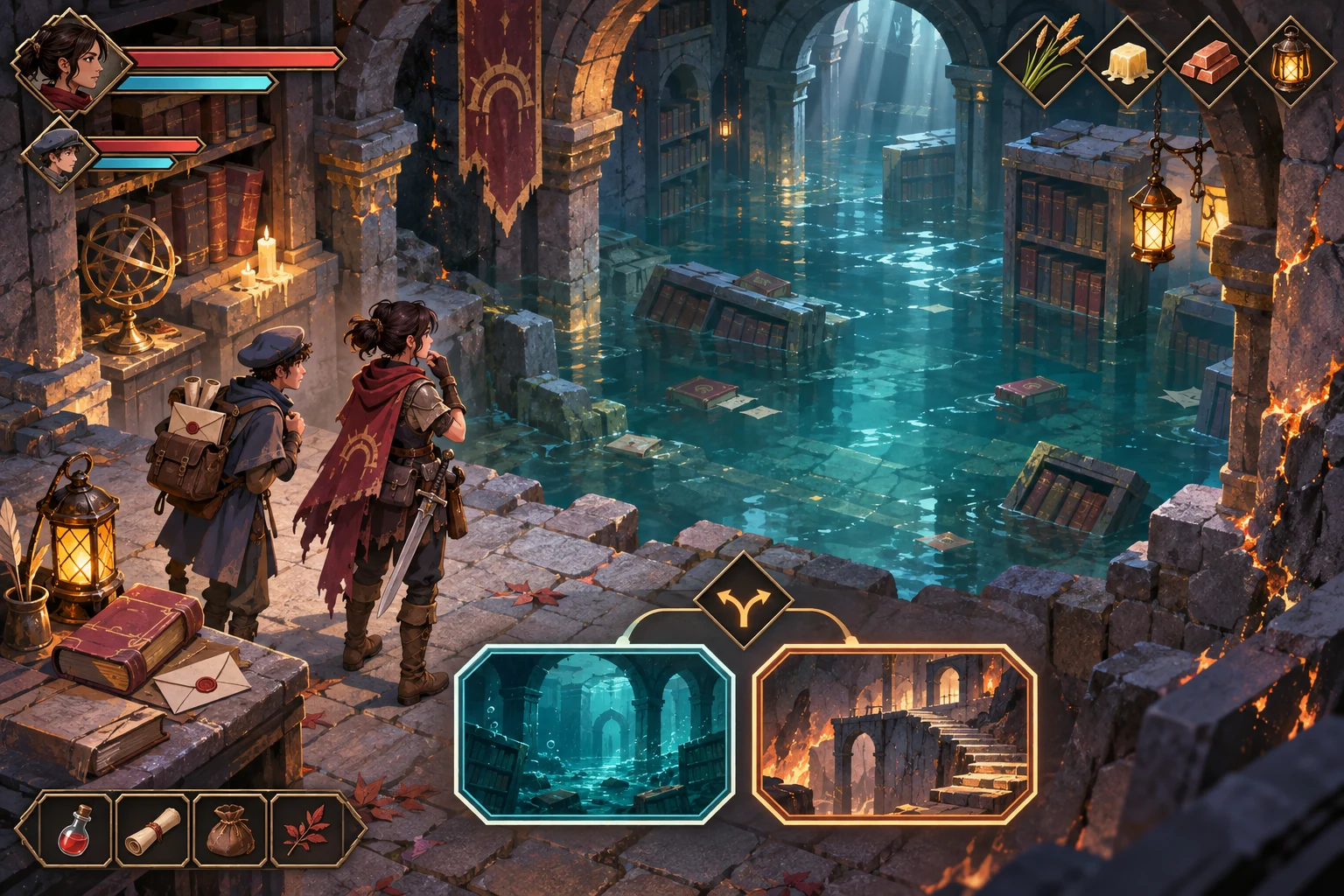
Crafting can move an action RPG story forward when the player makes a tool that answers a character's problem. A rope can repair a crossing, a signal can reach an isolated resident, or a filter can make a dangerous spring usable. The recipe becomes a story choice when its purpose is clear before the player gathers materials.
Start with one NPC obstacle, one recipe and one place to use the item. In this example, a flood cuts off an apprentice who needs a warning. The player crafts a message float from reeds and cord, then sends it from an upstream marker. This state model checks the quest trigger; it does not evaluate narrative quality or player emotion.

Tie each recipe to an NPC need and a world interaction
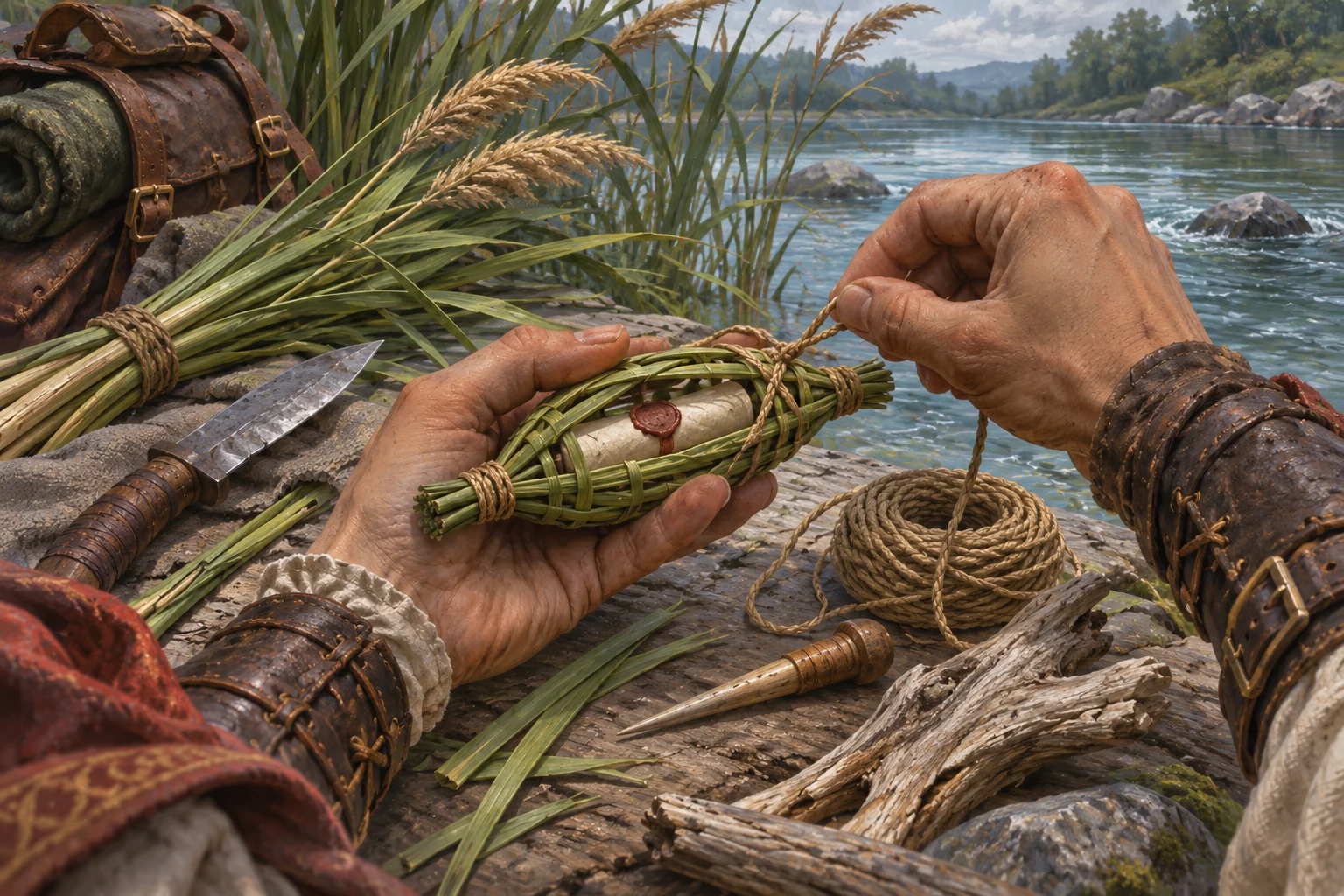
Give the NPC a specific obstacle and show what would change if it were solved. The isolated apprentice needs a warning before the flood reaches the lower path. The player can gather two reeds and cord along the river, then craft a float that can carry a sealed note downstream.
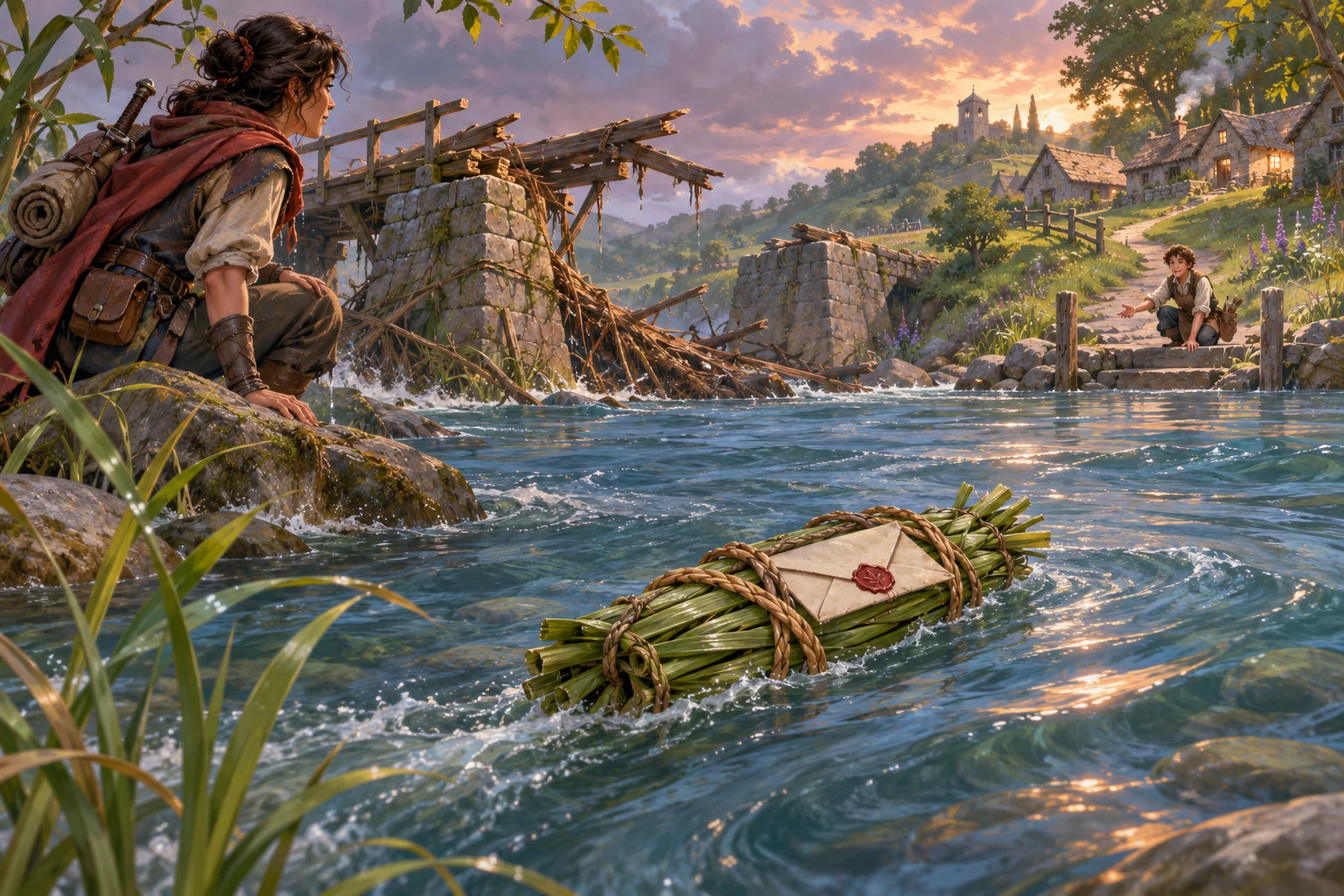
Keep item creation and story resolution as separate actions. Crafting adds the float to inventory; using it at the upstream marker sends the warning and updates the apprentice's quest state. Show the marker, the item requirement and the resulting change so the player can follow the connection from materials to story.
Preserve the action RPG's exploration and combat loop around that choice. Put materials on an optional route, keep the recipe visible in the journal and let the player return to the marker after crafting. Add alternate solutions only after this single craft-use-state chain is understandable.
See Godot's Resource documentation for reusable recipe, item and quest-state data definitions.
Update the quest only after the float is used
The player collects two reeds and cord and crafts the message float. In the first rule version, crafting immediately sets the apprentice's warning flag to complete. The story says the apprentice has been warned even though the float remains in the player's pack and the river marker has not been visited.
Change only the state trigger: keep the warning unresolved when the item is crafted, then set it after the player uses the float at the upstream marker. Hold the recipe, materials, dialogue and flood scene fixed. The item now changes the story because the player applies it to the obstacle.
This deterministic model checks the craft-use-quest sequence. It does not test whether the NPC feels believable, whether the player notices the marker or whether the obstacle is emotionally engaging. Playtest the scene and its alternatives before expanding the crafting quest chain.
Ask AI to prototype a story-driven crafting quest
Show the NPC problem, recipe materials, item use location and resulting quest state.
Change only when the warning flag updates while keeping the scene and recipe fixed.
Create an original action RPG quest about an apprentice isolated by a flood who needs a warning. The player gathers 2 reeds and cord to craft a message float. Compare a flawed rule that completes the warning quest as soon as the float is crafted with a corrected rule that completes it only after the player uses the float at an upstream river marker. Keep the NPC, dialogue, recipe and scene fixed. Show the inventory item and quest state before and after use. Do not claim the deterministic state check proves narrative quality or emotional impact.
Make a crafted item change the story when it is used
A story-driven recipe connects what the player gathers to a problem someone in the world actually has. Show the NPC's need, the tool's purpose and the place where it can help. Once the craft-use-state chain is clear, test alternate materials or solutions in a playable quest and see whether players understand the consequence.
Prototype an action RPG with SEELE's AI game maker
Frequently asked questions
How can crafting solve a story problem instead of only improving gear?
Give an NPC an obstacle that a crafted tool can address, then let the player use that item in the world. A recipe can carry a warning, repair a route or make a resource reachable. Show the resulting character or quest-state change after the interaction.
Should crafting automatically complete the related quest?
Not when the item still needs to be applied to the obstacle. Separate crafting from using the tool so players can choose when and where to resolve the problem. If creating the item itself is the solution, make that cause clear in the story and quest log.
Does a quest-state model prove the story is engaging?
No. It verifies that the crafted item and world interaction update the intended quest flag. It cannot judge character credibility, emotional impact, player comprehension or pacing. Playtest the dialogue and interaction in context before treating the story solution as successful.