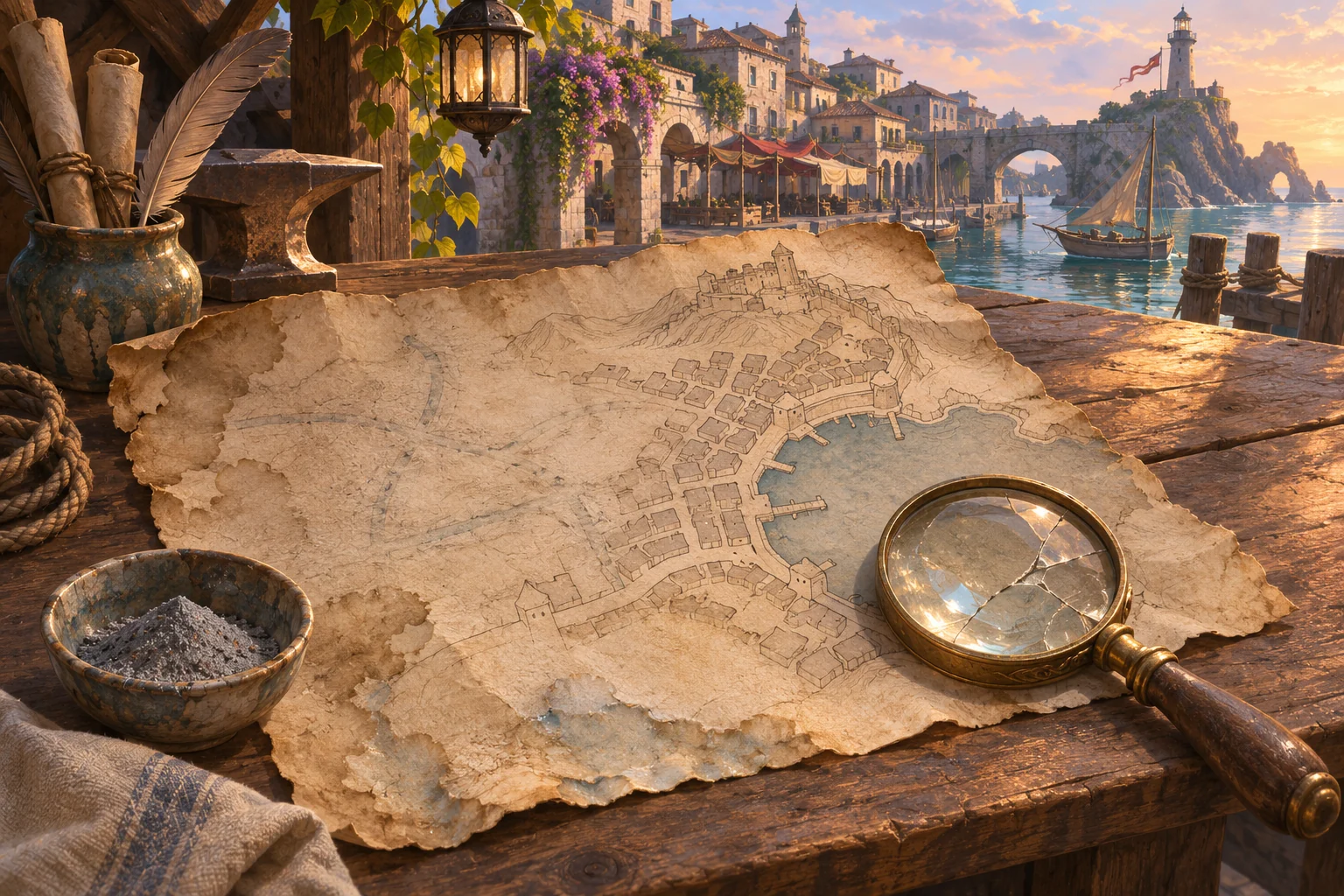
In a harbor town, the miller blames the sluice keeper for diverting the spring. The keeper insists someone altered the old charter. A player can investigate by crafting a Watermark Lens: combine a cracked lens with ash from the old sluice, then use the result to reveal a washed-out channel on the charter. The new evidence changes the conversation and opens the spring path.
That gives crafting a role in the story. The item is useful because of what its materials mean in this place, not because it adds a larger damage number. A small prototype can show the entire loop: inspect the clue, choose materials, craft, use the result, hear a changed response and check the route state.
Tie a story problem to an inspectable crafting loop
Give the player one disagreement with a visible stake: the town's spring is dry, and two residents blame each other. The old charter contains the answer, but water damage has hidden one channel. Place the charter, cracked lens and sluice ash in the same compact investigation area so the player can inspect each before leaving.
Keep the steps explicit. Inspect the charter to notice faint grooves; inspect the lens and ash to learn their properties; combine them at a workbench; then use the Watermark Lens on the charter. Show the revealed channel as evidence in a follow-up conversation, where the keeper recognizes the old sluice mark and opens the spring route. The player should see why the crafted object matters.
Let material traits carry meaning into the recipe
Treat materials as clues as well as ingredients. The cracked lens can magnify shallow scratches but cannot distinguish old marks from recent damage. Sluice ash holds mineral residue from the former channel. Together, the two materials create a lens that makes the charter's erased waterline visible. State those traits in the inspection text before the player crafts anything.
Avoid making every combination work. A polished lens made from the cracked lens alone can make the charter easier to read, but it should not expose the mineral trace that identifies the old route. Keep the recipe understandable: one ingredient reveals the marks, the second identifies their source. The resulting evidence is specific enough to change what the keeper believes.

Replay the scene and check whether crafting changes the story
Reset the same scene with the same charter, keeper dialogue and route state. In pass one, give the player a generic polished lens. It clarifies the charter's surface, but the erased channel stays uncertain and the keeper repeats the original refusal. In pass two, craft the Watermark Lens from the cracked lens and sluice ash. It reveals the old channel mark; the keeper recognizes it, changes the response and opens the spring path.
Record the visible difference at each step: item name and traits, revealed clue, dialogue branch and route flag. If the second pass only produces a different line without changing the player's next action, strengthen the consequence. The route state makes the iteration observable and lets a later human playtest check whether players understand the evidence.

Prompt a first version with one authored story puzzle
Start with one room, one disputed resource and one recipe that makes evidence. Ask the prototype to show material descriptions, a clear workbench action and the NPC's before-and-after response. Add more ingredients or quests only after the first story problem has a readable solution.
Create a compact harbor-town crafting RPG. The miller and sluice keeper disagree about a diverted spring. In one investigation area place a water-damaged charter, a cracked lens and ash from the old sluice. The cracked lens magnifies scratches; sluice ash identifies mineral traces. Let the player combine lens and ash at a workbench to craft a Watermark Lens. Using it on the charter reveals the erased channel, changes the keeper's conversation and opens the spring route. Include a reset and a generic polished-lens comparison that does not reveal the channel.
SEELE's free game maker describes creating a first version from a text prompt and refining it with follow-up requests. Use that general workflow to inspect the recipe, clue and dialogue transition before adding more story branches.
Start the story-solving crafting RPG in SEELE
Frequently asked questions
How can crafting solve a story problem?
Connect the ingredients to evidence that matters in the scene. In this example, a cracked lens reveals marks while sluice ash identifies their source. The crafted Watermark Lens exposes an erased channel on the charter, giving the keeper a reason to change the conversation and open the spring route.
How do I stop a crafting puzzle from feeling arbitrary?
Show each ingredient's relevant trait before the recipe is used, and let the outcome follow from those traits. The lens magnifies scratches; ash carries mineral residue from the sluice. Players can infer why the combination reveals a water mark instead of guessing from a long list of unrelated ingredients.
What should a first playtest compare?
Reset the same scene and compare a generic polished lens with the trait-bearing Watermark Lens. Track the revealed clue, the keeper's dialogue and whether the spring route opens. If players cannot explain why the second item changes the outcome, make the material clues or the resulting evidence clearer.