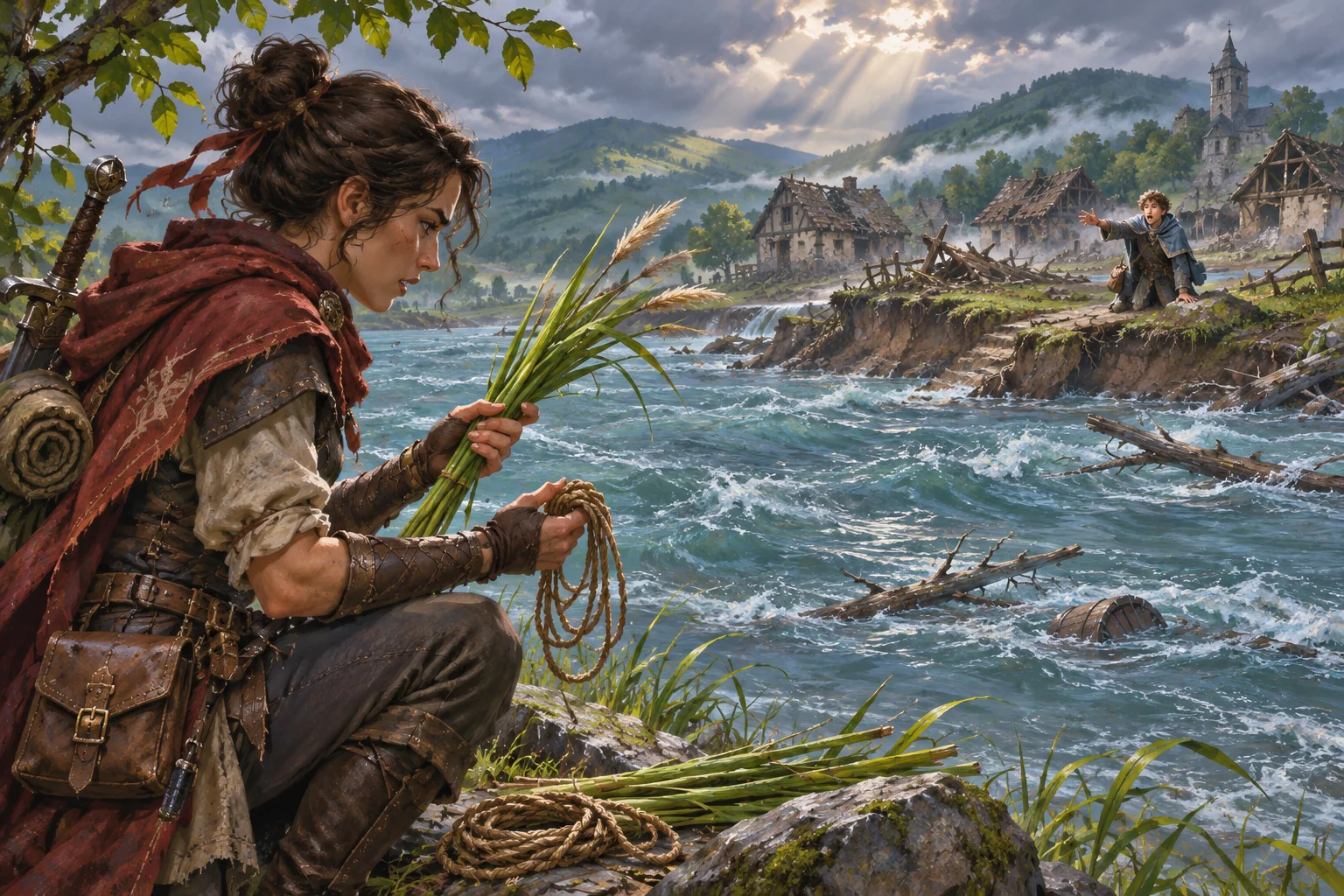
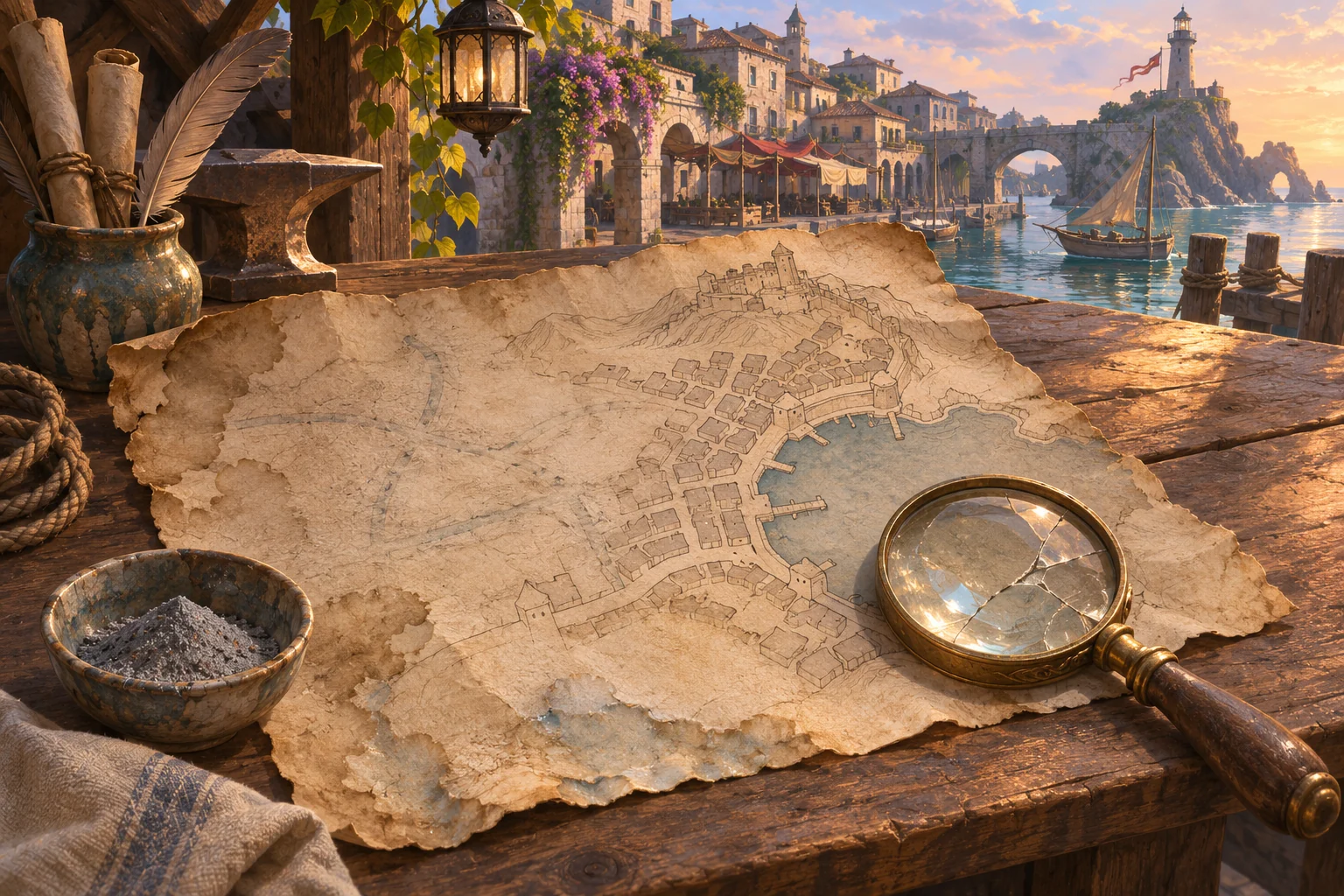
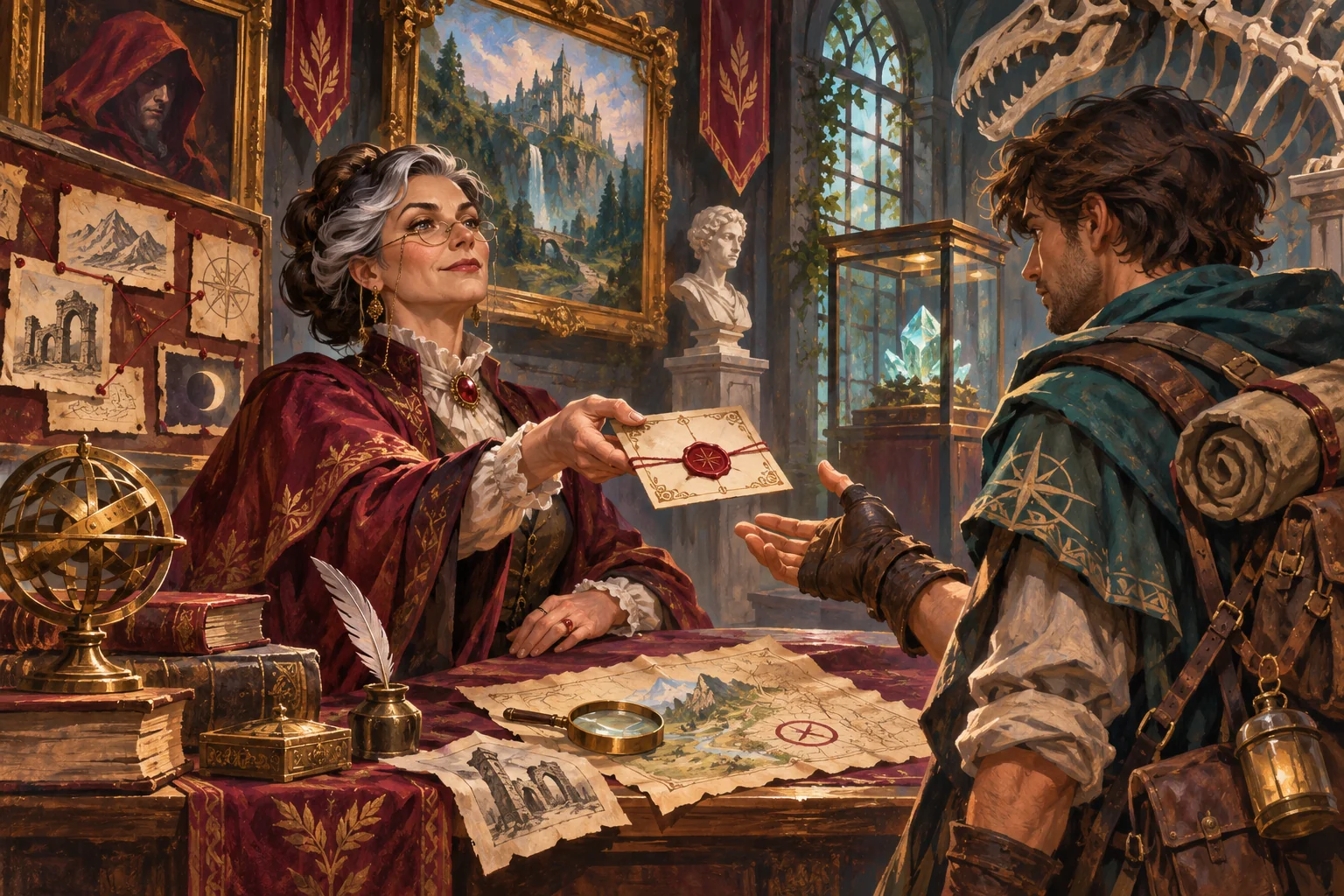
In fictional Ash Vault, a flooded archive blocks a courier’s route. During each roguelite run, the player can gather reed, wax, and copper, then craft a float lamp, seal kit, or signal chime. Each tool opens a different conversation or route choice. The player returns with one memory mark after helping the courier, while crafted tools reset. The design question is whether crafting can change how a story problem is solved instead of only improving combat.
Make the flooded archive a story problem
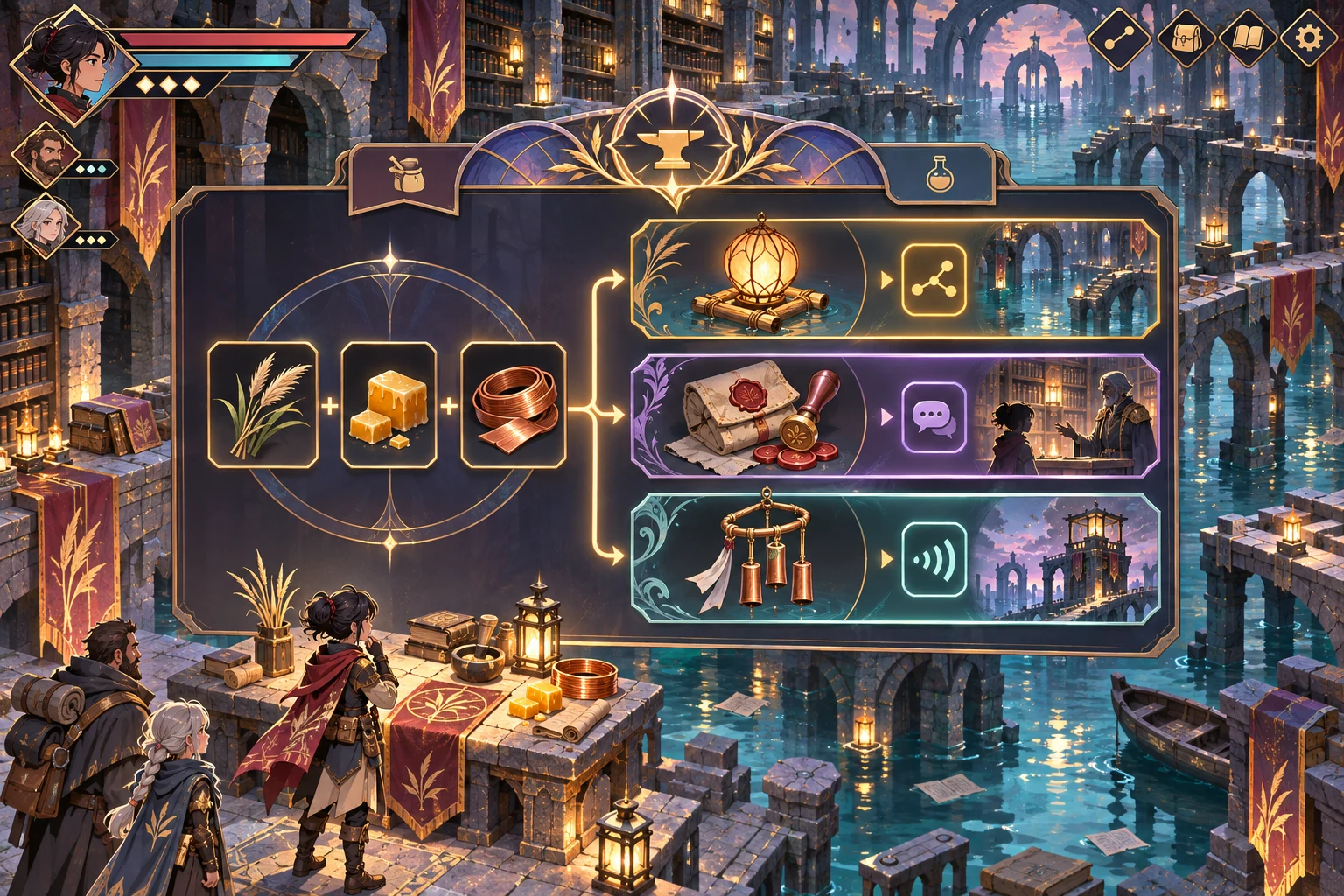
Give the courier a clear need: cross the flooded archive before a message becomes useless. Show the obstacle, the courier’s concern, and the materials the player can collect. A float lamp reveals a safe crossing, a seal kit protects a bundle of records, and a signal chime calls someone who knows another route. These are fictional alternatives for the prototype, not claims about a finished game.
Keep the encounter list, material drops, and run duration the same across the comparison. The choice should come from what the player crafts and how the courier responds. That makes the story outcome visible without also changing enemy difficulty or resource luck.
Let recipes open different conversations
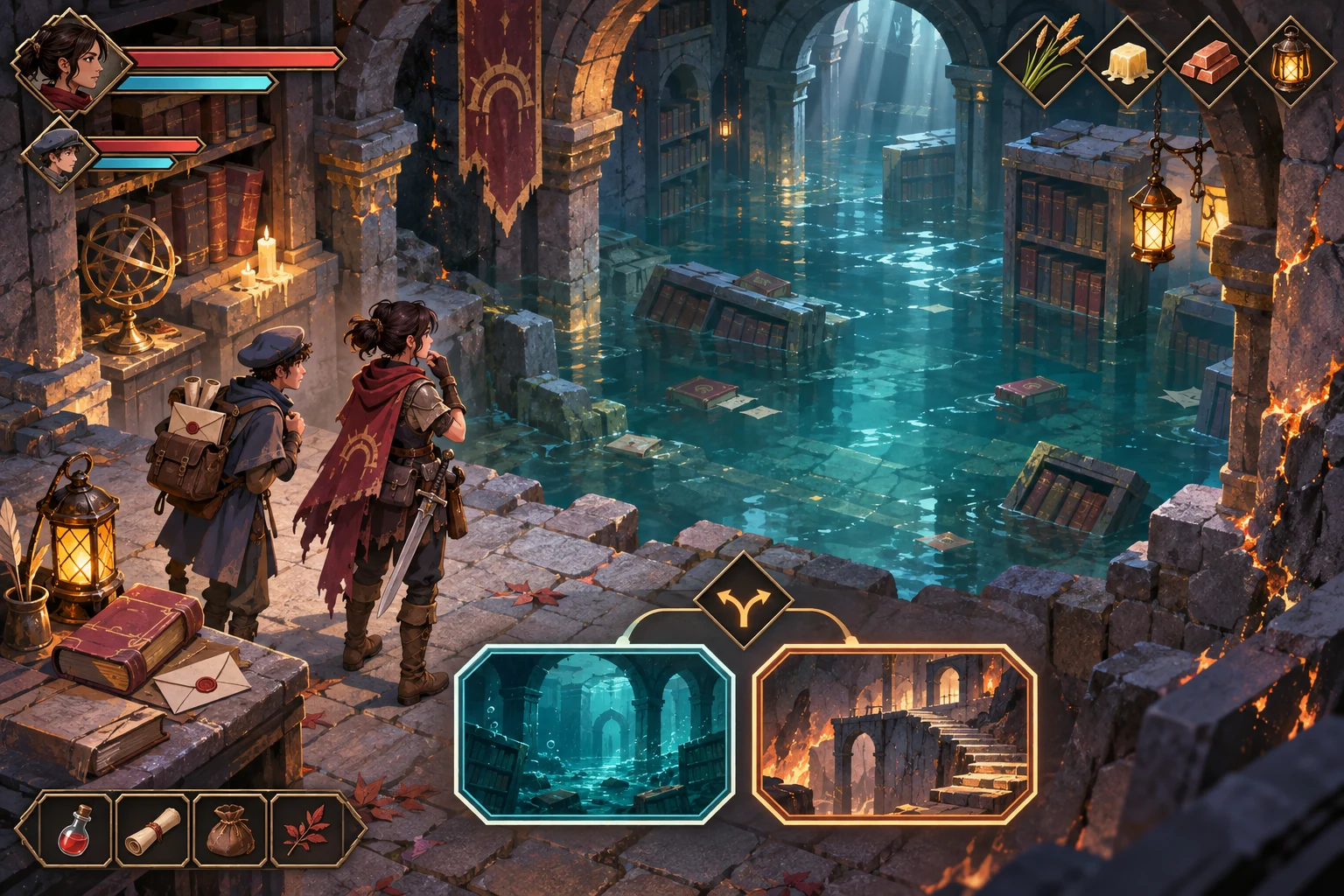
Use reed, wax, and copper as a small shared material set. A recipe definition can name its inputs and the story interaction it enables. The float lamp might reveal a safe passage, the seal kit might let the courier preserve a record, and the signal chime might bring a guide into the scene. Let the player see the likely story use before spending materials.
Godot Resources can store authored data such as recipe inputs, names, and interaction identifiers. Keep the current run’s inventory and crafted items in game state, while the resource describes the recipe itself. This separates reusable recipe data from what one player has gathered in a particular run.
Reset the run and preserve one memory mark
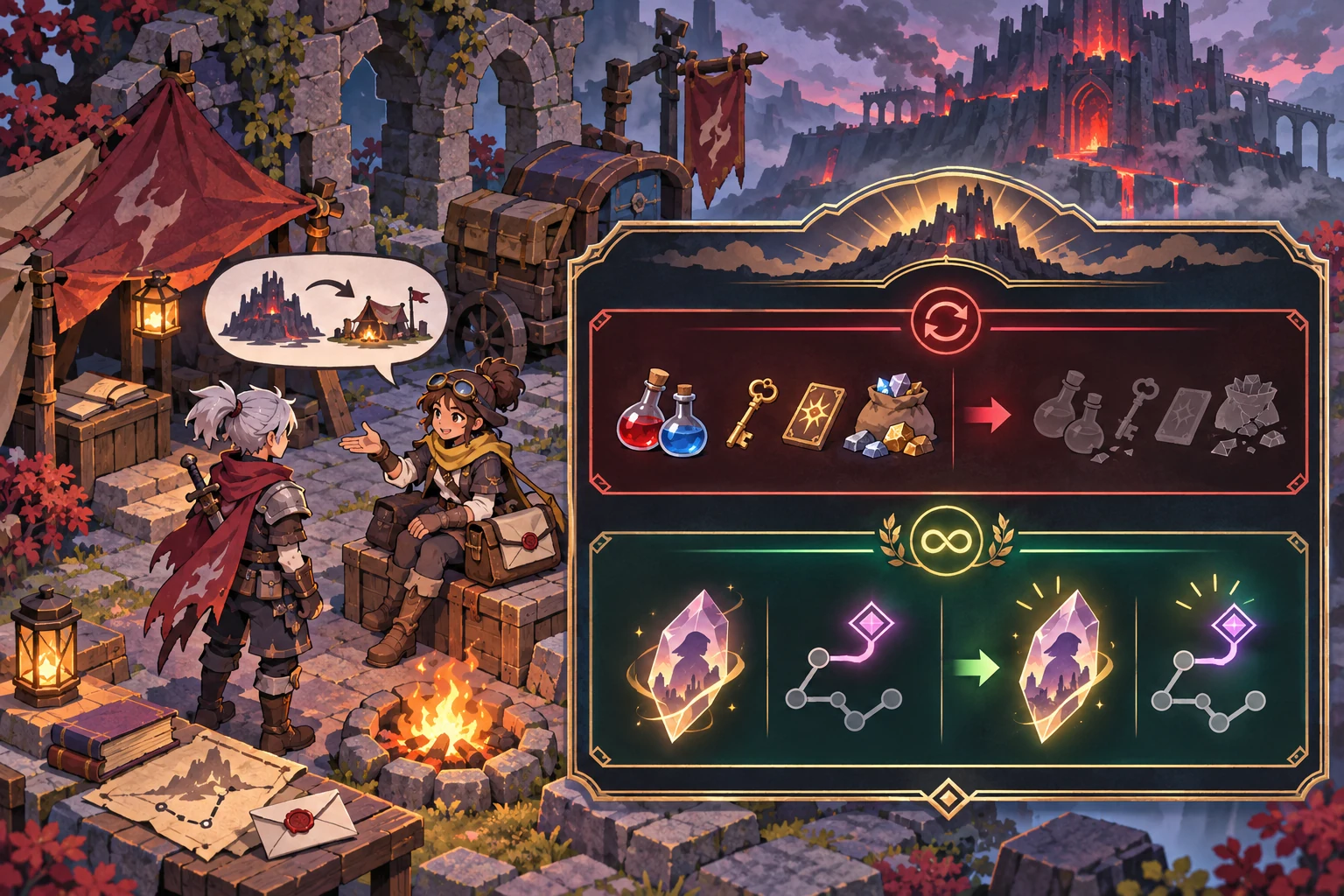
At the end of a run, reset gathered materials and crafted tools. If the player helped the courier, add one persistent memory mark and show how the next story encounter remembers that choice. The mark can change a line of dialogue or reveal a route hint; it should not silently keep the previous run’s full inventory.
Compare three identical runs with the same encounters, drops, and duration. In the baseline, the player fights through the archive encounter without crafting a story solution. In the revised run, one recipe resolves the courier’s obstacle. Report the story outcome, tools crafted and used, and persistent marks separately. This fixture tests the narrative loop only; it does not prove balance or replay value for a complete game.
Give the AI a fixed roguelite story test
Create a roguelite RPG prototype in the fictional Ash Vault. A courier needs to cross a flooded archive. Let the player gather reed, wax, and copper and craft a float lamp, seal kit, or signal chime; each recipe should enable a different conversation or route choice. Compare three identical runs with the same encounters, drops, and run duration. Keep a combat-only baseline and a revised run where one crafted tool solves the archive problem. After helping the courier, reset tools and materials but keep one persistent memory mark. Report story outcomes, crafted tools used, and memory marks separately.
If encounters, drops, or run duration change between runs, restore the same fixture and repeat. Confirm that tools and materials reset while exactly one memory mark persists after helping the courier.
FAQ
How can crafting affect a roguelite story?
Give crafted items a clear use in a conversation, obstacle, or route choice. Let different recipes create different story responses, then hold encounters and material drops steady while you compare them. This helps you see whether the narrative choice matters without mixing it with combat balance or random rewards.
What should persist between roguelite runs?
Choose a small, visible piece of progress, such as a memory mark or unlocked story hint. State what resets, including ordinary materials and crafted tools, so players understand the boundary between a run and longer-term story progress. Show the mark again in a later scene so its persistence has a clear narrative payoff.
How should I test a narrative crafting loop?
Replay the same encounters, drops, and run duration. Compare a baseline without a crafted story solution to a run where one recipe changes the outcome. Track the story result, tools used, and persistent progress separately. Repeating the fixture makes it easier to attribute a changed outcome to the recipe rather than a lucky drop.