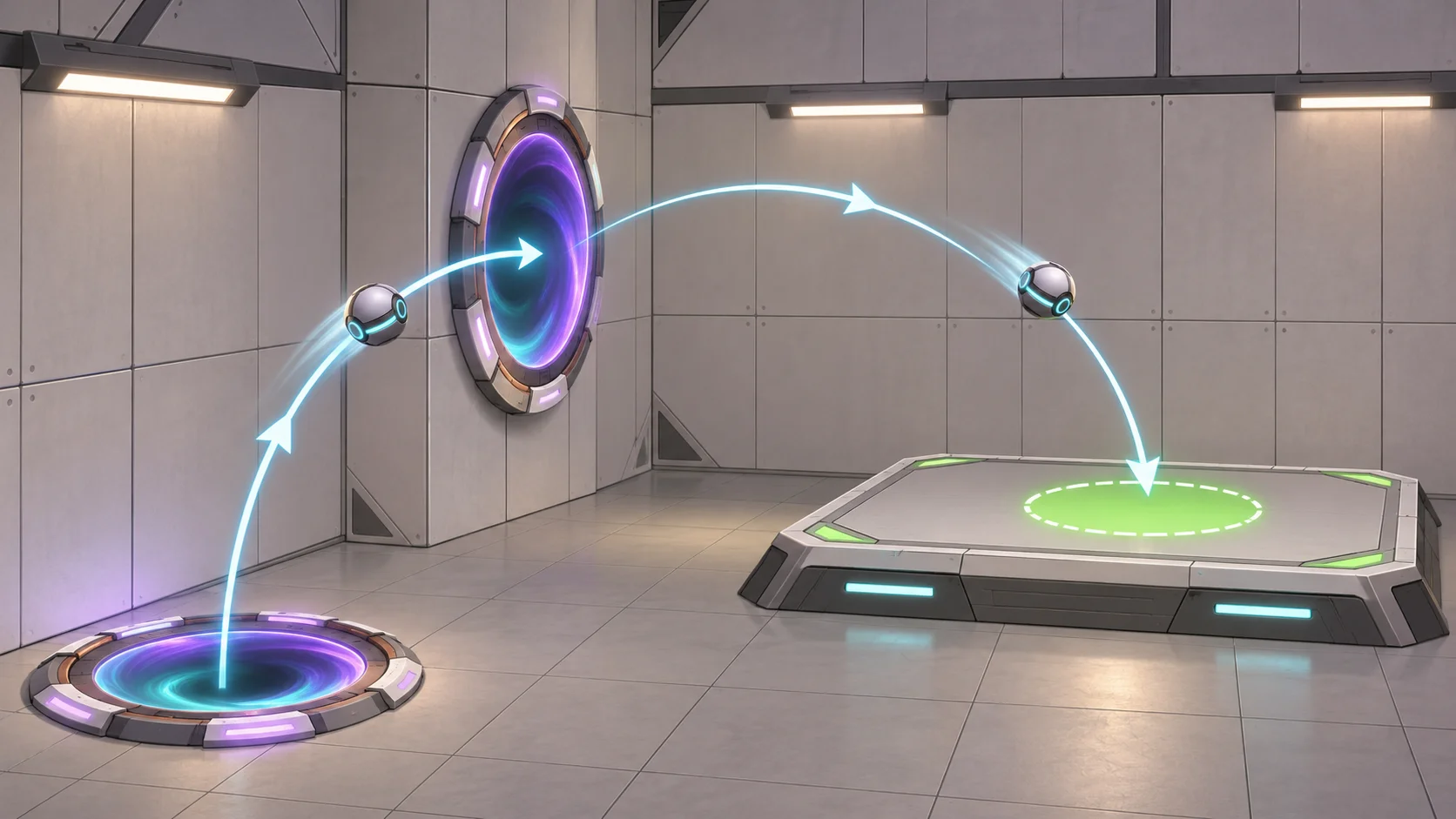
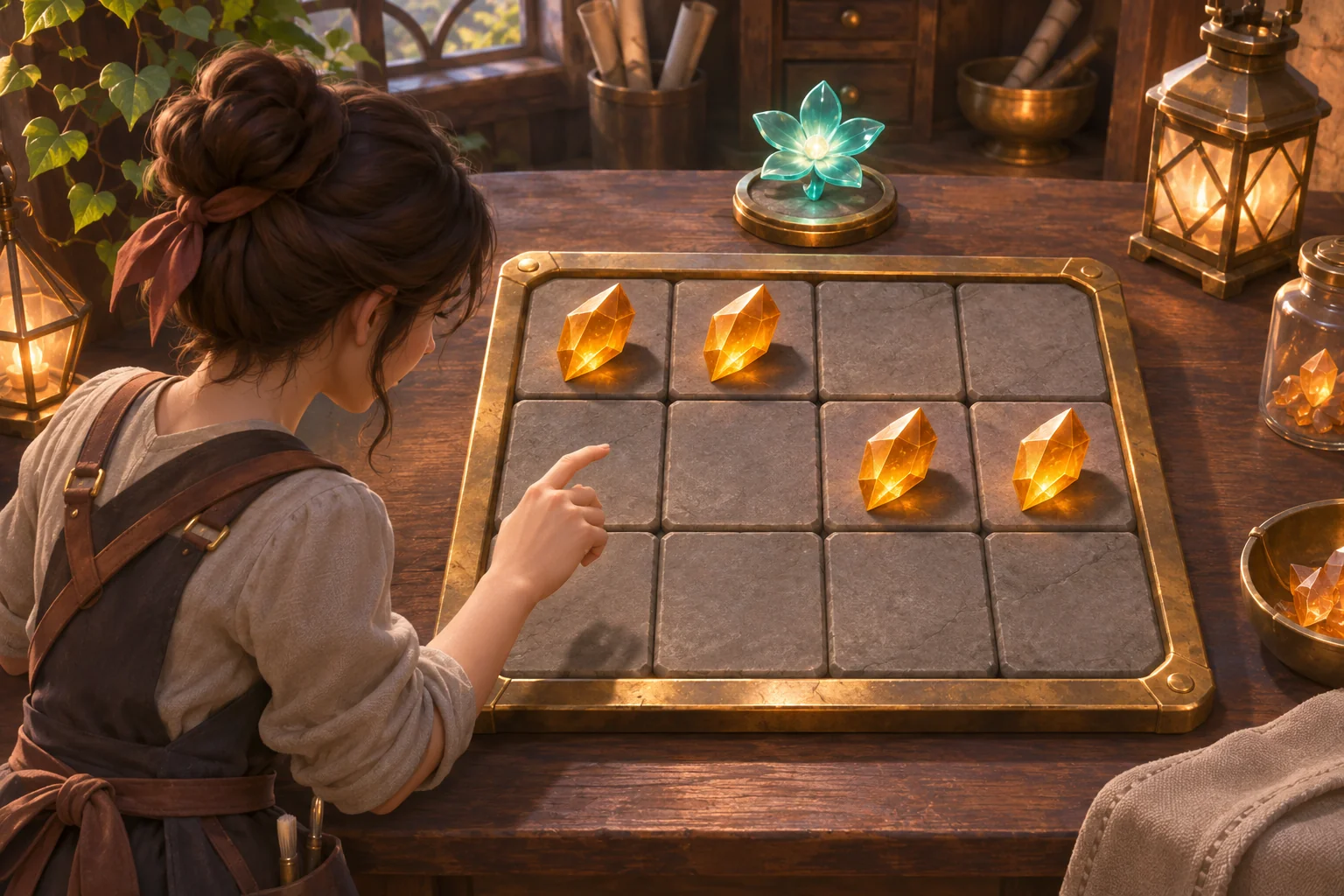
The loop gives the player a visible state to inspect, a low-cost action to test a hypothesis, feedback that reveals a rule, and a goal that uses the discovered rule. Make feedback and recovery legible, then test the system in a short repeatable scenario. Keep the first prototype to a few objects and one visible goal, then add rules only when the loop is clear.
Teach the player to observe a merge state
Begin each puzzle with a small board the player can read at a glance. Show object shape, location, and one visible property that may affect a merge, such as weight, color, or whether the object can move. Give the player a target state to reach, but leave enough room to form a prediction about which pair might combine and what the result could do.
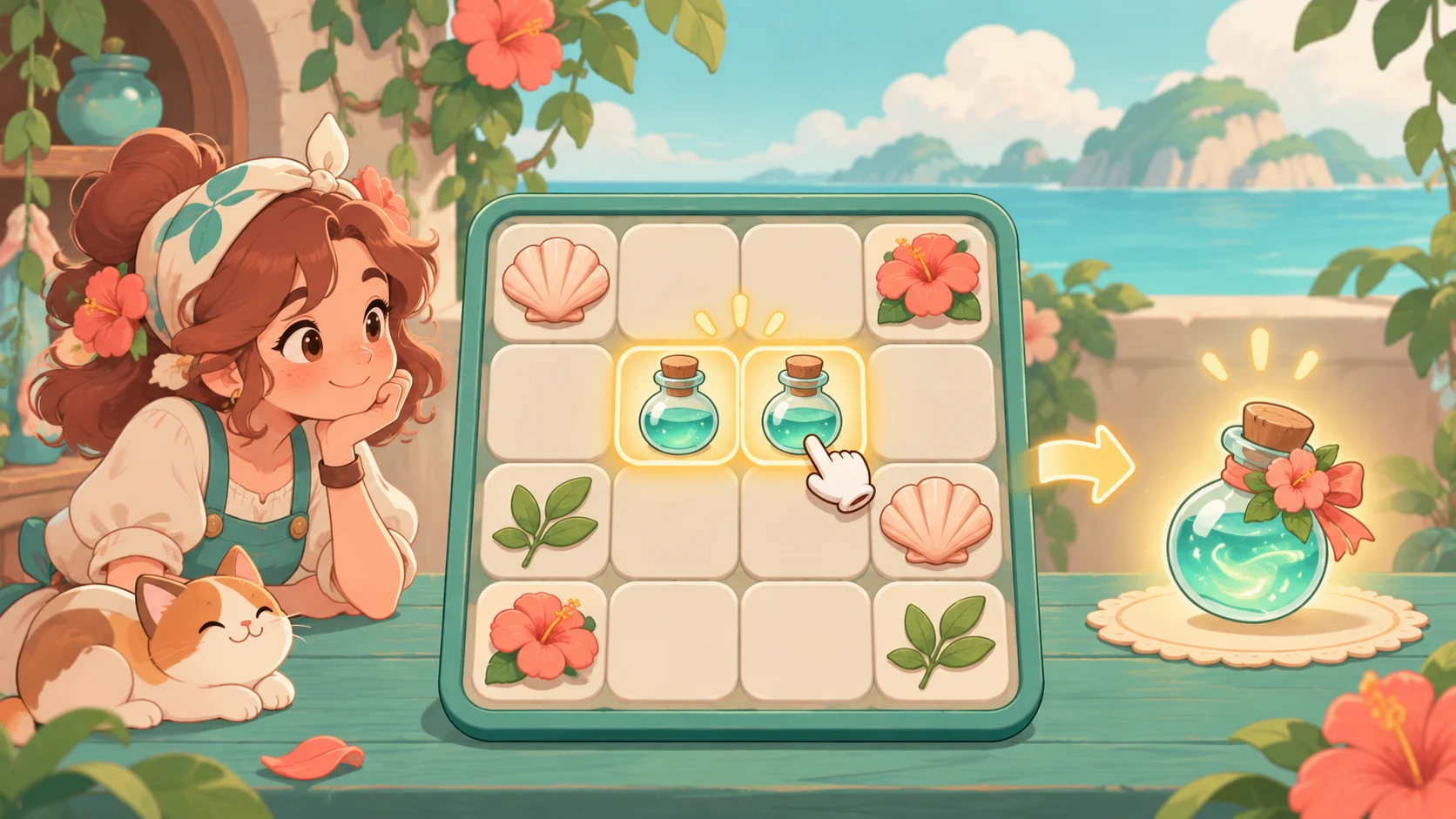
The official Merge It listing from Fewjix describes combining objects under rules that can be changed, with undo available. It supports the merge-puzzle context only; the observation and experimentation loop here is original. Start with one known rule and one new visual clue, then let the player inspect the board before they act.
Make experiments produce useful evidence
An experiment should answer a question. The player might combine two matching tiles to see whether the result gains a property, then use that result near a blocked path. Animate both the merge and its effect on nearby objects. If a pair does not combine, show a small response that narrows the rule rather than treating the action as if nothing happened.
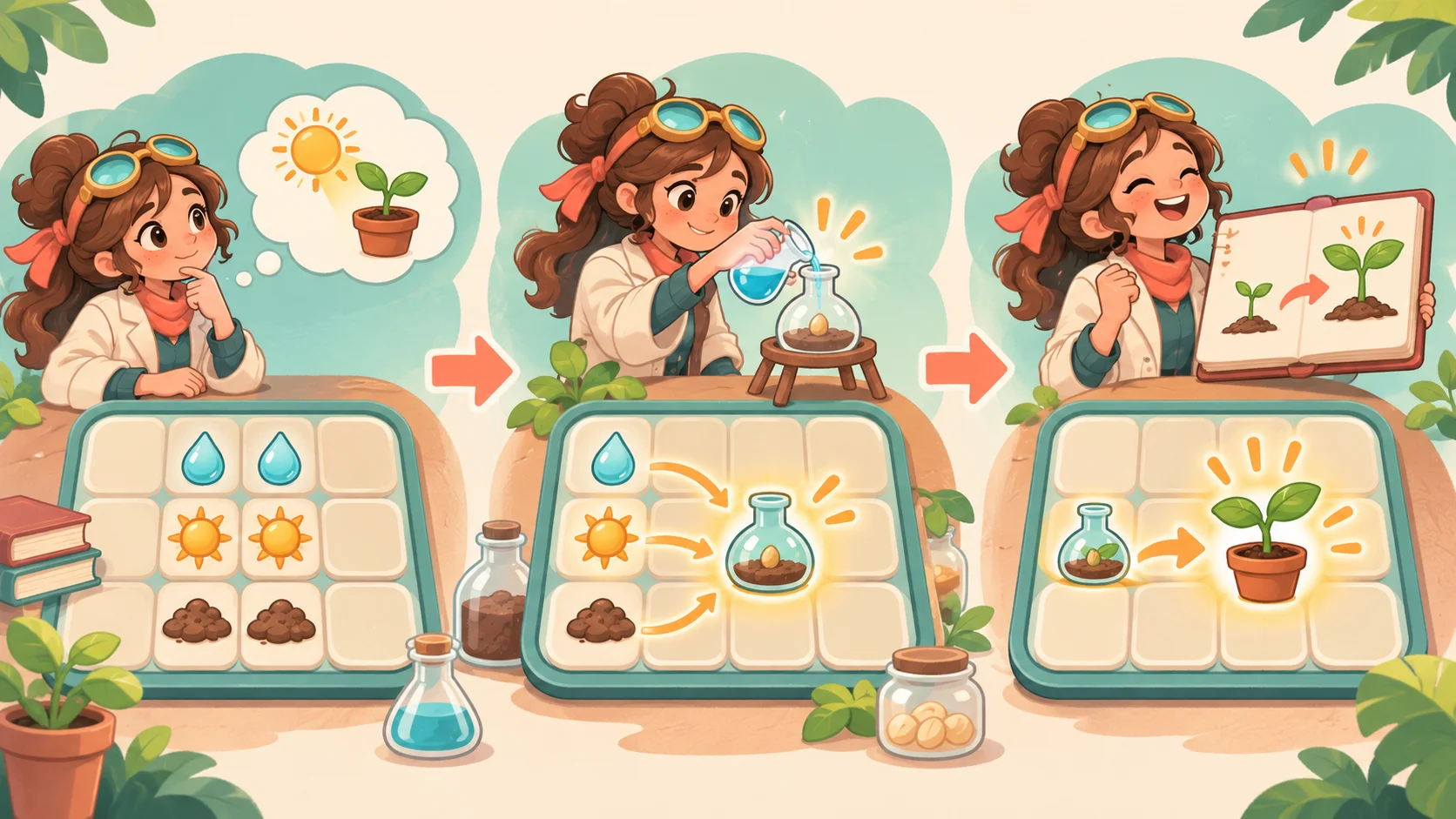
Keep experimentation low cost in early levels. Provide undo or a quick reset while the player learns the rule, and preserve enough pieces to test another hypothesis. As the player advances, ask them to combine known rules in a new arrangement rather than guess at a completely hidden interaction.
Connect discoveries to the solve step
Let the discovered rule matter immediately. A merged object might become heavy enough to press a plate, split into two pieces that fit separate spaces, or carry a property that changes another merge. Use a goal state the player can inspect, so they can compare the current board with the result they are trying to create.
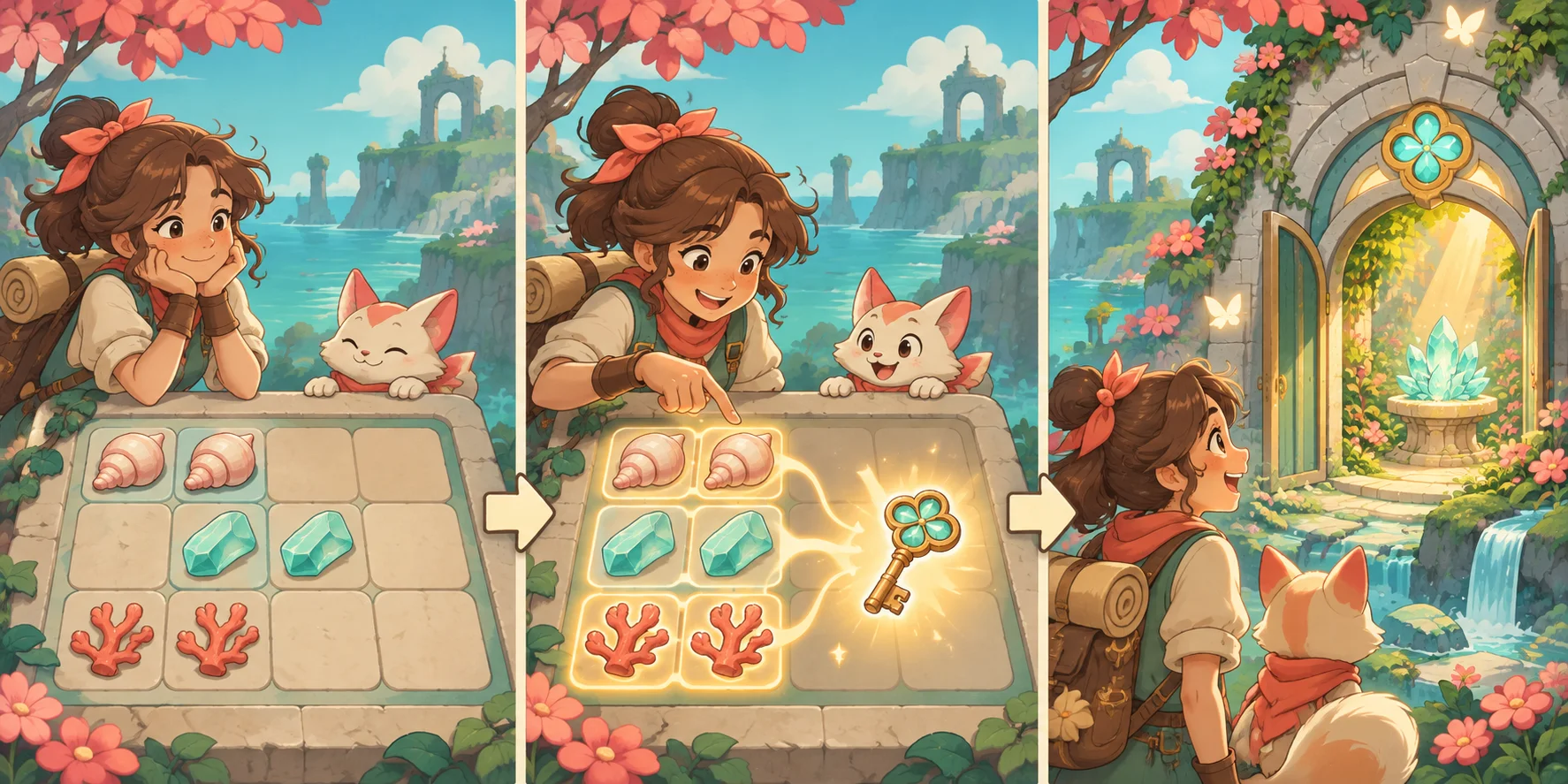
Introduce one complication at a time. A second object property or a rule-changing tile can make a puzzle richer, but show how it relates to the rule the player already observed. Avoid long chains where the first experiment gives no useful feedback until several moves later. The player should see which discovery unlocked the solve and be able to repeat it in a fresh puzzle.
Test the full loop without guesswork
Watch a new player move through observe, predict, experiment, and solve without coaching. Record the first object they inspect, their stated hypothesis, whether the result confirms it, and how many moves they need to reach the goal. Repeated random combinations may mean the rule is hidden, the cue is too subtle, or feedback fails to explain why a merge worked.
Test undo, reset, and board edge cases. Confirm that an incorrect experiment can be reversed and that the puzzle remains solvable after every supported move. For a related puzzle-progression idea, see a related guide to momentum-based puzzle progression. Pass when players can predict a merge, learn from its result, and use that knowledge to solve the board.
FAQ
What is an observe-experiment-solve loop?
The loop lets a player inspect a visible state, predict what an interaction will do, test the idea, and use feedback to reach a goal. In a merge puzzle, a player might compare two objects, combine a pair, and use the result to open a route. Each action should reveal information or move the board closer to its target.
How should a merge puzzle teach its rules?
Begin with a small board, one known interaction, and a visible clue to a new rule. Let the player inspect object properties before acting, then animate the merge and any resulting world change. Add a second rule only after the base case is understood, and give players a way to undo early experiments.
How do you make experimentation feel useful?
Make each experiment answer a question and provide feedback even when it fails. A non-merge should narrow the possible rule or show why the pair did not match. Preserve enough pieces or provide undo so a player can test another hypothesis. Avoid charging a move for an action that reveals no new information.
What should you test in a merge puzzle loop?
Observe whether players inspect the board, form a prediction, test an interaction, and apply the result to the goal. Record dead-end moves, repeated combinations, and use of undo. Test a fresh player and someone who already knows the rule to check that clues teach without making later puzzles automatic.