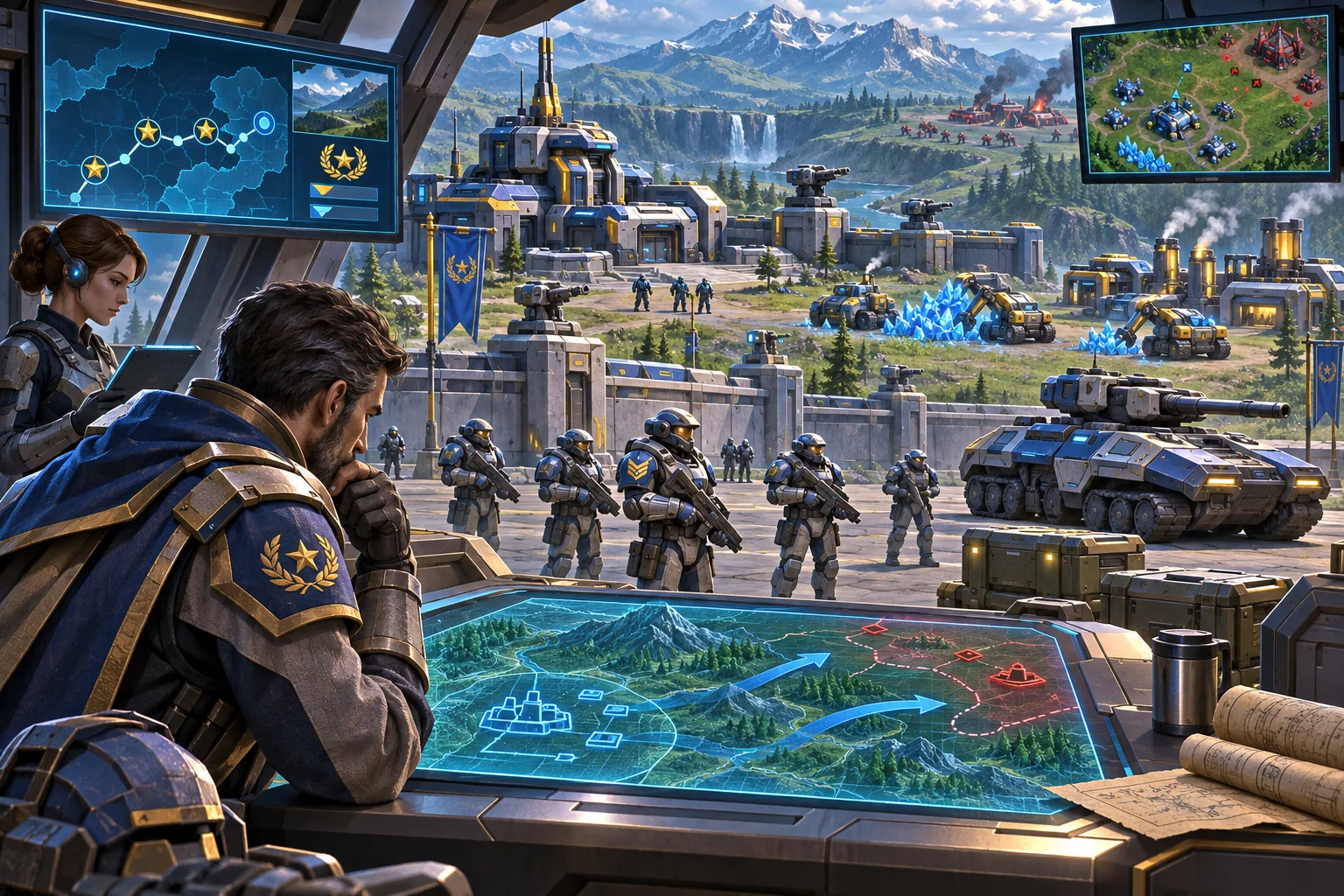
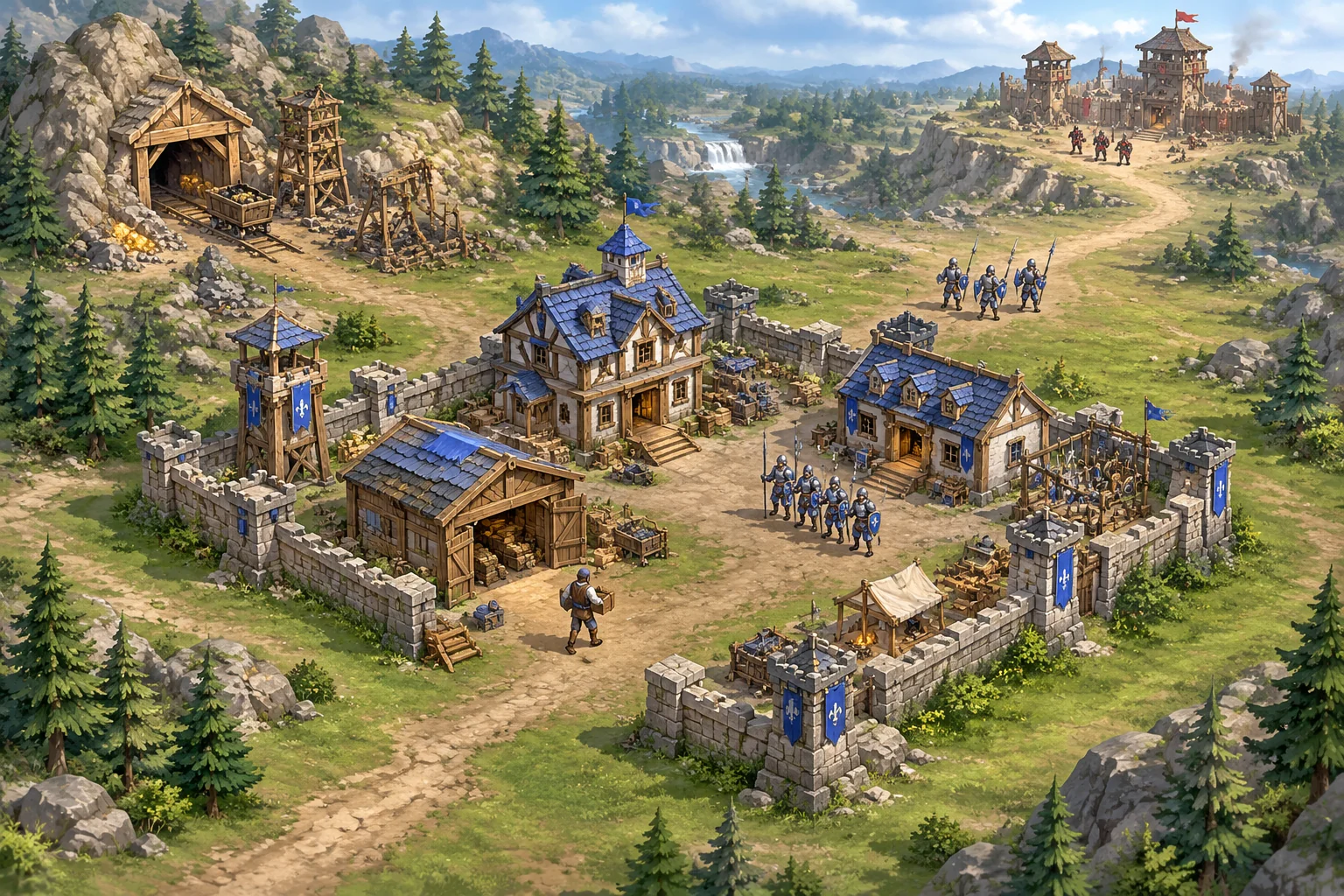
Make each economic action produce visible military options, then test whether scouting and resource pressure create meaningful timing decisions. A useful first prototype connects the player action, its feedback, and the next decision so the system can be tested as a complete loop.
Map the economy-to-combat baseline
Map the current loop from worker action to battlefield result. List resource sources, travel or drop-off steps, building costs, unit production time, and the commands players use after a force is ready. This makes gaps visible: perhaps workers gather resources that have no exciting use, or combat choices do not reflect economic pressure.
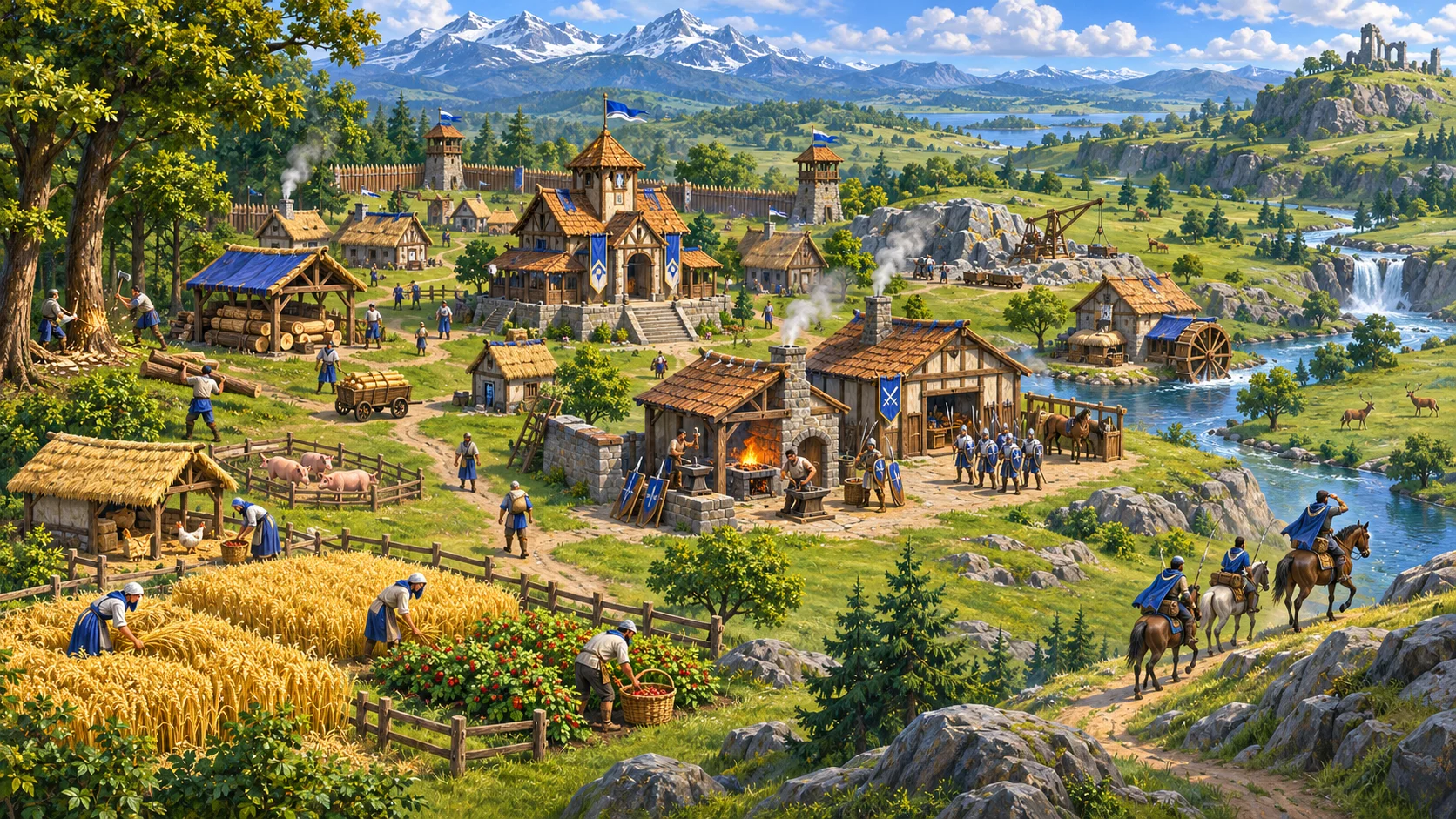
The official Age of Empires IV quickstart describes exploring, gathering resources, and using them to train units and build structures. Its tutorial also covers resource collection, buildings, and commanding military units. This supports the broad economy-to-combat context; the loop and tests here are original design guidance. See the official Age of Empires IV quickstart guide for this context.
Connect workers, costs, and production
Choose a small resource set and make each one support a legible decision. Workers collect from visible sources, return resources to a usable point, and contribute to buildings or unit queues. Add costs that force a choice between growing the economy, improving production, and assembling a force, rather than asking players to maximize every track at once.
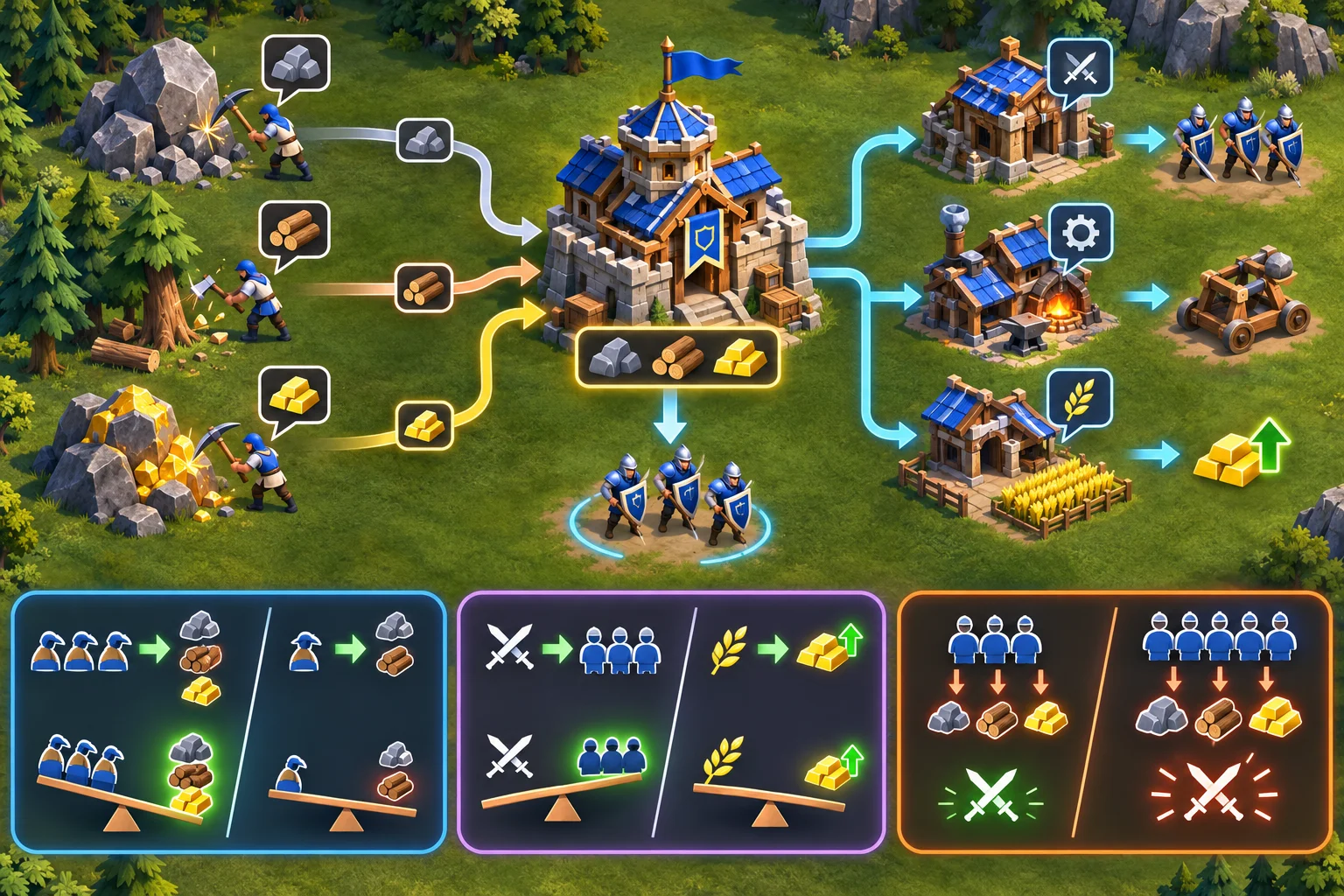
Make production time part of the decision. A cheaper unit may arrive sooner, while a structure or upgrade delays immediate combat but expands later options. Keep costs, queues, and rally commands understandable so a player can predict what their economic choice will produce.
Turn scouting into a force decision
Give scouting a purpose in the loop. A scout can reveal a route, resource site, or defensive commitment that changes whether the player expands, protects workers, or produces an army. Let the opponent’s visible pressure influence an economic plan, but avoid making a single hidden counter the only viable response.
For a first implementation, use one map, two resource sources, two production choices, and a simple opponent pressure. Track what information the player had when choosing to spend or save, then connect the consequence to unit availability and command options.
Test timing, losses, and recovery
Test the same scenario with an early expansion, an early defensive force, and a delayed attack. Compare when units become available, whether the base can recover after losses, and whether resource sites create meaningful map choices. A working loop makes economic actions visible in the army a player can field and the risks they can take.
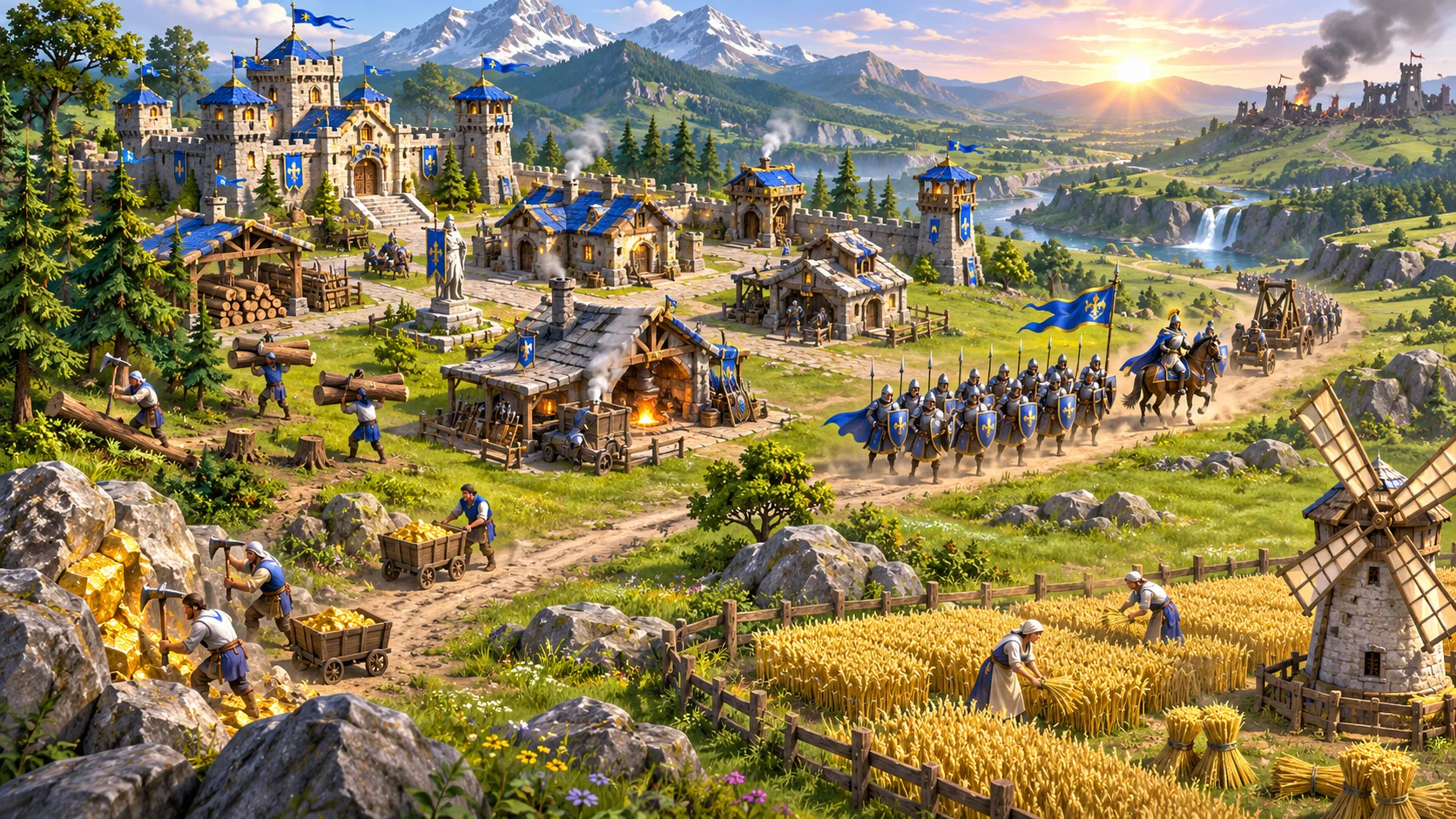
Use a repeatable scenario to tune costs before expanding the tech tree. The related a resource-logistics design guide covers how resource logistics can shape battlefield decisions. SEELE AI can help brainstorm possible loop variants; implementation, opponent behavior, and balance testing remain team work.
FAQ
How does an economy-to-combat loop work in a base-building RTS?
Workers gather resources, the player converts those resources into structures or production capacity, and the resulting units create battlefield options. The loop is strongest when players can see how a choice to expand, defend, or produce affects both timing and the ability to recover.
Which resources should connect to unit production?
Start with only the resources needed to express a meaningful choice. Each resource should have visible sources and uses, and unit costs should compete with at least one other useful investment such as worker growth, production buildings, or upgrades. Add complexity when the existing choices are easy to understand.
How should scouting affect economic decisions?
Scouting should reveal information that can change a decision: where to expand, which route to protect, or whether to invest in immediate defense. Test that players can connect the information to the choice they made. Avoid relying on hidden counters that make the economy feel arbitrary.
What should you test in an RTS economy-to-combat loop?
Replay a consistent scenario with different opening plans and record resource income, production timing, unit availability, map control, and recovery after losses. Check whether players understand why a force arrived when it did and whether they could adapt after seeing an opponent’s pressure.