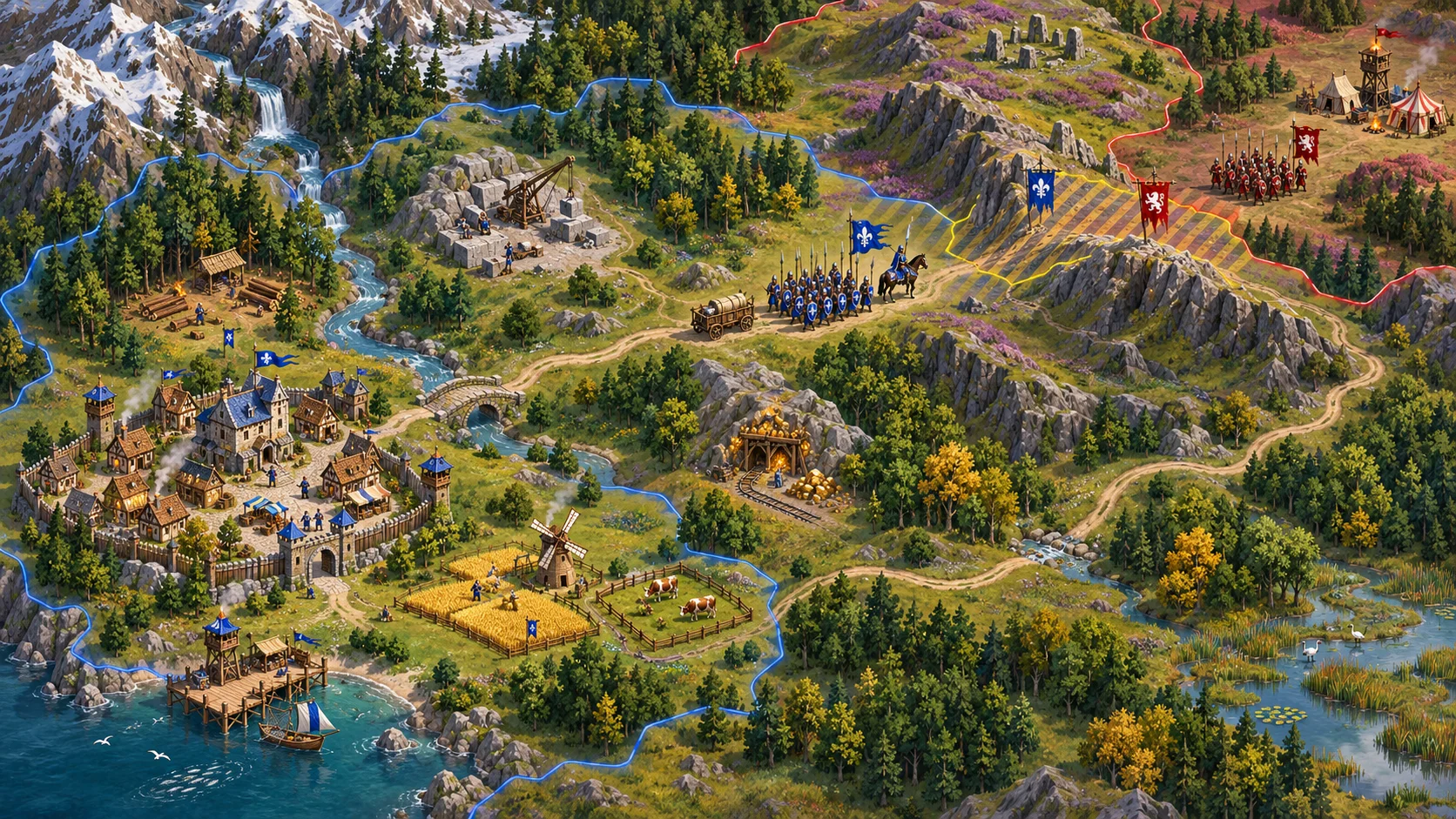
Map income sources and build costs
Begin by listing the resources that matter and where they come from. A mine may produce crystals over time; a depot may store them; towers may consume energy or construction materials. Decide whether a player can spend from anywhere or must connect a tower to a supply range. That rule changes battlefield planning, so show it early.

Track production rate, storage capacity, transport, and demand separately. If the mine fills up, production may stop; if a route is cut, towers may lose access. A single currency count cannot explain these differences. Use clear indicators for what is available now and what is expected to arrive.
The official Royal Wars: Farm TD listing describes wave-based tower defense with crystal mines, tower building and upgrades, and resource management. That supports the resource-based tower-defense context only; the supply network in this article is original design guidance.
Make routes compete with defenses
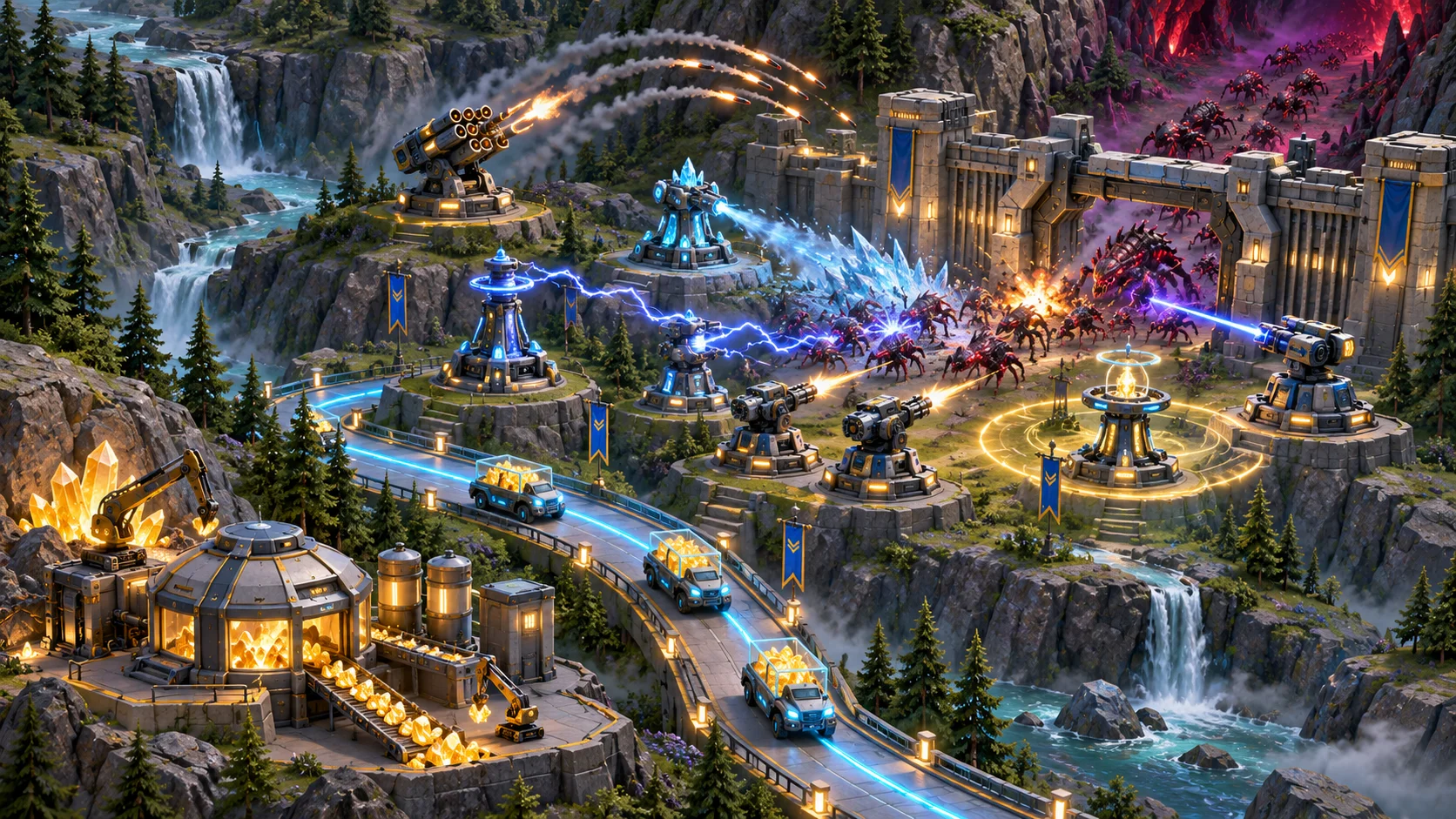
A logistics route becomes a battlefield decision when it uses space or requires protection. A relay might connect a distant tower but occupy a strong placement tile. A longer route can pass through safer ground but cost more material. Display the route and affected towers before confirming it so the player can compare logistics coverage with defensive geometry.

Keep the network understandable. Start with one production source, one storage point, and a few connected towers. Add alternate routes or multiple resource types only when they create a distinct choice. If a tower cannot fire because supply is unavailable, communicate whether the issue is distance, a broken route, or an empty store." alt="Supply line connects mine to towers but consumes battlefield space." width="1672" height="941" loading="lazy">
Let players protect or reroute critical links. If enemies can disrupt a supply line, signal the threat before a wave and provide a countermeasure such as a backup path or repair action. Logistics should create tactical pressure, not a surprise failure that disables the entire defense with no response.
Connect wave pressure to supply decisions
Enemy waves can test the network in different ways. A slow armored group may pressure the main choke point, while a fast raider targets a depot or relay. Telegraph the threat so the player can decide whether to add a tower, reroute supplies, or keep resources for a later upgrade. Distinct wave behaviors make the logistics layer matter throughout the match.
Avoid making enemies attack every vulnerable component at once. If the player must defend the base, every route, the mine, and storage simultaneously, the system can feel like busywork. Introduce one new pressure at a time and show the consequence of a disrupted supply line. A temporary slowdown may be more interesting than a total shutdown.
Balance the economy around recovery. Players should be able to rebuild a broken route or shift production, but the choice may cost time or materials. Make that cost visible and ensure one damaged relay does not make the level impossible unless the failure was clearly preventable and intended.
Test layouts for resilience
Replay the same wave schedule with a compact central hub and a longer protected supply route. Compare tower uptime, resource overflow, leaks, and recovery cost. Ask players to explain why a tower lost service and whether they saw the risk before committing to a layout. The test should reveal whether logistics meaningfully changes placement decisions. " alt="Defenders review a battlefield map with a mine, supply depot, and enemy route." width="1536" height="1024" loading="lazy">
Track how often players reroute, protect, or abandon a line, and whether resource bottlenecks arrive before or after a wave. If players build the same network every time, adjust tile tradeoffs or wave pressures. If they cannot predict outcomes, improve route previews and explain the network’s capacity.
See the tower-defense prompt guide for the core wave and placement loop. SEELE AI can help outline an original defense game, but resource transport, pathing, and wave balance need implementation and playtesting.
FAQ
How do you add resource logistics to a tower-defense game?
Choose resource sources, storage, transport rules, and tower costs. Then make supply access visible at each build location and let routes compete with placement or protection. Test the same wave sequence using different networks and track uptime, leaks, resource loss, and recovery.
How can supply routes affect tower placement?
A route can occupy buildable tiles, require relays, or limit how far a tower sits from storage. Show which towers it supports before the player confirms a route. The decision should trade off coverage, cost, and defensive position rather than simply adding extra clicks.
What should enemies do to battlefield logistics?
A wave can pressure a depot or relay, but signal that threat in advance and allow counterplay. Use disruption as one tactical demand at a time. A temporary slowdown or repair cost is often easier to recover from than disabling the whole network without warning.
What should you measure in a tower-defense logistics test?
Track resource production, storage overflow, tower uptime, route disruption, enemy leaks, and the cost of recovery. Compare different layouts under the same wave schedule. Ask players whether they understood why a tower lost supply and whether they could see the risk before committing.