Let unit identity and condition persist so one mission’s choices shape the next defense. Preserve replacement and recovery options, and make mission goals test more than repeating the same strongest lineup. Prototype a three-mission arc before adding a full roster campaign. The official source below supports tower-defense genre context only; persistent unit rules here are original.
Choose what persists between missions
Decide what persists between missions: unit identity, experience, equipment, injury, or a limited-use ability. Keep only states that create a later decision. Kingdom Rush Frontiers’ official listing describes tower-defense play across environments with upgradeable towers and heroes; this supports genre context only. The roster persistence framework below is original design guidance. See Ironhide Game Studio for the limited context claim.

Record each unit’s state at mission end and show the transition before the next deployment. A compact roster card can explain readiness, damage, role, and recovery cost. Preserve identity even when a unit is unavailable so the player understands what happened and what can be done about it.
Balance unit loss and recovery
Give damage and recovery a meaningful but bounded cost. A unit may need a rest mission, a supply item, or a workshop upgrade, but avoid leaving a player without enough defenders to continue. Always keep a basic replacement or a low-cost recovery route available, and state the trade before the next mission begins.
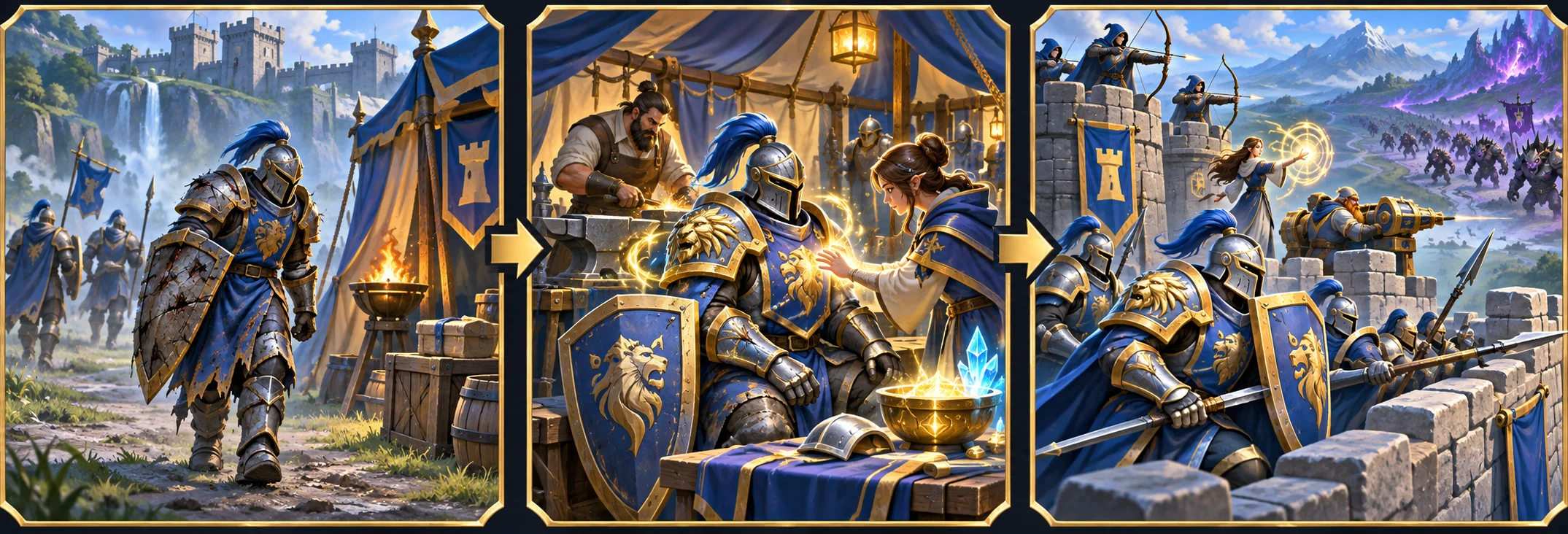
Separate permanent loss from temporary strain. If a defender can be lost permanently, make the risk explicit and provide a campaign-level replacement rule. A softer alternative is to reduce readiness for one mission, which preserves continuity while still making deployment choices matter.
Make missions test changing formations
Design later missions to ask for different roles rather than simply increasing enemy health. A lane with fast enemies can reward mobility; a siege wave can test durable defenders; a split route can reward flexible deployment. Let persistent units help, but keep several viable formations so one early upgrade does not become mandatory forever.
Show enemy intent and mission constraints before committing the roster. Players can then decide whether to deploy a tired specialist, rest it, or bring a less developed substitute. Vary placement and resource pressure so the campaign tests adaptation as well as unit investment.
Test campaign continuity and comeback paths
Run a short campaign with a win, a loss, a recovery opportunity, and a later mission that challenges a different role. Verify that unit state saves correctly, replacements remain available, and the player can recover from an early mistake without restarting the campaign.

For a related multi-mission campaign with persistent units, see a related persistent-unit campaign guide. Pass when players can explain what carries forward, why a unit is unavailable or improved, and how the next mission changes their formation choice.
FAQ
What should persist for units between missions?
Persist only unit information that changes later deployment choices, such as identity, experience, equipment, injury, or readiness. Show the state after a mission and before the next deployment. Keep the roster readable so players can see who is available, what they contribute, and what recovery options remain.
How do you balance unit loss and recovery?
Make recovery costs and timing visible, and preserve a basic replacement or low-cost option. Separate temporary strain from permanent loss. If a unit can be lost for good, warn players before the risk and define how the campaign remains playable after that loss.
How can missions reward different defensive setups?
Use missions with different enemy roles, lane layouts, and resource constraints so players must adapt their roster. Give clear information before deployment, preserve multiple viable formations, and avoid making one early upgrade mandatory for every later encounter. Persistent units should create attachment and planning, not a single fixed solution.
What should you test in a persistent-unit campaign?
Play a short sequence that includes a win, a loss, recovery, and a later mission that tests another role. Verify unit state across saves, confirm replacements exist, and test whether the player can recover from an early mistake. Ask players to explain what persisted and how it changed their deployment choice.