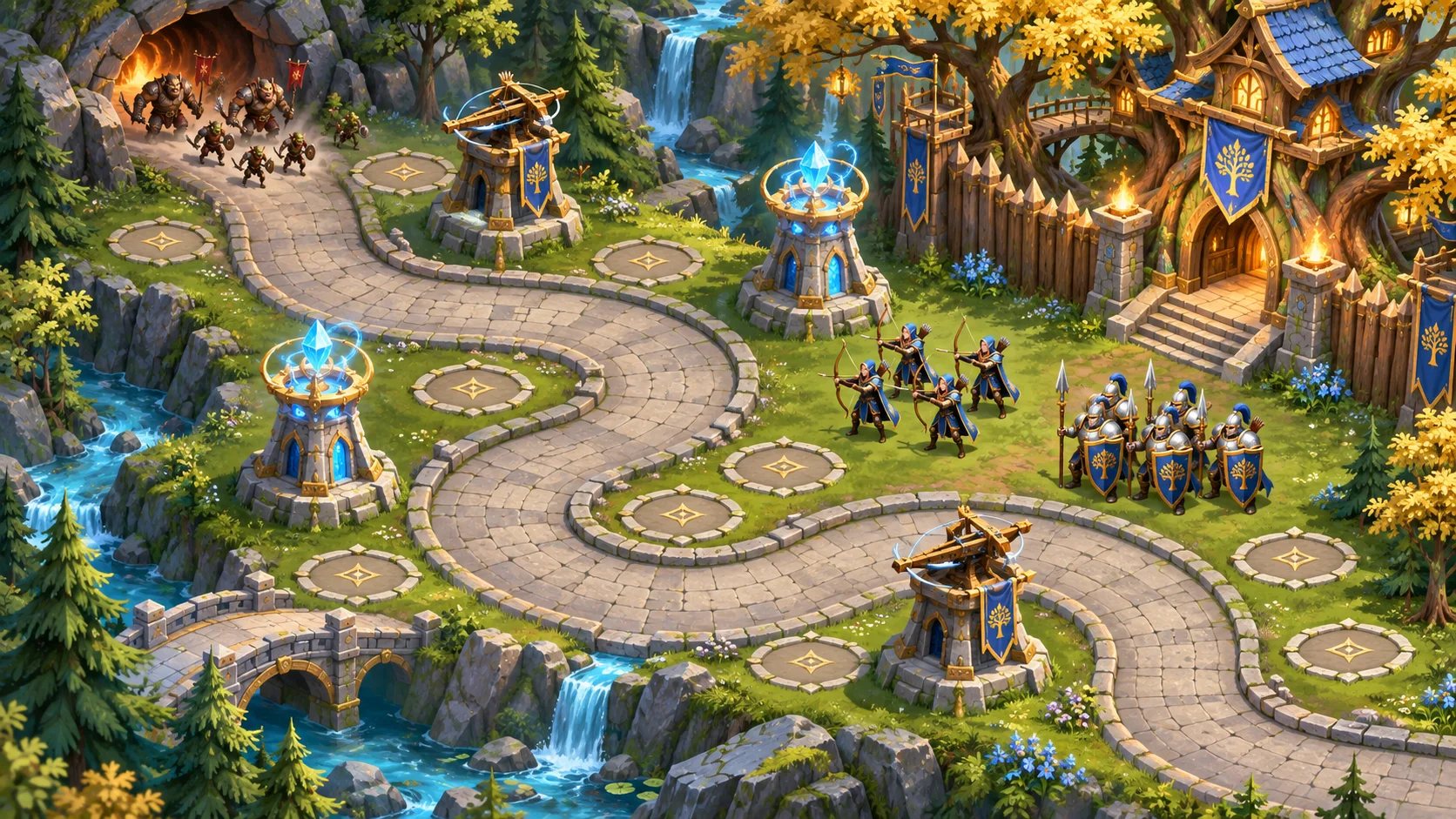
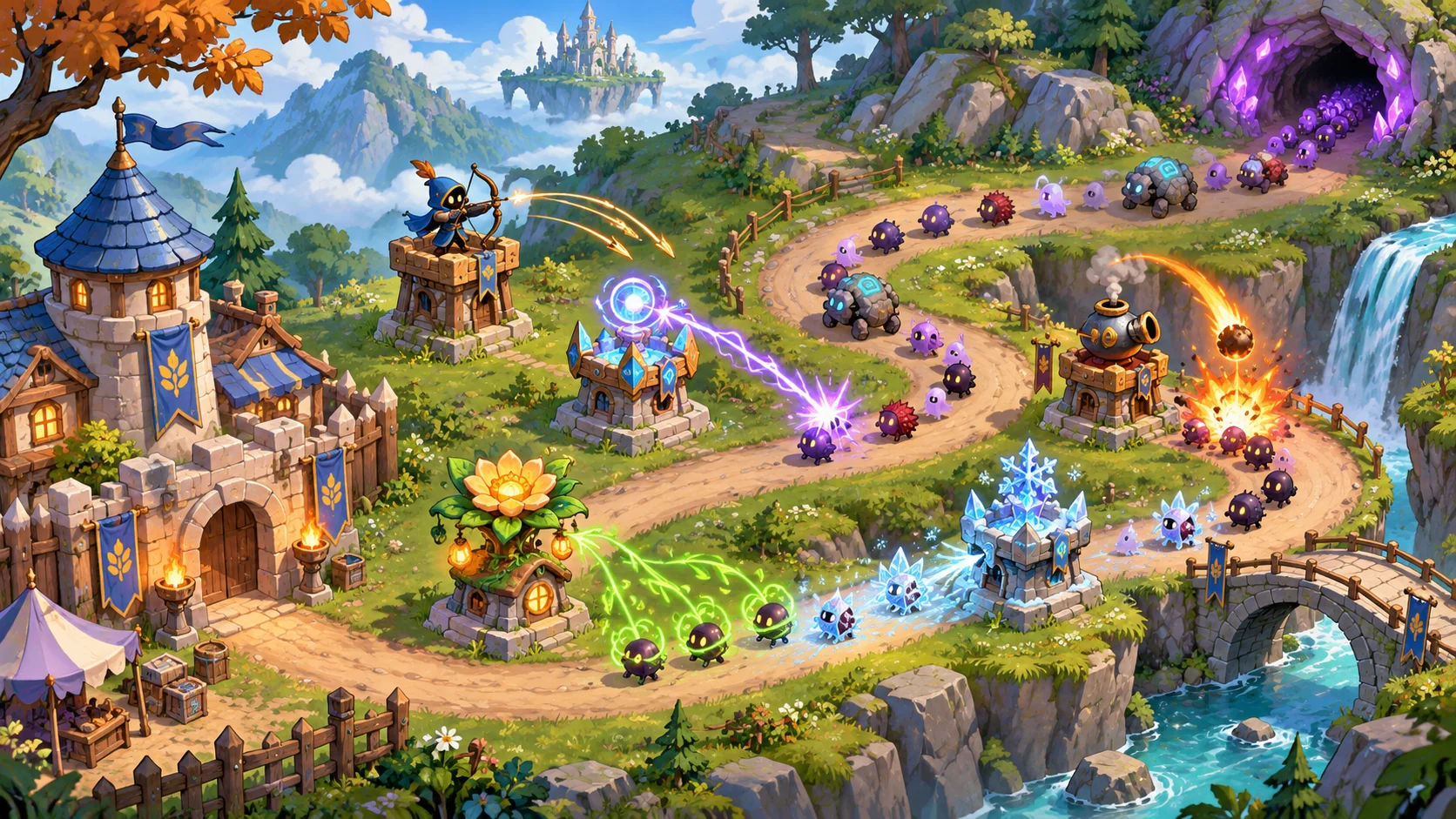
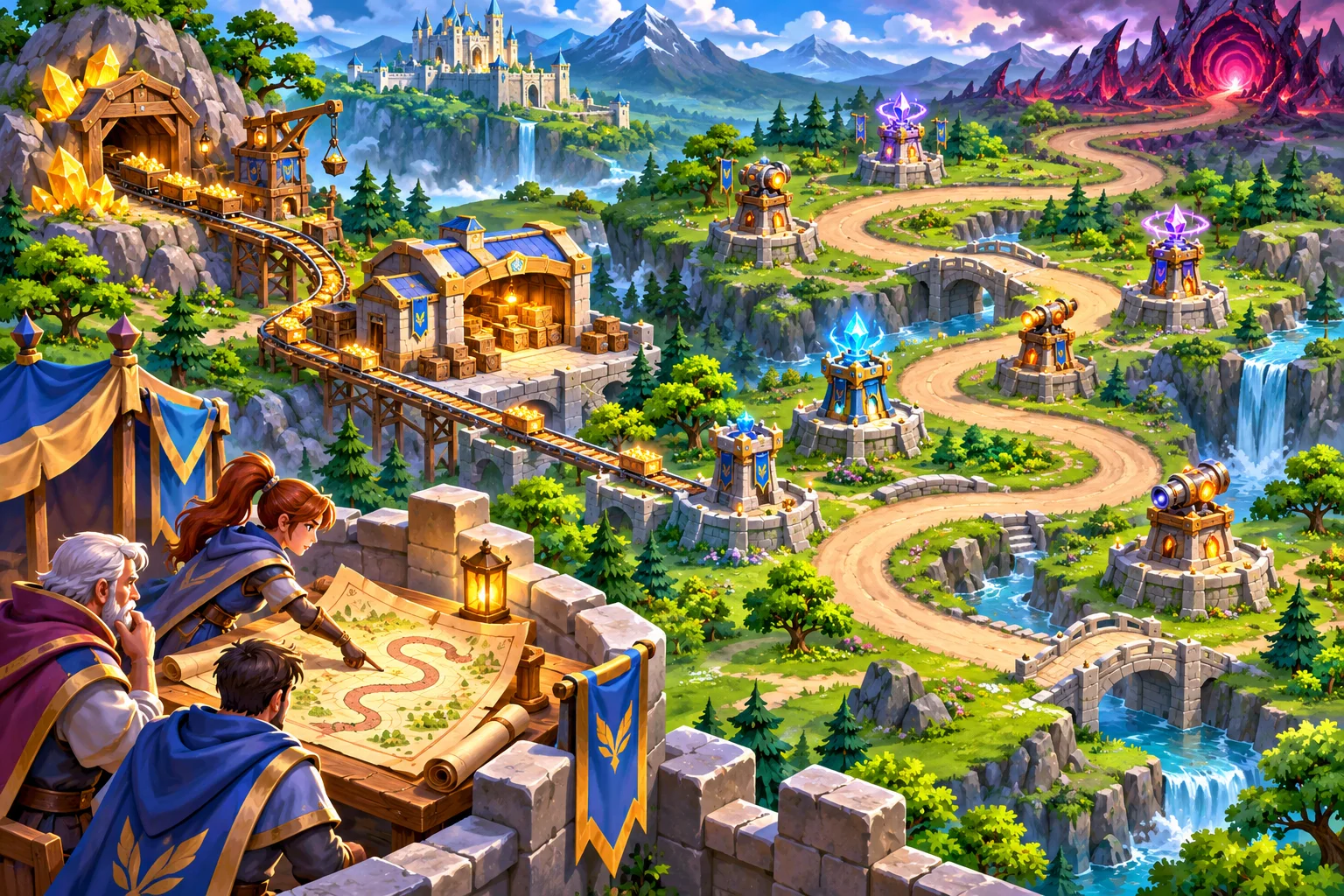
Persistent unit growth can reward players for returning to a tower-defense game, but it can also make later waves lose their challenge. Decide whether growth belongs to a tower type, a named unit, or the player profile before asking AI to add levels, experience, or permanent upgrades.
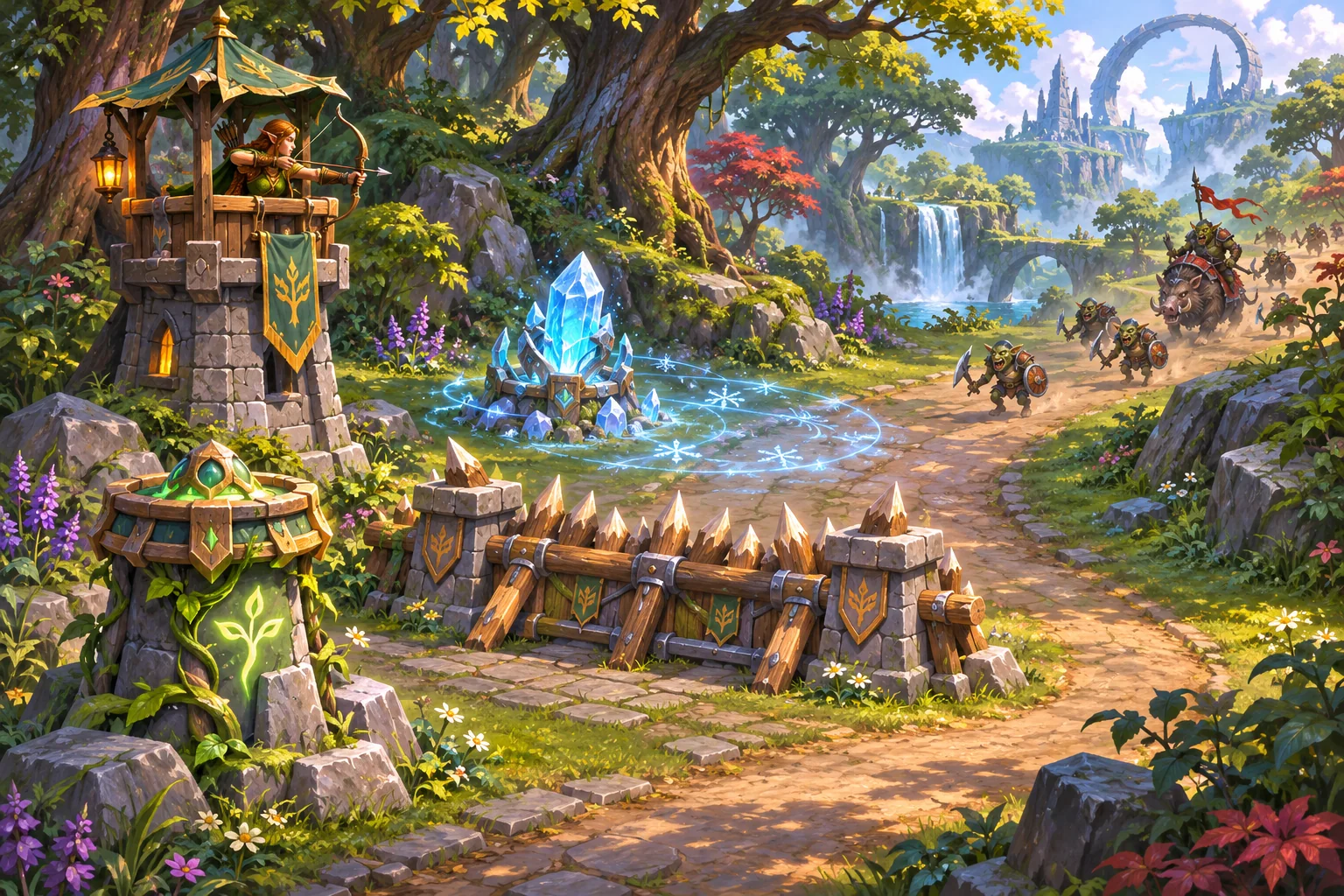
This guide uses a fictional forest defense to make the design choices concrete. No project, map, wave, or progression system was tested. The goal is a narrow growth layer that preserves the current placement and enemy-wave rules.
Separate permanent development from the active map
List which values persist after the match and which reset when a map starts. A tower's unlocked specialization may be permanent; its current placement, cooldown, temporary damage buff, and wave target usually belong to the active run. The project may use a different model, so write down its current rules before changing them.
| State | Example | Lifetime |
|---|---|---|
| Tower definition | Base range, target type, firing behavior | Authored game content |
| Permanent growth | Unlocked branch or profile level | Across maps |
| Map setup | Placed towers, path, resource budget | One map or saved run |
| Wave state | Enemy positions, cooldowns, temporary buffs | Active encounter |
The fictional Emberwatch map might let an archer tower unlock one permanent targeting specialization. Placing three copies on a later map does not necessarily mean each copy owns a separate level. Decide whether growth belongs to the tower type or to named instances. That choice affects selling, replacing, duplication, and save migration.
Set progression ownership and reward timing
If growth belongs to a tower type, all placed copies can read the same profile record. If it belongs to each individual unit, assign stable instance IDs and decide how a unit is retained between maps. Avoid letting a sale operation accidentally erase permanent growth or let a recreated tower duplicate the same reward.
Choose an event that grants experience once. It could be map completion, a specific challenge, or an existing account reward. Do not attach permanent XP to every enemy-damage tick or repeated wave callback unless the design intentionally rewards that behavior. Preserve the game's existing loss, retry, and replay rules.
Keep progression choices meaningful and limited. A small specialization can support one defensive strategy without making range, damage, fire rate, and area coverage all increase together. If players can respec, define its cost and verify that unlocks, selected branches, and tower placement remain consistent.
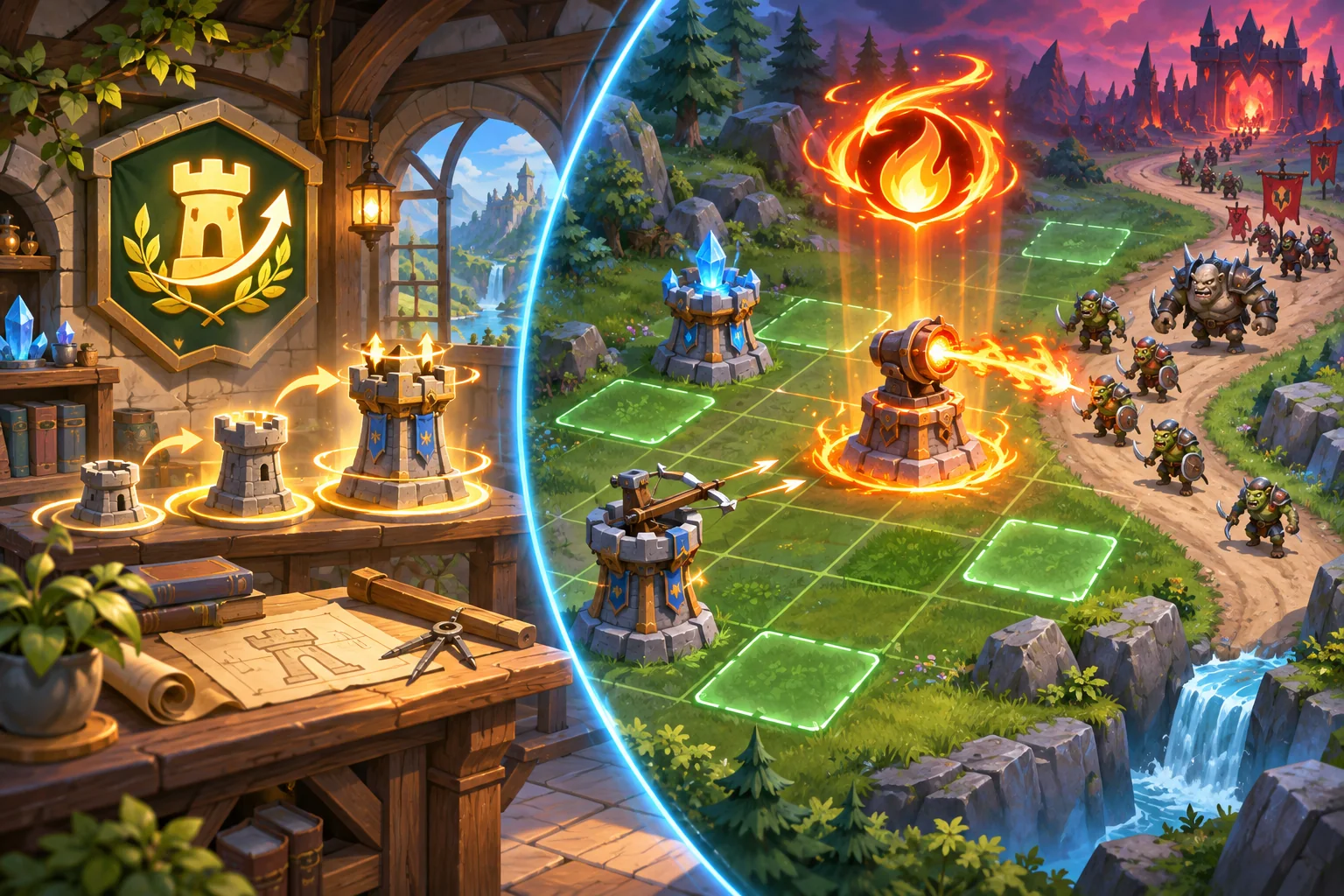
Connect growth to the current tower systems
Trace how the game creates a tower, reads its definition, applies upgrades, targets enemies, and saves profile progress. Ask AI to map those owners before editing. Keep the existing targeting and combat code as the source of truth; the growth record should adjust only values or capabilities the tower system already supports.
A useful first slice might be one tower type and one permanent choice. The profile stores the chosen ID; tower creation reads it and applies the approved modifier; wave logic continues unchanged. Avoid a second tower-stat calculator in the upgrade menu, because it can disagree with the actual placed unit.
Version the save data. New growth fields need safe defaults for existing profiles. Validate IDs and allowed ranges when loading, and test migration on a duplicate save. Godot's official save tutorial demonstrates file serialization and discusses JSON tradeoffs; Unity's Application.persistentDataPath is a platform-dependent location intended for data retained between runs. These references do not set the tower economy or guarantee a particular save format.
Keep wave pressure comparable
Progression changes the assumptions behind map balance. Compare the same map and wave sequence before and after the growth choice, keeping placement budget, difficulty, and starting resources stable. If the new tower clears a wave earlier, inspect whether the choice changed coverage, uptime, or target priority before changing enemy health.
Test more than one layout. A range increase may seem modest on an open map but cover two lanes in a tight map. A faster reload may interact with a temporary buff or target-switching rule. Decide whether the feature should create a new strategy or simply raise the power ceiling, then collect evidence from repeatable runs.
Ask AI to report every changed file, its effect, and a rollback path. Review for changes to wave timing, enemy health, placement costs, pathing, and unrelated tower types. If the assistant modifies shared balance values, separate those changes from the requested progression layer so they can be evaluated individually.
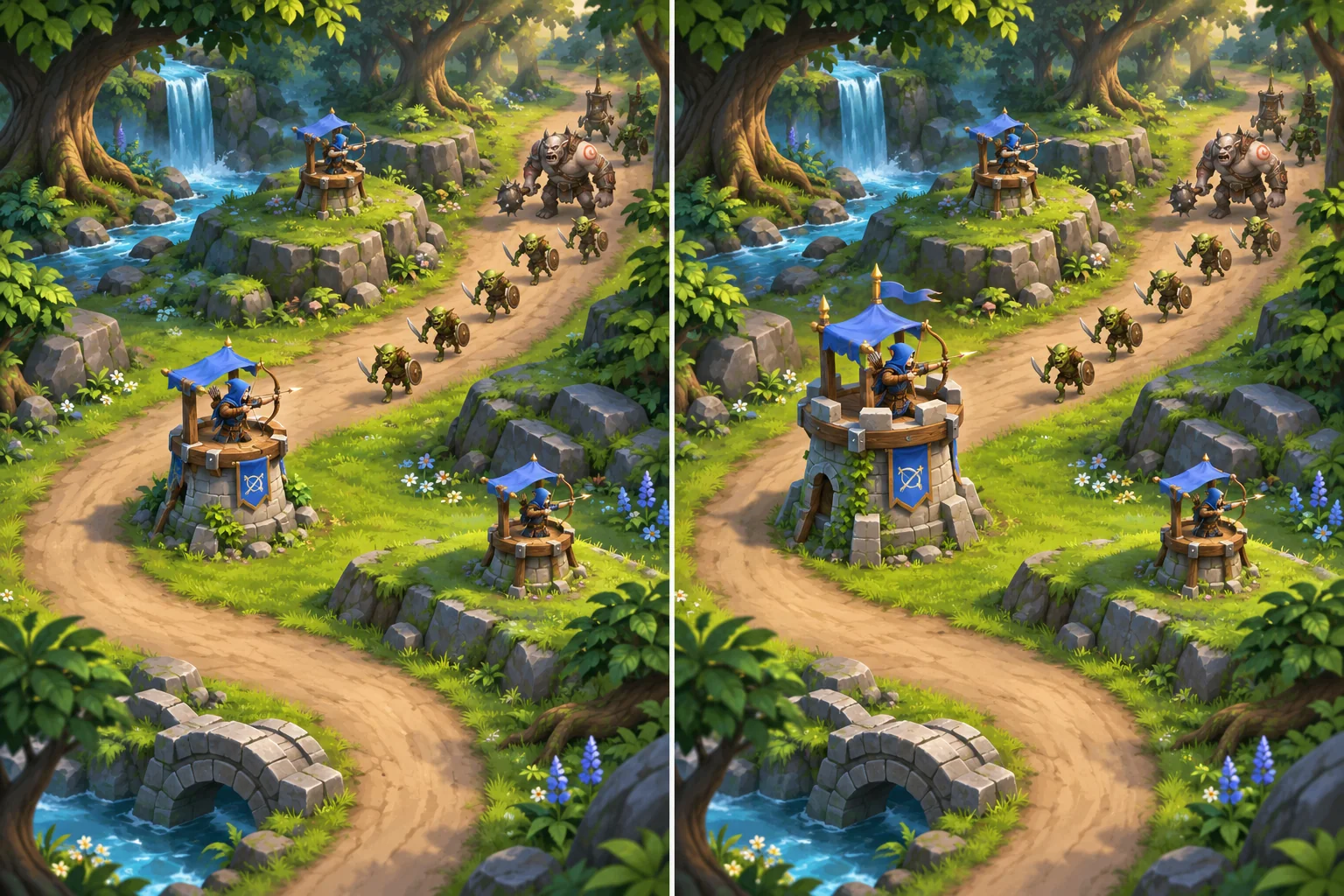
Verify persistence, placement, and replay
The following cases are a proposed plan, not results from the fictional Emberwatch map:
| Case | Action | What to verify |
|---|---|---|
| Fresh profile | Start a clean campaign | Base tower stats and unlocks match current rules |
| Earn growth | Complete the specified reward event | Progress is granted once and the selected ID is saved |
| Duplicate placement | Place several copies of one tower type | Each reads the intended growth owner, without extra rewards |
| Sell and replace | Sell a tower and place it again | Permanent progress follows the chosen ownership model |
| Replay a map | Start the same wave sequence again | Temporary buffs and wave state reset as designed |
| Old save | Load a copy from before progression existed | Migration sets safe defaults and preserves campaign state |
Record build and profile versions, map seed if available, placement budget, tower IDs, steps, expected result, and observed result. Run the target build. A concept image or a spreadsheet plan cannot establish that a later wave remains fair or that growth actually persists.
Frequently asked questions
What should persist for a tower-defense unit?
Decide whether growth belongs to a unit type, a named unit instance, or the player profile. Persist only the intended permanent unlocks or levels; keep temporary map buffs, placement, cooldowns, and current wave state in the active run. State the owner clearly so a sold tower cannot erase profile progress.
How should duplicate towers share progression?
If progression belongs to a tower type, all placed copies can read the same profile record. If units are named instances, each needs a stable ID. Choose one model so placement and selling do not create or erase growth unexpectedly. Write down the placement and selling behavior before adding growth.
When should a tower earn permanent experience?
Define a reward event that can be applied once, such as map completion or a specific objective. Avoid granting permanent progress on every repeated wave callback, and preserve the project's existing defeat and replay rules. Test a failed or replayed map using the current game rules.
How do I keep persistent growth from unbalancing waves?
Compare the same map, wave sequence, placement budget, and tower loadout before and after progression. Tune one growth variable at a time and record real run outcomes instead of treating a hypothetical build as balance evidence. Keep evidence from the same conditions before and after the change.
What should I test after adding unit growth?
Test fresh profile, map completion, replay, selling and replacing a tower, save/reload, and an older profile. Confirm permanent growth and temporary wave state follow separate rules in the actual target build. Include the profile version and map details in your test notes.
Build one growth choice before a tree
Start with one unit type, one permanent choice, one reward boundary, and a repeatable map. Keep active wave state separate and compare the same defense layout before and after the change. Expand only after saves, duplicate placement, selling, and late-wave behavior work in the actual build.
For a separate browser-playable prototype idea, try SEELE AI Game Maker. This CTA is for a separate prototype, not a tower-defense project editing feature.