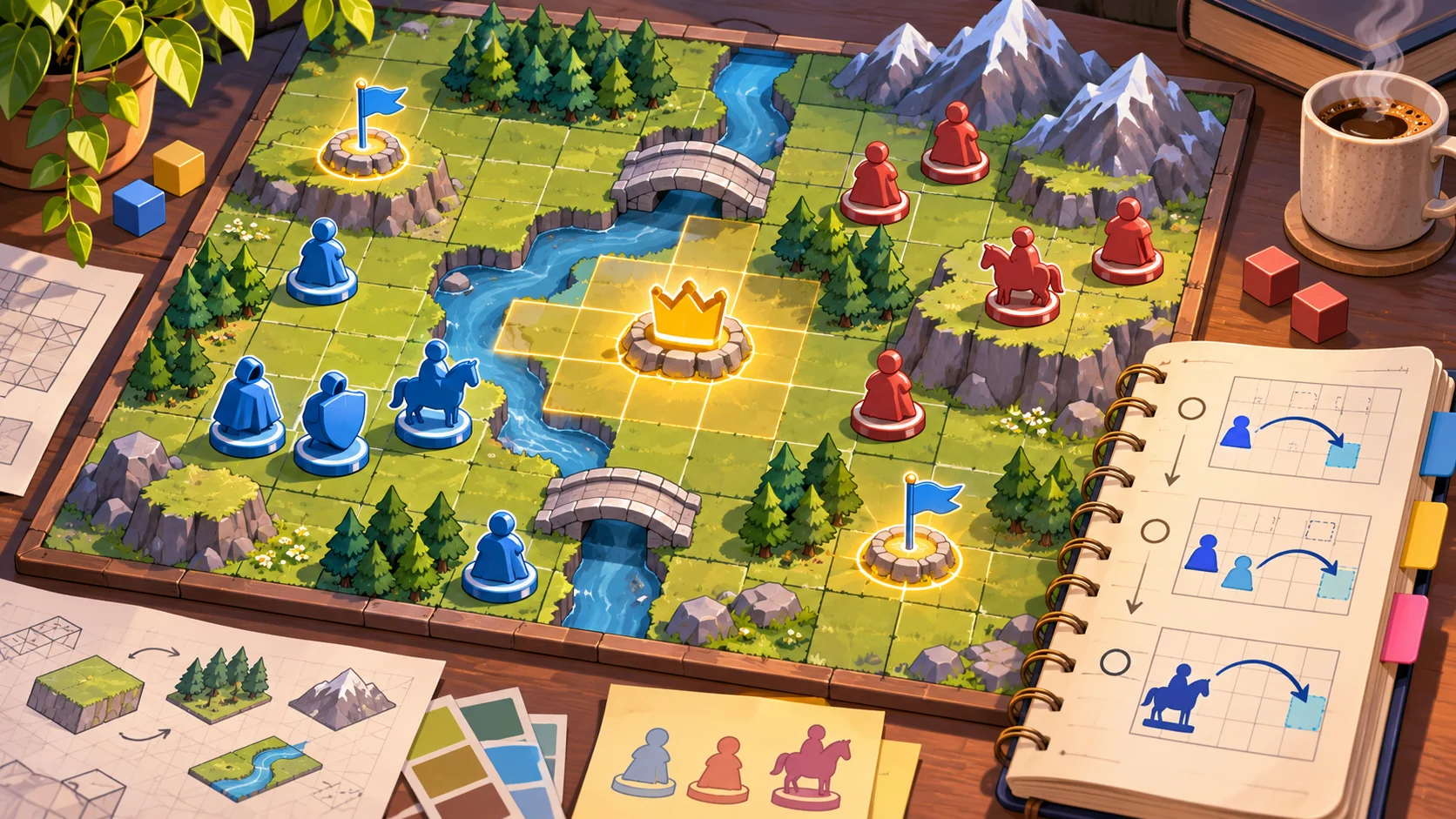
Introduction
A tower-defense prototype connects path layout, build spots, tower roles, resources, enemy waves and a clear objective. If the prompt begins with dozens of towers and enemies, the player may not know why a placement worked. Start with one short fictional map and a small set of rules whose results are visible.
This guide uses Lanternwatch, an invented fantasy outpost with original towers, creatures and game resources. All ranges, wave sizes and outcomes are placeholders. No playable game or balance test was run, and the example is not real security or military guidance.
Define the defense loop
Describe what the player protects, how a wave begins and what ends the encounter. A compact loop can inspect the route, place a tower, resolve one wave, collect abstract game resources and prepare the next. Explain what happens when an enemy reaches the objective and how the player can retry.
Prompt 1 — first defense brief
Design a fictional tower-defense game called Lanternwatch. Scope one short encounter with a winding path, a protected gate, three original tower roles, a few enemy types and a small game-only resource pool. Define placement, range, targeting, wave timing, damage, victory, defeat and reset. Use provisional values, list assumptions and identify what must be tested. Do not claim balance or real-world defensive usefulness.
A brief should make the objective and failure state easy to inspect. Players need to understand which route is active, how many build choices remain and when the next wave starts.
Make the path and build spots readable
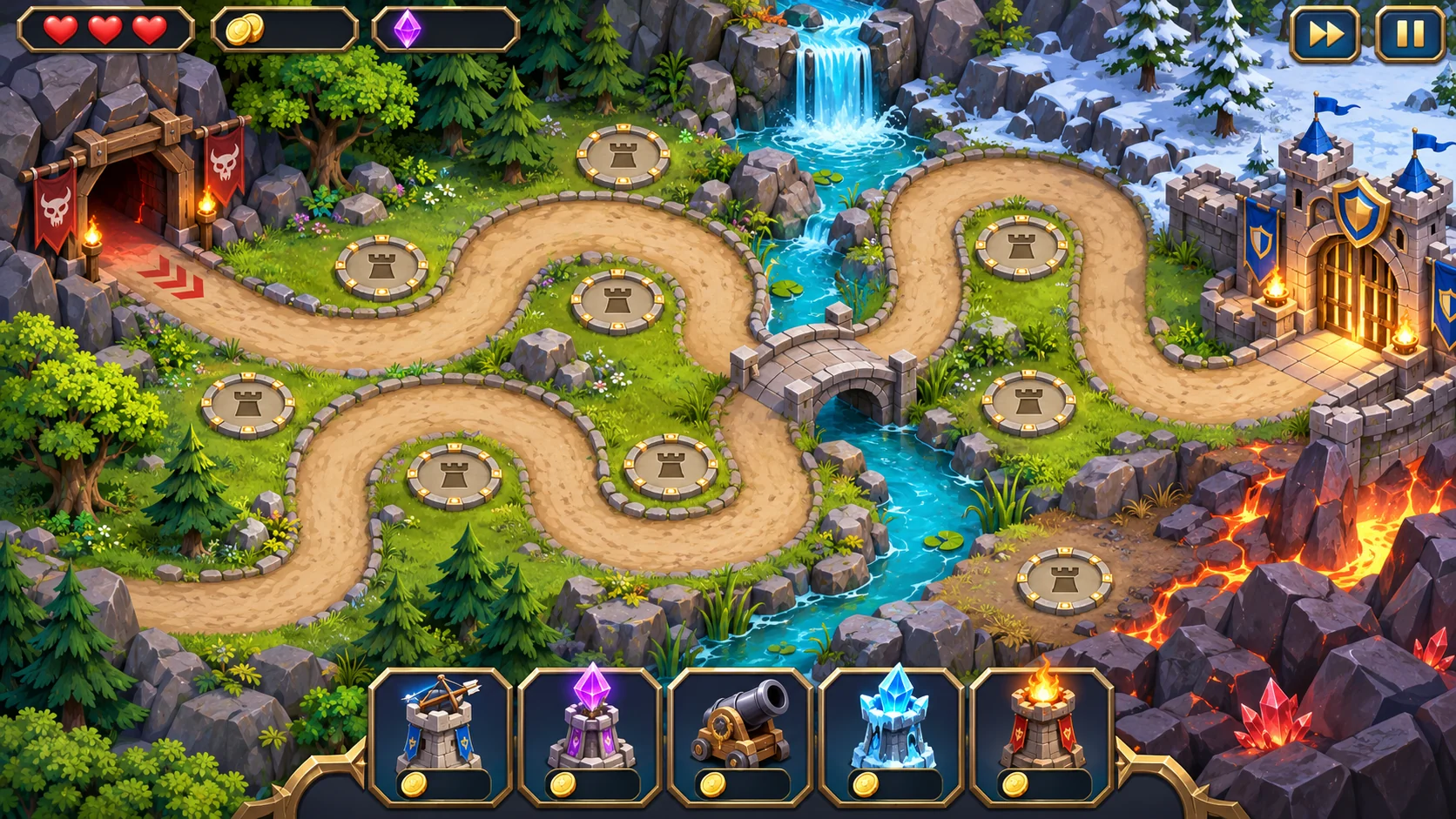
A small map can show the enemy route, buildable tiles, blocked terrain and protected objective. Use a consistent legend and distinguish a legal placement from an occupied or unavailable spot. Tell the player why a tower cannot be placed before resources are spent.
Prompt 2 — compact battlefield map
Create a Lanternwatch game map with one winding enemy path, a gate objective, a few build spots, two terrain types and a visible spawn point. Use clear colors for legal, occupied and unavailable spaces. Add a concise legend and keep the map compact. Treat all placement rules as fictional prototype mechanics.
| Map marker | Game meaning | Feedback |
|---|---|---|
| Open build spot | A tower may be placed here | Show range before confirmation |
| Occupied spot | A tower already uses this tile | Select it to inspect or upgrade |
| Blocked terrain | Placement is unavailable | Explain the map rule |
| Gate objective | The protected game target | Show its remaining state clearly |
The map is a game interface example, not a representation of real defensive planning.
Give towers distinct jobs

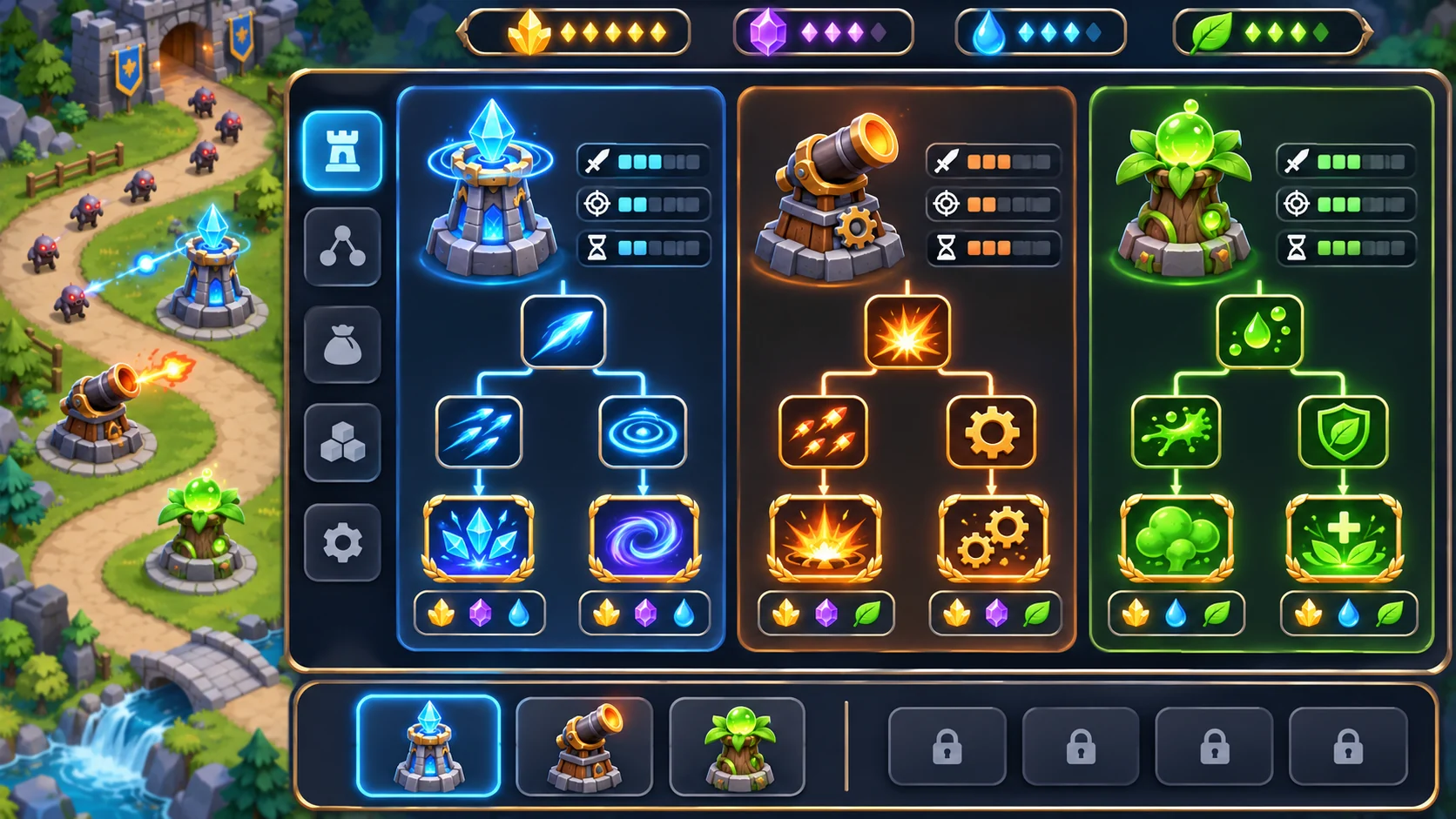
A small roster is easier to compare when each tower has a role, range and limitation. A bolt tower might target one nearby enemy, a flare tower might slow a group and a beacon might support a neighboring build spot. These are fictional rules; describe their cost and timing before the player commits.
Prompt 3 — tower cards
Define three original Lanternwatch towers with distinct game roles. For each, show a placeholder resource cost, range, target rule, attack or support effect, upgrade option and one limitation. Explain how the player previews affected path tiles. Keep all values fictional and label them provisional.
Tower cards should use the same terms as the map and combat log. If an upgrade changes range or effect, display the changed state and cost before confirming.
Make enemy waves and targeting inspectable
A wave preview can show a few fictional enemy types, their order and the path they follow. Explain how towers choose a target and how ties are resolved. Do not describe a prototype as adaptive or intelligent unless that behavior has been implemented and observed.
Prompt 4 — wave and targeting rules
Define two or three fictional Lanternwatch enemy types and a short wave sequence. State their path, objective interaction and visible game traits. Specify deterministic tower targeting and tie-breaking rules, and show a wave preview. Label all enemy values as placeholders; do not make real-world threat or combat claims.
Readable combat feedback records which tower fired, which target was chosen and what game state changed. If a tower cannot reach a target, show the reason rather than silently skipping an attack.
Connect resources, upgrades and wave results
An end-of-wave report can show enemies resolved, objective state, remaining resources and available upgrades. Tie each change to a visible event. Keep scores and damage as game values instead of implying they predict real performance.
Prompt 5 — wave report
Create a Lanternwatch wave summary with fictional enemy outcomes, gate state, tower actions, resource changes and one next-wave choice. Show which event caused each update and whether an upgrade is affordable. Use invented placeholder values, not balance claims.
The report should help a player decide whether to upgrade, add a tower or change placement. State when the game advances and what carries between waves.
Request a small playable defense slice
A first build could include one map, three tower roles, a few waves, visible build spots, deterministic targeting, an objective meter, event log and reset. Specify the interactions that must work: place a tower, preview its range, start a wave, observe attacks, inspect resource changes and finish or retry. A static strategy screen is still a mockup.
Prompt 6 — first playable slice
Build a small fictional Lanternwatch tower-defense game with a winding path, gate objective, legal build spots, three tower roles, a few enemy waves, visible range preview, deterministic targeting, resource updates, event log, win/defeat states and reset. Explain blocked actions and show why each state changes. At handoff, list working interactions, mockups and unverified rules. Do not call static screens playable.
After the build exists, run the encounter and verify placement, targeting, wave progression, objective state and reset. No such build was tested for this guide.
Prompt 7 — observed-output review
Review the running Lanternwatch prototype for legal placement, range preview, tower targeting, enemy path, wave order, resource change, objective damage, victory/defeat, event log and reset. Mark each present, missing or unclear based only on observed interactions. Record brief evidence and one smallest next change. Label placeholders and avoid balance claims unless tested.
Fictional encounter snapshot
| Field | Lanternwatch example |
|---|---|
| Map | One winding path and a gate objective |
| Towers | Three original roles with different limits |
| Waves | A few fictional enemy groups |
| Main loop | Inspect → place → start wave → review |
| First milestone | One placement changes the outcome visibly |
| Evidence | Fictional plan only; no game or balance test |
This snapshot sets a small prototype boundary; it does not show tested difficulty or strategic balance.
Conclusion
Tower-defense prompts should connect path layout, tower placement, targeting, resources and wave results in one small encounter. Lanternwatch and its values are fictional; no playable game or balance test is claimed. Make every state change visible, then inspect the running output before calling it playable.
You can take a scoped concept into the Free AI game maker, then compare the result with the review checklist.
FAQ
What should AI prompts for a tower-defense game include?
Define the route, objective, build spots, tower roles, enemy waves, targeting, resources, results and first-build scope.
How can a tower-defense game explain placement rules?
Preview legal spots and range, show the cost and explain why blocked locations cannot be used.
Should generated tower stats be treated as balanced?
No. Treat the values as placeholders and test the running game before making balance claims.
How many towers should a first prototype include?
Use only enough original roles to demonstrate different placement choices in one short encounter.
Does a tower-defense map mockup prove the game is playable?
No. Verify placement, targeting, wave progression, resource changes, objective state and reset in the running output.