Introduction
A grid-based tactics prototype needs more than a map and movable units. The prompt has to define the grid, turn order, movement, actions, terrain, objectives and what the player sees after a choice. If those rules are vague, a generated board may look tactical without making it clear whether a move is legal or why a unit can act.
This guide uses Cairn Watch, a fictional abstract scenario where two teams contest three signal points on a small square map. The teams, values, terrain and outcomes are invented and untested. The example avoids graphic combat and does not claim a playable prototype exists.
Define the turn and objective
State what a team is trying to do and how a turn ends. A first milestone can use a small board, a few unit roles and a simple objective such as holding two markers after a fixed number of rounds. Avoid adding a campaign, equipment trees and a large unit roster before one turn is understandable.
Prompt 1 — core tactics brief
Design an original grid-based tactics prototype called Cairn Watch. Two teams compete to control three signal points on a small square map. Define the objective, turn order, unit actions, movement, terrain, round limit and win condition. Use abstract, non-graphic visual tokens. Keep the first milestone to one scenario. Label all numerical values as untested assumptions.
A strong brief answers who acts, what actions are available, when control is checked and what happens in a tie. If those conditions are hidden, a player cannot predict how a position affects the objective.
Specify the grid and legal movement
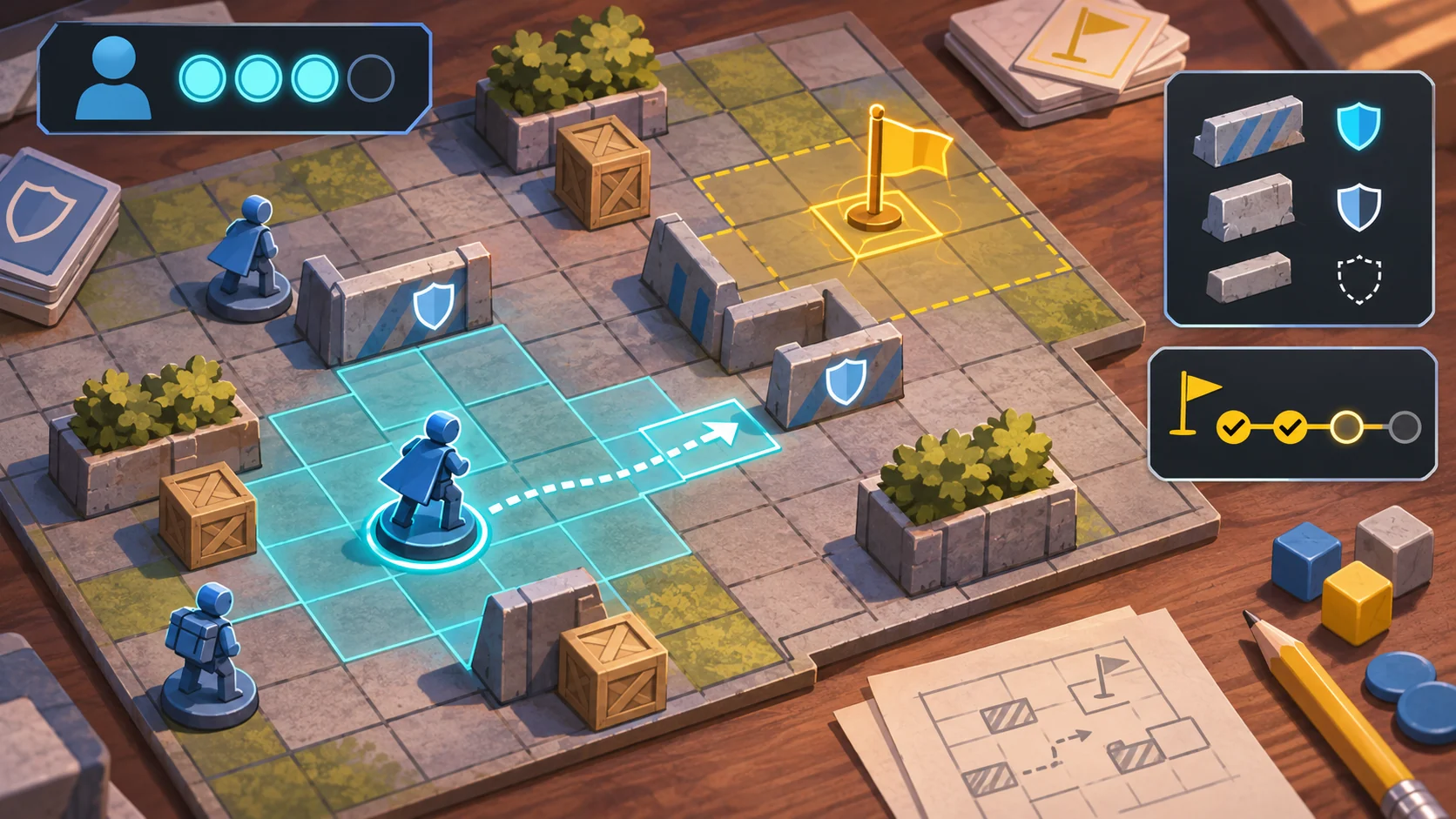
Define whether the map uses square or hex cells, which cells block movement and how distance is counted. State the movement range for each role and whether units can pass through allies, obstacles or occupied spaces. Explain what the UI highlights before the player commits.
Prompt 2 — map and movement rules
Create a compact square-grid Cairn Watch map with open ground, low cover, a blocked ridge, three signal points and clear team starts. Define legal movement for two fictional unit roles using a simple step count. State whether units can pass through occupied cells and how terrain affects movement. Highlight legal destinations before confirmation; do not hide movement costs.
| Map element | Rule to define | Feedback to show |
|---|---|---|
| Open cell | Base movement cost | Reachable cells highlighted |
| Cover tile | Whether it changes protection or line of sight | Tile meaning shown on selection |
| Blocked ridge | Whether it stops movement or sight | Invalid path visibly marked |
| Signal point | How control is gained and lost | Current controller displayed |
| Occupied cell | Whether movement may pass through | Blocked destination explained |
Make actions and turn limits explicit
Describe what a unit can do after moving. Can it take one action, spend a shared point or choose between several actions? Does a failed action consume a turn? A limited action budget can create planning choices, but the interface should show the remaining options and costs before the player confirms.
Prompt 3 — action economy
Define the action sequence for one Cairn Watch turn. List the available actions, who can take them, action costs and what happens after a unit moves. Show remaining actions for the team and explain why an unavailable action is blocked. State whether a player may end the turn early and what state changes when they do. Treat costs as placeholders.
Avoid giving two actions different names when they produce the same effect. If one role has a special ability, explain when it can be used and what visible state changes. Keep values editable until the prototype has been evaluated.
Connect terrain, positioning and objectives
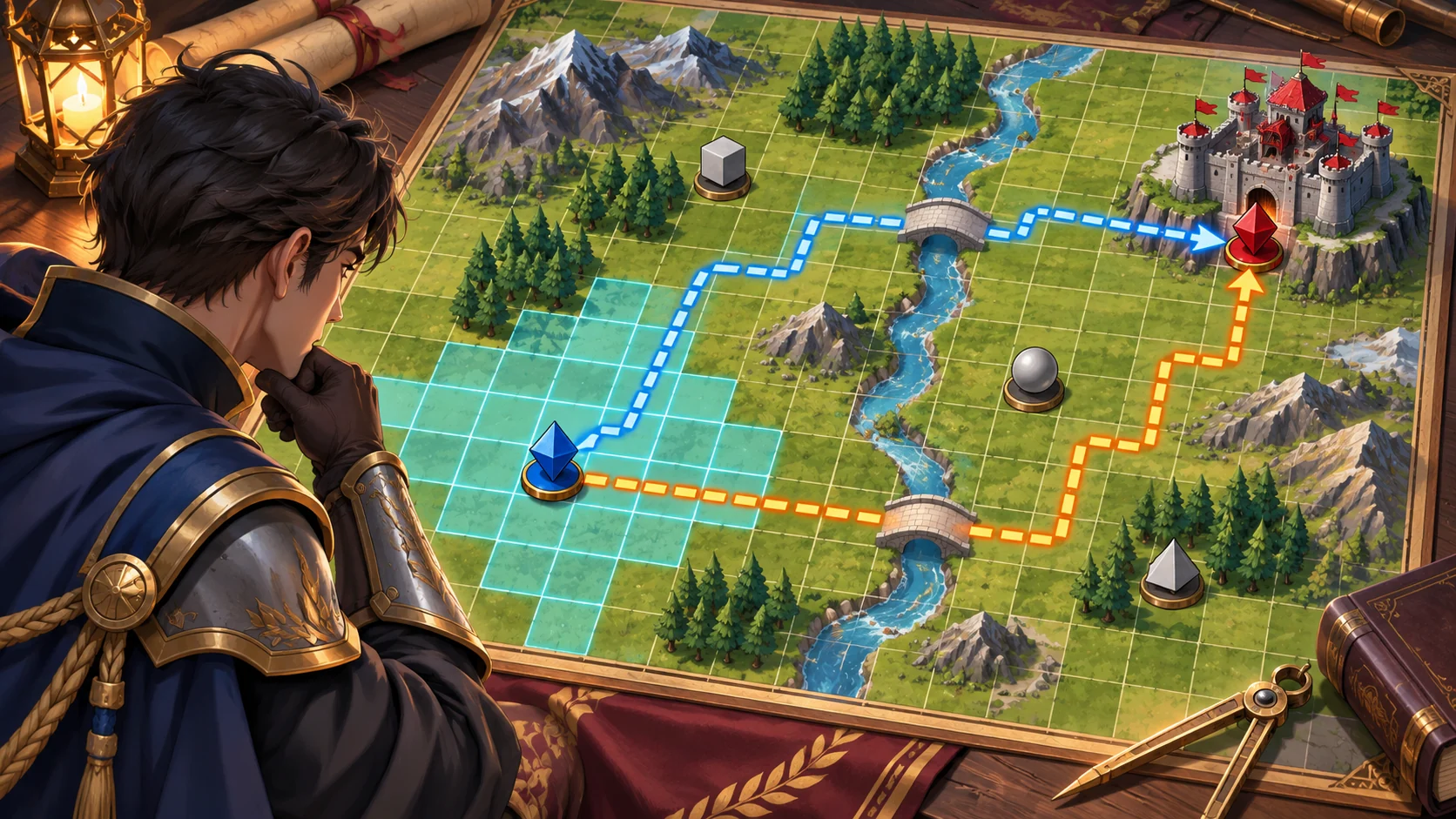
Tactical positioning should change a choice the player can see. Define how cover, distance or a control point affects the scenario. Avoid invisible bonuses. If an objective changes hands, tell the player why and whether the change is temporary or persists through the round.
Prompt 4 — objective and board feedback
Define the three signal points in Cairn Watch. Explain how a unit captures a point, when control is checked, how a point can change hands and what happens at the round limit. Show the current controller and progress on the board. State how terrain affects visibility or movement, if at all. Do not add hidden modifiers.
| State | Visible feedback |
|---|---|
| Legal move | Reachable cells and movement cost |
| Selected action | Target, cost and expected result |
| Point control | Current team and check timing |
| Turn end | Remaining actions and opponent phase |
| Scenario end | Win, loss or tie condition |
Request one playable scenario
Ask for a complete small scenario rather than a large tactical campaign. Include a setup, two unit roles, a handful of terrain types, objective points, a round limit and a reset. Exclude online matchmaking, progression, equipment loadouts and multiple maps until the turn loop is clear.
Prompt 5 — prototype build
Build a first playable Cairn Watch scenario on one compact square grid. Include two teams, two unit roles, legal-move highlighting, a small action budget, low-cover and blocked terrain, three signal points, clear control checks, a round limit, end-state feedback and reset. Use abstract tokens. At handoff, list working interactions, placeholders and unverified items. Do not describe a static map as playable.
A generated map image cannot prove that movement or control rules work. Open the actual output and check legal destinations, action costs, terrain response, point control, turn changes, round ending and reset. This article’s Cairn Watch scenario was not built or tested.
Fictional scenario snapshot
These are hypothetical planning values, not balance recommendations.
| Field | Fictional planning value |
|---|---|
| Working title | Cairn Watch |
| Board | Small square grid with three signal points |
| Teams | Two fictional teams with two unit roles each |
| Core choice | Move to cover, spend an action or contest a point |
| Round limit | A short placeholder limit for one scenario |
| First milestone | One map, one match, end state and reset |
| Excluded | Campaign, online play, equipment tree and large roster |
Review the output before adding content
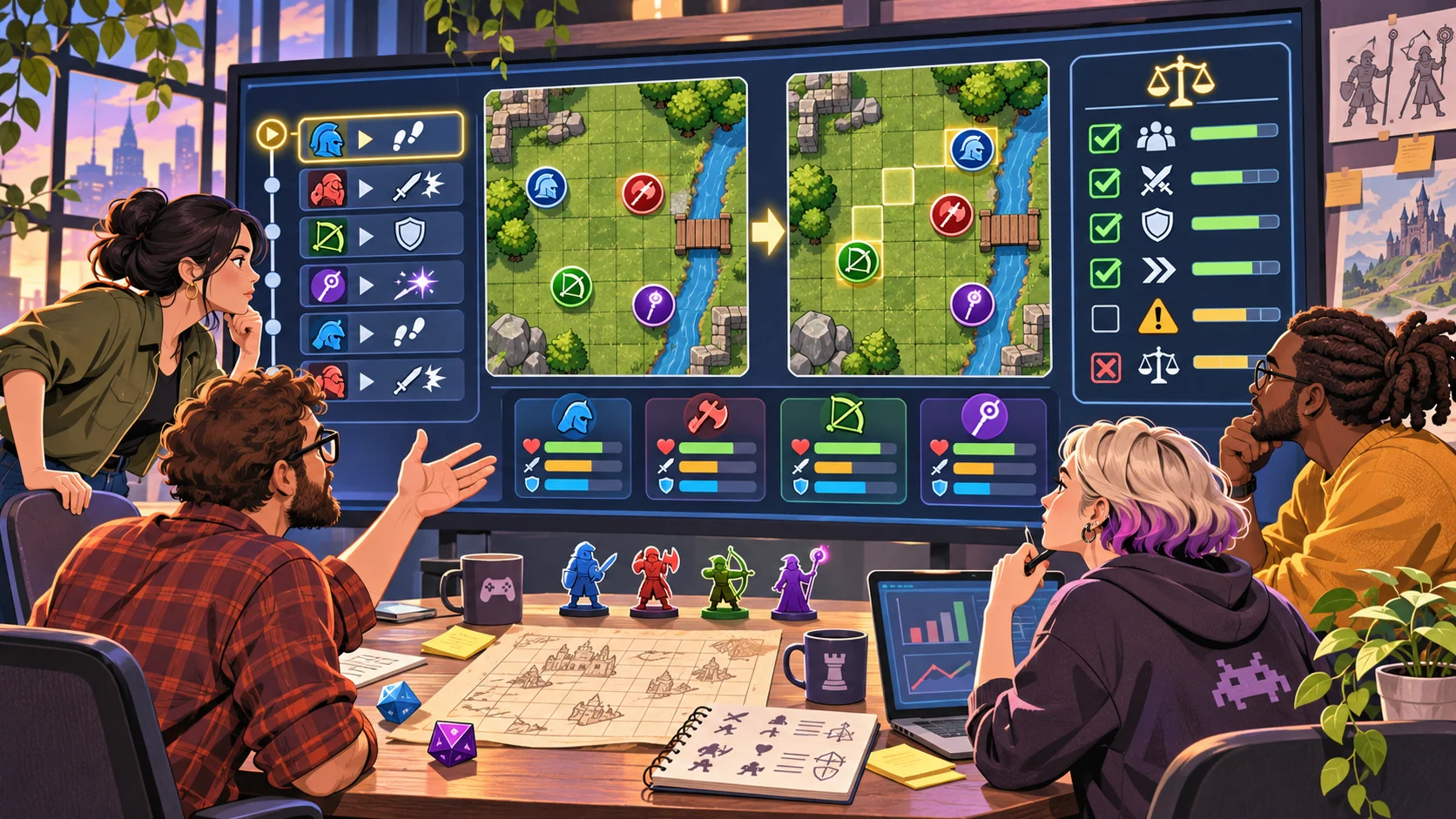
Compare the running scenario with the GDD. Mark each rule present, missing or unclear based on observed interaction. A highlighted cell is not enough if the unit can still move through a blocked tile. A control marker is not enough if the player cannot see when the point changes teams.
Prompt 6 — implementation review
Review the running Cairn Watch prototype for grid setup, legal movement, terrain blocking, action costs, point control, turn order, round limit, result display and reset. Mark each present, missing or unclear using only observed interactions. Quote evidence and suggest one small fix for the first gap. Do not claim balance or playtesting unless performed.
If a rule is unclear, revise that specific requirement and test it before adding another unit role. One verified turn gives a clearer base for later scenarios than a large board full of unverified systems.
Conclusion
Grid-based tactics prompts should connect movement rules, action limits, terrain, objectives and turn feedback in one compact scenario. Cairn Watch provides a fictional example, but its values are untested. Request a small build, verify each state change and describe mockups as mockups until interaction has been checked.
Take a defined concept into the Free AI game maker, then compare it with the review checklist.
FAQ
What should AI prompts for a grid-based tactics game include?
Specify grid type, legal movement, action limits, terrain, objectives, turn order, round limit, win conditions and the first scenario scope.
How do I make legal movement clear?
Define movement range and blocked cells, then ask the interface to highlight legal destinations and explain invalid paths before confirmation.
How can terrain matter without hidden rules?
State whether terrain affects movement, visibility or protection, and show those effects on the selected tile or unit state.
How large should the first tactics prototype be?
Use one compact map, a few unit roles, a single objective and a complete turn/end loop. Add more maps after those interactions are verified.
Does a generated tactics board prove that the game is playable?
No. Verify movement, actions, terrain, objectives, turn changes and reset in the actual output before making a playable claim.