Introduction
A strong AI prompt for a 3D collectathon describes a loop, not just a world full of objects. The player needs a reason to explore, a clear way to collect, and a route back to a goal that uses what they found. This guide turns that structure into a sequence of prompts you can inspect and revise. The fictional Aster Vale example uses floating garden platforms and wind-glass seeds. Its local playable mock is an isometric 2.5D mechanic prototype: it demonstrates movement, pickups, a route and a finish condition, not a complete 3D engine build or a SEELE-generated result.
Define the collectathon loop before writing prompts
Start with a short rule contract. Say how the player moves, what counts as a collectible, whether items persist, how many are needed, what the player does with them and how the stage ends. If the prompt only asks for “a magical world with lots to collect,” a generator may add scenery without a usable objective.
For Aster Vale, the core loop is: leave the garden gate, explore two raised paths, collect three wind-glass seeds, then return to the gate to open the next garden. A seed disappears after collection and increments a visible count. The player can take an optional route for a fourth seed, but the optional branch does not block completion. These are design choices for a fictional prototype, not observed game behavior until implemented.
| Rule | Aster Vale decision | Why specify it |
|---|---|---|
| Movement | Four-direction movement across an isometric floor | Prevents unclear navigation assumptions |
| Collectible | Wind-glass seed disappears and increments count | Defines what a successful pickup means |
| Route | Two required paths and one optional branch | Connects exploration to collection |
| Completion | Return to gate with three seeds | Gives the loop a finish condition |
| Reset | Restart clears position and collected state | Makes repeatable checks possible |
This contract becomes the reference for later prompts. If a generated build changes one of these rules, mark the change and decide whether to accept it rather than silently letting the prototype drift.
Prompt 1 — loop brief
Design a fictional 3D collectathon called Aster Vale. Define player movement, camera, collectible behavior, required and optional routes, collection count, completion gate, reset and scope limits. Keep the first slice to one compact level. Do not add combat, inventory crafting or story systems unless required by the loop.
Make exploration change the route

A collectathon becomes more than a scavenger hunt when the route asks the player to notice and choose. Give each collectible a position with a reason: one lies on the main path, one sits behind an optional loop and one requires a short detour that rejoins the route. The player should be able to understand how to get back. Avoid hiding essential objects behind confusing geometry or making the camera obscure a required pickup.
Optional content should be genuinely optional. If the gate needs three seeds, an optional fourth seed can reward curiosity or reveal a scenic route. It should not become secretly required because the goal count was miscommunicated. Use a visible threshold and state whether the player can finish with only required items.
| Route type | Player decision | Check in the level |
|---|---|---|
| Main path | Follow the route to a required seed | Can the player see the next landmark? |
| Optional loop | Leave the path for a bonus pickup | Does it rejoin without a dead end? |
| Return route | Bring the required count to the gate | Can the player recognize the start/finish? |
Prompt 2 — route layout
Lay out one compact isometric Aster Vale level with a start gate, two required collectible routes, one clearly optional loop and a return path. Describe landmarks, walkable ground, camera visibility and how the player can orient back to the gate. Make the required threshold explicit.
Prompt in stages and keep each output testable
Large prompts often combine level design, art, controls and progression in one request. When the result misses something, it becomes hard to tell which instruction caused the mismatch. Use a chain: define rules, lay out the space, specify one interaction, add progression, then request checks. Keep the same names and invariants in each prompt.
Prompt 3 — pickup and state behavior
Implement Aster Vale pickups so each seed has a stable unique ID, disappears once collected and increments the counter once. Re-entering its location must not increment again. Define the counter display, restart behavior and a way to verify required versus optional pickups. Do not change the movement or route rules.
Prompt 4 — play space and feedback
Build the compact isometric level described in the Aster Vale route plan. Keep all required seeds visible from a reachable path, use distinct landmarks for branches, and show immediate pickup feedback. Include a readable finish gate that opens only at the stated required count. Preserve the optional-loop rule.
The prompts are more useful when they ask for observable behavior. “Make collecting satisfying” is a goal, but not a check. “The seed disappears, the count increases once and the gate state changes at three required seeds” gives a reviewer something concrete to inspect.
Assemble an editable prototype brief

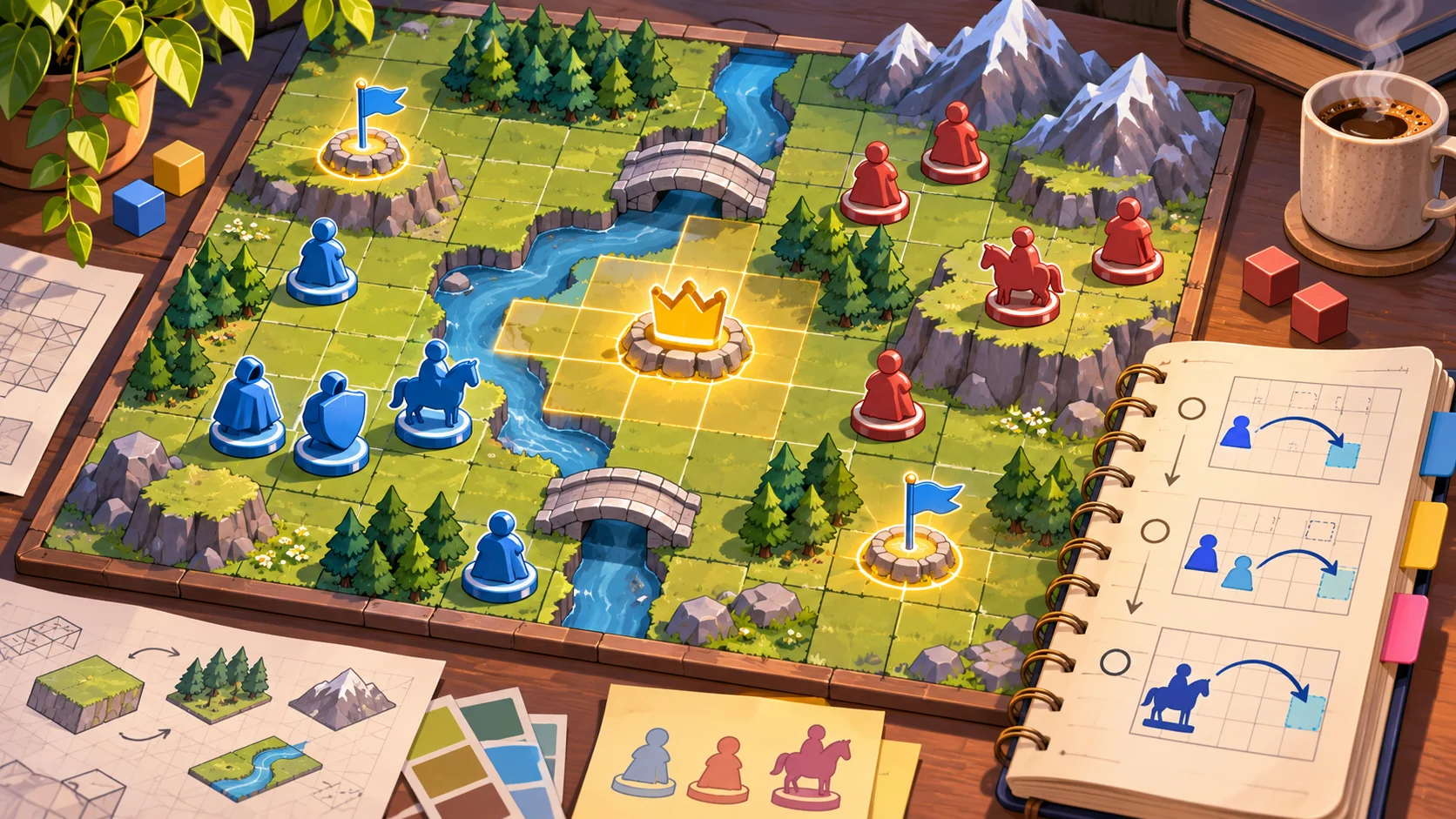
Keep the level and interaction settings in a small spec so you can change one part at a time. This example is the design brief used for the local mechanic mock. The mock uses isometric shapes and movement rather than a full 3D engine or production assets.
Prompt 5 — build brief
Create a playable local prototype from the Aster Vale specification. Include keyboard movement, three required seeds, one optional seed, a visible counter, finish gate and reset. Use a single compact level. Label any 2D/2.5D stand-in clearly; do not claim full 3D rendering or engine export.
{
  "gameName": "Aster Vale — fictional collectathon",
  "rendering": "isometric 2.5D mechanic mock; not a full 3D engine project",
  "movement": "four directional keys across walkable floor",
  "requiredSeeds": 3,
  "optionalSeeds": 1,
  "pickupRule": "unique seed ID; count once; remove after pickup",
  "finish": "return to gate with three required seeds",
  "reset": "restore player, seeds and closed gate",
  "evidenceStatus": "local mock; no external product or player study"
}
The spec keeps the prototype honest about its scope. If you later replace the mock scene with a real 3D engine, keep the same acceptance checks and add engine-specific details only after choosing the target stack.
Check the playable loop, not only the art
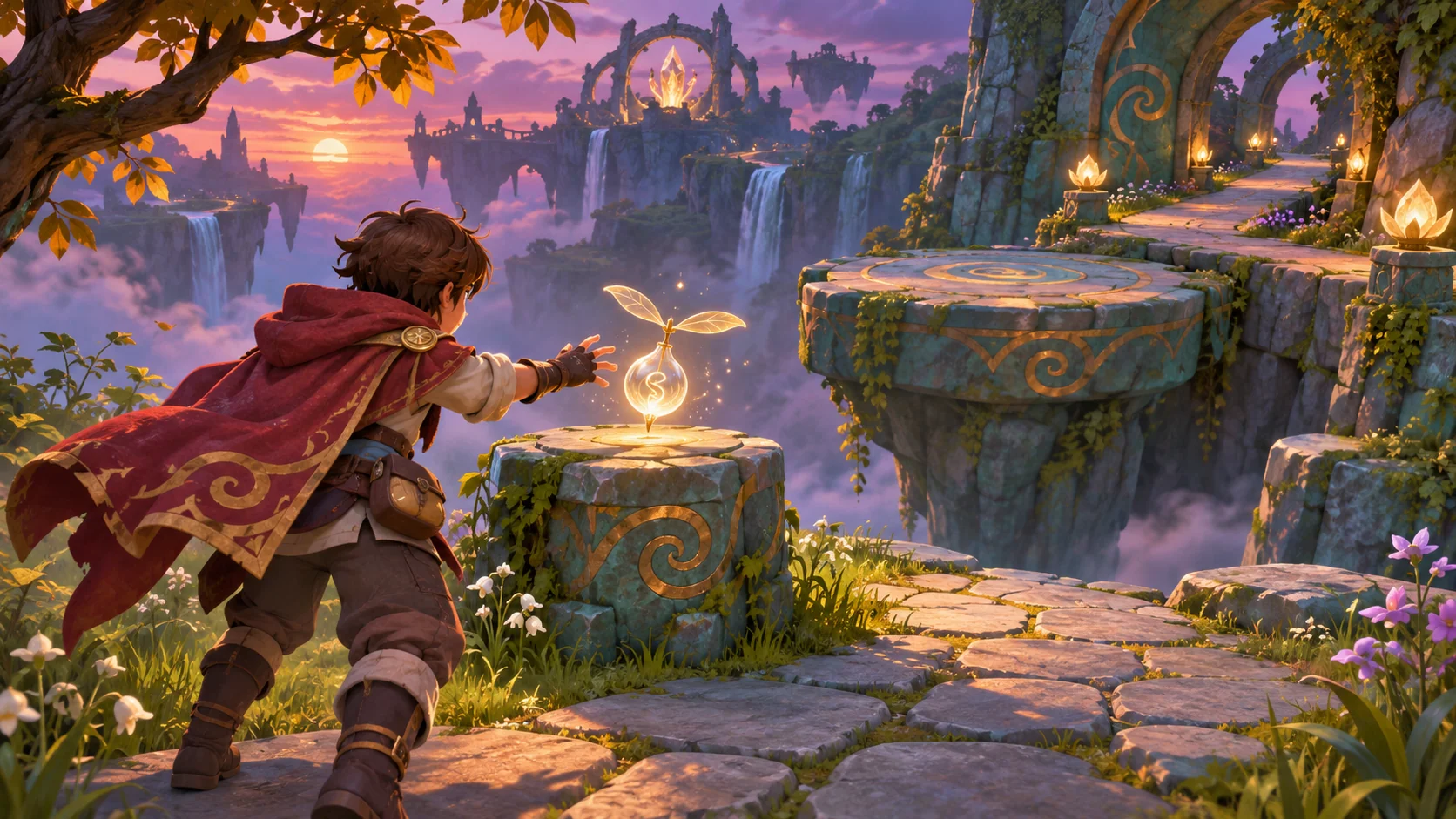
A local isometric mock can demonstrate movement, pickups, a return gate and reset in a browser. That is a useful mechanics check, but it does not validate a full 3D camera, production-scale collision, animation, persistence or player enjoyment. For a full build, inspect the actual engine project and test each path with the intended controls.
Prompt 6 — acceptance test
Test the Aster Vale prototype against the brief: move to each required pickup, confirm it increments once, revisit it, collect the optional item, reach the gate below and at the threshold, finish, then reset. Report each observed result and any missing behavior. Do not infer player enjoyment from a functional check.
Record the result with a build identifier. If a pickup increments twice, fix the state rule before adding content. If the gate opens too early, check whether the required count is shared with the optional count. Small state checks catch loop breaks that a polished screenshot would hide.
| Check | Expected behavior | If it fails |
|---|---|---|
| Move through level | Character stays on walkable ground | Review bounds and input mapping |
| Collect required seed | Counter increases once and seed disappears | Check unique ID and collection state |
| Revisit seed location | Count does not increase again | Ensure removal and state persist |
| Reach gate below threshold | Gate remains closed with clear feedback | Check threshold and message |
| Reset after finish | Level returns to initial state | Reset position, count and gate |
Iterate from one concrete mismatch
After the first pass, change one issue at a time. If a player cannot find a route in a local review, make a landmark more visible or adjust the path. If the mechanics work but the level feels empty, add an optional pickup only if it gives exploration a reason. Do not add a new system to solve a camera or state problem.
Prompt 7 — scoped iteration
Given a specific observed Aster Vale issue, propose one change to the route, pickup feedback or gate logic. State the intended behavior, what must remain unchanged and one retest. Do not invent user feedback; use only the supplied observation.
SEELE’s current catalog describes a one-line game-creation capability, playable-game categories and a 3D assets/world-building category. Those capabilities can inform a starting brief, but this page does not claim a specific 3D export or engine integration. Use the Free AI game maker to explore a game concept, then validate the generated interaction against the loop contract.
FAQ
What should an AI prompt include for a collectathon?
Define movement, collectible behavior, route structure, required count, finish condition and reset. State which items are optional and what the player should see after a pickup. These details turn “make a fun world” into behavior that can be inspected, revised and retested without guessing what the prompt meant.
How do you make collectibles support exploration?
Place them along a main path, an optional loop or a short detour with a recognizable landmark. Give the player a way to orient back to the goal, and make the required count clear. An optional collectible should reward exploration without becoming secretly necessary for completion.
Does the Aster Vale example use a full 3D engine?
No. The Aster Vale specification describes an isometric 2.5D mechanic mock, not a full 3D scene, production engine project or exported SEELE build. A real 3D implementation would need additional decisions about camera, collision, controls and assets. This scope distinction matters when packaging a prototype for review or publication.
How can you tell whether a pickup works correctly?
Collect the item, check that the counter changes once, then revisit its location. The item should remain collected and the counter should not increase again. Also test the completion gate below and at the required threshold, then reset. These checks verify basic prototype behavior, not whether the game is enjoyable.
Should a collectathon add optional items?
Optional items help only when they give exploration a clear purpose, such as a side route or alternate scene. Keep them separate from the required completion count unless the goal says otherwise. If players cannot tell which items matter to the gate, improve the prompt or feedback before adding more collectibles.