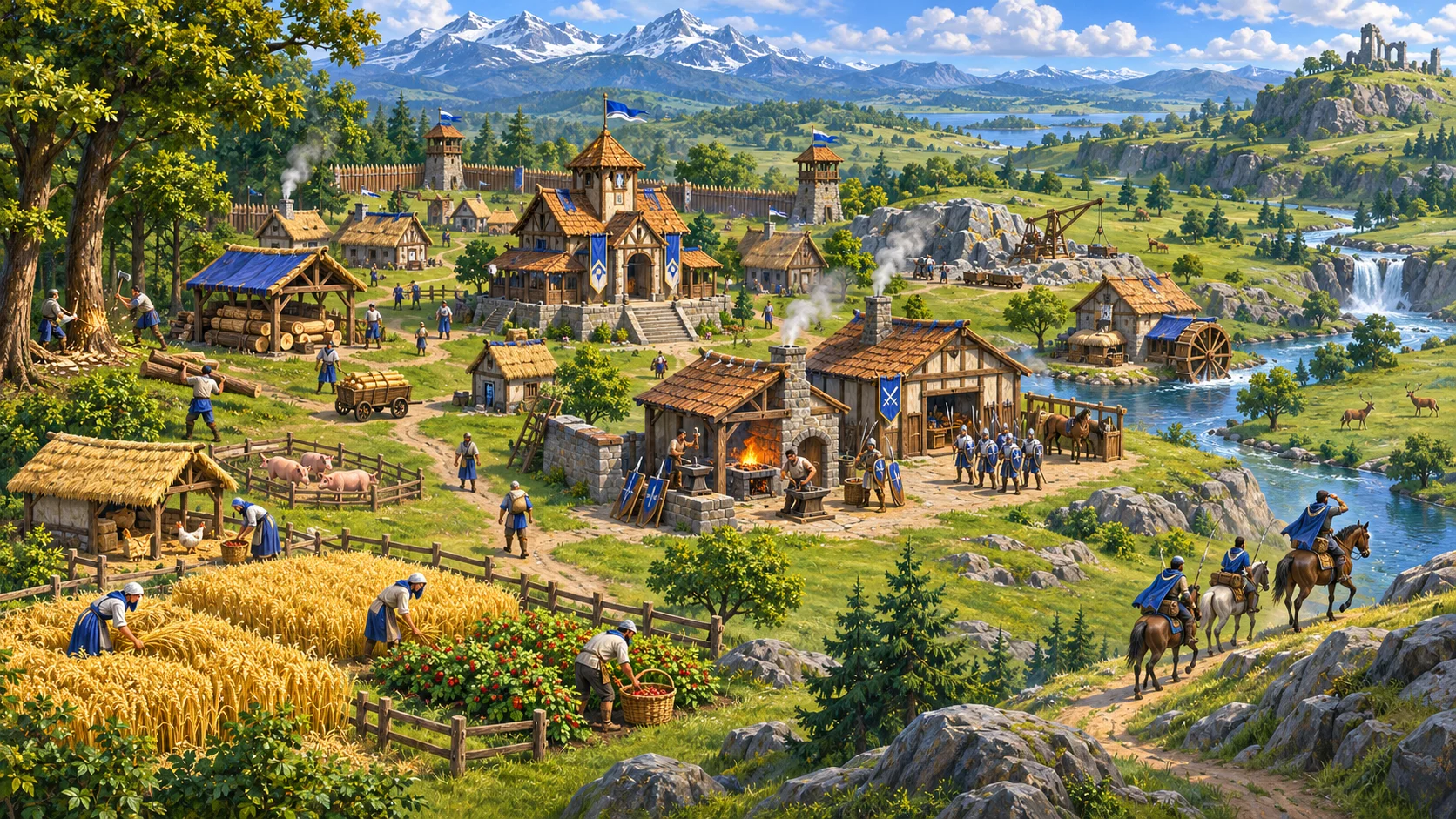
Make supply routes and carrying limits change where armies can move, hold, and fight, while giving players clear ways to scout, protect, or reroute logistics. Start with one small scenario, make its cause and effect visible, and test whether a player can explain the choice they made. The recommendations below describe original design options; cited game material is limited to genre context.
Map territory and supply baselines
Set a map scale with a few settlements, resource sites, and contested approaches. Record what armies consume, where supplies originate, how fast they travel, and what happens when they leave controlled territory. In an official Northgard developer announcement, Shiro Games says Supply Lines were created to prevent early rushes. This supports logistics affecting attack timing; the network here is original. See Shiro Games for the limited source context.
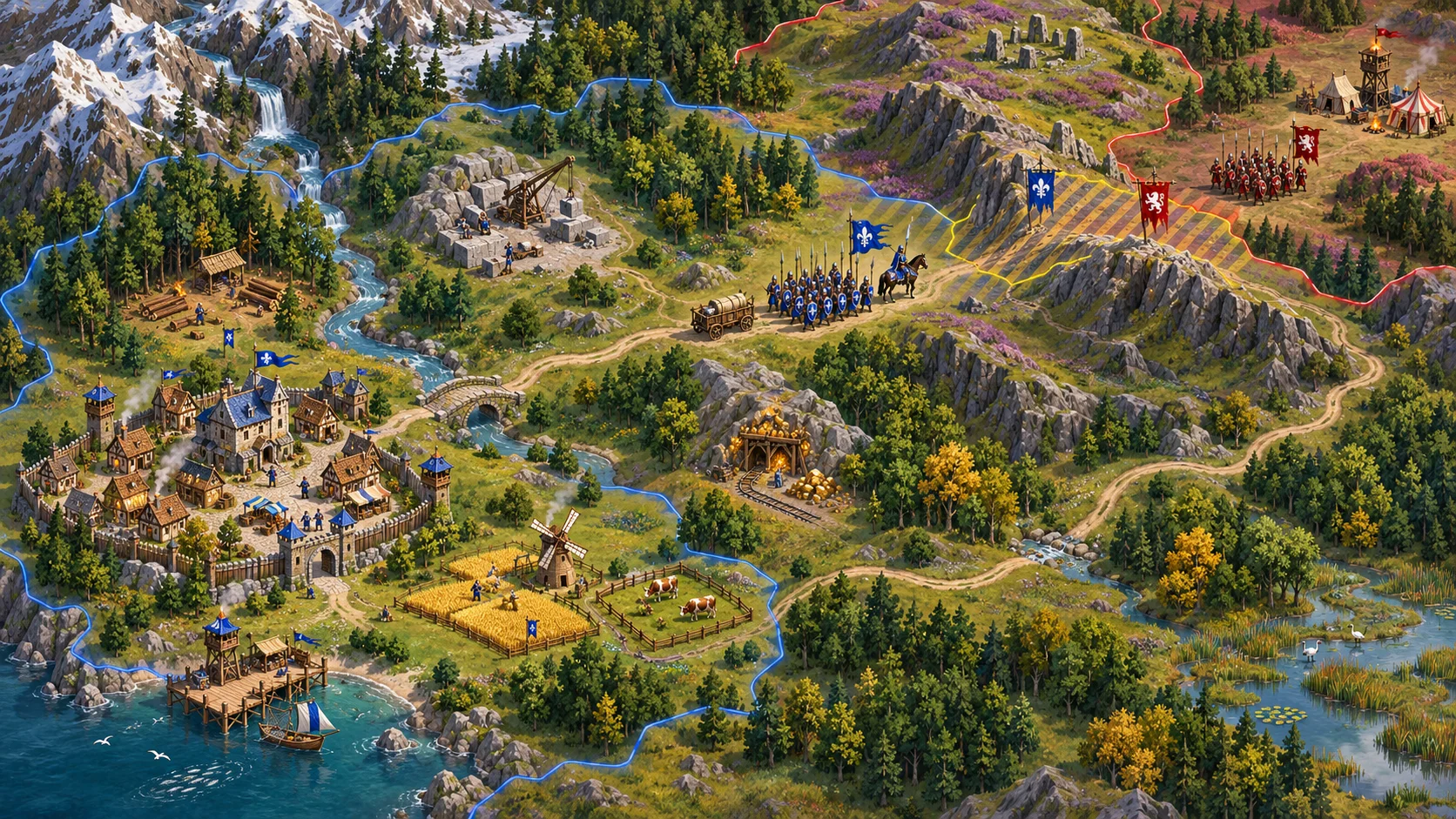
Choose whether supply is represented by a route, a territory connection, a convoy, or a carried stock. Each model creates different counterplay. A territory model rewards expansion, while a convoy makes interception visible. Avoid a hidden rule that weakens units without showing the player why.
Connect routes to army readiness
Connect supply status to battlefield decisions that players can anticipate: movement range, recovery, ability use, or staying power. Show the route and the point where an army becomes unsupported. Let players inspect a forecast before advancing so logistics shapes commitment rather than punishing the player after the fight begins.
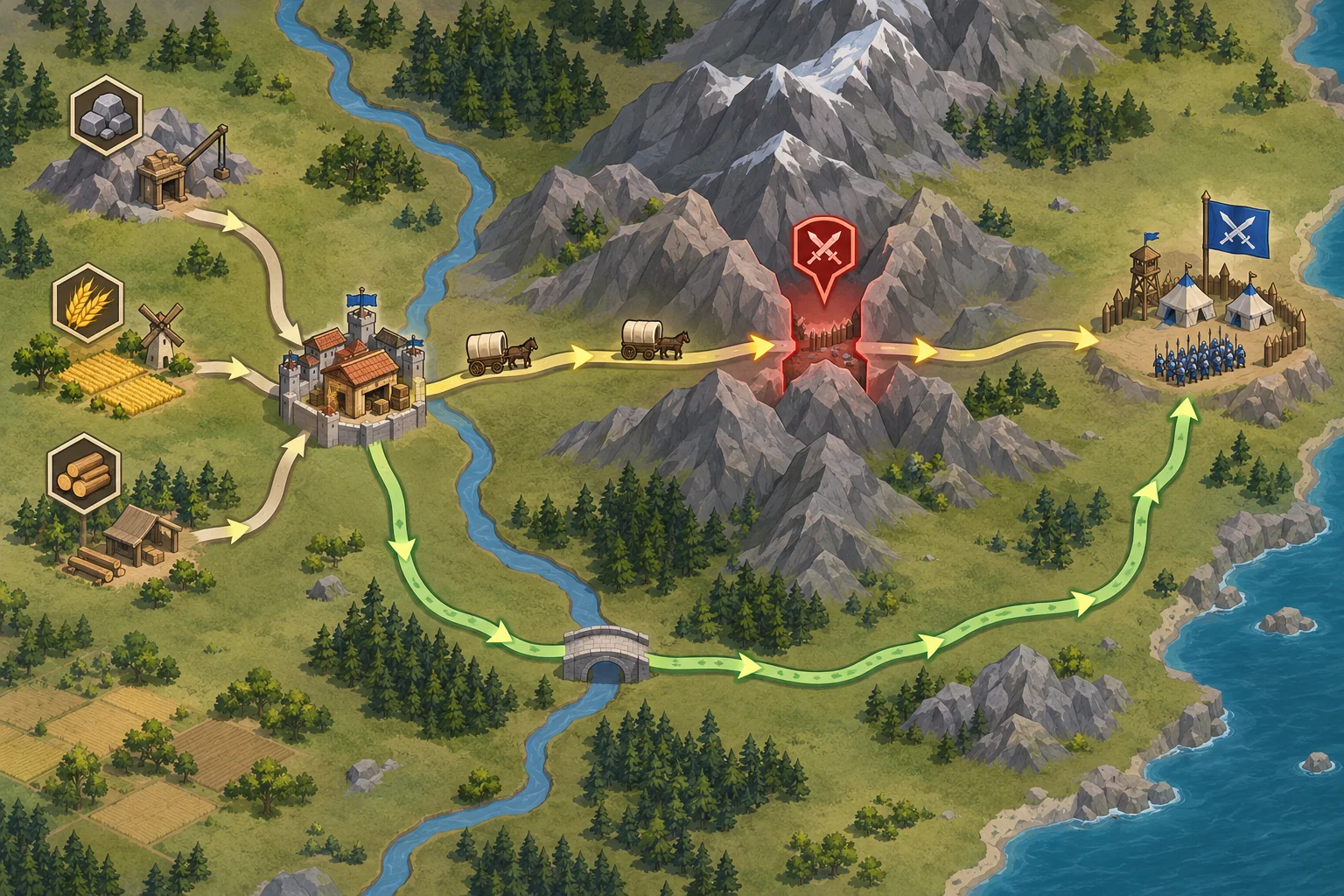
Protect more than one viable strategy. A forward push may be fast but fragile; a longer route may protect supplies while sacrificing time or territory. Scouting, escorts, alternate paths, and temporary depots can offer counterplay without making every attack wait for a single convoy.
Make logistics create battlefield choices
Make disruption reversible and readable. If an enemy blocks a pass or captures a tile, show which armies lose supply and what recovery options remain. A player could reroute, retreat to a friendly site, escort a carrier, or spend a limited reserve. Explain consequences before confirming a retreat or resupply action.
Tie logistics to expansion without letting map control become a tedious checklist. Make key resource sites and route bottlenecks meaningful, then provide compact feedback when a network changes. If multiple resources exist, show which one constrains the current order instead of presenting several low-value meters.
Test disruption and recovery
Play a fixed scenario with a direct route and a longer protected route. Compare arrival time, readiness, resource loss, and strategic options after a disruption. Repeat as the defending player to check whether supply attacks create decisions rather than an unavoidable shutdown.
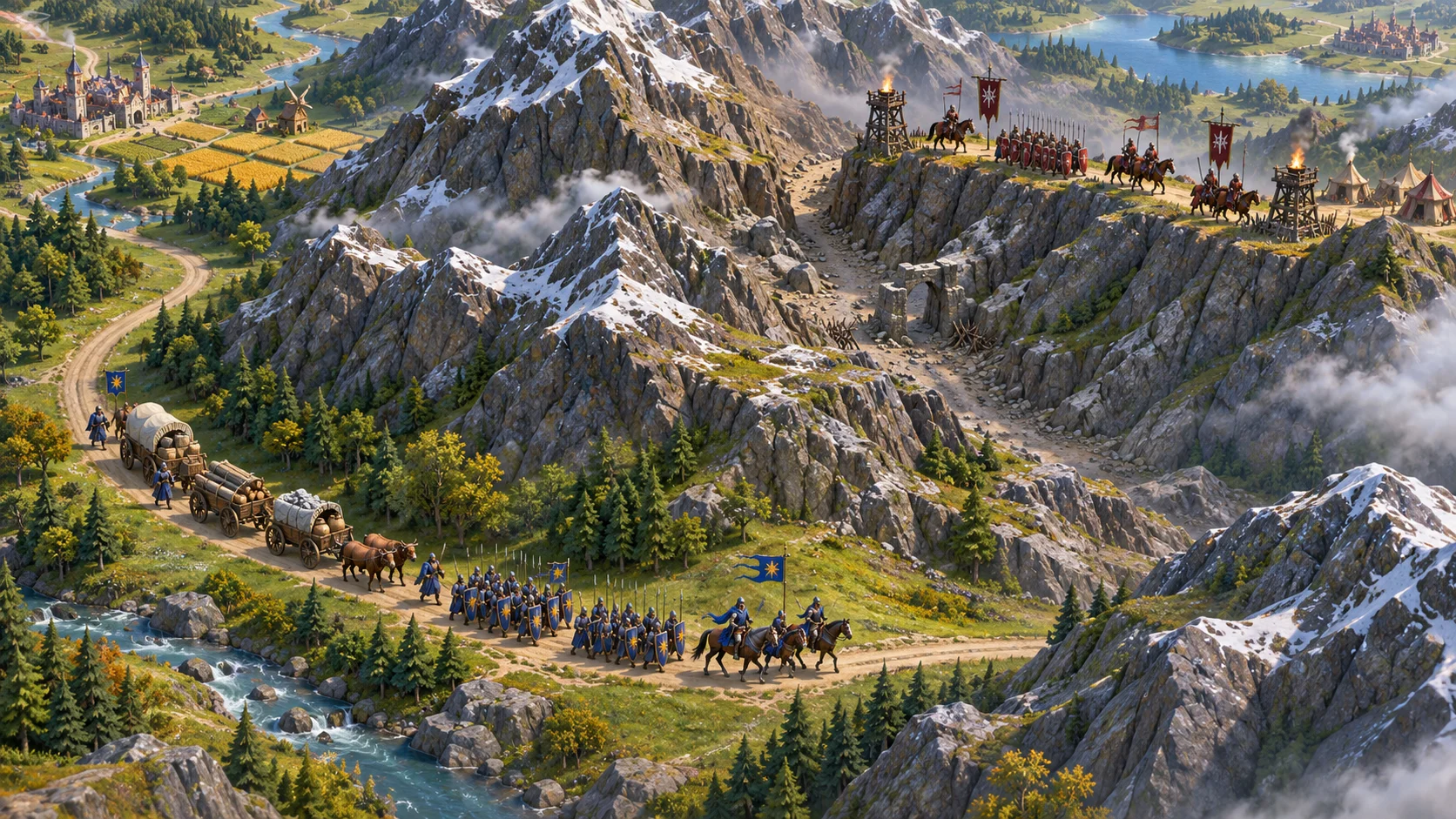
See an economy-to-combat loop guide for connecting economic choices to combat. Pass when route state changes a visible battlefield choice and both sides have a credible response to disruption.
FAQ
How should logistics affect a small-scale 4X battle?
Logistics can affect where an army can travel, how long it can remain forward, and whether it can recover after a fight. Show the supply route and readiness effect before an attack. Keep the effect predictable enough that players can plan and provide counterplay through scouting, escorts, alternate routes, or retreat.
What makes a supply route strategically important?
A route becomes strategically important when it connects a base or resource site to an army and creates a meaningful risk or delay. Chokepoints, exposed roads, and alternate paths can create choices. Show where supply is vulnerable and how long a reroute takes before the army commits.
How can players respond to disrupted logistics?
Offer responses such as capturing a route, escorting carriers, rerouting, using a temporary depot, or returning to friendly territory. Explain what each option costs in time and resources. Disruption should create a decision and a recovery path, not silently disable the player’s army.
What should you test in a 4X logistics prototype?
Compare direct and protected routes in the same scenario, then test a supply disruption from both sides. Track readiness, arrival timing, resource loss, and whether players chose a countermeasure. Check that players can explain the logistics rule from the map feedback.