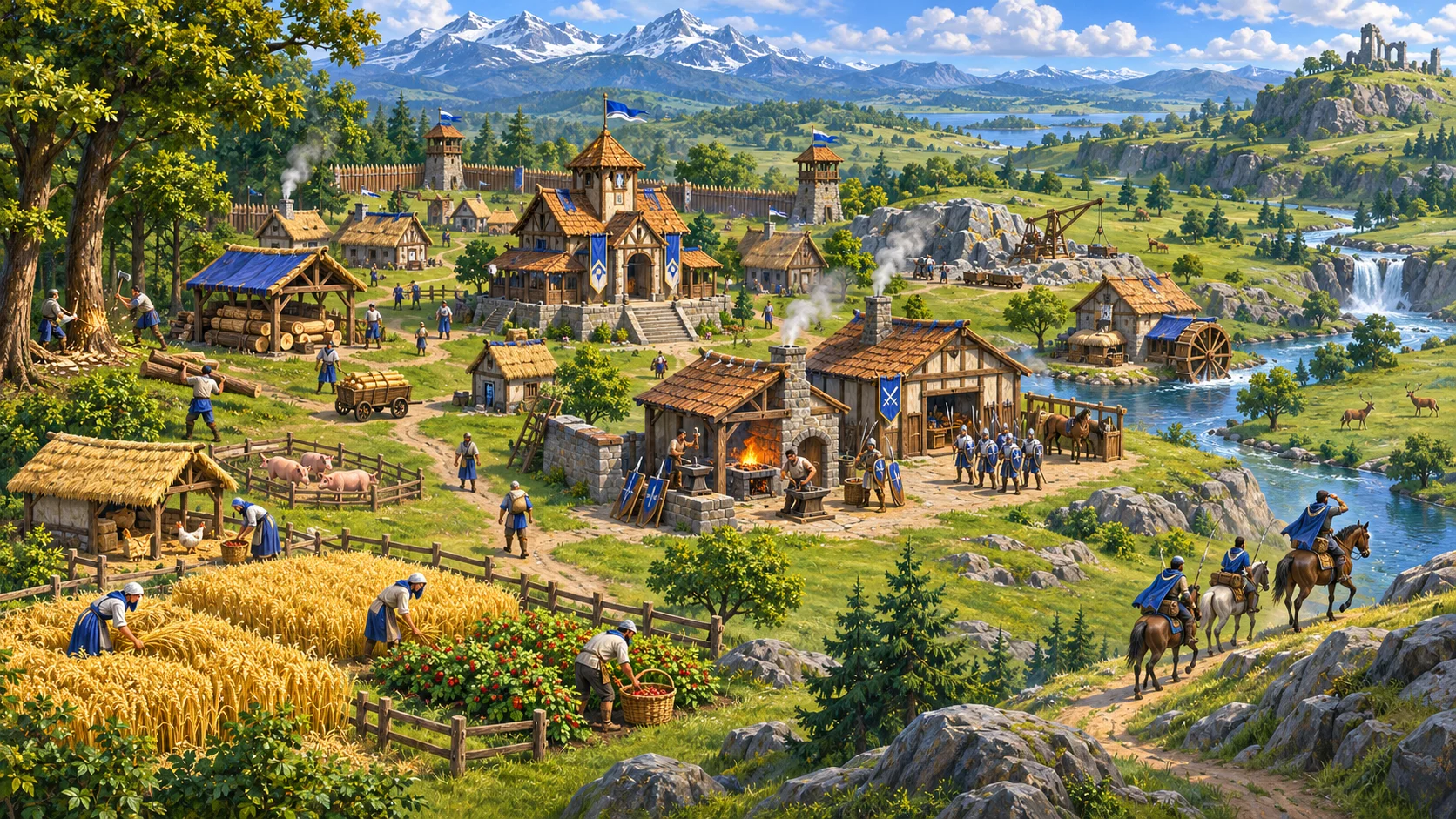
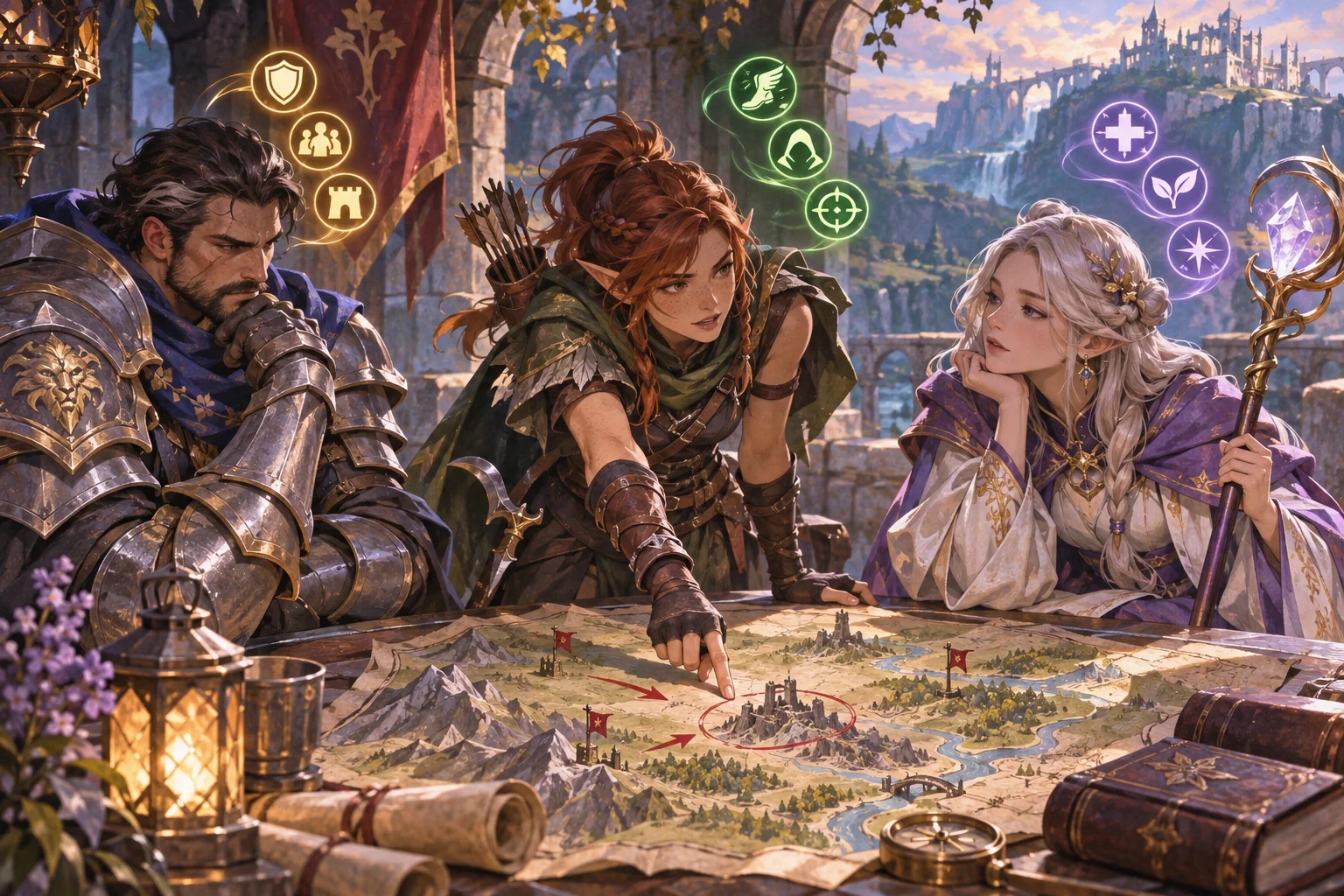
Persistent unit development can give a base-building RTS a memorable campaign layer, but it can blur the line between long-term progress and the current battle. Decide what survives a match before changing unit entities. Keep resource production, command handling, and tactical state in their existing owners, then add one small progression record that loads predictably at the next deployment.
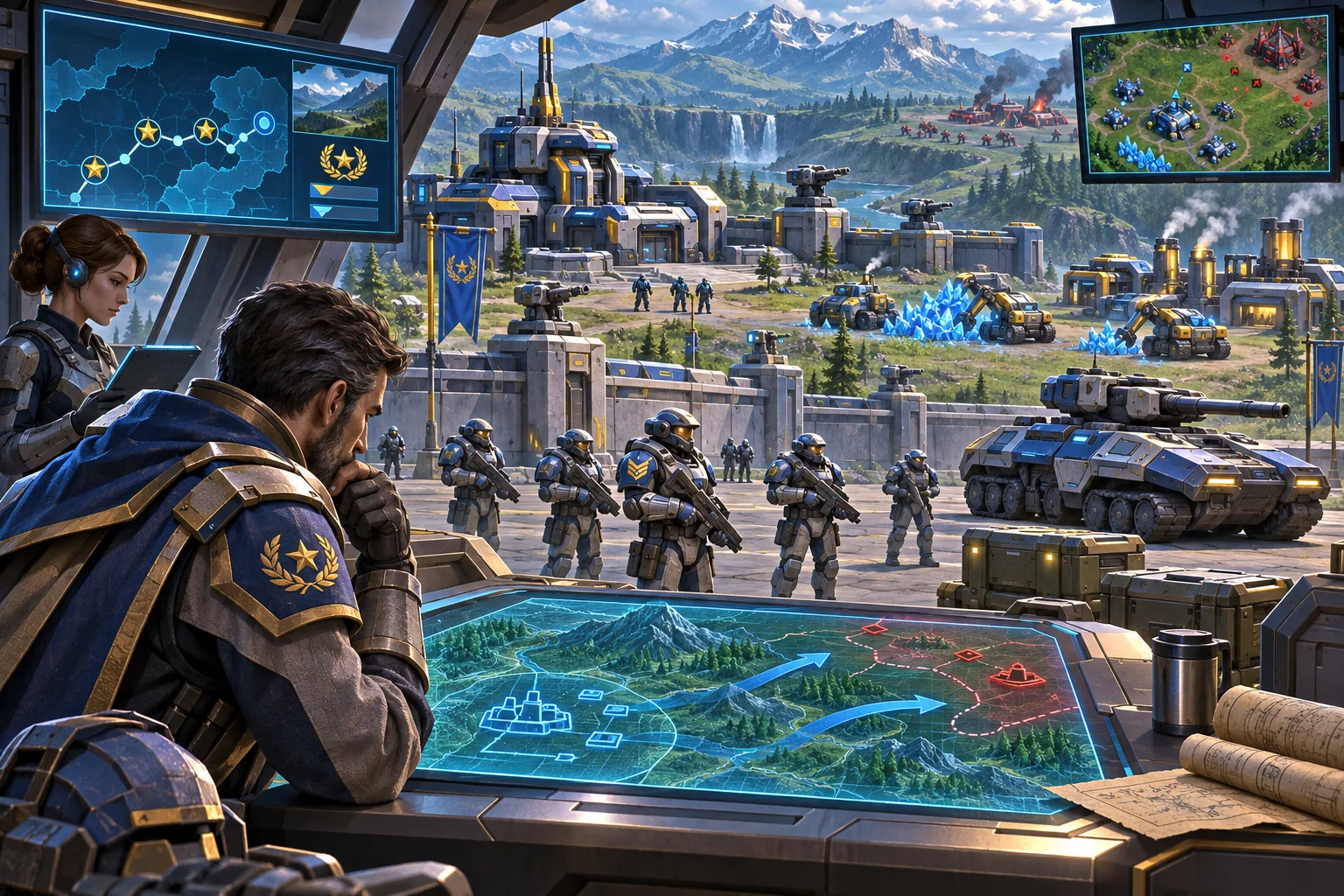
This guide describes an expansion to an existing RTS, not a claim that a growth system has been implemented or validated. No source code, save, build, multiplayer session, or combat simulation was available. The unit examples and checks are proposals for a real project review.
Separate campaign identity from a single match
Trace how a unit is created, selected, ordered, damaged, upgraded, removed, and recreated in a new match. Find the owners of unit templates, production queues, commands, combat stats, resources, campaign records, and save loading. Capture a baseline replay or scenario with the same map, starting resources, unit composition, and opening orders. Note what the game currently resets after victory, defeat, surrender, or disconnect.
Choose what “persistent” means. It might be a cosmetic callsign, a campaign roster entry, an earned specialization choice, or a small set of veteran records. Position, current health, target order, cooldown, temporary aura, and one-match buffs usually belong to the live match unless the existing campaign explicitly preserves them. Write the reset contract in plain language and enumerate every field that crosses it.
| State | Likely owner | Reset question |
|---|---|---|
| Unit lineage ID | Campaign roster | Does the identity survive destruction? |
| Experience or record | Campaign progression | Which completed event earns it? |
| Unlock choice | Progression rules | When is it applied to a new match? |
| Health and position | Match entity | Do they reset at every deployment? |
| Orders and cooldowns | Command/combat loop | Can stale runtime state leak forward? |
| Resources | Economy and match | Are upgrade costs paid once? |
Build one bounded growth loop
Start with a clear event already owned by the game, such as a match result or objective completion. Define the progression input, eligibility, cap, reward choice, and failure path. Do not award persistent growth on every damage tick or repeated callback. If assists, objective control, or survival time matter, specify how they are counted and whether the server, campaign host, or local simulation commits the result.
In the fictional Ironvale campaign, a scout squad earns one record after completing an objective and can choose a small recon specialization before the next battle. This example does not establish that experience or scouting exists in any target project. The actual game must choose an event that is authoritative and resistant to duplicate processing.
Keep the effect bounded. An identity badge or tactical choice can add variety without multiplying raw damage indefinitely. If progression changes combat stats, document the exact modifier and cap, then test against unit counters and starting compositions. Preserve a baseline mode or no-progression option if the existing game supports competitive or custom matches.
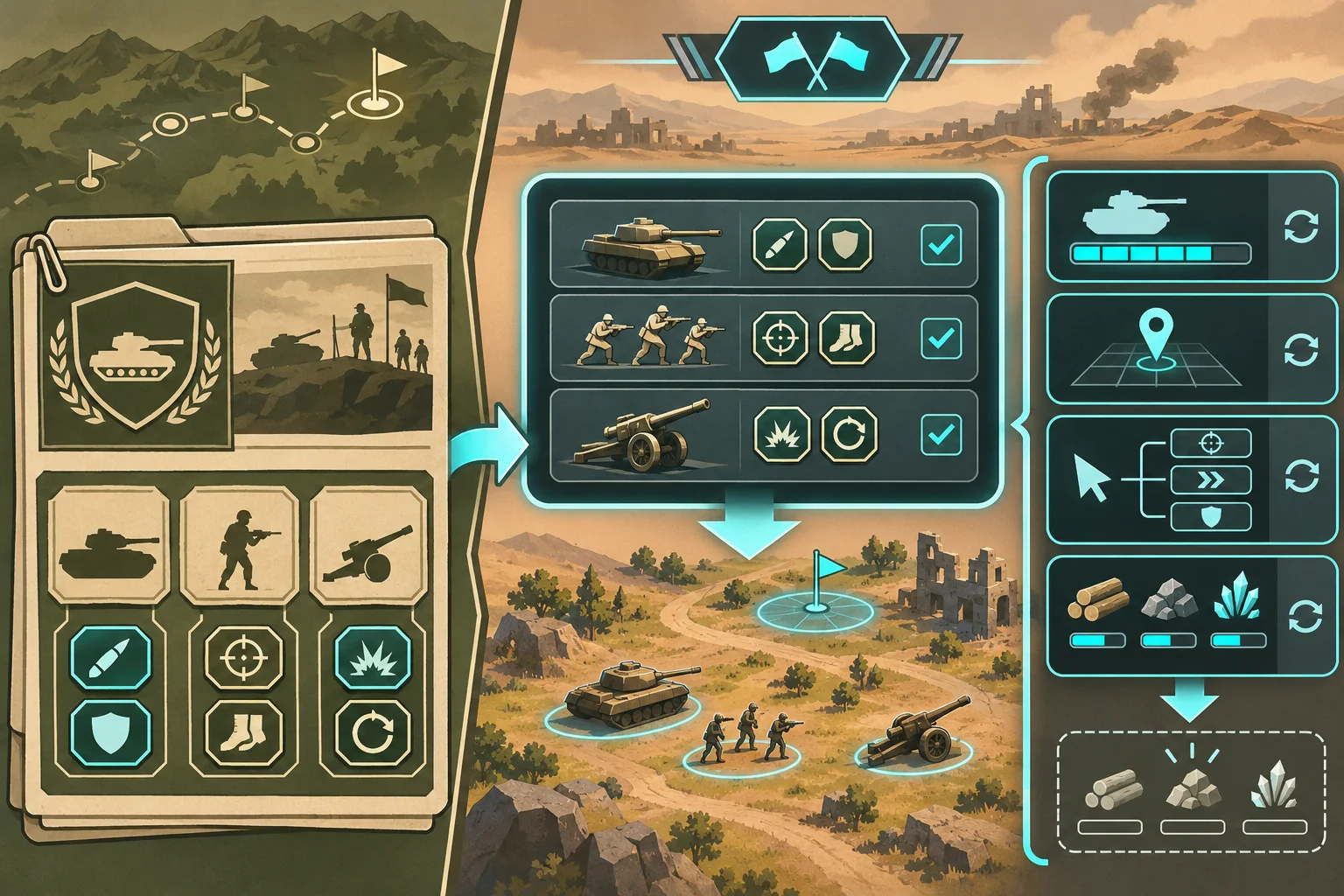
Keep campaign data outside transient combat objects
Use a stable unit or lineage identifier that does not depend on a display name, list index, or temporary entity handle. Store only the progression fields the campaign needs. At match setup, resolve those records into the current unit template through one existing creation path. If a squad is rebuilt, split, merged, or destroyed, define whether lineage transfers, ends, or becomes a campaign record.
If the project uses Godot, the official Resource documentation describes a serializable base class used primarily for data containers and says resources can be saved on disk. This is an engine-specific option when the project already uses Resources; it is not a required RTS model. Godot’s saving tutorial demonstrates one workflow where persistent objects return relevant data for serialization. Neither source prescribes campaign identity, authoritative multiplayer writes, or balance rules for this game.
Make every reward idempotent. Record a stable match-result or award ID and commit it once. If the client retries after a network interruption, it should not duplicate experience or currency. If the current game has multiplayer, identify the authority that validates the result. Never trust a client-side progression value just because it appears in a UI.
Protect the economy and command loop
Let existing production and resource systems continue to own costs, queues, and availability. If a specialization costs currency, send that purchase through the existing economy transaction path and record whether it succeeded. Do not let a campaign screen change the unit’s cost in one branch while production uses another. Keep unit selection, group commands, formation, rally points, and hotkeys intact.
Define when growth takes effect. Applying it only on a new match can simplify reset behavior; applying it mid-match may require re-evaluating combat stats, UI, and network replication. If the original game has one authoritative stat calculation, route the modifier through it instead of adding a second combat formula. Preserve the baseline for AI-controlled opponents and replays so the system does not desynchronize recorded battles.
| Feature area | Narrow change | Keep stable by default |
|---|---|---|
| Progression event | Consume one committed match result | Damage and command callbacks |
| Roster | Store stable campaign ID and chosen unlock | Runtime entity handles |
| Deployment | Resolve campaign data on unit creation | Production and resource costs |
| Combat effect | One capped modifier through current stats | Counter logic and base stats |
| Persistence | Optional progression record with version | Match state and old save fields |
Ask AI for a reviewable change
Provide an allowlist for unit templates, match result handling, campaign progression, save loading, and the existing stat calculation. Ask the assistant to map ownership and identify where a progression record enters a new match before editing. Request one feature slice, a migration plan, tests, and a list of untouched systems. Review the full diff and reject duplicated stat calculations or edits to unrelated economy code.
Keep a clean branch and a copy of representative saves. If a new progression version is required, make older records default safely and avoid rewriting current unit IDs. Preserve a rollback revision that restores the original unit creation and combat path. If the change affects networked matches, test host authority and disconnect handling before allowing the feature in ranked play.
Test resets, rewards, and counter matchups
Run a baseline match with progression disabled and an otherwise identical match with it enabled. Test fresh accounts, an old save, a unit that levels, a unit destroyed before result commit, a duplicate result callback, a rematch, and a rollback. Keep maps, resources, build, difficulty, and orders fixed when comparing. Record whether the growth feature changes outcomes, not merely whether the UI updates.
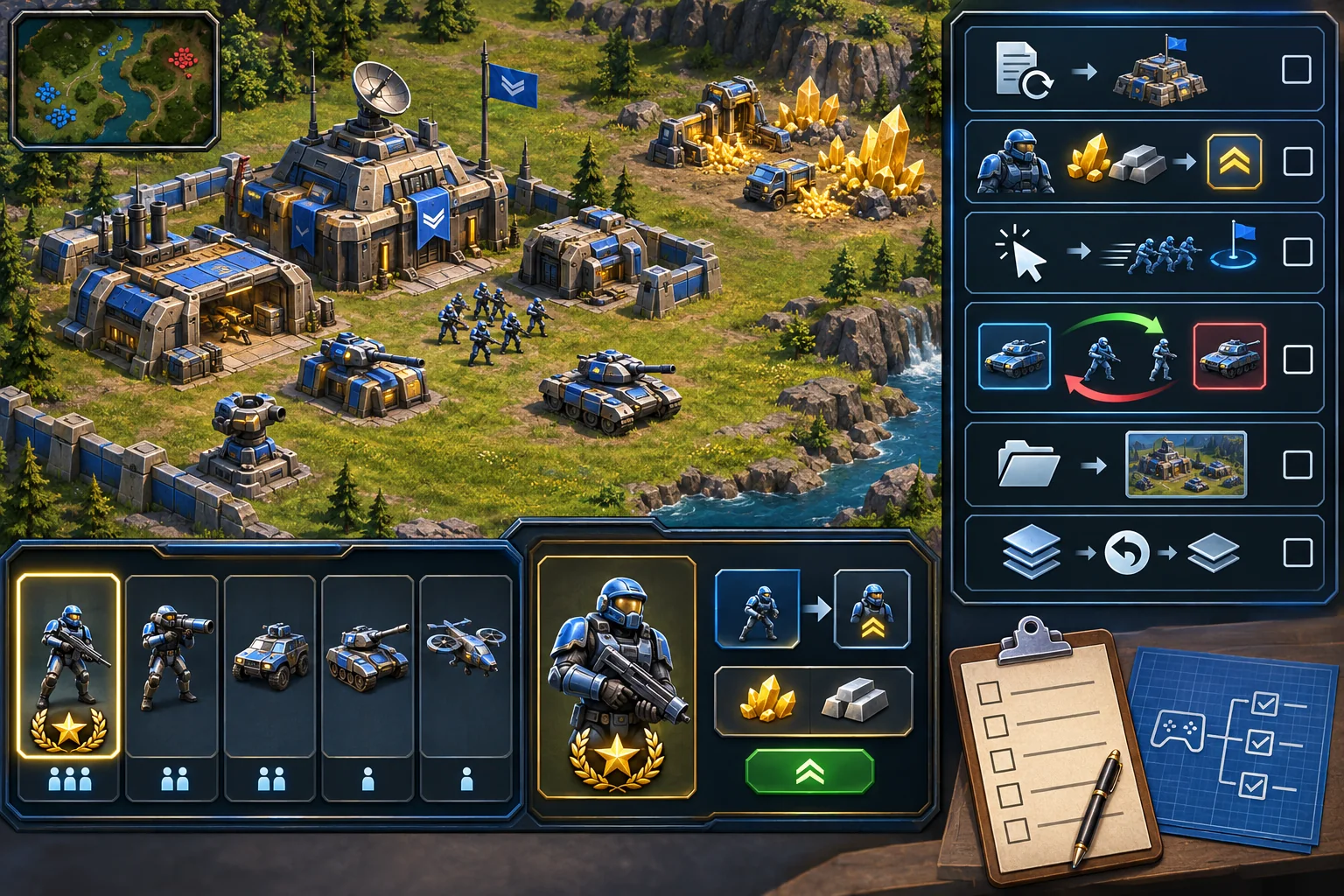
| Proposed check | Action | Evidence |
|---|---|---|
| Match reset | Win, start a new match, inspect deployed unit | Persistent and reset fields |
| Duplicate award | Replay or retry result submission | Single stable award ID |
| Resource cost | Choose and reload a specialization | Cost and selected unlock once |
| Command behavior | Use groups, rally, and target orders | Order execution and UI state |
| Counter balance | Repeat representative unit matchups | Composition, outcomes, and variance |
| Old save | Load a pre-feature campaign copy | Safe defaults and unchanged roster |
| Rollback | Restore baseline revision | Original production and combat behavior |
This matrix is a proposal, not a test report. Record build, map, player count, seed if available, starting resources, unit composition, campaign record, orders, result, and expected versus actual behavior. If multiplayer exists, include host migration and disconnect cases. A generated tactical screen cannot establish combat balance or save safety.
Make development legible to players
Show what a unit keeps, what resets, and when its next choice becomes available. Explain caps and costs before players commit. Keep temporary battle effects visually distinct from campaign upgrades, and make it possible to inspect a unit’s lineage without interrupting command control. The system should encourage a new tactical decision, not create an unstoppable stack of permanent bonuses.
To explore a separate strategy-game concept, try SEELE AI Game Maker. It is a concept tool, not an editor for an existing project.
Frequently asked questions
What unit progress should persist between RTS matches?
Decide whether a campaign preserves only account-level unlocks, a named unit lineage, or selected veteran records. Keep match-only position, health, orders, cooldowns, and temporary buffs in the match state unless the game already treats them as campaign data. Make each persistent field explicit so a reset cannot carry combat state forward by accident.
How can unit growth avoid breaking RTS balance?
Start with a modest, bounded progression effect and compare it against the current baseline. Prefer choice, cosmetic identity, or narrowly limited specialization before large damage or resource bonuses. Test representative unit types and counter relationships over repeatable scenarios; do not assume a veteran bonus is fair because a single battle looks successful.
Should unit experience be stored in the unit object?
Follow the project’s existing ownership pattern. A campaign progression owner can store a stable unit or lineage ID and selected development fields, while match entities load the campaign data at match start. Avoid using a temporary runtime object as the only source of progress if matches recreate units from templates.
How do I prevent upgrades from duplicating after a reload?
Give unlocks and upgrade events stable IDs and commit them through one campaign progression owner. Test a save immediately before and after purchase, restart the match, and reload repeatedly. Confirm the resource cost is applied once and that the unlocked option neither disappears nor grants duplicate bonuses.
Can AI add persistent growth to my existing RTS?
AI can inspect supplied unit, economy, command, progression, and save files, propose one limited growth feature, and draft tests. It cannot confirm multiplayer authority or competitive balance without the actual project and executed scenarios. Provide an edit allowlist, baseline match, expected resets, and a rollback revision.
Add growth without carrying a battle forward
Define which campaign identity and unlocks persist, keep health and commands in the live match, and route modifiers through the current unit and economy owners. Test resets, duplicate awards, old saves, command behavior, and representative counters on repeatable builds. Treat fictional Ironvale units and the generated UI as design aids, not evidence of a working or balanced RTS feature.