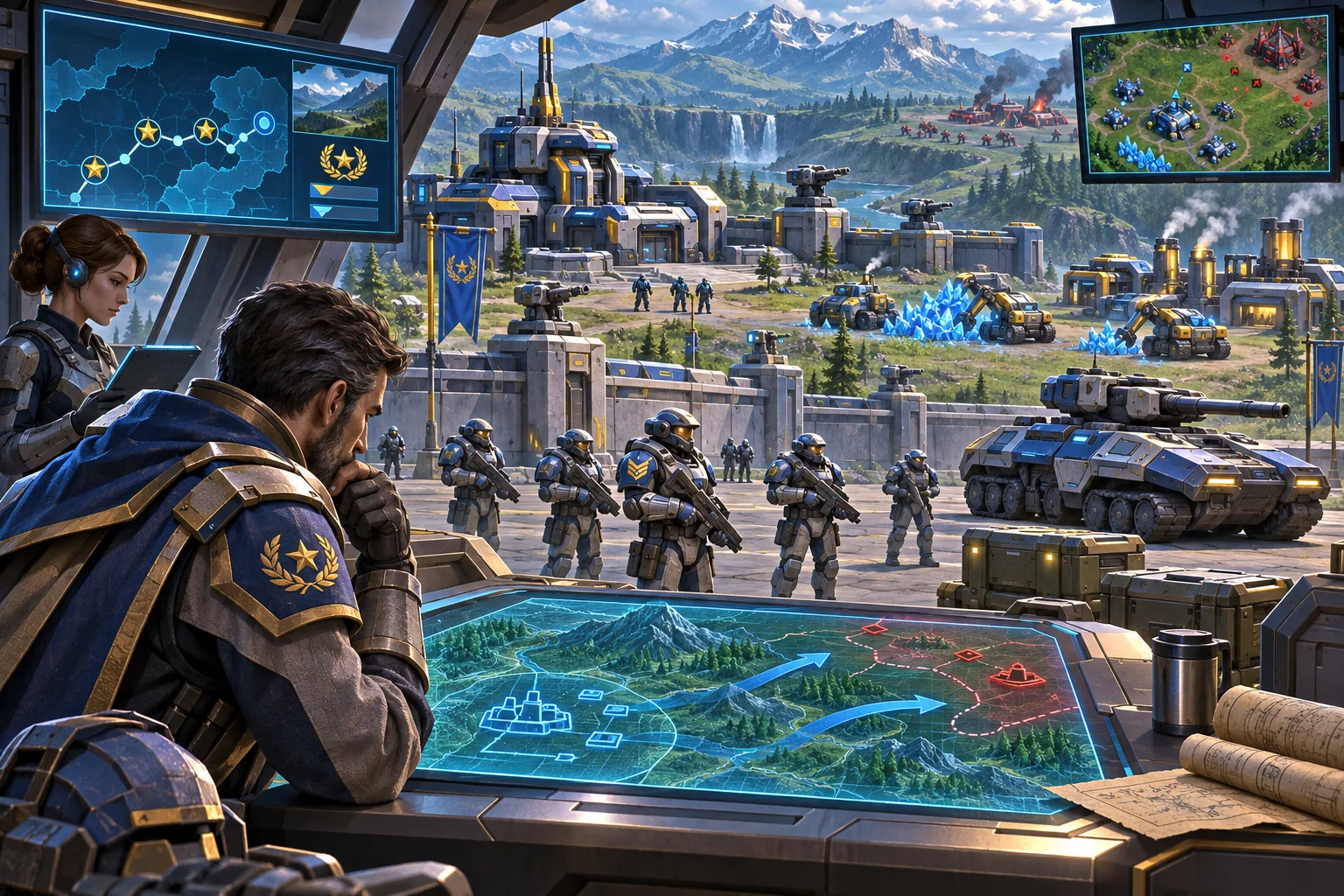
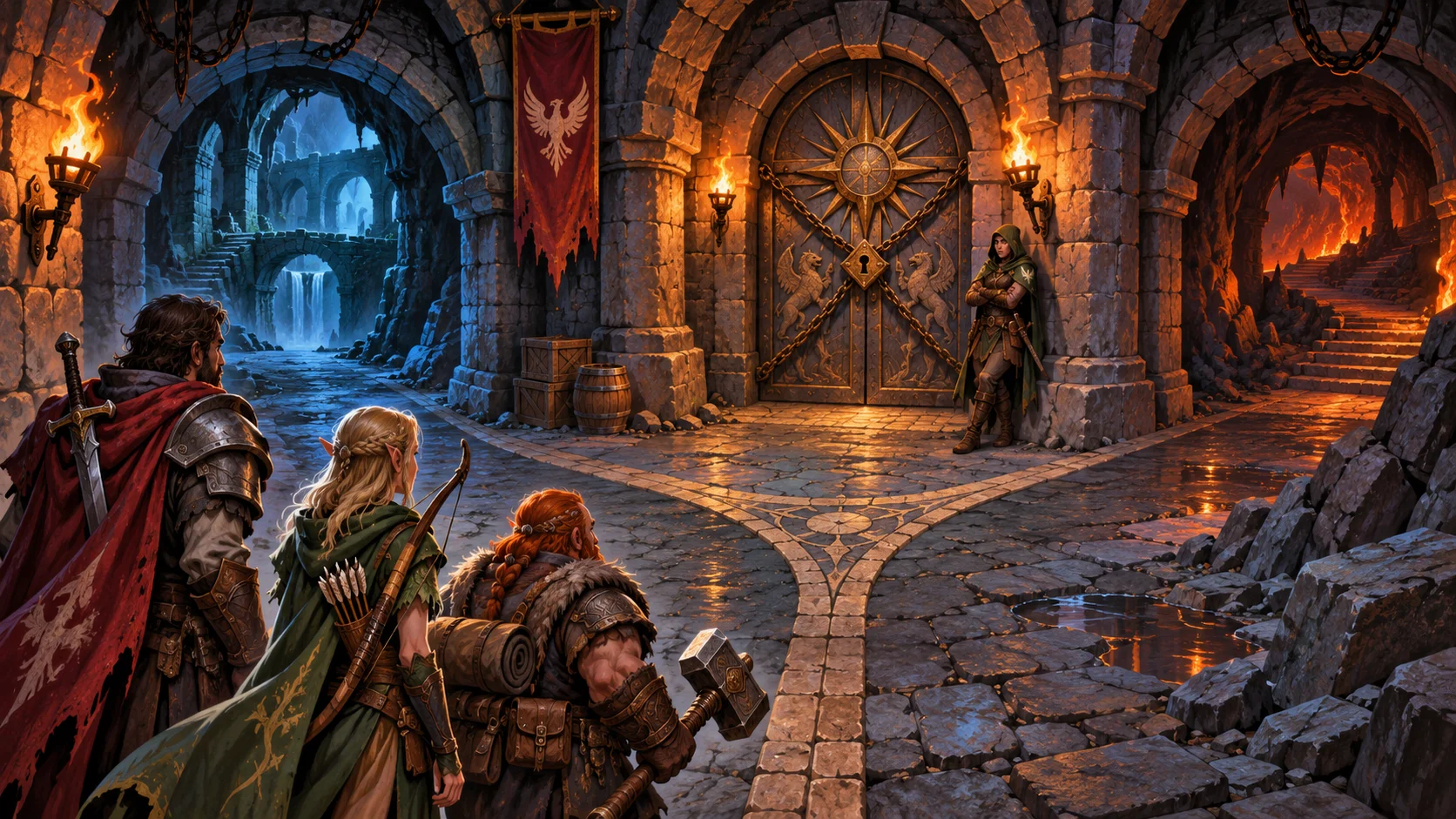
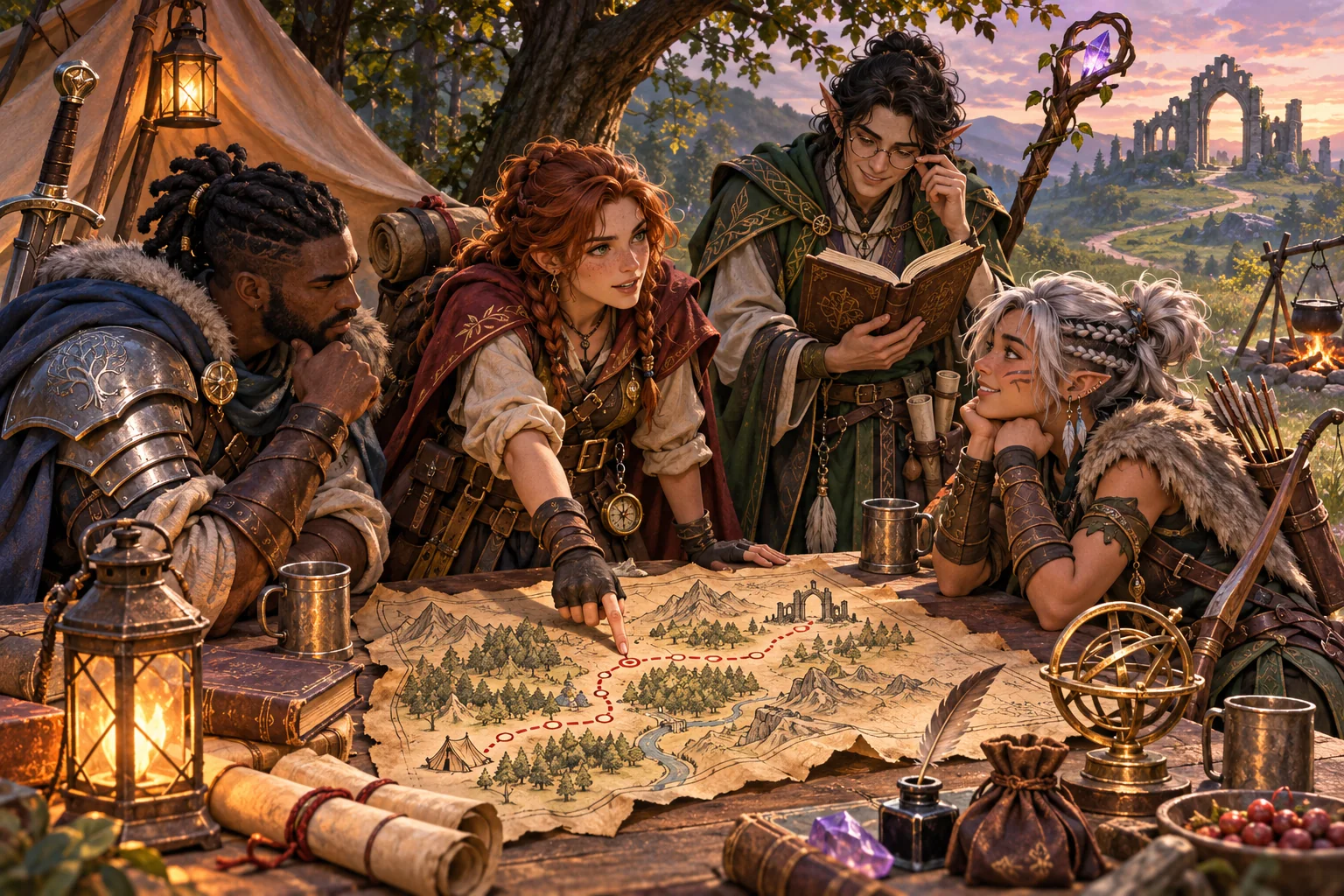
A persistent guild headquarters can give a dungeon crawler a useful between-run planning layer, but it must not erase the attrition that makes each expedition meaningful. Separate the hub’s long-term facilities and unlocks from temporary health, supplies, loot, and floor state. Reuse the current inventory and progression owners, then define precisely what is settled after victory, defeat, or an abandoned run.
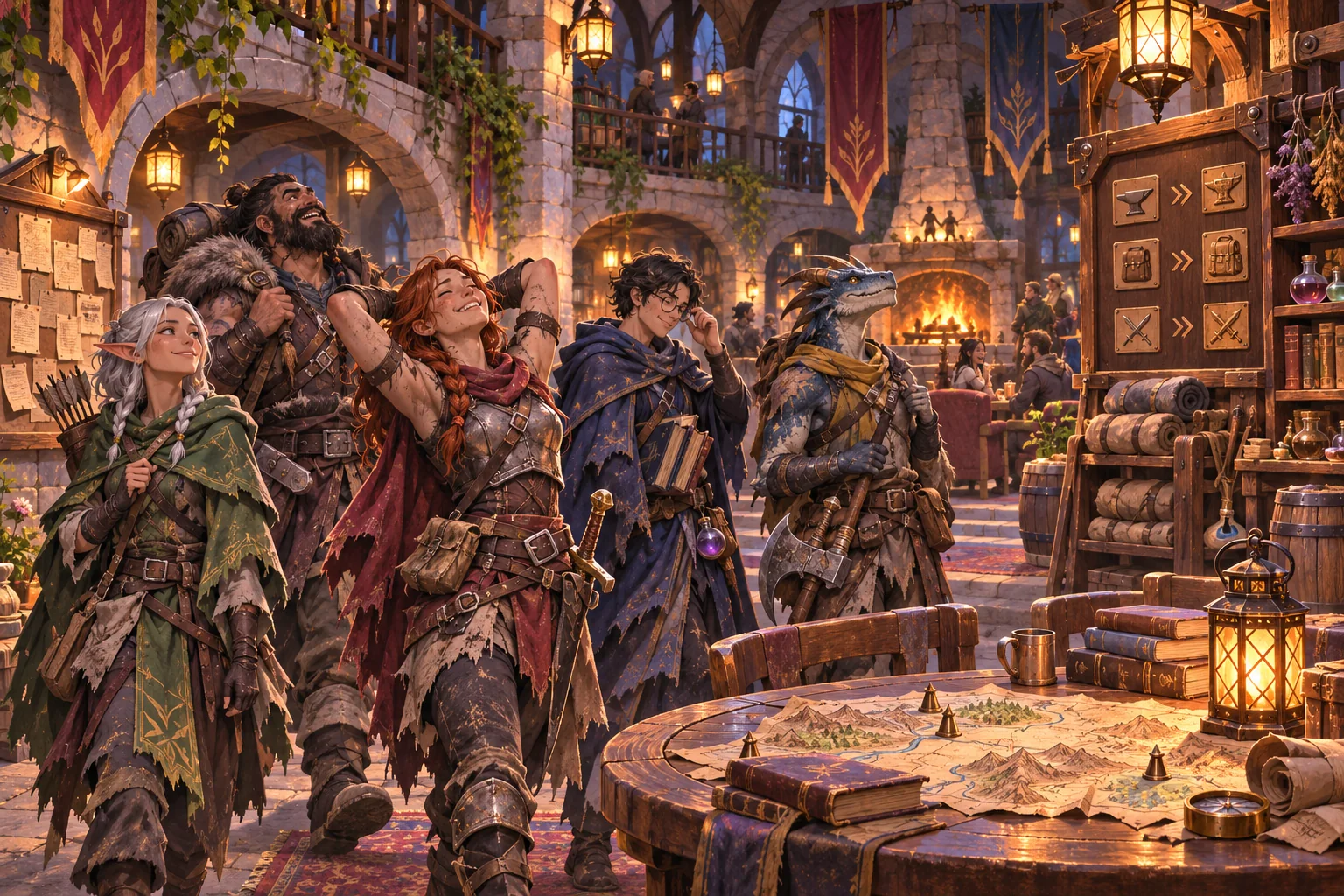
This article proposes a headquarters feature for an existing dungeon crawler. The guild, upgrades, members, supplies, and outcomes below are invented. No project files, build, save, or playtest were available. All checks are plans, not reported game results.
Separate guild facilities from expedition state
Trace how an expedition begins, consumes food or tools, changes party health, grants loot, records a floor, and ends. Find who owns the active party, inventory, encounter state, unlocks, defeat result, and save. Identify what is already retained between runs. Preserve a baseline save at the entrance, mid-run, and after returning to the current hub or menu.
Define the headquarters as a between-run layer. Its persistent state might include facility unlocks, guild roster, a map table, training options, or a supply store. Expedition state might include current floor, party health, temporary effects, carried consumables, run-specific keys, and unsold loot. The exact boundary depends on the existing game; do not let a new scene decide which values survive by resetting everything on load.
| State | Possible owner | Decision |
|---|---|---|
| Facility level | Guild progression | Which unlock and cost apply? |
| Roster identity | Party/character collection | Who can join a run? |
| Health and effects | Current expedition | What carries after return? |
| Supplies and loot | Inventory/expedition settlement | What is consumed, kept, or lost? |
| Floor and encounter | Run state | Resume, restart, or close? |
Choose a small first headquarters feature
Start with one facility that supports planning without changing combat math. A map room could show already discovered routes; a supply desk could let players buy from the existing shop system; a training space could explain a current skill path. Define its cost, prerequisites, interaction, and effect. If the first upgrade grants a combat bonus, limit it and test that bonus in the existing encounter balance.
In the fictional Lanternkeep guild, a map table displays discovered branches and a supply desk prepares one extra non-combat tool. The examples are invented and do not claim the game has maps, guild currency, or tool slots. The actual project should select a feature whose data and interactions already fit the current run loop.
Make the hub optional where possible. A player should be able to return to the current dungeon entry and continue the existing game. Avoid turning every run into a long sequence of mandatory menus. Keep the first implementation to one facility, one cost, one unlock record, and one visible result.
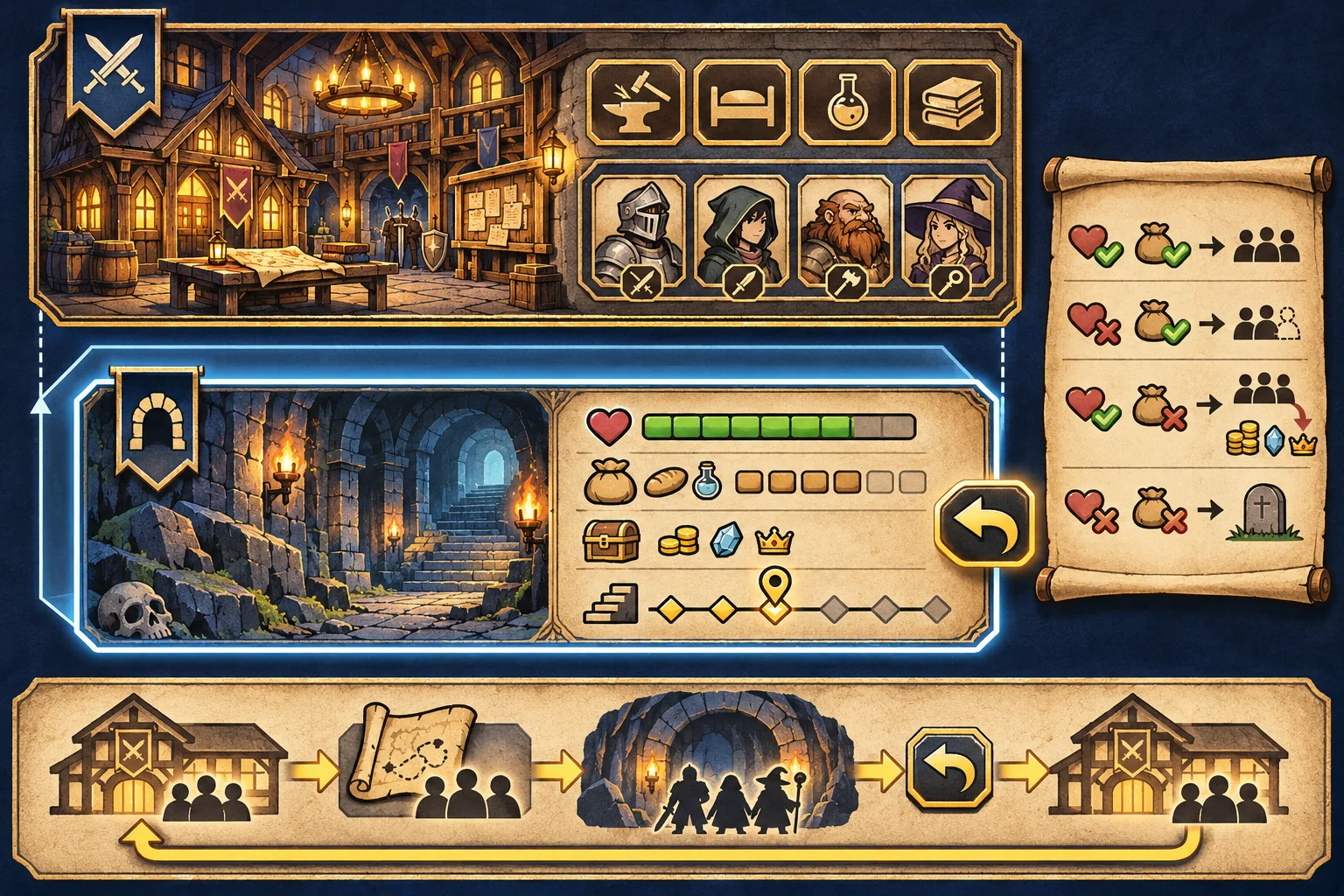
Define return, defeat, and abandonment
Write a settlement table for each expedition ending. After victory, decide which loot enters permanent inventory and whether health resets. After defeat, define which supplies are consumed, which items are protected, and whether the party returns to the entrance. If a player leaves mid-run, decide whether the game saves a checkpoint, closes the run, or asks for confirmation. Keep those rules consistent with existing attrition.
Do not use a hub upgrade to silently replenish depleted supplies unless that is part of the game’s existing economy. If the headquarters offers rest or repairs, define the cost and commit it through the current resource owner. Show the player what will be restored before spending. Test entering a new run after both a win and a defeat to check for stale health, encounter, or loot state.
Separate permanent ownership from a run’s carried copy. If a party member brings a potion into a dungeon, the run can track whether it was consumed. On settlement, update the persistent inventory once. Do not keep both the run copy and the hub copy. Use a stable run ID so reloading the result screen cannot apply the same settlement twice.
| Ending | Rules to define | Potential duplicate risk |
|---|---|---|
| Victory | Loot, health, unlocks, next run | Repeated reward settlement |
| Defeat | Loss, recovery, checkpoint | Supplies restored accidentally |
| Retreat | Keep or forfeit run loot | Settlement event runs twice |
| Abandon | Save, restart, or close instance | Stale encounter state reused |
| Hub upgrade | Cost and unlock timing | Upgrade purchased repeatedly |
Keep upgrades inside existing progression
Use the current economy, item, and unlock systems. The hub should request a purchase and display the result; it should not make a second currency ledger. Give every upgrade a stable ID, prerequisite, cost, and effect. If a facility unlocks a new encounter or route, update the existing encounter catalog and preserve its normal gate checks.
If the project uses Godot, the official Resource documentation describes serializable data containers that can be saved on disk. That is an engine-specific capability, not a required guild data format. Godot’s saving tutorial demonstrates one workflow where persistent objects provide relevant data for serialization and loading. Neither source prescribes this crawler’s expedition settlement or resource attrition model.
Ask AI to inspect run lifecycle, inventory, defeat handling, unlocks, and saves before editing. Request one facility and a clear ownership map. Use an allowlist, review the complete diff, and keep the original exploration, encounter, and resource loops intact. If a new save field is needed, give old saves a safe default and migrate a copy first.
Test victory, defeat, and resource attrition
Test a new save and copies at the dungeon entrance, mid-run, after victory, after defeat, and after leaving during an encounter. Buy the upgrade before and after a run, repeat the purchase event, and compare supply counts. Test a new expedition immediately after each outcome. Confirm that guild facilities persist while temporary run values follow the documented rules.
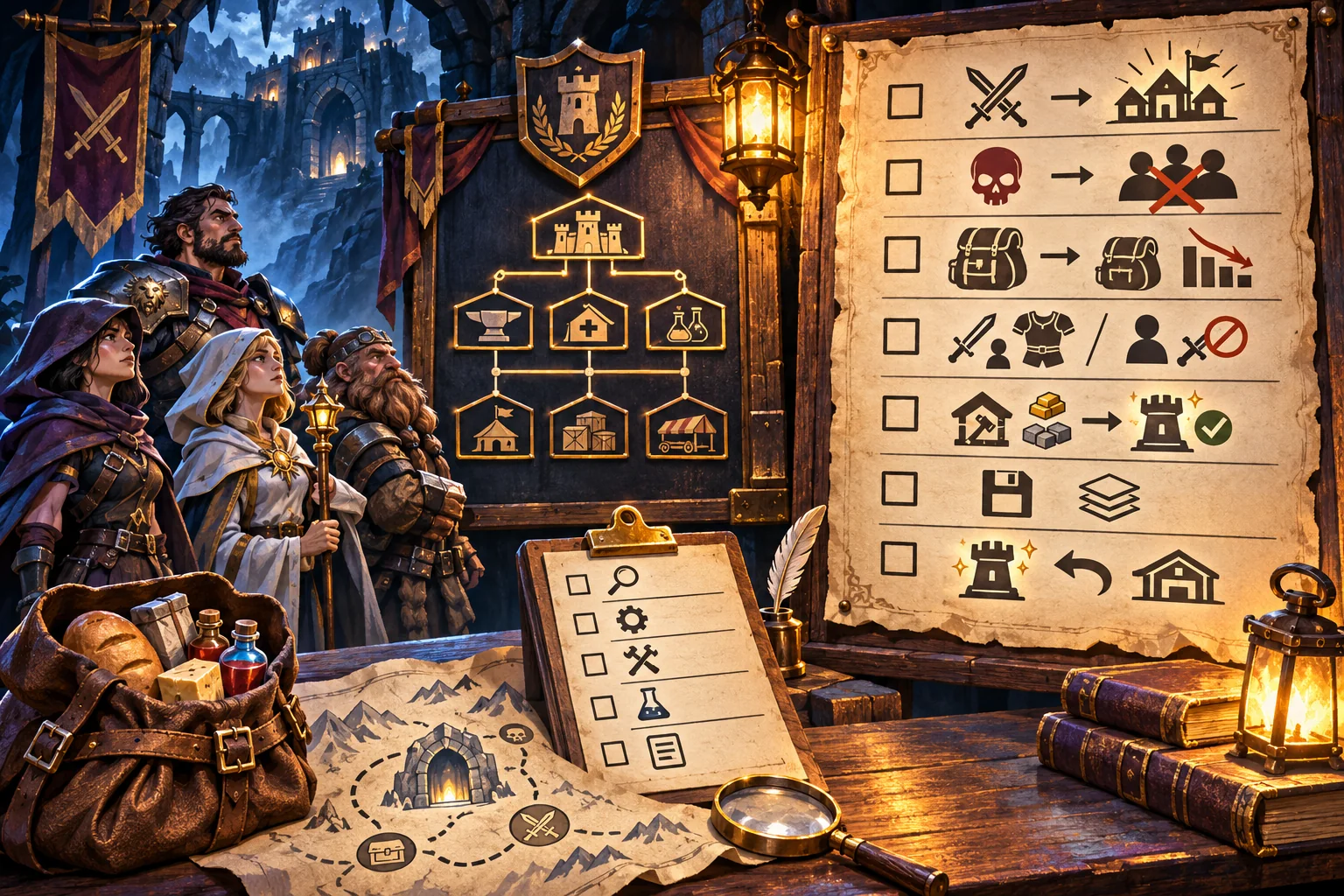
| Proposed check | Action | Evidence |
|---|---|---|
| Upgrade once | Purchase, reload, and retry same request | One cost and one facility level |
| Victory settlement | Complete a run and return to guild | Loot, unlock, and health state |
| Defeat settlement | Lose a run then enter again | Supplies, party and checkpoint rules |
| Abandon run | Leave mid-encounter and reload | Explicit resume or discard result |
| Attrition | Use supplies and compare persistent stock | Consumed items committed once |
| Old save | Load pre-hub save copy | Safe default, current progress intact |
| Rollback | Restore baseline revision | Original crawler loop |
This is a proposed matrix, not an executed test. Record build version, run ID, party, floor, starting and ending supplies, outcome, upgrade ID, save copy, and expected versus actual state. Generated guild art can illustrate the boundary but cannot prove that attrition or balance is correct.
Make preparation useful, not mandatory busywork
Show facility effects before purchase and make the return path to the dungeon easy to find. Keep the status of the last expedition, current party, and available supplies visible. Explain which items are permanent and which are run-bound. Let players change their plan without hiding the game’s existing difficulty or resource rules.
To explore a separate dungeon-crawler concept, try SEELE AI Game Maker. It is a concept tool, not an editor for an existing project.
Frequently asked questions
What should persist at a dungeon crawler guild headquarters?
Keep only the between-run state the existing game intends to preserve, such as facility unlocks, guild upgrades, or a roster record. Track expedition health, temporary effects, carried supplies, and floor position through the current run system. Write the return and defeat rules so the headquarters cannot silently refill resources the crawler is designed to exhaust.
How can guild upgrades preserve resource attrition?
Make upgrade costs explicit and commit them through the existing economy owner. Do not let a headquarters upgrade replenish expedition resources unless that is an intentional and bounded design choice. Test an upgrade before and after a run, including defeat, abandoned expeditions, and repeated reloads.
Should the guild hub unlock new dungeon content?
If it does, connect the unlock to the existing progression and encounter catalog. Define whether the upgrade grants access, a preparation option, or a permanent combat bonus. Keep difficulty and resource costs visible, and test that the new route does not skip prerequisites or alter active runs unexpectedly.
What happens to party gear after a failed expedition?
Follow the game’s current defeat and recovery rules. Keep persistent equipment ownership distinct from temporary durability, consumables, or run-only drops, and tell players which values return to the guild. Test a copied save after victory, defeat, and leaving mid-run so the headquarters cannot duplicate or erase items.
Can AI add a guild headquarters to my dungeon crawler?
AI can inspect supplied run, inventory, upgrade, encounter, and save files, propose a bounded guild feature, and draft regression cases. It cannot verify attrition or difficulty without the project and executed runs. Provide an edit allowlist, baseline expedition saves, upgrade limits, and rollback revision.
Anchor each run in a persistent guild
Keep facility unlocks and roster choices in the hub, temporary supplies and encounters in the run, and settle between them once per expedition result. Test victory, defeat, retreat, abandonment, old saves, and rollback. Treat Lanternkeep and its mock screens as fictional planning aids, not evidence of an implemented or balanced dungeon feature.