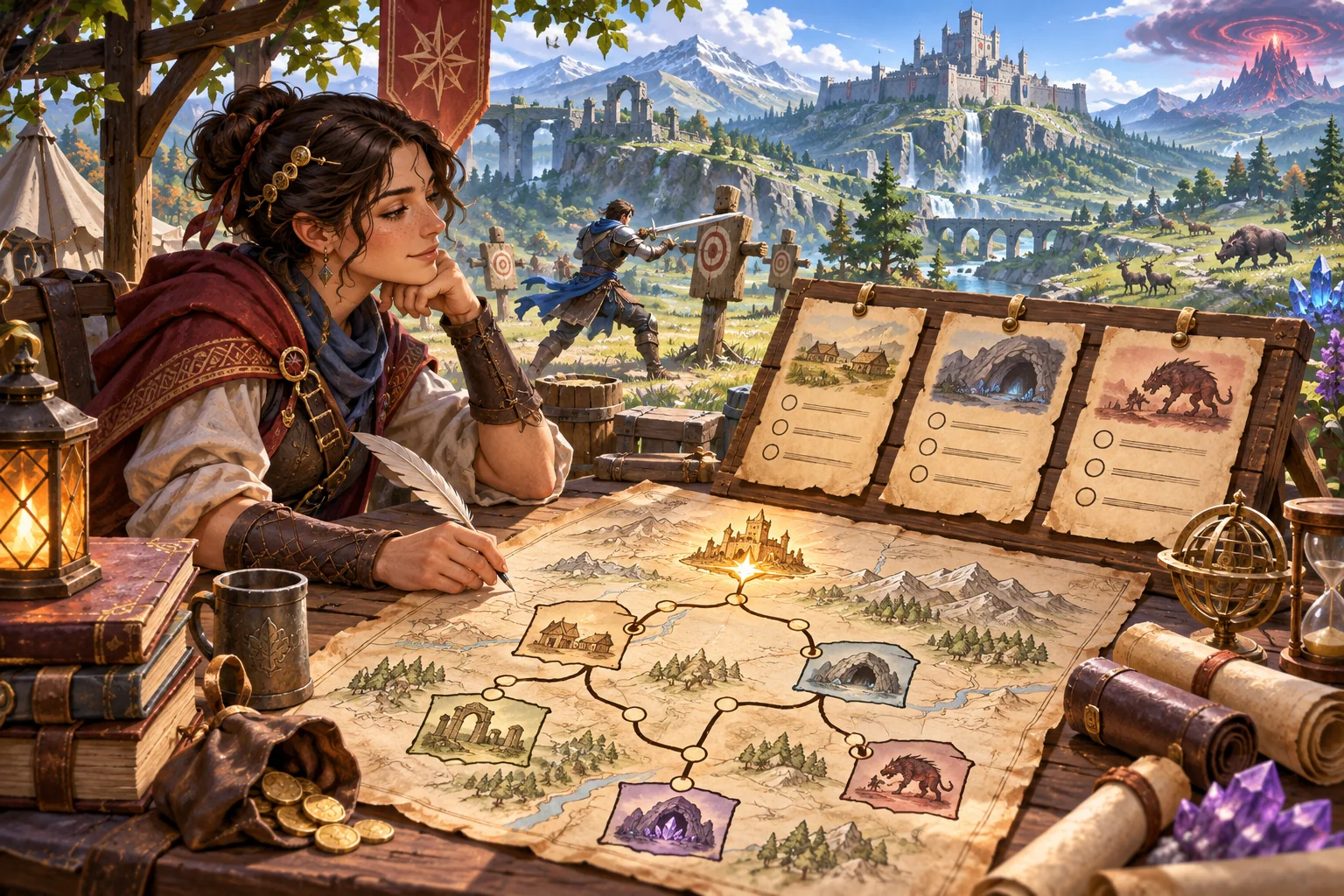
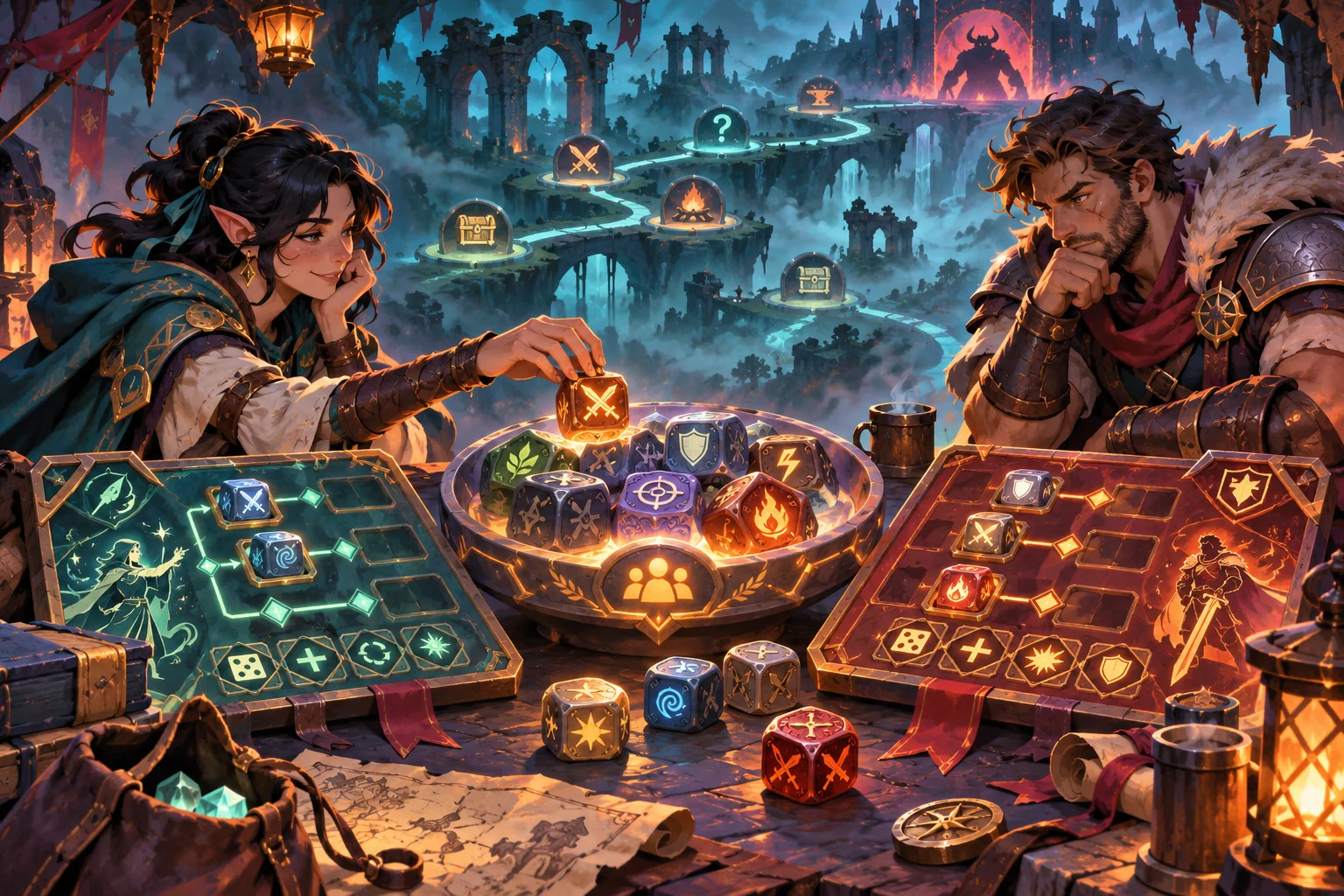
Cooperative adventure can make a party-based RPG feel more social, but it changes who owns quest progress, combat results, inventory, and rewards. Start with one quest and one explicit session model. Decide which peer can commit state, what solo progression means after a co-op run, and how the group recovers from a disconnect before synchronizing every system in the game.
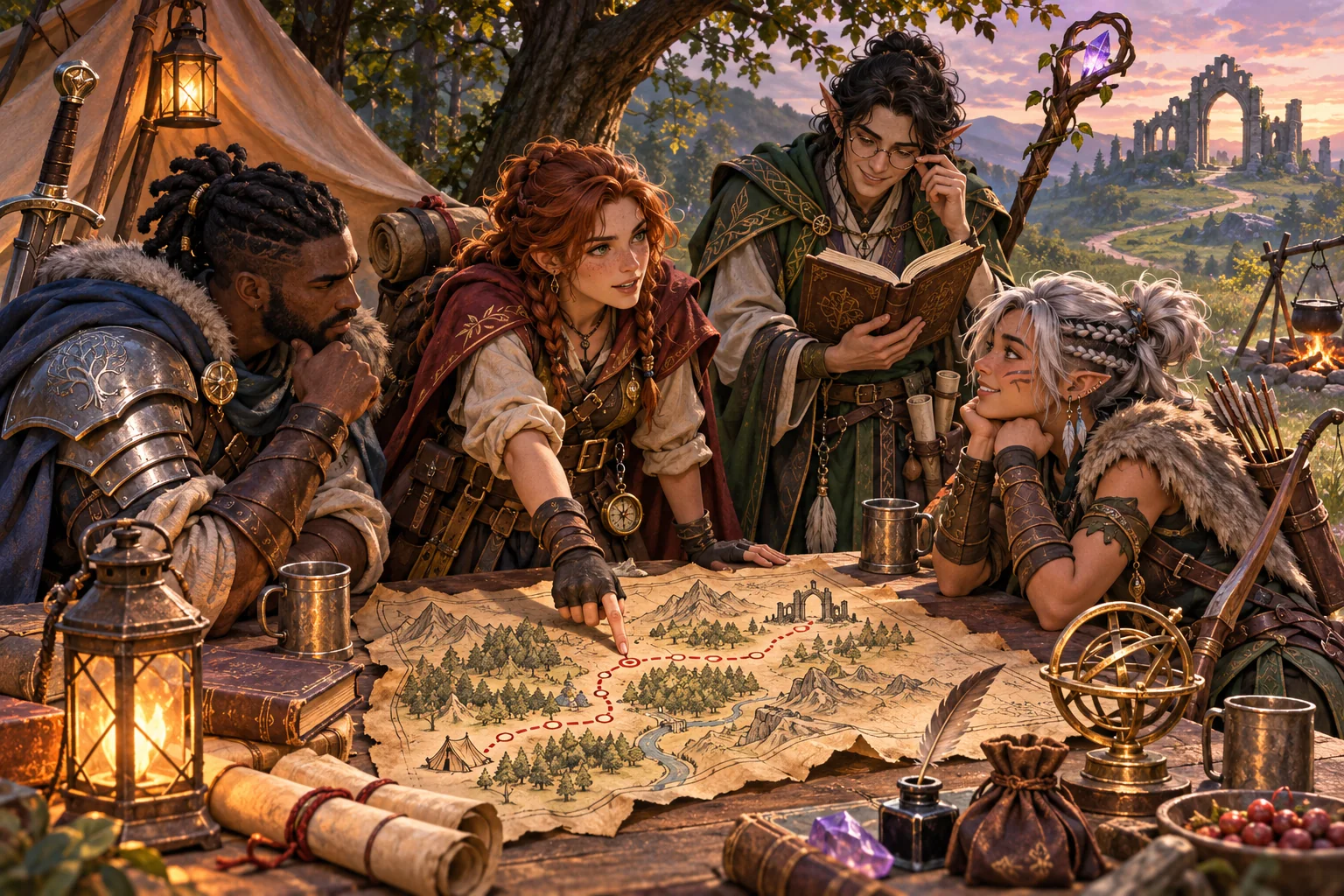
This article outlines an expansion to an existing RPG, not a claim that networking has been implemented. No project, quest database, build, network session, or playtest was available. Ashen Atlas, its party, and its outcomes are illustrative. Treat the checks below as a plan for the real game.
Define the co-op session before syncing everything
Map how a solo quest starts, tracks objectives, changes world state, awards experience or items, and writes a save. Trace combat authority, party membership, inventory ownership, cutscenes, checkpoints, and quest failure. Find whether the game already has an online lobby, turn-based session, or companion system. Keep a baseline solo save and test path before editing.
Choose a narrow first format: a host invites one or two players into a shared quest instance, each player controls one party member, and the group reaches one checkpoint and one result screen. Specify whether this is drop-in co-op, a separate campaign, or a temporary session layered over solo progression. These models have different save and reward consequences; avoid mixing them in the first implementation.
| State | Decision | Owner to identify |
|---|---|---|
| Quest objectives | Shared, personal, or both? | Quest progression system |
| Combat outcomes | Which peer validates damage and defeat? | Combat authority |
| Inventory | Personal bags or shared rewards? | Inventory/economy system |
| Checkpoint | Session snapshot or campaign save? | Save and session owners |
| Rewards | When and how many times committed? | One result authority |
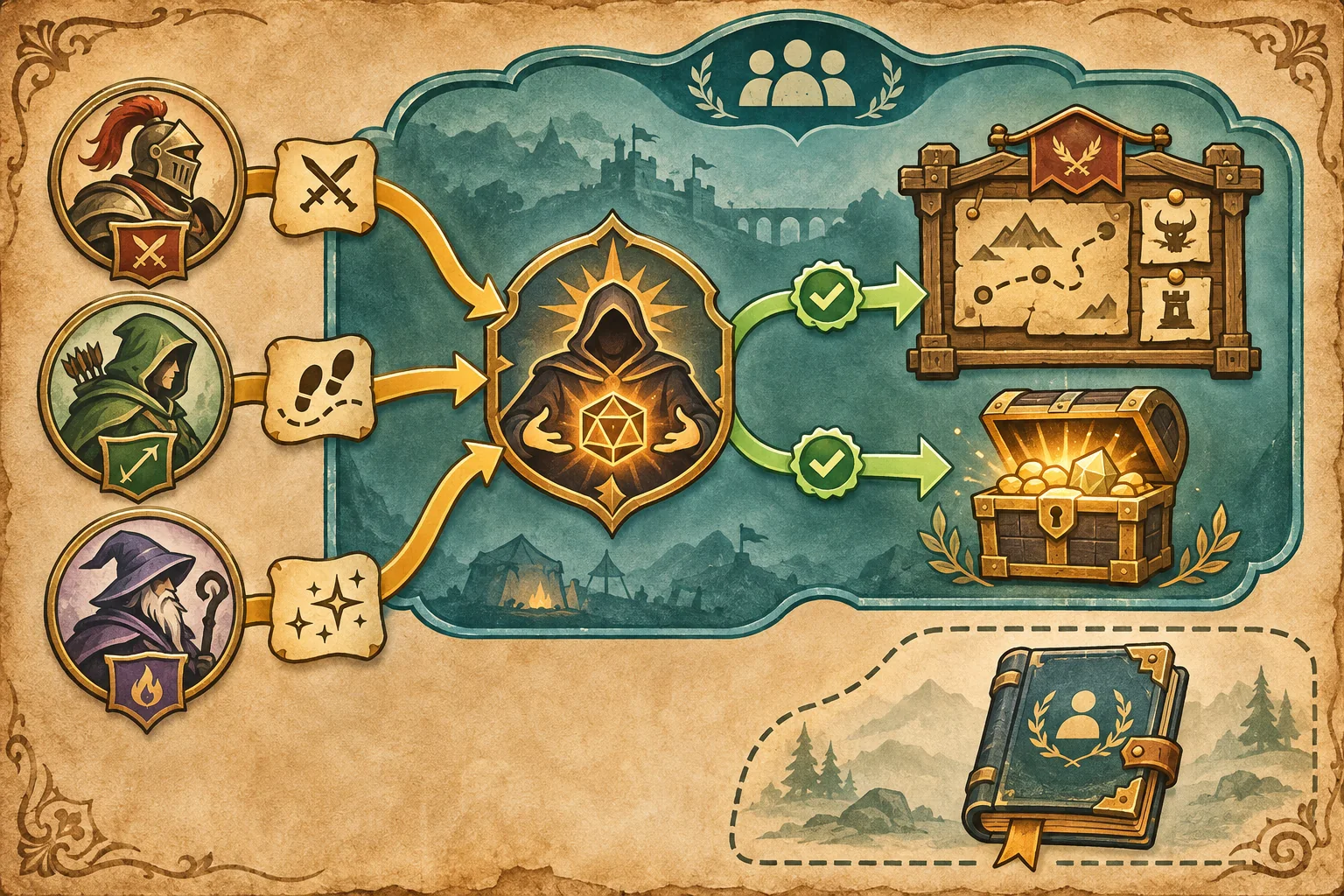
Give the party one source of truth
In a host-authoritative design, clients send input or action requests and the host validates quest, combat, inventory, and reward changes. The server or host should not accept a client’s claim that an enemy died, a quest completed, or an item was acquired without checking the relevant rule. Other network models exist, but every critical state needs a clearly named authority and conflict policy.
Godot’s official high-level multiplayer guide explains RPC authority modes and recommends treating client input as untrusted for competitive or persistent multiplayer. It advises validating arguments and keeping important decisions server-authoritative. This is Godot-specific guidance, not proof that the target RPG uses Godot or that a particular network model is secure.
Keep gameplay rules separate from presentation. A quest panel can display replicated state but should not independently award experience. A combat animation can show a hit but should not decide damage. One completion event should update the canonical quest state, and each player’s UI should render that result. This reduces disagreement when packets arrive late or a player reconnects.
Preserve solo campaigns and character ownership
Decide what participation means for a player’s own campaign. Possible choices include no solo progress, unlocking the quest but requiring a solo completion, or granting a bounded completion flag. If the quest changes the world, define whether it changes the host’s world, each participant’s world, or only a temporary co-op instance. State the rule before players join.
Character ownership needs the same clarity. A participant may bring a campaign character, select a session-only hero, or control a host-provided party member. Define which equipment and skills load, whether temporary effects persist, and what happens if a player leaves. Never let a temporary session object overwrite a player’s canonical character without a deliberate save rule.
Use stable player, character, quest, and session IDs rather than display names or scene positions. Keep solo saves isolated from a temporary session snapshot. If both need to receive a result, commit each through its existing owner with an idempotency key. A second network response should not grant the same item or quest reward again.
Plan join, disconnect, and recovery behavior
Choose when late joining is allowed. If a player joins at a checkpoint, define which party members are present, what quest state is synchronized, and how enemies or cutscenes are presented. If late joining is not supported, say so in the lobby and provide a stable leave path. Do not treat transport reconnection as automatic restoration of game state.
For a disconnect, decide whether the host pauses, continues with an AI companion, or waits for reconnection. Record a checkpoint that is safe to resume. If the host disconnects, define whether the session ends or transfers authority. Test party membership changes during combat, dialogue, reward selection, and save writing—not only from the lobby.
Quest failure should also have a single outcome. If one player falls or leaves, define whether the party can revive them, continue with a smaller party, or restart from a checkpoint. Keep failure and completion mutually exclusive. A reconnecting client should receive the current session phase, not replay the reward event.
| Session event | State to preserve | Recovery rule |
|---|---|---|
| Late join | Quest phase and party roles | Checkpoint snapshot or deny entry |
| Client drop | Host quest and character owner | Pause, AI control, or wait |
| Host drop | Canonical progress and authority | End session or explicit migration |
| Quest failure | Failure result and spend | One restart/checkpoint policy |
| Reward result | Stable completion ID | Commit once and replay result |
Make a narrow change around existing quest systems
Ask AI to inspect quest start/completion, combat result, inventory, character saves, and current network code before editing. Have it describe owners and proposed message flow. A first slice might synchronize party membership, one quest checkpoint, one objective event, and a result commit. Leave every other quest, cutscene, trading system, and campaign migration alone until the slice works.
Use a file allowlist and review the full diff. Require an explicit list of client requests, authority checks, replicated state, and failure cases. If the target is Godot, the official save tutorial demonstrates one approach where persistent objects provide relevant data for serialization and loading; it does not define a safe multiplayer save architecture. Keep network session state and persistent character state distinct.
Keep a clean baseline branch and disposable save copies. Add feature flags or a separate co-op entry path where suitable. If solo saves need a migration, isolate it and test the previous format first. Preserve a rollback that removes session changes without changing the original solo flow.
Test reconnects, solo saves, and reward commits
Test one host and one client on a fresh session, then on a copied existing campaign save. Cover a successful quest, failure, late join, client drop, host drop, duplicate completion message, and reconnect after the reward panel. Verify combat state and quest state agree on both peers. If a test environment cannot simulate packet loss or latency, document that limitation.
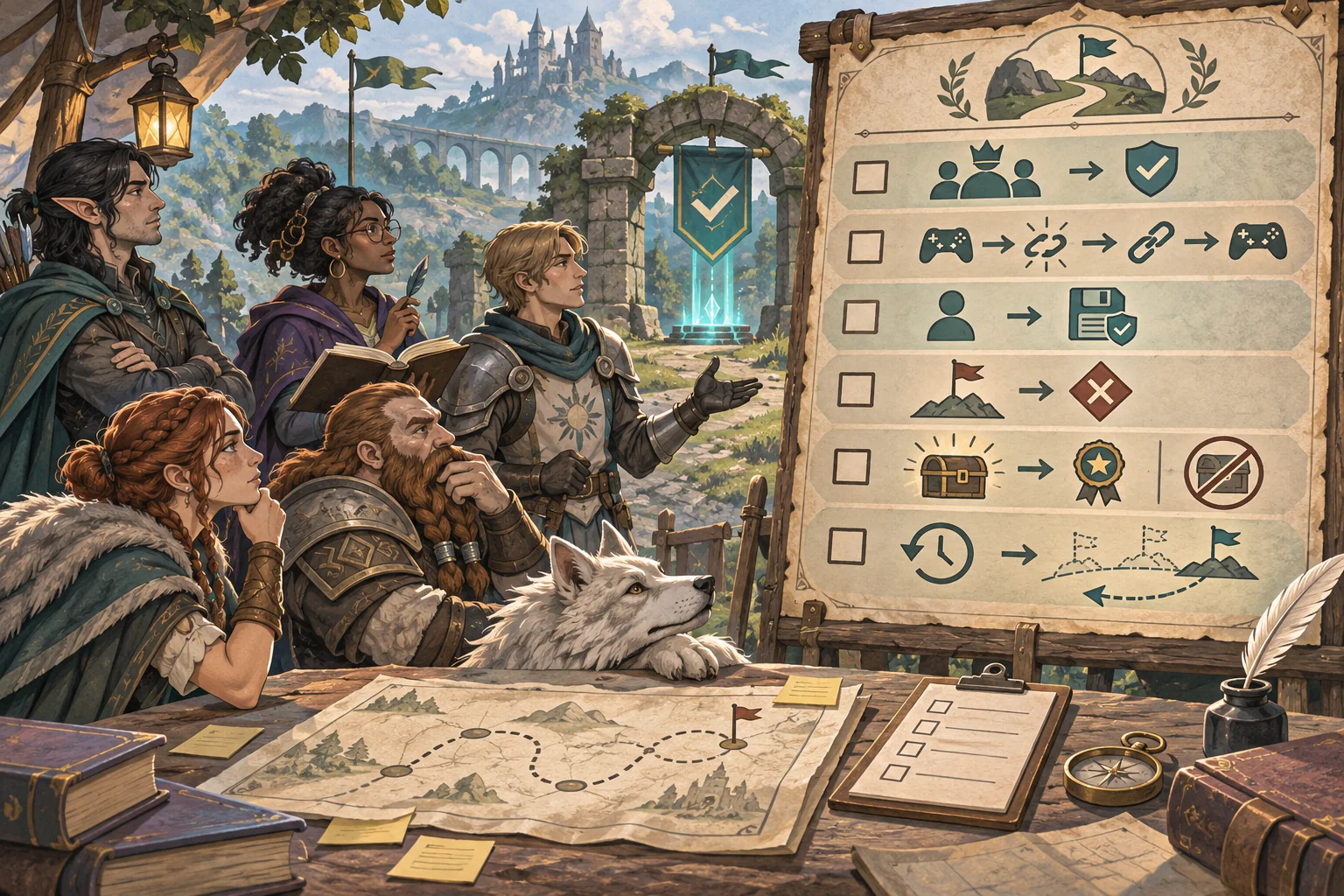
| Proposed check | Action | Evidence to record |
|---|---|---|
| Authority | Send invalid quest or reward request from client | Validation response and unchanged state |
| Solo save | Join and leave with a copied campaign | Character and quest fields before/after |
| Disconnect | Drop client at a checkpoint and during combat | Session phase and reconnect snapshot |
| Host drop | Exit host during a quest | End or migration behavior |
| Duplicate result | Retry completion event and reload | Single completion ID and reward |
| Quest failure | Fail, restart, and rejoin | Objective state and resource spend |
| Rollback | Restore baseline build | Solo quest and save behavior |
This is a test plan, not a report. When the real build is available, capture engine/build version, host model, peer IDs, quest/session IDs, network conditions, save copies, request and response order, and expected versus actual state. Generated interface art can explain a test idea but cannot establish synchronization, security, or reconnect reliability.
Keep cooperative play understandable
Show who owns the session, who is ready, whether progress is shared, and what each player keeps after leaving. Provide clear indicators for party roles, quest phase, checkpoint, and reward commit. Keep solo launch visible if co-op is optional. Players should not have to guess whether a shared result alters their personal campaign.
To explore a separate party-RPG concept, try SEELE AI Game Maker. It is a concept tool, not an editor for an existing project.
Frequently asked questions
What should be authoritative in a cooperative RPG session?
Choose one clear owner for quest progress, combat outcomes, inventory changes, and rewards. In a host-authoritative design, clients can send player intent while the host validates state changes. The actual project may use another model, but it must prevent two peers from committing conflicting quest or reward results.
How can co-op preserve solo quest progress?
Keep solo and co-op progress rules explicit. Decide whether a cooperative quest writes to a shared session, each player’s campaign, or both, and explain which result is saved on exit. Test an existing solo save before and after joining a co-op session, including failure, abandonment, and replay.
What should happen when a player disconnects?
Define whether the session pauses, continues with an AI stand-in, or waits for the player to reconnect. Preserve the authoritative quest checkpoint and avoid granting rewards until the outcome is committed once. Test reconnecting at a checkpoint and after a reward event instead of assuming the network layer restores game state automatically.
How do I prevent duplicate co-op rewards?
Assign a stable session or quest-completion ID and commit each reward through one authority. A retry after a timeout should return the previous result instead of adding the reward again. Verify this with repeated completion messages, host reload, and reconnect cases on disposable saves.
Can AI add co-op to my existing party RPG?
AI can inspect supplied quest, combat, inventory, save, and networking files, propose one cooperative flow, and draft tests. It cannot prove synchronization, security, or reconnect reliability without the real project and executed sessions. Provide the intended host model, file allowlist, baseline saves, and rollback revision.
Expand from one cooperative quest
Choose a session authority, define the solo-save boundary, and implement one quest checkpoint and one idempotent result. Test late join, client and host disconnects, failure, duplicate rewards, and rollback on disposable saves. Treat the fictional party, diagrams, and QA screen as design illustrations; only executed tests on the target build can validate co-op behavior.