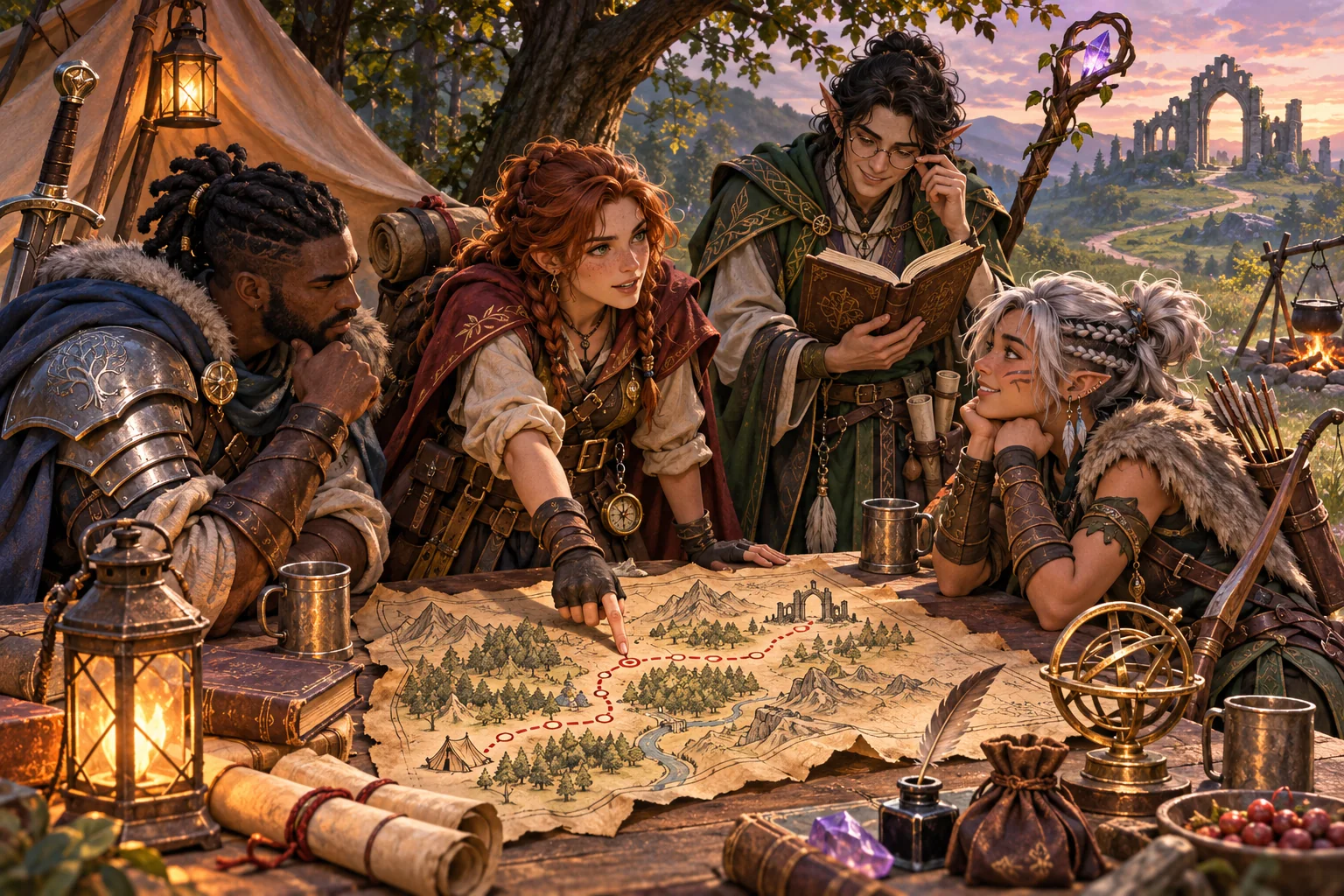
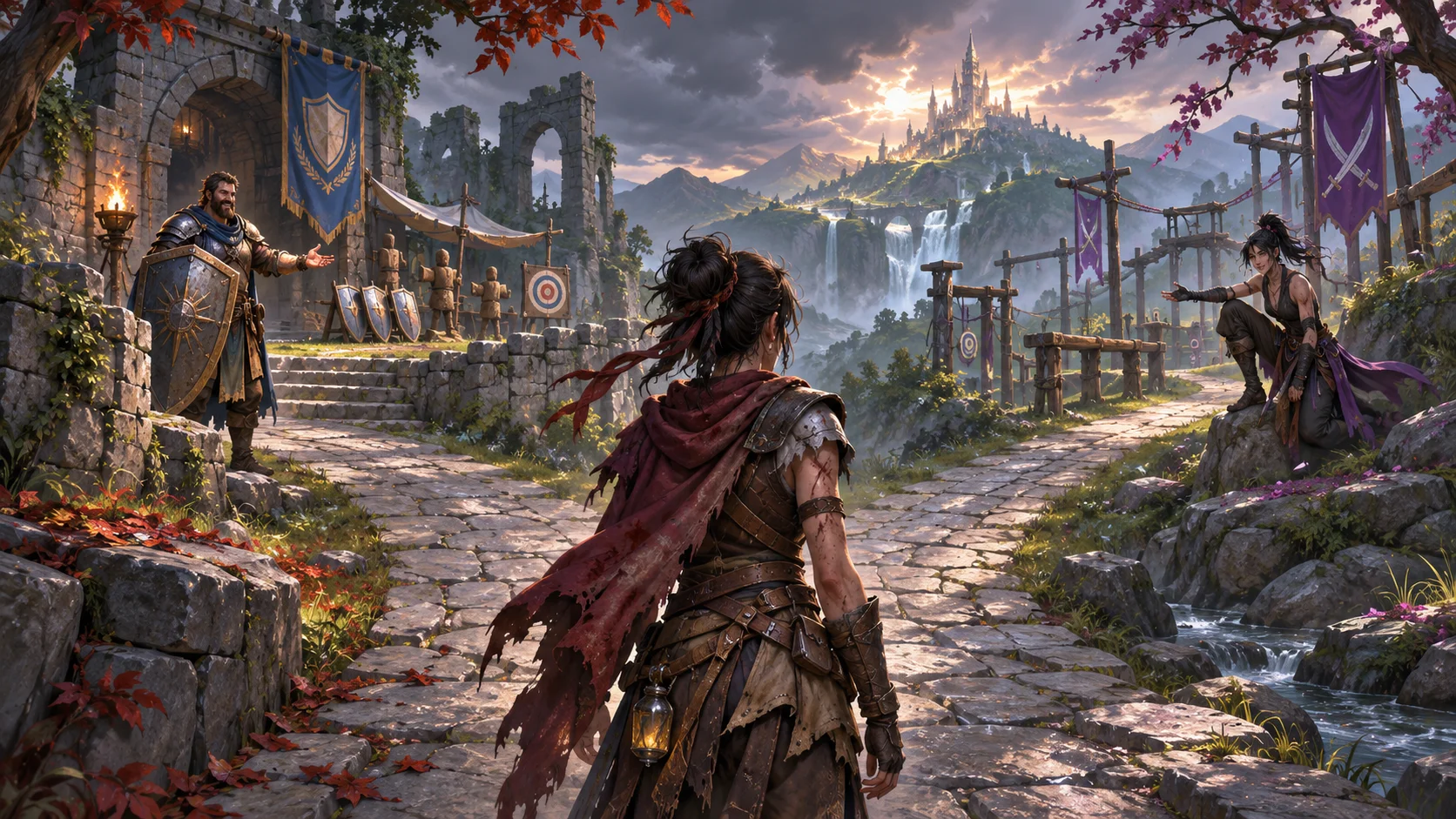
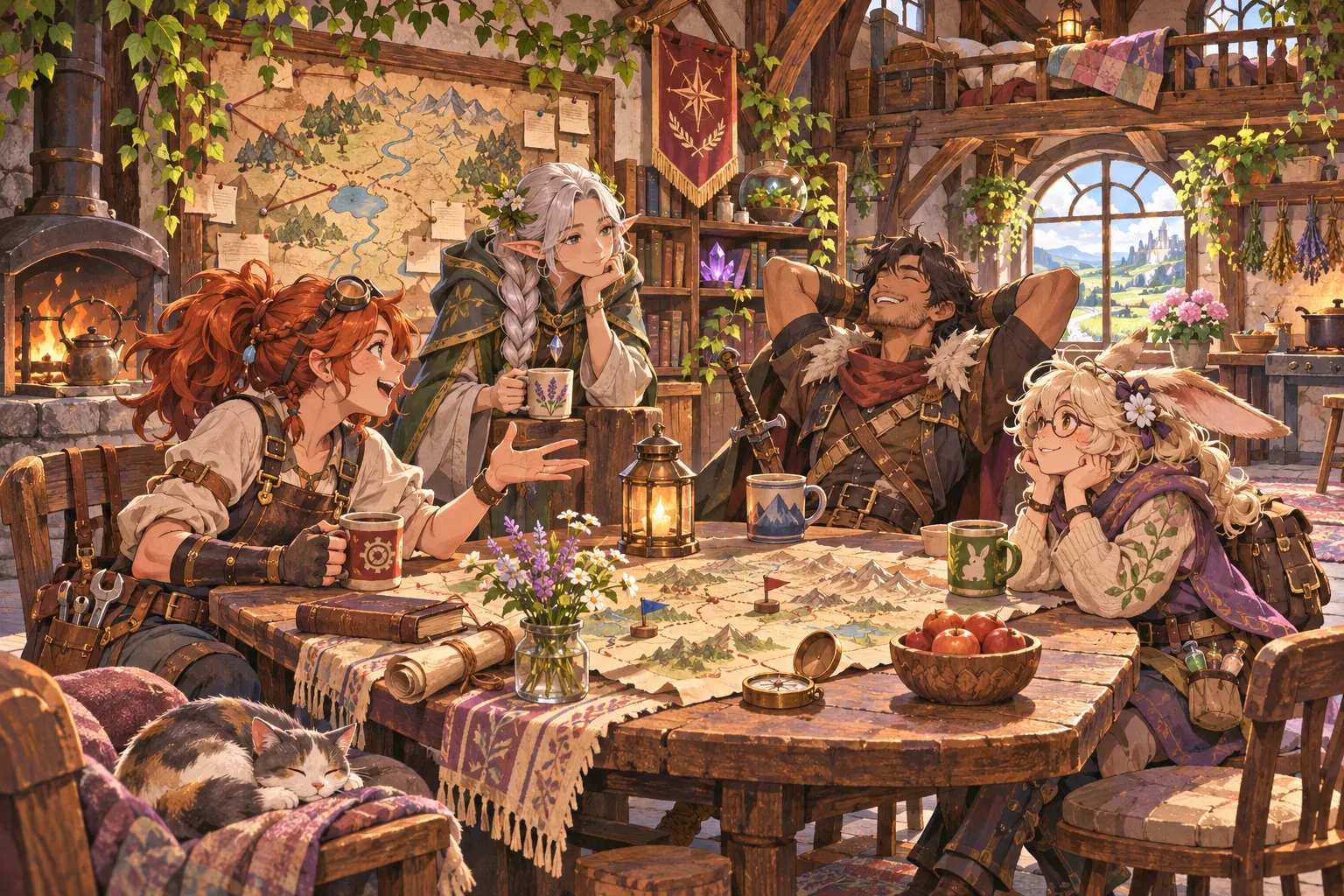
Reuse combat rules and define shared state
An action RPG already has a combat language: movement, attack timing, stamina, enemy telegraphs and healing. A cooperative mode should preserve that language so players recognize the game, while making shared and personal state easy to distinguish. The fictional Ashen Vale example assumes two players, existing dodge/light/heavy actions, stamina, and a three-room expedition. These are design assumptions, not facts about a supplied title.
Write an authority table before implementation. The host controls room transitions, encounter start, enemy positions and expedition completion. Each player controls their character input and personal stamina. Enemy health is shared and replicated. Rewards are granted once when the expedition completes; this example excludes trading, PvP, join-in-progress and cross-platform matchmaking.
Keep the first slice to one two-player expedition with a shared enemy-health state and one revive token per player. Decide what happens on simultaneous attacks, a player falling during a room transition, and a host leaving. Define these cases before asking AI to modify network code.

Make cooperation, disconnects and encounter completion explicit
Co-op encounters need readable cues for both players. Show which enemy is targeting whom, signal the revive window, and distinguish personal stamina from shared enemy health. Avoid adding damage bonuses based only on party size until encounter pacing can be observed in a real build.
For disconnects, pause the expedition for a 30-second grace period if the host remains connected. If a guest returns before the timer ends, restore that guest at the last room entrance with their existing health and stamina state. If the host disconnects or the grace period expires, end the run and return both players to the expedition hub without claiming a win. This is a proposed rule set and needs product-owner approval.
Track the encounter as a small state machine: lobby, room active, revive pending, room cleared, next room, complete, failed. Only the host advances shared room state. Log the transition reason and player identifiers so future network tests can detect duplicate rewards, stranded players or disagreement about whether the run ended.
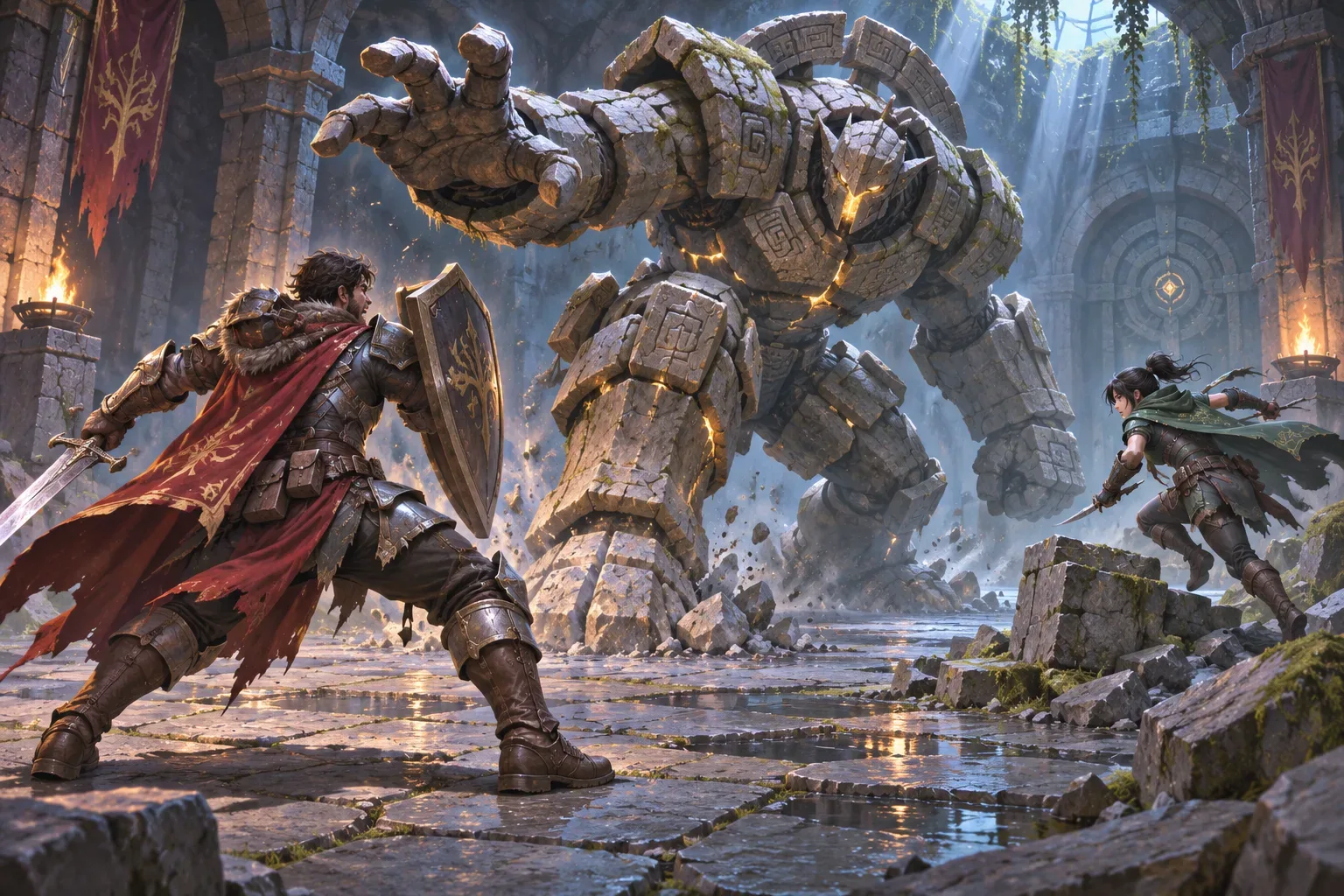
Trace the example
A future session begins in a two-player lobby. The host starts the expedition and both players enter room one. The enemy has one shared health value; each player has separate stamina and can use one revive during the run.
When a room is cleared, the host advances both clients to the next room. If the guest disconnects, the host keeps the run open for up to 30 seconds. A timely reconnect returns the guest to the current room entrance; expiry or host departure ends the run and returns both players to the hub.
The flow above is a design example, not a multiplayer implementation or observed session. A real build must validate replication, latency, reconnect behavior and reward idempotency with actual clients.
Write the six prompts
Use one prompt per design decision so later checks have a clear source of truth. These drafts describe Ashen Vale; they have not been run and do not represent a generated playable game.
Prompt 1: inspect existing RPG systems
Inspect the existing action RPG project without editing it. Identify combat actions, stamina, enemy state, room progression, save/reward flow and current networking. Cite file paths and separate confirmed behavior from assumptions.Prompt 2: assign authority and ownership
Draft a co-op authority table for a two-player expedition. The host owns room progression and shared enemy state; players own input and stamina. Flag conflicts with existing architecture before proposing code.Prompt 3: define encounter transitions
Define the encounter states and transitions: lobby, room active, revive pending, room cleared, next room, complete and failed. Include disconnect, host departure, simultaneous clear and duplicate reward cases.Prompt 4: bound the co-op slice
Plan a minimal two-player slice using existing dodge and attack actions. Show only necessary files and message fields; keep PvP, trading, matchmaking expansion and unrelated combat changes out of scope.Prompt 5: implement approved shared state
Implement only the approved shared encounter state with validation and clear replication boundaries. Show the diff; do not claim network behavior works until tested with two real clients.Prompt 6: prepare real-client checks
Prepare future multiplayer checks for simultaneous damage, shared health, personal stamina, revive limit, room transition, guest reconnect under 30 seconds, timeout, host exit and exactly-once reward. State evidence to collect.SEELE’s official page describes general plain-English prompting, a playable first version, browser testing and refinement; it does not verify Ashen Vale. See Free AI game maker for workflow context only.
Prepare future build checks
Cooperative state must agree across clients. These are future checks for a real two-client build, not passed results. These are future checks, not passed tests. Record the before and after state so a later build can be compared with the specification.
| Future check | Expected rule | Evidence to capture |
|---|---|---|
| Combat parity | Existing dodge and attack rules remain consistent for both players | Client actions and server state |
| Shared/personal state | Enemy health is shared; stamina stays per character | State snapshots from both clients |
| Revive limit | Each player can revive once per expedition | Revive counter and transition log |
| Reconnect | Guest returns within 30s at current room entrance; timeout fails run | Timestamps, room state and client logs |
| Completion/reward | Host advances room and completion grants exactly once | Event IDs and reward records |
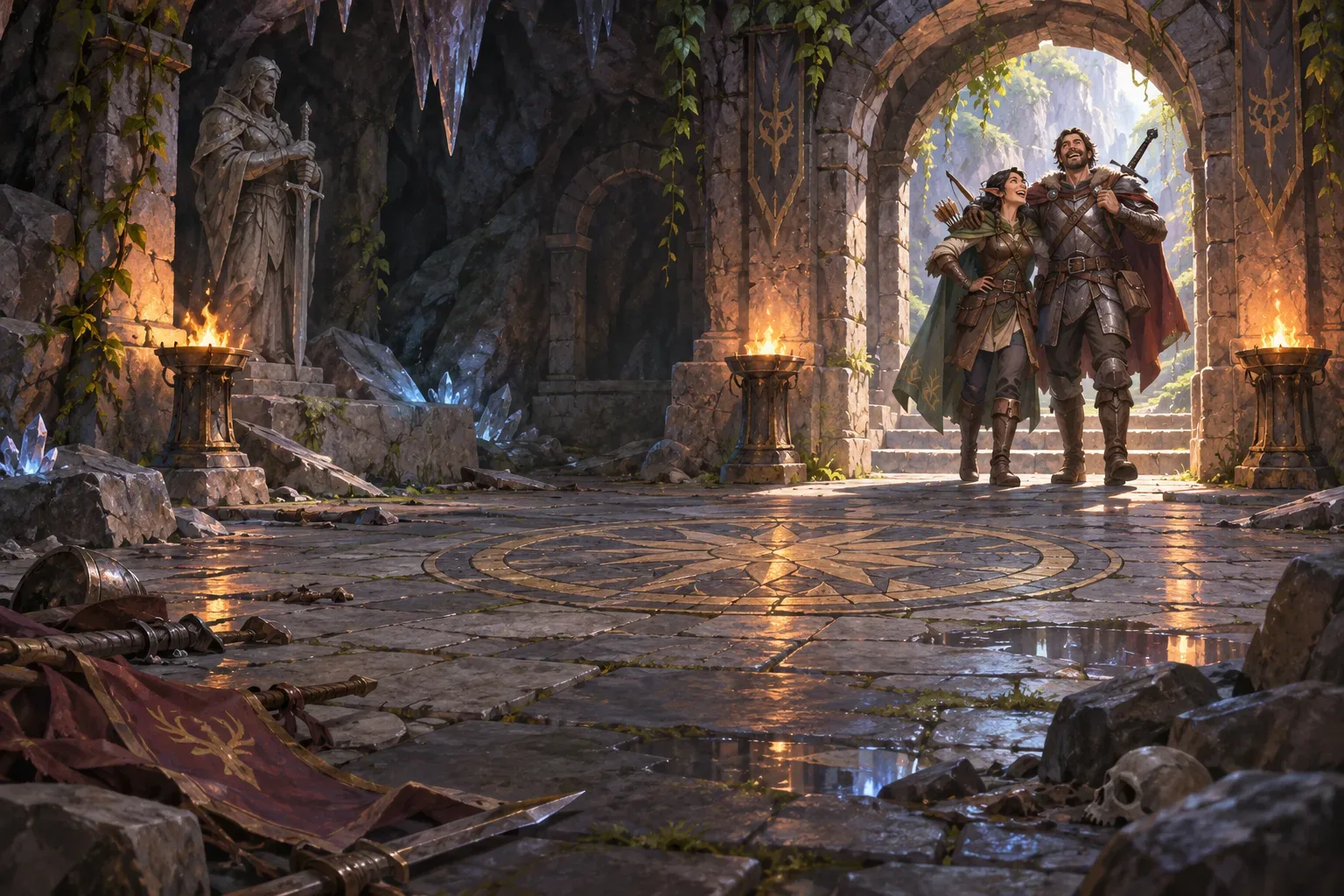
No real game run, browser test or measured result is available for this fictional example. The illustrations are original concept art and are not screenshots.
Frequently asked questions
What should be reused when adding co-op to an action RPG?
Start with the existing movement, combat, stamina, enemy and room rules, then define which state is shared and which remains personal.
Why define multiplayer authority before coding?
Clear ownership prevents clients from disagreeing about enemy state, room transitions, reconnect outcomes and reward grants.
How should a co-op reconnect rule be specified?
State the grace period, which player can remain, the returning player's restore point and what happens when time expires.
Was Ashen Vale’s co-op mode implemented or tested?
No. Ashen Vale is fictional and no networked build, two-client session or gameplay test is claimed.
Should co-op rewards be granted by each client?
The example assigns completion rewards to authoritative expedition state and calls for an exactly-once check in a real build.