Define what the guild hall owns and what the player owns
A guild headquarters can give party members a stable place to meet between quests, but it adds shared state to a game that may already save the player's home and inventory. The fictional Willowbound RPG has a player-owned home and daily quests. The proposed guild hall belongs to the guild, is visitable by four listed members and persists between sessions. This is a design example, not a real feature or tested title.
Separate ownership explicitly. The guild record owns member IDs, donated materials and room levels. The player profile owns personal inventory, home decorations and quest progress. A visit may display shared guild state, but it must not silently move, duplicate or consume objects in the player's home.
Set a narrow first release: a shared board, a Map Room and a Garden Room. During each story chapter, members may complete one room upgrade. Map Room costs four timber and two cloth; Garden Room costs two timber and four seeds. The upgrade can be funded by one player donation or multiple recorded donations, but the total cost must be reached before confirming the upgrade.
Make donations and room upgrades durable transactions
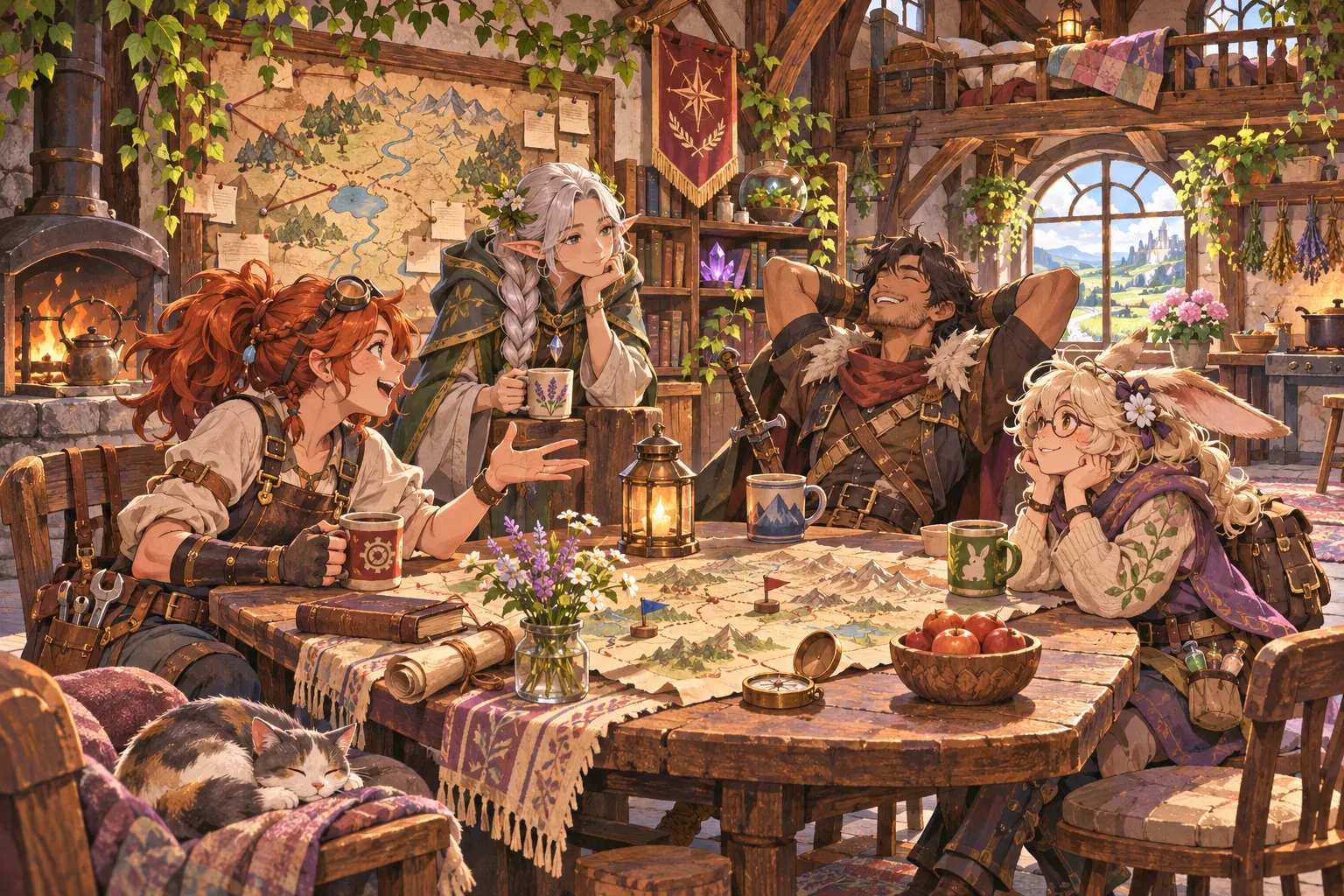
Treat donation and upgrade as transactions. Preview the material amount, source inventory and target guild room. On confirmation, verify the player still owns the materials, subtract them once, record the contribution under that member, and save the guild state. A failed or cancelled transaction leaves both the player inventory and guild total unchanged.
When the total reaches the room cost, the guild may confirm one upgrade for the chapter. Save the new room level, chapter identifier, contributing members and transaction ID together. If a second request arrives after completion, reject it without charging materials again. Do not grant an upgrade merely because the client shows a full contribution bar.
On load, reconstruct the guild hall from the saved room levels and member list. Keep the player's home scene and decorations on their own save path. Defer guest permissions, guild dissolution, cross-player online sync and player-created room layouts until the core shared-state boundary is reviewed.
Trace the example
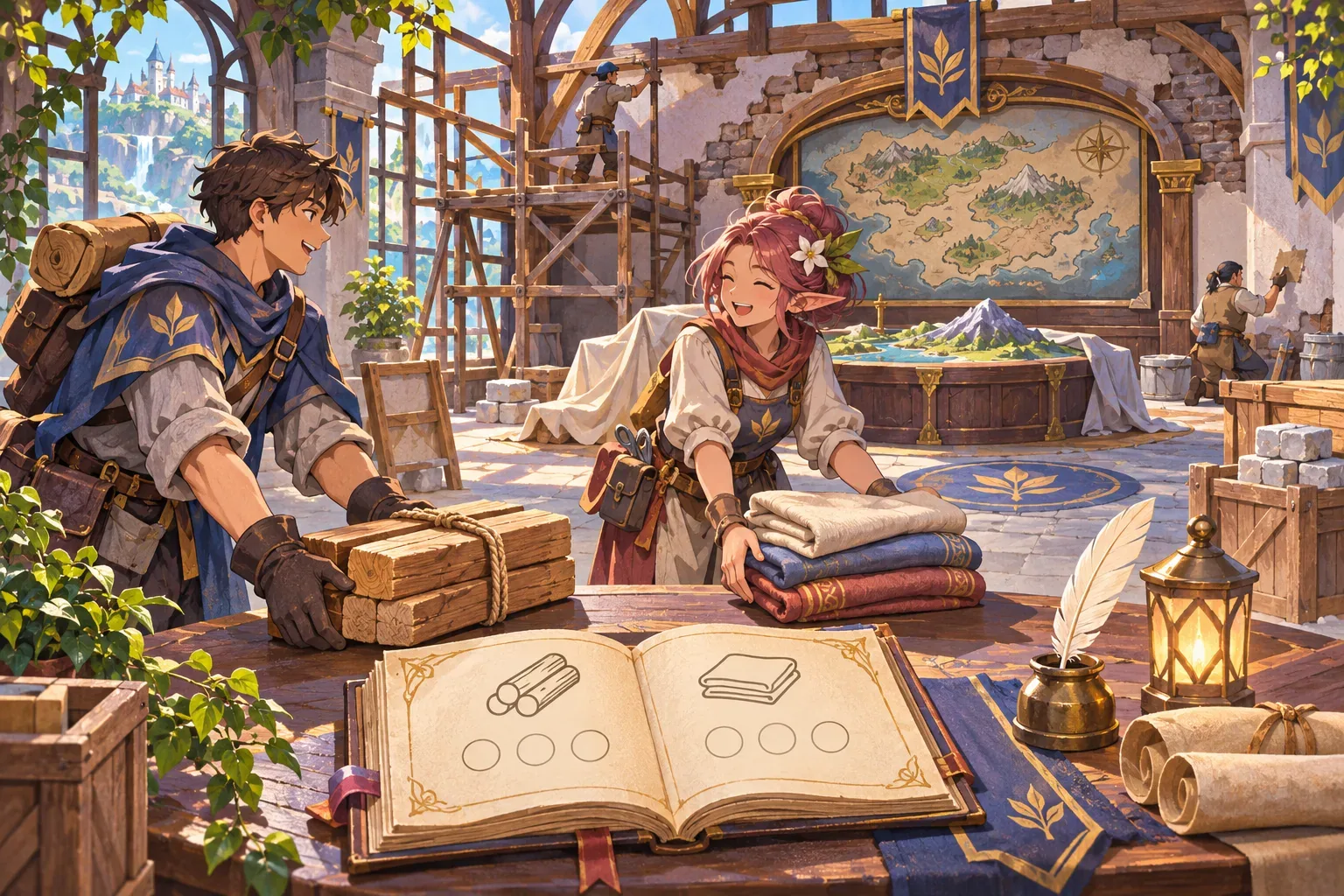
In a new Willowbound chapter, the guild chooses the Map Room. The player contributes two timber and one cloth; another member later contributes two timber and one cloth. The shared total reaches four timber and two cloth, matching the room cost.
The guild confirms the upgrade. The transaction records the Map Room's new level and both contributions once. Returning to the hall after reloading shows the same room, while the player's home and remaining personal inventory remain as they were outside the donated materials.
This is a fictional state example. No game source, contribution service, save implementation, multiplayer session or persistence test is available for Willowbound.
Write the six prompts
Use one prompt per design decision so later checks have a clear source of truth. These drafts describe Willowbound; they have not been run and do not represent a generated playable game.
Prompt 1: inspect home, party and save ownership
Inspect the supplied RPG project read-only. Locate player home, inventory, quest rewards, party member IDs, save profiles, scene loading and any guild/social data. Cite paths and identify ownership boundaries.Prompt 2: define the shared guild record
Design a guild-owned record for member IDs, material contributions, chapter and room levels. Keep it separate from player home decorations and personal inventory; flag migration and account ownership questions.Prompt 3: bound the hall and room costs
Define the first hall scope: shared board, Map Room cost 4 timber + 2 cloth, Garden Room cost 2 timber + 4 seeds, one upgrade per chapter. State who can contribute and how contributions are displayed.Prompt 4: validate member donations
Implement donation as a validated transaction: preview, recheck inventory, subtract exact materials once, record member contribution and save. Cancellation or failure must leave both records unchanged.Prompt 5: commit room upgrades once
Implement room confirmation with a stable transaction ID, full-cost validation and one-upgrade-per-chapter rule. Reconstruct the hall from saved guild state without altering the player's home scene.Prompt 6: prepare persistence and isolation checks
Prepare future checks for partial contributions, exact costs, insufficient inventory, cancel/retry, duplicate transaction, reload persistence and unchanged home/inventory. Do not claim results without running the game.SEELE’s official page describes general plain-English prompting, a playable first version, browser testing and refinement; it does not verify Willowbound. See Free AI game maker for workflow context only.
Prepare future build checks
A shared headquarters must persist without leaking state into an individual player's home or inventory. These are future checks, not tested outcomes. These are future checks, not passed tests. Record the before and after state so a later build can be compared with the specification.
| Future check | Expected rule | Evidence to capture |
|---|---|---|
| Ownership boundary | Guild rooms and contributions are shared; home decor and remaining inventory stay personal | Before/after player and guild records |
| Contribution | Exact materials are removed and attributed to the member once | Inventory delta and contribution ledger |
| Insufficient/cancel | No state changes when materials are short or user cancels | State snapshots before and after |
| Upgrade rule | Room cost is exact and one upgrade per chapter | Chapter ID, cost and room level |
| Reload | Guild layout and member list persist; player home is unchanged | Reloaded guild and home scenes |
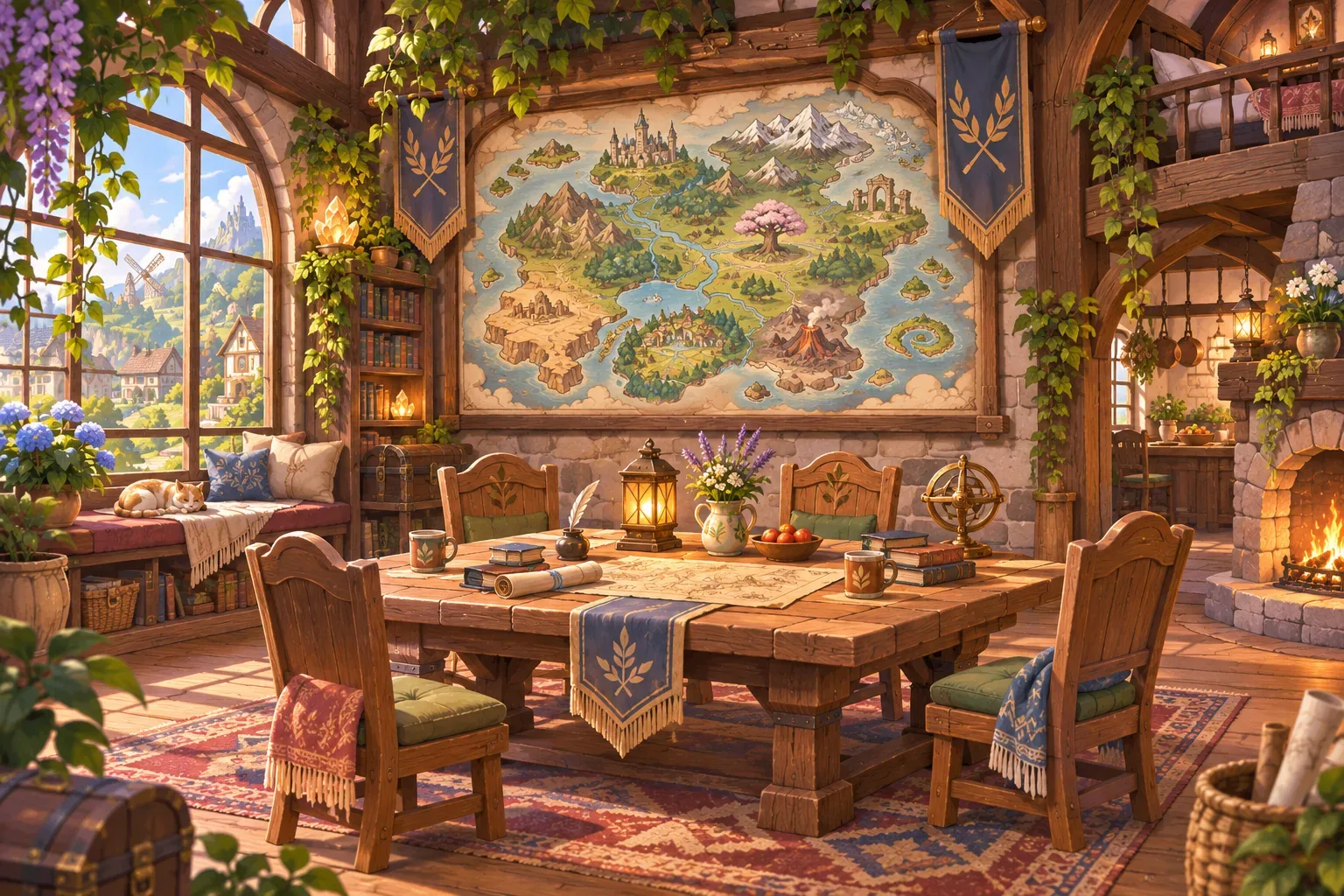
No real game run, browser test or measured result is available for this fictional example. The illustrations are original concept art and are not screenshots.
Frequently asked questions
How is a guild headquarters different from a player home?
The guild hall uses shared guild-owned state such as members and room levels, while home decorations and personal inventory remain tied to an individual profile.
What does the Willowbound Map Room cost?
In this fictional example, it costs four timber and two cloth, with one room upgrade allowed per chapter.
Can several players contribute to one room?
The example supports recorded contributions from multiple members and confirms the upgrade only when the shared total meets the exact cost.
Was Willowbound's guild hall built or tested?
No. Willowbound is fictional; no game source, implementation, save test or multiplayer session is claimed.
How do you avoid charging materials twice?
Validate against authoritative inventory, record a stable transaction ID and commit the material delta and room level as one saved operation.