Persistent card unlocks sound like a save-field change, but a narrative game must also protect the order in which players discover information. A chapter may be unlocked while its cards remain hidden until a reveal. A card can be collected without being selected into the active deck. Model those states separately before extending the save flow, then test chapter transitions and older saves.

This guide is for an existing card-based narrative project. The archivist, cards, chapter branches, and reveal rules below are fictional teaching examples. Adapt them to the project’s actual content model and spoiler policy.
Separate access, discovery, and selection
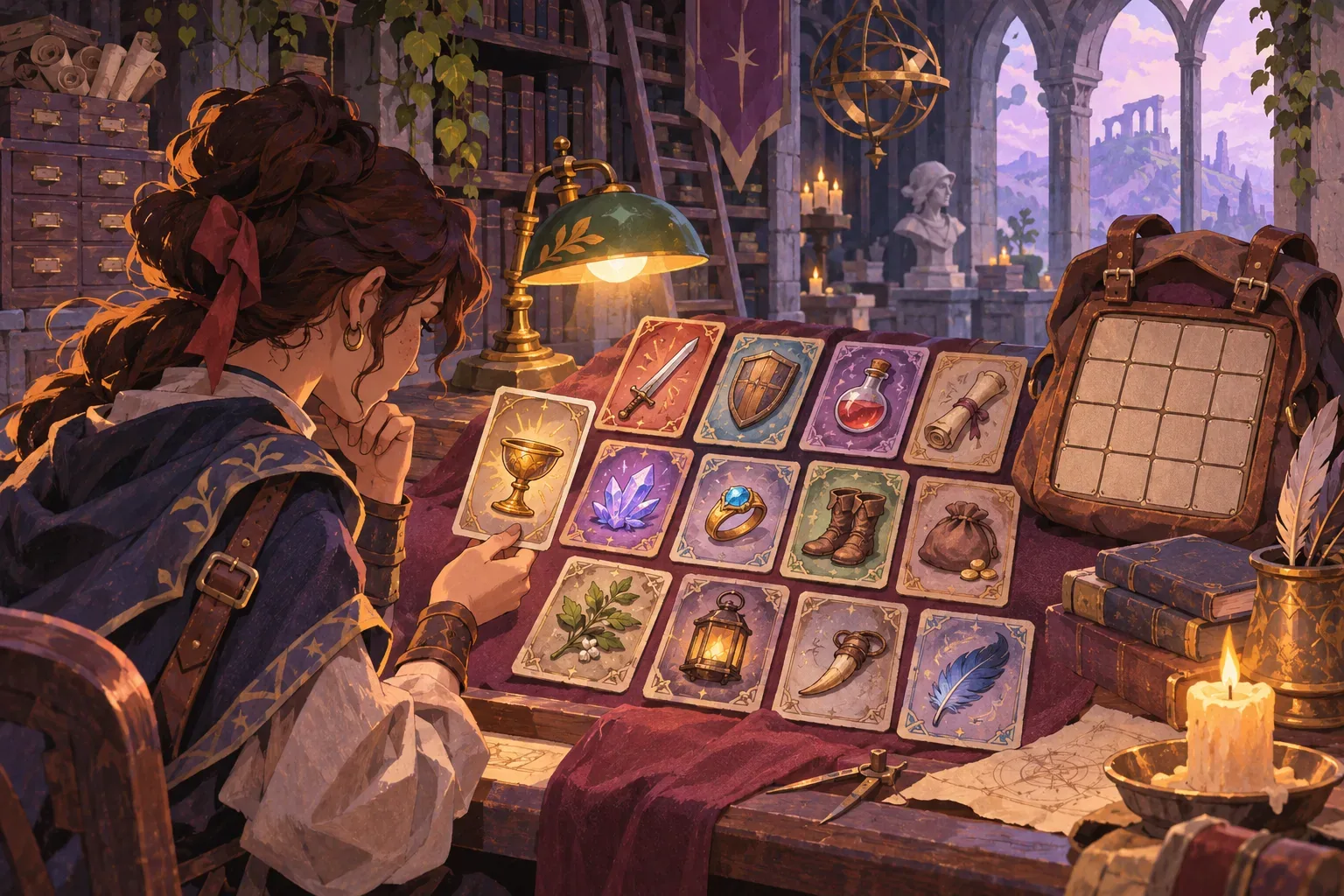
Start by listing each card-like state and its lifetime. “Unlocked” might mean the chapter is available. “Collected” can mean the player found an evidence card. “Revealed” can mean the story has shown its face or text. “Selected” may describe a temporary reading deck or dialogue option. If one boolean has to answer all four questions, the interface and story logic can drift apart.
| State | What it means | Typical reset question |
|---|---|---|
| Access | Player may enter a chapter or branch | Does access survive a new session or chapter replay? |
| Discovery | A specific card or clue was found | Can a chapter reset remove discovery? |
| Reveal | Story has shown the card’s content | When can its art or text appear in menus? |
| Selection | Card is in the active deck or current choice | Does it clear after a scene or run? |
In the fictional Meridian Archive, discovering a brass key card adds it to the collection, a later scene reveals its backstory, and chapter access is controlled by a separate branch flag. A temporary reading deck resets when the player starts another chapter. These are sample design rules, not observed game behavior.
Keep unlocks from revealing future story
Decide what the player should see in each surface: chapter list, collection screen, hand/deck, dialogue choice, and replay menu. Persisting access does not require revealing the card’s title, image, or explanation everywhere. A locked or undiscovered placeholder can preserve the collection’s shape without exposing story details.
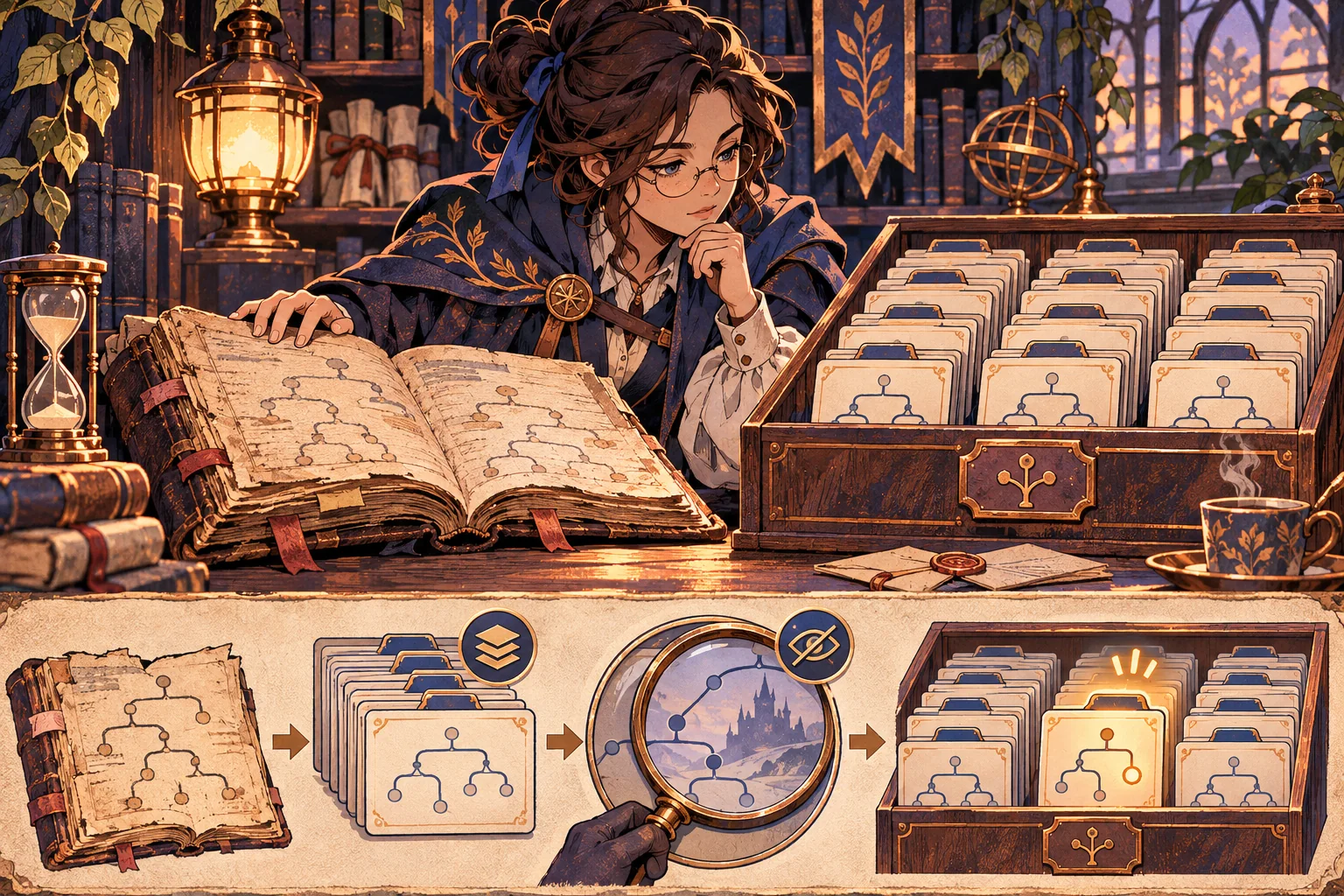
Write reveal rules next to the content IDs. For each branch, record the required prior event, the flag that unlocks access, and the first scene that may reveal the card. Then test reloads immediately before and after the reveal. A UI-only fix can hide a spoiler in one menu while a dialogue prompt or generated thumbnail still exposes it.
| Player surface | Safe question | Check |
|---|---|---|
| Chapter list | Does access appear without story text? | Inspect locked, unlocked, and replay states |
| Collection | Do undiscovered cards avoid spoilers? | Check titles, artwork, previews, and tooltips |
| Active deck | Are only valid selections shown? | Start and exit scenes at each reveal boundary |
| Dialogue | Can future cards affect earlier choices? | Reload a save before and after the unlock event |
Prefer stable content identifiers over card display names. Text and art can change or be localized; a key such as archive_key_card should continue to refer to the same story record. Keep access rules in the existing narrative/content owner rather than scattering special conditions across menus and scenes.
Extend the current save and content model
Trace how the project already stores chapters, inventory, achievements, and active choices. Reuse its save slot and reset behavior where practical. A new “card unlock manager” can disagree with the narrative system that decides which scene to show. Identify the source of truth for branch flags before creating another field.
Godot’s stable saving tutorial demonstrates deciding which information should persist and serializing relevant data. That is an engine-specific example, not a prescribed narrative schema. If the project uses Godot, confirm the actual engine version and follow its current save architecture; for another engine, use its own documentation and project conventions.
Be explicit about what happens when an older save lacks a new card field. Do not default every missing card to unlocked simply because the collection is now larger. Decide whether to derive access from an existing chapter flag, initialize discovery as empty, or run a one-time migration. Preserve the active deck only if the old game already treated it as durable state.
Ask AI to inspect the story flow before editing
Give AI the relevant content IDs, save model, chapter transitions, reveal events, and existing reset behavior. Ask it to map where access, discovery, and selection are read and written. A narrow instruction can request a file list, minimal data changes, migration defaults, spoiler checks, and a rollback plan before implementation. Review the diff for UI paths that still use the old field.
Inspect the existing card and narrative save flow before editing. Keep chapter access, discovered cards, reveal state, and active selection distinct. Preserve current branch order, chapter reset, localization IDs, and save slots. First identify state owners and affected files. Then propose the smallest change with old-save defaults, spoiler checks, and rollback steps. Do not claim persistence works until it is tested in the project.
SEELE’s catalog describes game creation from a written idea and playable game categories. It may help explore a separate card-narrative concept or communicate a scene direction. It does not establish that SEELE edits an existing narrative codebase or migrates player saves.
Migrate carefully and keep recovery possible
Use a copy of an older save. Record the old and new schema versions, fields added, default values, and behavior if a card ID no longer exists. Keep an untouched copy so you can compare access and discovery before and after migration. If parsing or migration fails, follow the project’s established recovery behavior rather than overwriting the only save with a partial state.
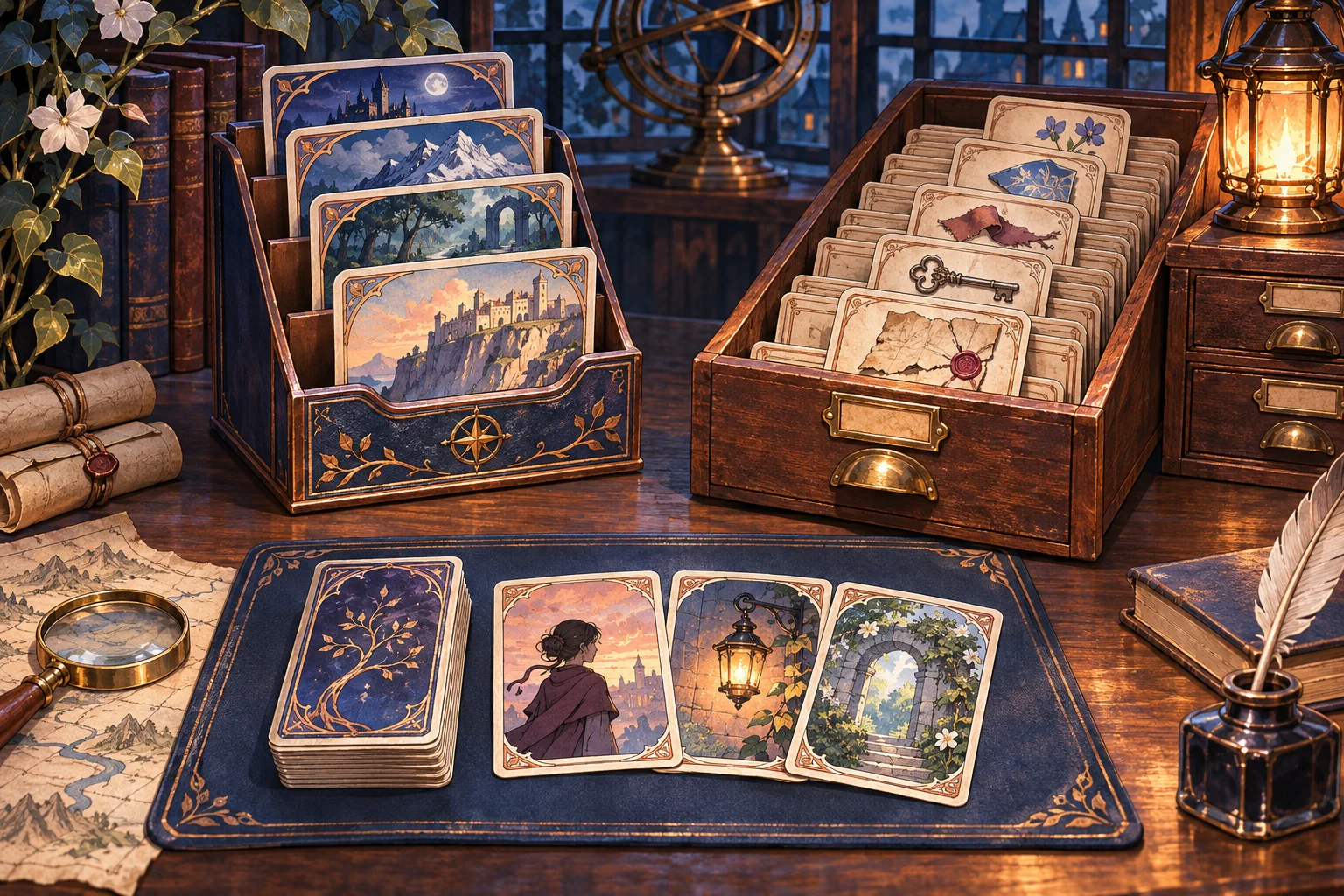
The mock ledger helps explain what the team should review, but it proves nothing about a real save. Check the actual chapter list, collection, active deck, and dialogue after loading. Include a save version and chapter ID in the test record so a future regression can reproduce the same path.
Test the reveal and reset boundaries
Test from a fresh profile, just before a branch unlock, immediately after it, after a chapter replay, and from a copied old save. The following matrix describes checks to perform, not completed results.
| Case | Action | Verify |
|---|---|---|
| Fresh profile | Open chapter and collection screens | No stale unlock or spoiler appears |
| Unlock event | Trigger a branch access condition | Only intended access state changes |
| Card discovery | Find a story/evidence card | Collection updates once with correct ID |
| Scene reveal | Advance to its narrative reveal | Card content becomes visible at the right point |
| Chapter reset | Replay or restart chapter | Durable access and temporary selection follow rules |
| Older save | Load a duplicate prior-version save | Migration keeps earned content and hides future details |
Record build, save schema, chapter, card ID, action, expected state, and observed state. If the wrong card appears, determine whether the issue is in migration, branch evaluation, collection filtering, reveal timing, or UI caching before patching multiple systems.
Frequently asked questions
Which card unlocks should persist in a narrative game?
Persist the story or collection unlocks that should remain available across chapters and sessions. Keep the active deck, temporary draft choices, and one-run effects separate unless the design intentionally preserves them. Use stable content IDs and make reset rules visible to the player.
Should collected evidence cards and story unlocks use the same flag?
Usually they represent different decisions: a player may discover a card without unlocking its chapter, or unlock a chapter without selecting the card. Model those states separately when the game needs to present, filter, or reset them independently. Reuse the project’s current content model where possible.
How do I avoid spoilers when saving narrative card progress?
Separate what is unlocked from what is revealed in the current chapter or interface. A durable flag can grant access while the UI still respects the story's reveal order. Test reloads at chapter boundaries and verify that previews, collection screens, and dialogue do not expose future content prematurely.
How should old card saves migrate to a new unlock system?
Load a copied older save, map known card identifiers to the new schema, and define defaults for missing fields. Preserve earned content and the player's selected deck where intended. Record the migration version and retain a recoverable original until real project tests pass.
Can a mock archive prove persistent card unlocks work?
No. A mock can clarify card groups and reveal rules, but persistence requires an actual save, reload, and chapter transition in the target build. Record build and save versions, expected unlocked cards, and what the game displayed after each action.
Make persistence serve the story
Keep access, discovery, reveal, and active selection aligned with the narrative’s intended order. Reuse one source of truth, migrate from a copied save, and test every chapter boundary where content changes. That gives the team a clear way to expand card progression without losing earned story state or spoiling a future reveal.
To explore a separate card-based narrative concept, try SEELE AI Game Maker. It is a concept starting point, not a save migration tool.