Keep the permanent collection outside the active bag
Persistent card unlocks can reward a player across runs without making an active bag unpredictable. The fictional Parcel Vault game has a 4×4 inventory grid, three-room runs, a temporary run deck and a permanent archive collection. Its example rules are illustrative; no game or feature has been supplied or tested.
Separate four pieces of state: the archive collection that records permanently unlocked cards; the draft pool available when a future run begins; the active run deck; and the cards or items currently placed in the 4×4 bag. Unlocking a card changes the archive and future draft pool only. It must not silently insert a card into a current deck or occupied bag.
A completed room-three run earns one archive stamp. Every two stamps let the player choose one eligible card to unlock permanently. The unlock happens at the post-run archive screen, not during the active encounter. Failed or abandoned runs before room three award no stamp. The example excludes duplicate unlocks, refunds, trading and cross-save behavior.
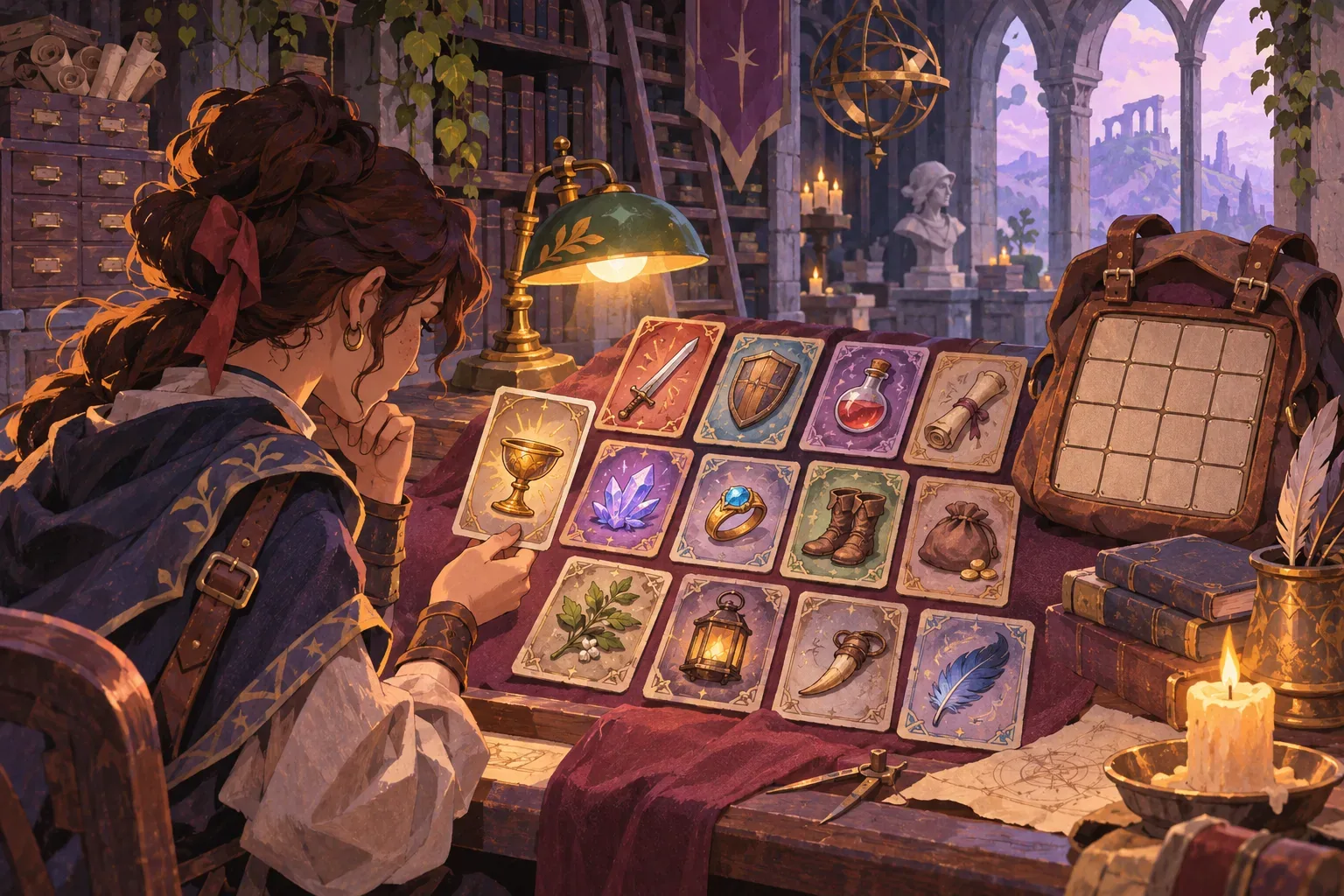
Unlock future choices only after a completed run
At a future run's setup, build its draft pool from the permanent archive plus starter cards. The player still chooses what to draft and where to place it. This preserves the inventory puzzle: permanent collection breadth changes available choices, while each active run remains a separate arrangement.
Use a stable run identifier to settle the completion reward once. When the player selects an unlock, confirm the card is eligible and not already in the archive; spend exactly two stamps, then record the card ID. If the player exits the archive screen before choosing, keep the earned stamps and let them decide later.
On reload, derive the future draft pool from the archive collection. Do not save a second contradictory copy of that pool unless required by the existing architecture. Clear active deck, bag placements, temporary items and room state at run end while retaining archive stamps and card IDs.
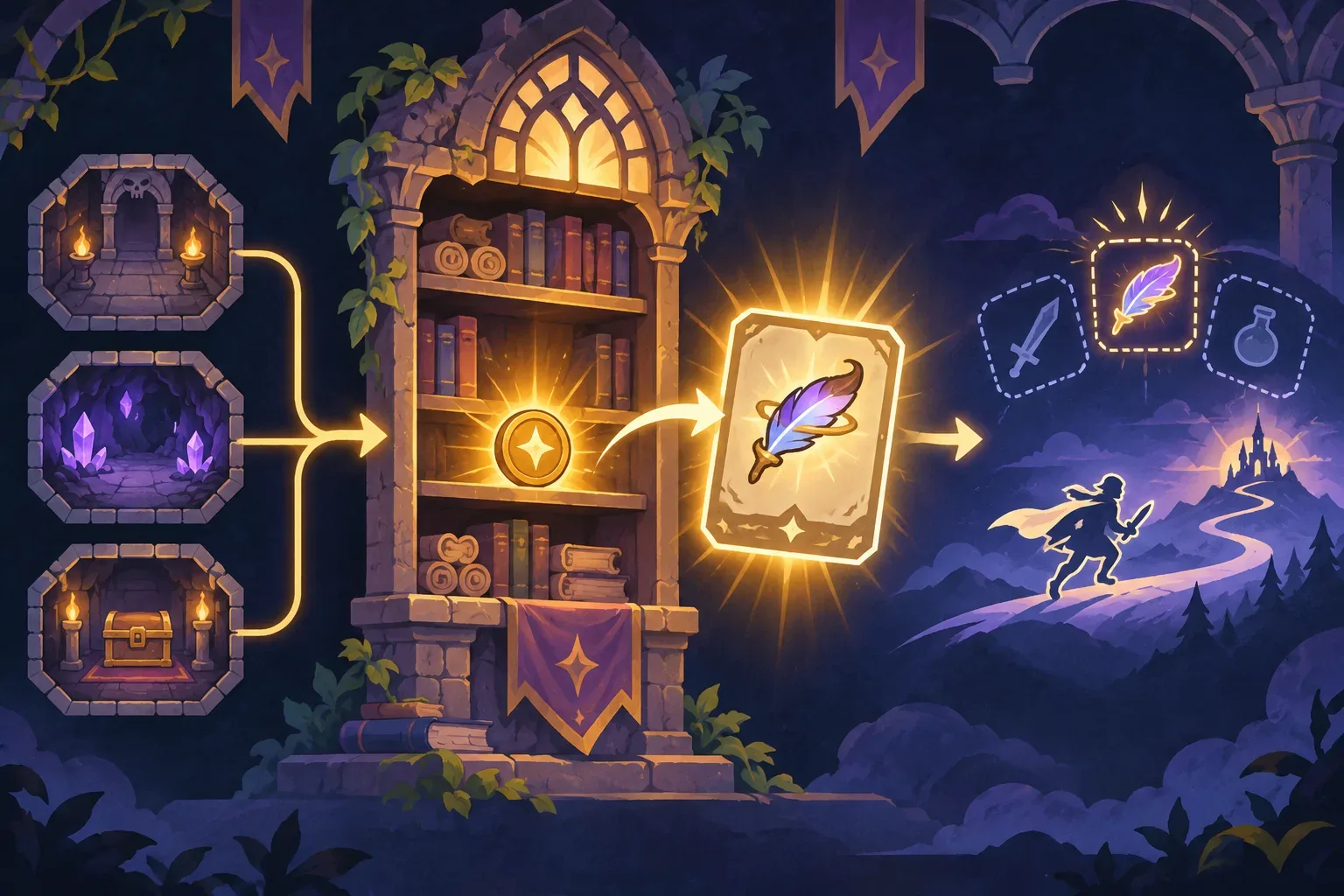
Trace the example
A player completes all three Parcel Vault rooms and reaches the archive with one new stamp. After a second completed run, the balance reaches two stamps. The archive screen offers an eligible card, and the player chooses Pack Mule.
The archive records Pack Mule and subtracts two stamps. The current run is already over, so no active deck or bag changes. At the next run setup, Pack Mule joins the draft pool; it is still not automatically drafted or placed. Temporary cards from the previous run have disappeared.
This example traces the proposed rules only. No source, implementation, playthrough, save migration or card-balance test exists for Parcel Vault.
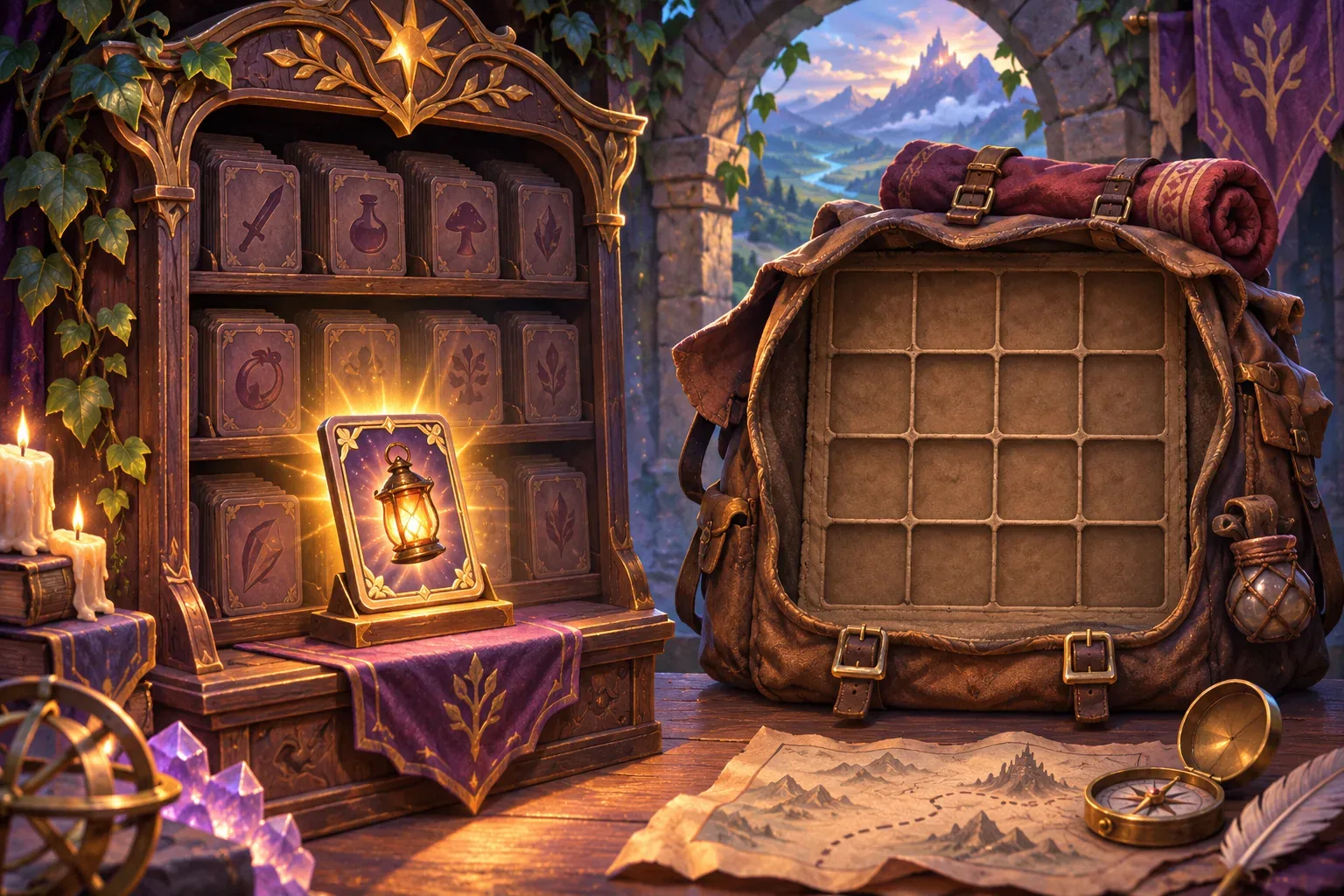
Write the six prompts
Use one prompt per design decision so later checks have a clear source of truth. These drafts describe Parcel Vault; they have not been run and do not represent a generated playable game.
Prompt 1: inspect collection and run state
Inspect the supplied roguelike project read-only. Locate card definitions, archive or collection data, run deck, draft pool, bag placements, run completion and save/load. Cite paths and state unknowns.Prompt 2: separate four card layers
Define four distinct states: permanent archive collection, future-run draft pool, active run deck and current bag placements. Show which existing data structures can represent them without duplicating state.Prompt 3: settle completed-run stamps
Specify reward settlement: clearing room3 grants one archive stamp; every two stamps allow one eligible permanent card unlock at the post-run archive. Use a stable run ID to award once.Prompt 4: unlock at the archive screen
Implement the archive selection without changing the active run. Validate the card is eligible and not already unlocked, spend two stamps exactly once, and derive future draft options from the updated collection.Prompt 5: build the next draft pool
At new-run setup, add archived cards to the draft pool but do not auto-draft or place them. At run end, clear deck, placements, temporary items and room state while retaining stamps and card IDs.Prompt 6: prepare persistence and reset checks
Prepare future checks for failed/cleared run rewards, duplicate settlement, two-stamp threshold, duplicate unlock, next-run draft availability, unchanged active bag and save/load. Do not claim results without a real build.SEELE’s official page describes general plain-English prompting, a playable first version, browser testing and refinement; it does not verify Parcel Vault. See Free AI game maker for workflow context only.
Prepare future build checks
The collection should persist while the current run remains isolated. These are proposed checks for a future build, not passed results. These are future checks, not passed tests. Record the before and after state so a later build can be compared with the specification.
| Future check | Expected rule | Evidence to capture |
|---|---|---|
| Reward boundary | Only a completed room-three run grants one stamp | Room result and settlement ledger |
| Unlock threshold | Two stamps unlock one chosen eligible card exactly once | Balance and archive IDs before/after |
| Future draft | Unlocked card joins next-run draft pool without auto-placement | Pool contents and bag state |
| Run reset | Active deck, bag placements and temporary items clear | End and next-run snapshots |
| Reload | Archive stamps and unlocked IDs persist | Saved profile and derived pool |
No real game run, browser test or measured result is available for this fictional example. The illustrations are original concept art and are not screenshots.
Frequently asked questions
How do persistent card unlocks work in a roguelike?
A permanent collection can expand the draft options available in future runs while each active deck and inventory remains temporary.
Does an unlocked card automatically enter the current run?
No. In the fictional Parcel Vault rule, an archive unlock changes future draft availability only.
When does Parcel Vault award archive stamps?
The example grants one stamp after completing the third room; incomplete runs do not earn one.
Was Parcel Vault’s card archive implemented or balanced?
No. Parcel Vault is fictional; no code, build, playthrough or balance test is claimed.
What should reset after a run?
The active deck, bag placements, temporary items and room state reset, while archive stamps and permanently unlocked card IDs persist.