Separate run state from long-term progress
Before adding unlocks, list what resets after a run and what carries forward. Inventory contents, temporary effects, route choices, and current health usually belong to the run. A newly available starting item or alternate character may persist. State this boundary in the UI and in save data so a reward never disappears or carries over by accident.
The official Backpack Hero listing describes an inventory-management roguelike with randomly generated runs and a Story Mode with meta progression, including unlockable heroes, challenges, and quests. That supports the high-level coexistence of run variation and persistent content only; the balance approach here is an original design proposal.
Keep the tactical bag central. A permanent unlock should feed the same spatial or resource decisions as a found item. If a new tool has a powerful effect but occupies awkward space, the player still has to decide whether it fits the current run. Persistent content should create choices, not bypass the system that makes each run distinctive.
Unlock options instead of guaranteed power
Prefer rewards that widen the item pool, starting kits, characters, or challenge rules over permanent damage increases. A new item can be exciting while remaining situational. For example, an awkward two-cell tool may reward a layout built around adjacent items, while a compact defensive charm may support a different strategy. Both can be viable without making the earlier inventory obsolete.
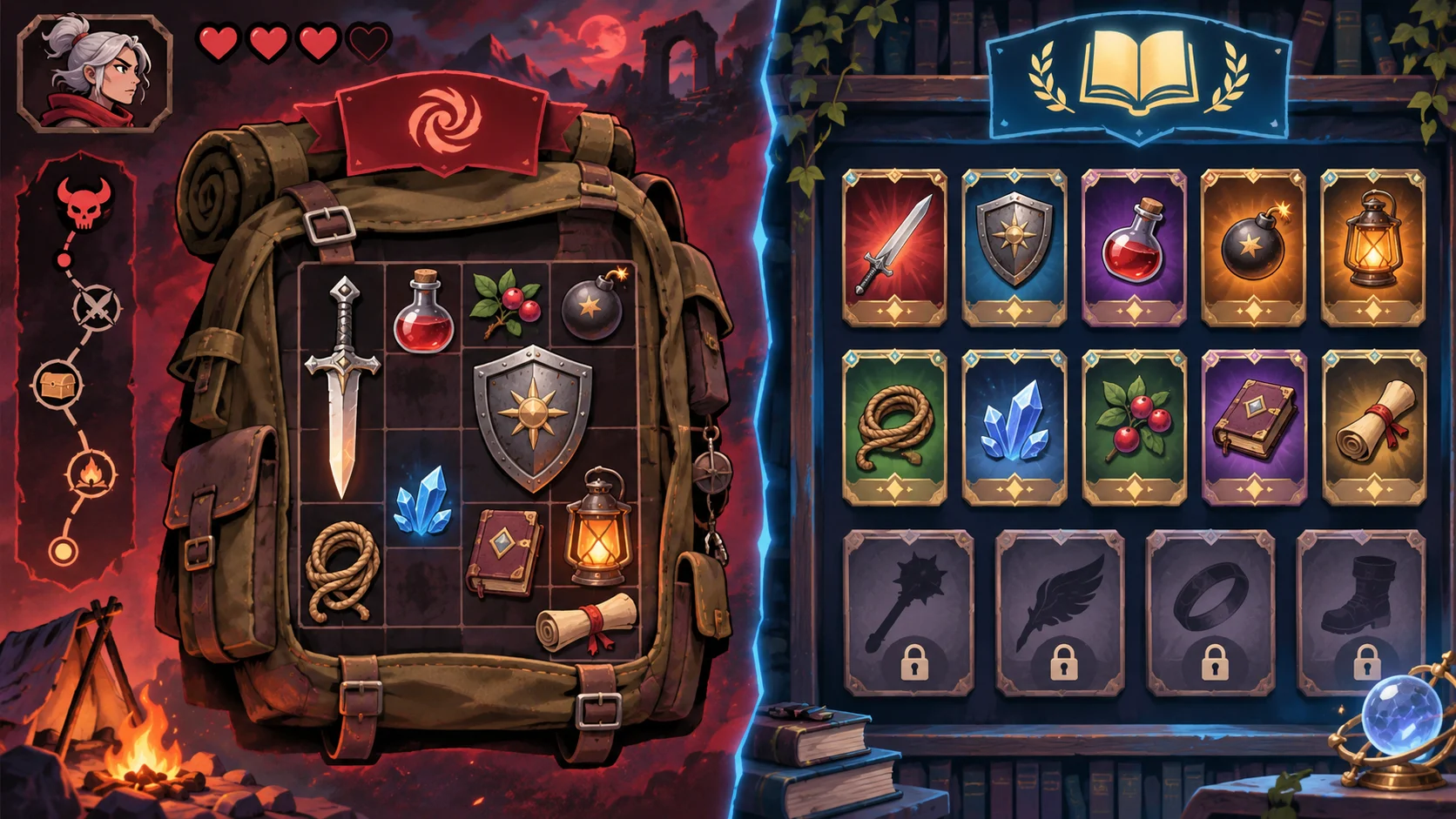
If unlocks change what can appear, tell players when the pool changes and how they can try the new content. Avoid adding so many items at once that a new player cannot learn their interactions. A small unlock can introduce one new decision, then let later milestones add variations once the base rule is understood.
Check whether the original starting state remains fun after many unlocks. Meta progression should not make the initial run feel like a deliberately weak tutorial. Offer ways to select a smaller pool, choose a starting kit, or revisit an earlier challenge if that supports the game’s goals.
Keep inventory decisions central
Every newly unlocked item needs a place in the run economy. Ask what it costs in space, when it is useful, and which other items it supports. If an item always fits and outperforms alternatives, it can become a mandatory unlock. If it never fits, the reward may be technically present but practically invisible.
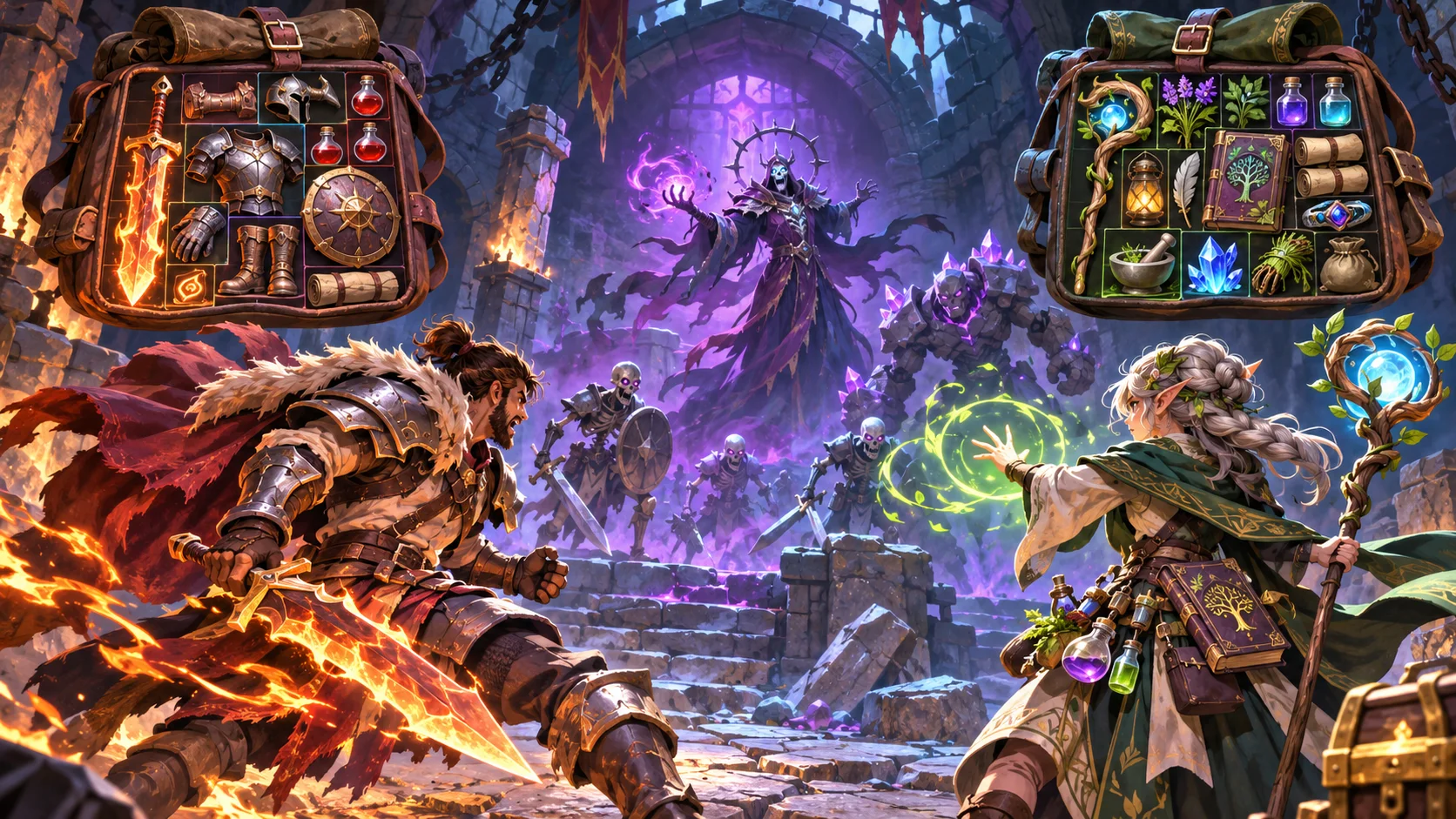
Look at item synergies and bag shape together. An unlock that gains power when surrounded by tools may encourage a compact cluster; a large weapon may require the player to leave space for future finds. Show the relevant interaction in a tooltip or preview. Players should be able to learn why the item works without memorizing a hidden rule list.
Do not confuse variety with randomness alone. A run feels distinct when its constraints lead to different viable plans. Persistent unlocks can improve variety by adding new pieces, but they can reduce it if one option dominates. Track actual item use and layout patterns, not only how many items exist in the database.
Compare run variety after progression
Use a matched test: play a fixed seed or equivalent encounter path with the original pool, then with the expanded unlock pool. Compare starting strategies, bag layouts, item combinations, and viable ways to finish. Ask players whether the unlock gave them a new option or simply made the same build stronger.
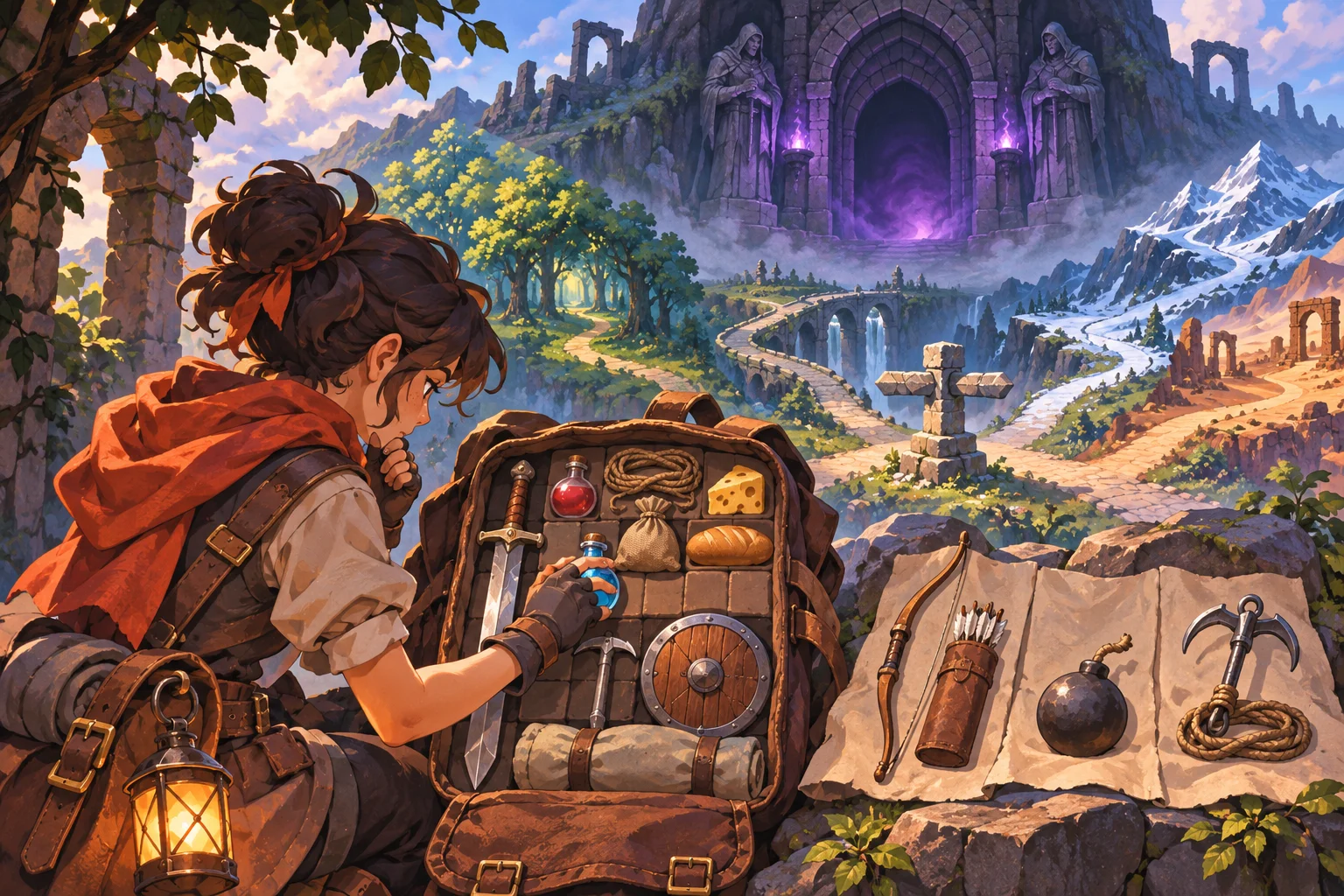
Track how often each unlocked item appears, is selected, fits into a viable build, or is discarded. Look for solved openings, mandatory unlocks, and a decline in build diversity. Also check whether late unlocks make early content easier in a way that erases its challenge. Tune rewards after observing several paths, not just one successful run.
See the inventory roguelike guide for the core bag and run loop. SEELE AI can help outline an original roguelike, but save boundaries, unlock pacing, and run balance need implementation and playtesting.
FAQ
How do you add persistent unlocks to an inventory roguelike?
Define what resets and what persists, then add unlocks that widen the item pool or starting choices. Keep inventory placement and resource tradeoffs central to each run. Compare matched runs before and after progression to make sure the new content adds strategies instead of one automatic upgrade.
What should reset between roguelike runs?
Run-specific inventory, temporary effects, route choices, and current resources commonly reset, while unlocked content or account milestones may persist. The right boundary depends on the game, but explain it clearly and store it separately so players know what a failed run will cost.
How can meta progression preserve run variety?
Favor alternate tools, characters, or challenge options over permanent stat inflation. Give each unlock a use case and a tradeoff, and ensure the original baseline remains viable. Review item selection and layout patterns to see whether unlocks create new plans or force one dominant build.
What should you compare in a persistent unlock system?
Use matched or fixed-seed runs and compare viable layouts, item combinations, selection rates, and player strategy. Watch for solved openings, mandatory unlocks, and content that never gets used. Ask players whether progression created new options or only made the same approach stronger.