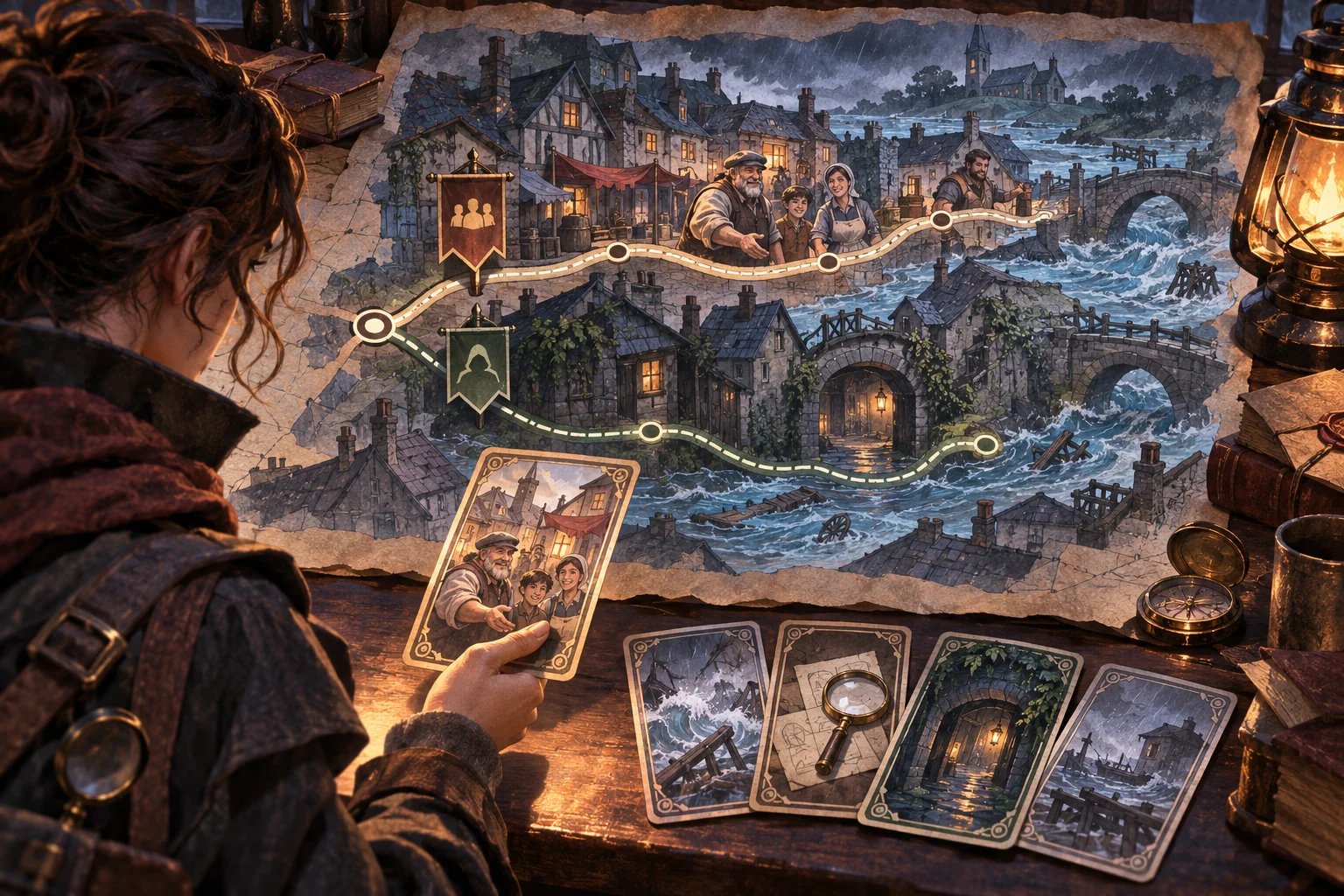
Ashwater is investigating who redirected the flood away from one district and into another. In Chapter 1, the player finds a witness ledger and must choose: publish the names to rally the town, or seal the list to protect a source. That decision changes Chapter 2's available card pool. A public account adds Open Testimony and Public Muster cards; a sealed account makes Quiet Entry and Private Contact available instead.
The card pool is part of the story state, not just a reward screen. After the choice, show which cards were added or excluded, then draft a small deck for the next encounter. Players can see how protecting a witness or naming them publicly changes their tactical options and the route through the inquiry.
Tie a chapter decision to the next card pool
Give the first chapter a choice with a clear narrative cost. Publishing the witness list may bring neighbors into the inquiry, but it exposes their names. Sealing it protects the source, while leaving the town with less public support. Record that decision as a branch state before moving to Chapter 2.
Start with a fixed eight-card base pool. The public branch adds two Open Testimony cards and two Public Muster cards, while excluding two Quiet Entry cards. The sealed branch adds two Quiet Entry and two Private Contact cards, while excluding two Public Muster cards. Show the pool change before drafting so players can connect the story decision to available cards.

Make branch-specific cards express the story outcome
Give each card a tactical role that follows from the branch. Open Testimony draws a local ally into the encounter; Public Muster gives a small defense bonus when allies are present. Quiet Entry lets the player bypass a guarded lane, while Private Contact reveals a hidden clue at the cost of one supply. These effects make the card names and chapter choice work together.
Keep the pool distinct from the active deck. Chapter 2 offers a short draft from the cards allowed by the branch, then the chosen cards form the encounter deck. If a card is excluded, say why in the pool summary. This helps players understand that the story state changed the options, even when a card was not selected.

Replay the same encounter with both story outcomes
Reset the same seed, battle, starting deck and ledger scene. In the public run, publish the list and inspect the pool: Open Testimony and Public Muster appear, while Quiet Entry is absent. Draft from the available pool and enter the next encounter with allies responding to the public account.
Reset and seal the ledger instead. The pool now contains Quiet Entry and Private Contact, while Public Muster is excluded. Draft from that set and use a side route to reach the same inquiry location. Record the branch state, added and excluded cards, draft choices and route result. If the two pools feel interchangeable, make their tactical jobs or next-scene consequences more distinct.
Prompt a first chapter with a consequential card-pool change
Start with one witness decision, an eight-card base pool and two branch-specific card sets. Ask the prototype to display the branch state, pool additions and exclusions, draft options and resulting encounter. Add further chapters only after players can explain why their choice changed the next deck.
Create a compact roguelike deckbuilder about the Ashwater flood inquiry. In Chapter 1, let the player find a witness ledger and choose to publish the names or seal them to protect a source. Start from the same eight-card base pool. Publishing adds two Open Testimony and two Public Muster cards and excludes two Quiet Entry cards. Sealing adds two Quiet Entry and two Private Contact cards and excludes two Public Muster cards. Show the story branch and pool update before a Chapter 2 draft. Keep card roles distinct, include a reset and compare both choices with the same seed, battle and starting deck.
SEELE's free game maker describes starting from a text prompt and refining a first version through follow-up requests. Use that general workflow to inspect the branch state, pool update and Chapter 2 draft before adding more chapters.
Start the story-driven deckbuilder in SEELE
Frequently asked questions
How can a story choice change a deckbuilder's card pool?
Store the chapter choice as a branch state, then add or exclude cards before the next draft. Publishing the witness ledger can open public support cards, while sealing it unlocks infiltration and private-contact cards. Show the change so the player can connect story and deck options.
What is the difference between a card pool and an active deck?
The pool contains the cards eligible for the next draft; the active deck contains only the cards the player selected. Keep those views separate and show why branch-specific cards were added or excluded. The distinction makes story changes legible before combat begins.
What should I hold constant in a branch comparison?
Use the same seed, battle, starting deck and ledger scene, then change only whether the witness list is published or sealed. Record the branch state, pool additions and exclusions, draft options and route result. This isolates whether the story choice meaningfully changes play.