Measure the restaurant service baseline
Record the normal flow from reservations or arrival through seating, ordering, cooking, serving, payment, and cleanup. Track the time each step takes and where customers wait. A demand feature should change a decision within this loop, not add a separate score that managers cannot influence.
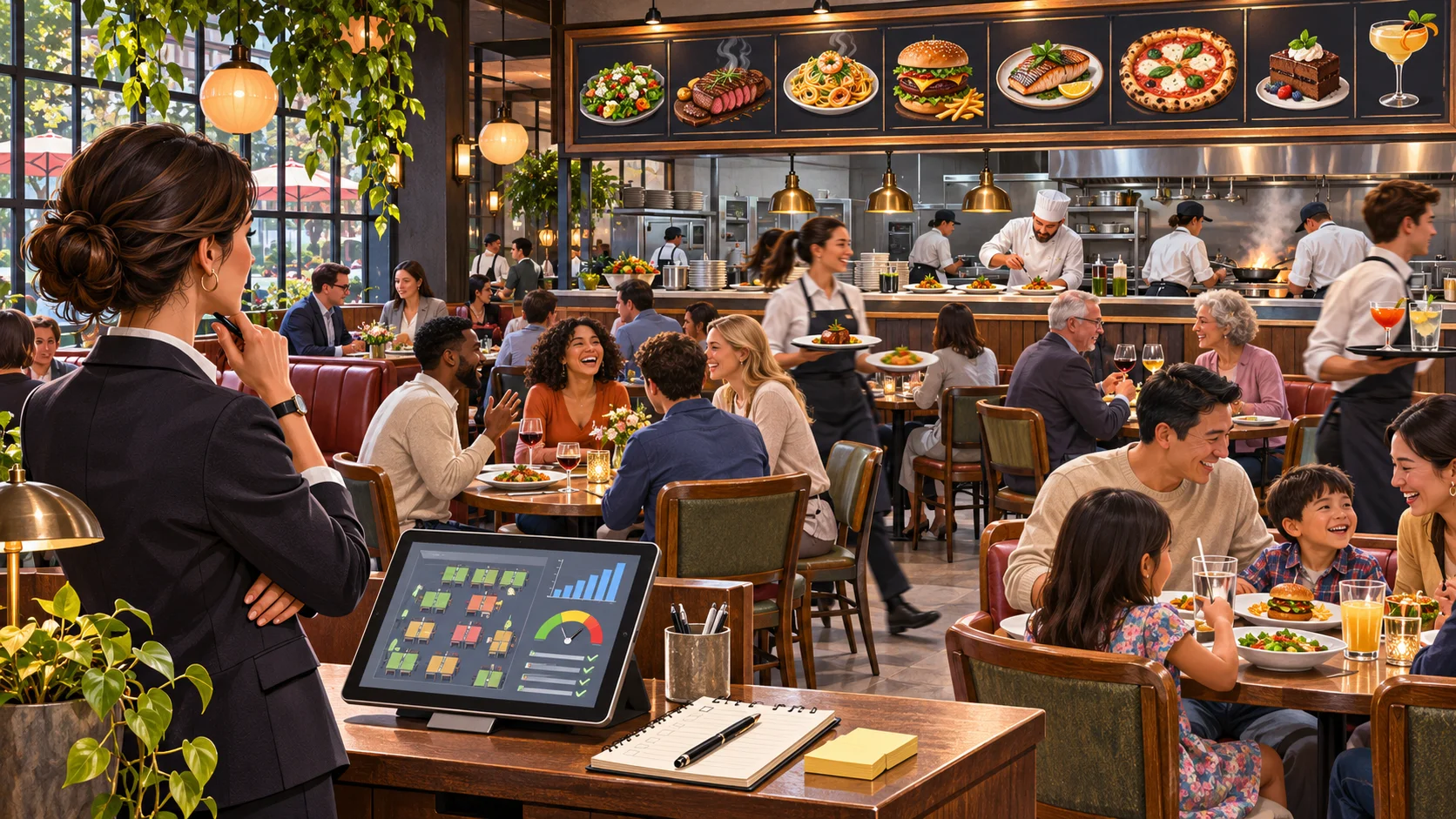
Identify a few resources that can become limiting: prep stations, trained staff, table turnover, fresh ingredients, or service time. Make the constraints visible before a rush. If a restaurant can meet unlimited demand simply by adding menu items, customer preferences will not create meaningful planning.
The official Service Please listing describes managing customer groups, menus, staff, stock, and events. This is restaurant-management context only; the competing-preference model in this guide is original. See the official source for this context.
Define competing customer preferences
Choose a small set of preference dimensions, such as affordability, speed, atmosphere, ingredient quality, or variety. Give each customer group a different weighting and show a readable signal, like a request, review, or visit pattern, so players can infer what matters.
Let preferences overlap. Families and lunch visitors might both value quick service but differ in menu variety; date-night guests may care about atmosphere and specialty dishes. Overlap helps the player build a coherent restaurant instead of maintaining a separate menu for every group.
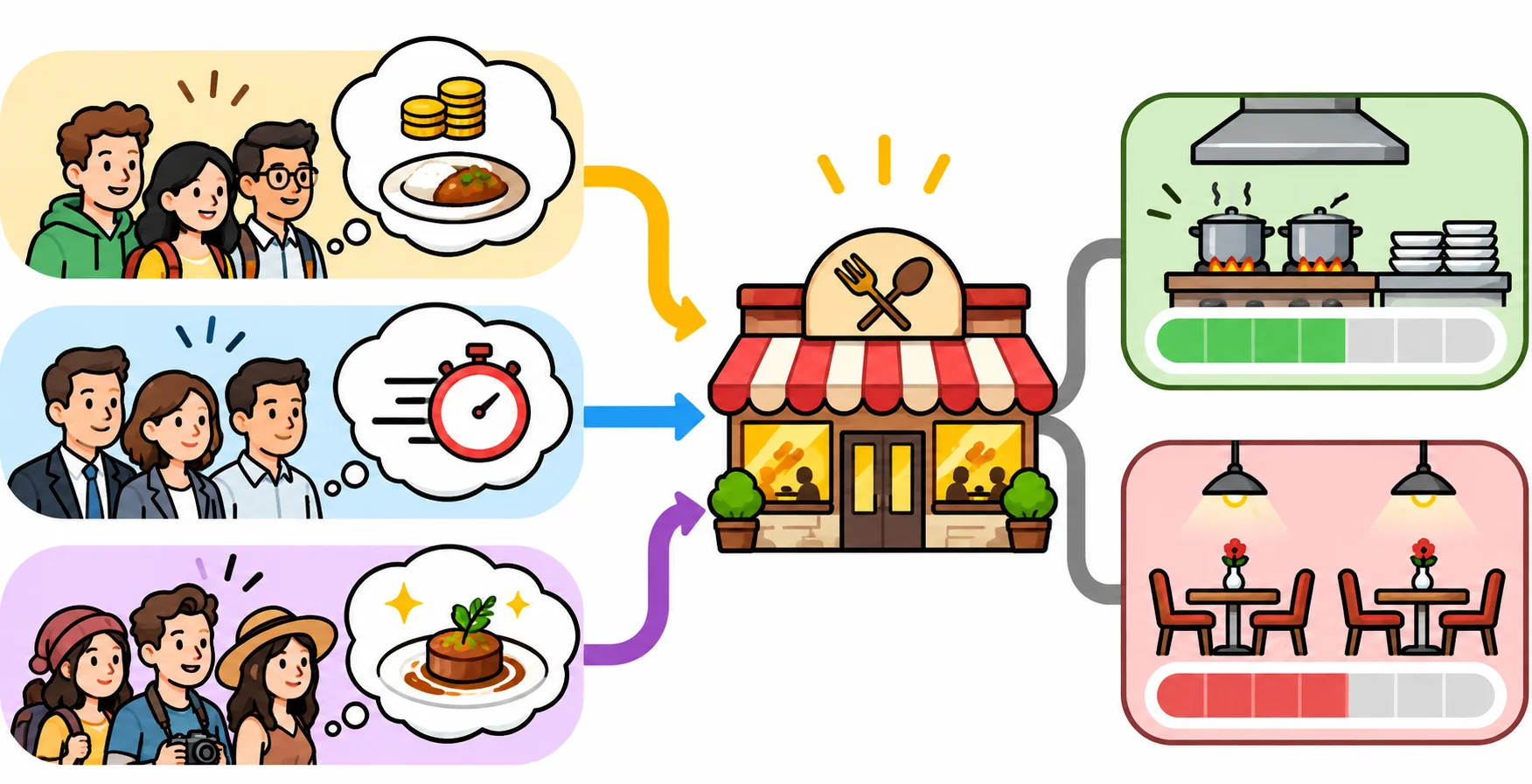
Keep preference signals distinct from hard requirements. A guest who strongly prefers a dish may still choose another option, while an allergy or unavailable ingredient can block a sale. Explain the difference in the UI so players do not mistake a preference for a guaranteed order.
Connect demand to kitchen capacity
Translate expected group visits into an order forecast, then compare it with ingredients and station throughput. A popular slow dish can overload a grill even when the restaurant has empty tables. Show expected bottlenecks at a useful level of detail before the player changes the menu.
Allow managers to respond through pricing, recipes, staffing, prep, seating, or service policy. Each action should have a cost. Raising prices may reduce volume but improve margin; simplifying a menu can free the kitchen while disappointing guests who value variety.
Give preferences a time and event context. A lunch rush may prioritize speed, while a themed evening draws guests who value atmosphere or special dishes. Communicate upcoming shifts early enough for the player to schedule staff and stock ingredients.
Test menu and service tradeoffs
Play through the same service windows with different menus and staff assignments. Track group satisfaction, wait time, food waste, stockouts, completed orders, and margin. Ask players which groups they intended to attract and whether the outcome matched the signs they saw.
Test a demand spike, an unavailable ingredient, an understaffed station, and a menu with several popular slow dishes. Make sure the report distinguishes demand that was absent from demand that arrived but could not be served. Use that distinction to guide the next decision.
Accept the model when groups react differently, managers have several viable responses, and kitchen limits remain understandable. The staff-role design guide offers adjacent capacity-planning ideas.
FAQ
How do you model competing customer preferences in a restaurant game?
Create a few customer groups with different priorities, such as price, speed, atmosphere, or menu variety. Connect those preferences to visible choices and test whether players can serve more than one group without every option being equally good. This gives players useful feedback and helps them plan a next action.
How can customer demand affect food production?
Translate customer preferences into order patterns that affect ingredient use, station capacity, and preparation time. Show forecast demand separately from actual orders, and let managers adjust menus or staffing before a rush makes the constraint obvious. This gives players useful feedback and helps them plan a next action.
Should every customer group prefer a different menu?
Give groups overlapping preferences so the menu remains manageable. One dish may appeal to several types for different reasons, while a specialty item can attract a narrower audience. The goal is a tradeoff that guides planning, not a unique recipe for every diner.
What should you measure when testing restaurant demand?
Track group satisfaction, order mix, service time, kitchen load, stockouts, waste, and revenue. Test menu and staffing changes during both quiet periods and rushes. Players should be able to identify whether unmet demand comes from preference, capacity, or price. This gives players useful feedback and helps them plan a next action.