Choose a persistent reward that fits the dungeon loop
Long-term progression can make repeated dungeon runs feel connected, but it also changes balance and save data. Start with a small reward that comes from an observable milestone. The fictional Hollow Lantern crawler has three boss encounters per run. Clearing a boss earns one permanent memory shard; shards for cleared bosses are settled when the run ends, including an early defeat after a boss. This example is not a real game or tested system.
Place permanent choices between runs. Hollow Lantern has four one-time skill nodes, each costing one shard: Vitality adds one maximum health, Focus adds one maximum mana, Echo adds one relic slot, and Wayfinder reveals one map branch at run start. There is no respec in this version. Keeping the tree small lets the team inspect every interaction between a permanent bonus and the existing combat loop.
Write down what resets: current health and mana, temporary potions, run level, relic pickups and timed buffs. Write down what persists: settled shards, unlocked nodes, and their permanent base-stat or map effects. Do not store temporary effects in the permanent character record.
Separate settlement, skill unlocks and run resets
Use an explicit run-end settlement step. Count only bosses with a cleared result, add those shards once to the saved total, then load the between-run skill screen. A stable run ID and settlement marker help a future build avoid awarding the same clear twice after reload or duplicate events.
When a node is purchased, check that it is still locked and the shard balance is sufficient, subtract exactly one shard, mark the node unlocked, and apply its effect from the permanent profile. On reload, derive max health, max mana and map reveal from the saved node set. This reduces the chance of saving both an unlock and a conflicting copied bonus.
Keep the first implementation focused on settlement, four nodes and the reset boundary. Defer respec, branching prerequisites, skill refunds, account-wide unlocks and multiplayer sync. Ask AI to trace the existing save model first and to show migrations or compatibility risks before changing player data.
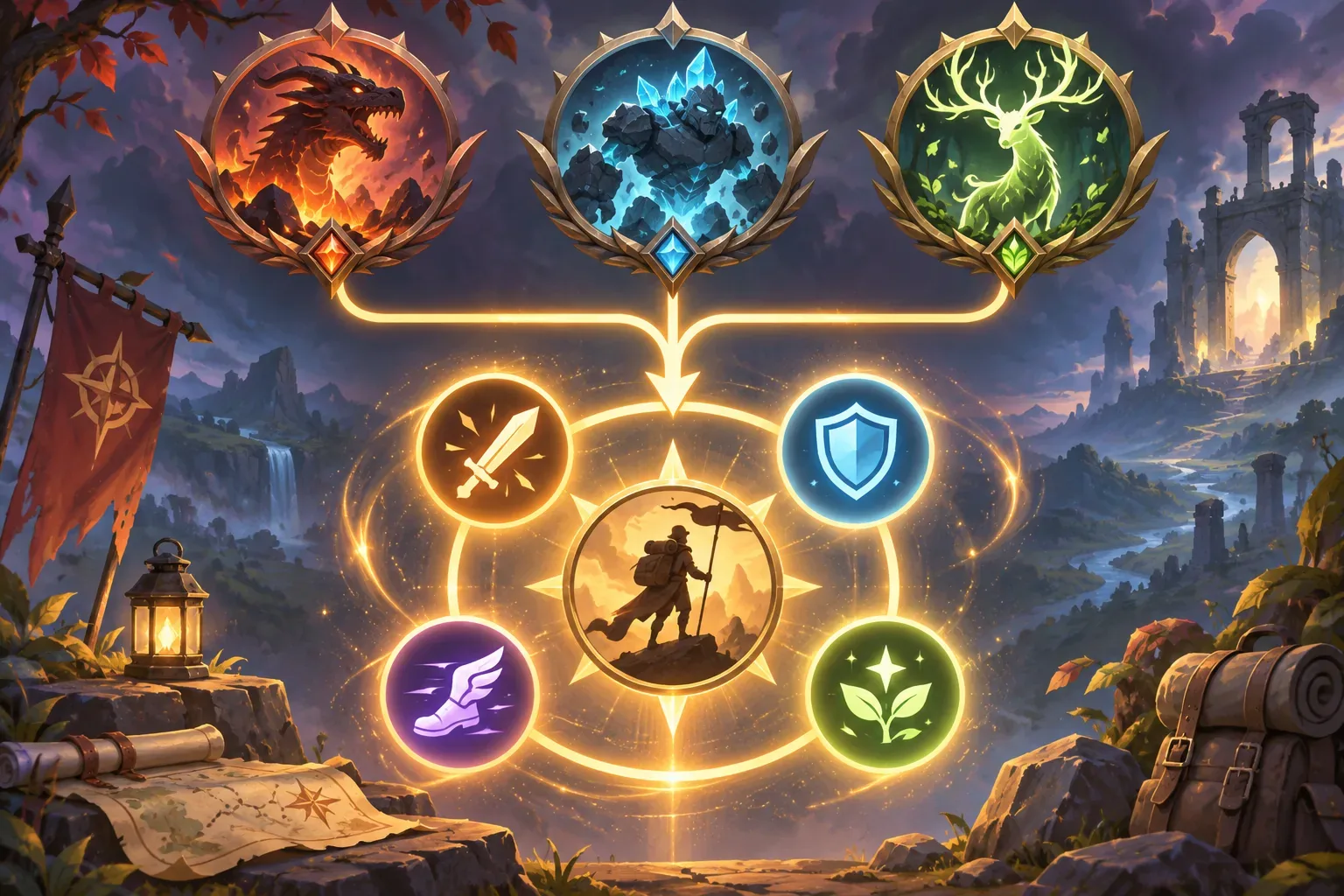
Trace the example
A new Hollow Lantern run clears the first two bosses and ends in defeat before the third. At settlement, the run contributes two memory shards, not three. The shard total persists to the between-run screen; health potions and in-run character levels disappear.
The player spends one shard on Focus. The persistent balance drops by one and the skill node is marked unlocked. A future run derives one extra maximum mana from that saved node. If the player reloads, the same node remains unlocked and the purchase is not charged again.
This is a rules trace for a fictional design. No implementation, save migration, game run or progression balance test is available for Hollow Lantern.
Write the six prompts
Use one prompt per design decision so later checks have a clear source of truth. These drafts describe Hollow Lantern; they have not been run and do not represent a generated playable game.
Prompt 1: inspect progression and save flow
Inspect the supplied dungeon crawler read-only. Locate run results, boss-clear events, settlement, character profile, save/load, temporary buffs, health/mana and map reveal. Cite paths and identify the safest extension points.Prompt 2: draw the persistence boundary
Define the persistence boundary. Permanent data: settled shards and unlocked node IDs. Run-only data: current stats, potions, level, relic pickups and buffs. Flag existing fields or migrations that could conflict.Prompt 3: settle earned milestone currency
Specify run settlement: one shard per cleared boss, including an early defeated run; zero for uncleared bosses. Use a stable run identifier to ensure settlement occurs once.Prompt 4: add the bounded skill web
Add an between-run four-node skill web: Vitality +1 max health, Focus +1 max mana, Echo +1 relic slot, Wayfinder reveals one branch; each node costs one shard and unlocks once. No respec or prerequisites.Prompt 5: derive permanent effects on load
Derive permanent effects from unlocked nodes after load and at run start. Keep temporary effects separate and show an exact diff plus save compatibility concerns.Prompt 6: prepare milestone and reset checks
Prepare future checks for clearing 0–3 bosses, early defeat, duplicate settlement, each node purchase, insufficient shards, reload persistence, derived effects and run-only reset. Do not claim tests passed without a real build.SEELE’s official page describes general plain-English prompting, a playable first version, browser testing and refinement; it does not verify Hollow Lantern. See Free AI game maker for workflow context only.
Prepare future build checks
Run-end rewards and permanent skill effects must survive reload without leaking temporary run state. These are future checks, not completed tests. These are future checks, not passed tests. Record the before and after state so a later build can be compared with the specification.
| Future check | Expected rule | Evidence to capture |
|---|---|---|
| Boss settlement | Only cleared bosses award one shard, including early defeat | Boss results and settlement ledger |
| Exactly once | Duplicate settlement for a run ID does not add currency twice | Run ID and before/after balance |
| Skill purchase | Each node costs one shard and unlocks once | Balance, node state and applied effect |
| Reload | Unlocked nodes and derived effects persist after reload | Saved profile and derived stats |
| Run reset | Potions, temporary level, pickups and buffs reset between runs | End and next-run state comparison |
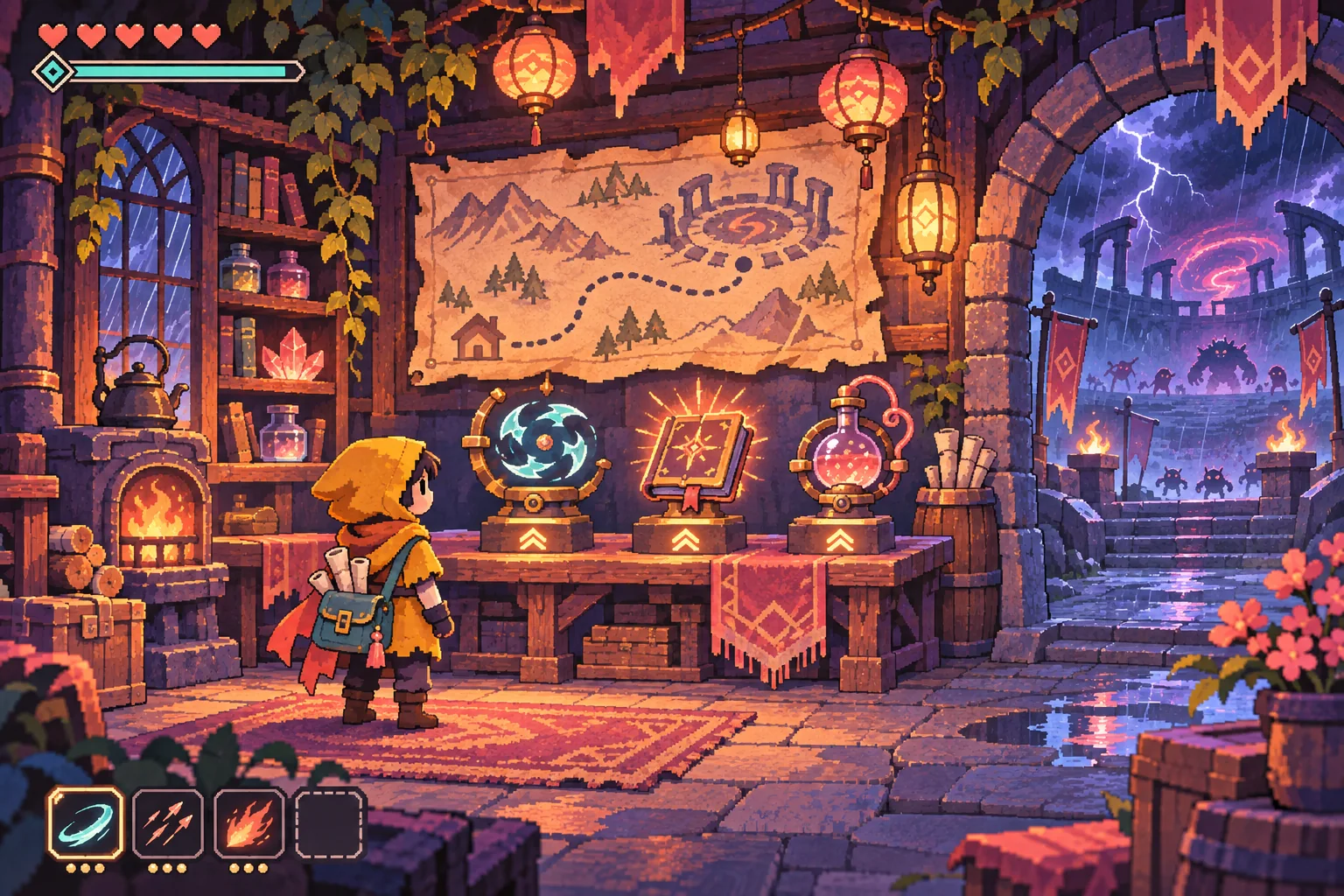
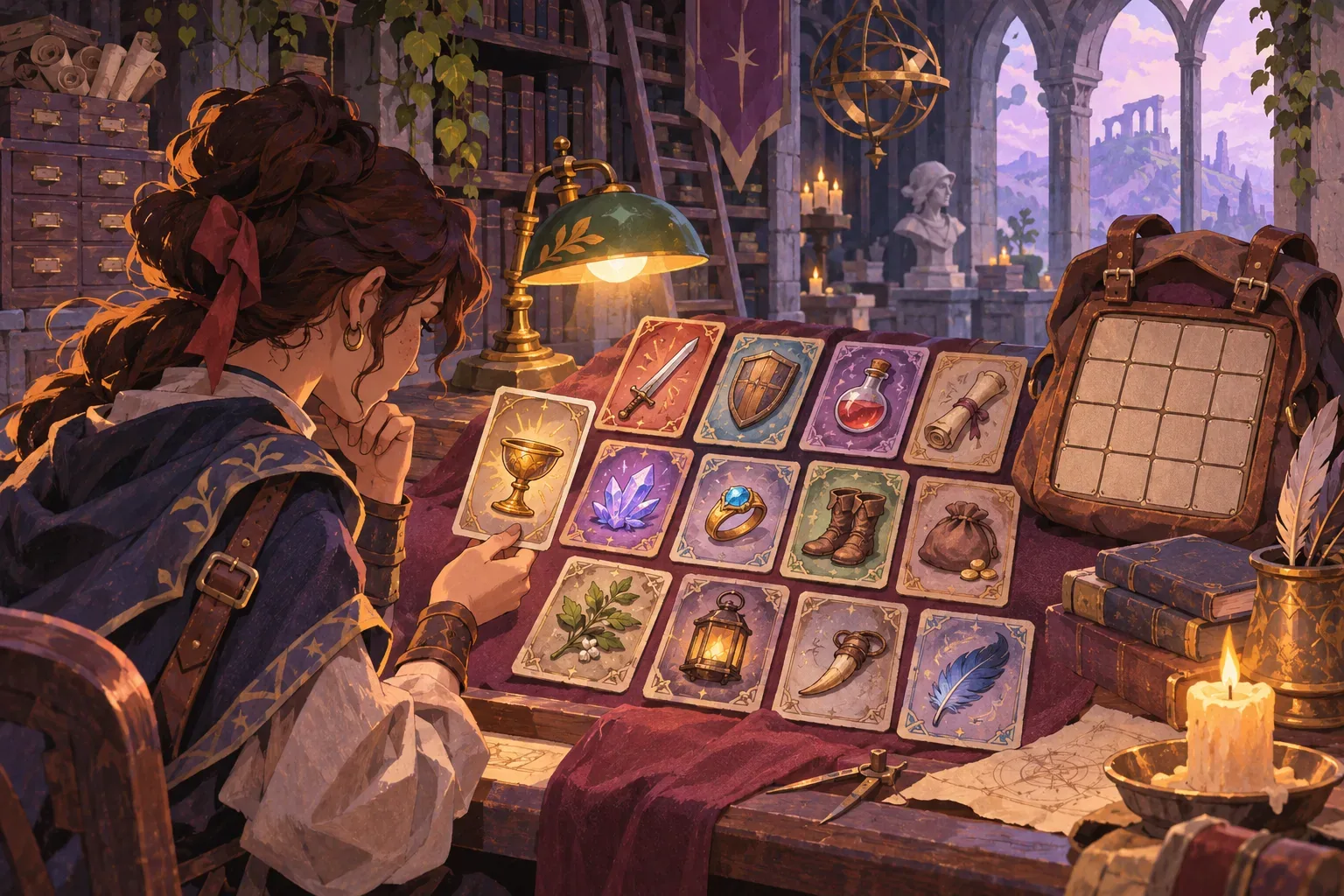
No real game run, browser test or measured result is available for this fictional example. The illustrations are original concept art and are not screenshots.
Frequently asked questions
What makes dungeon-crawler progression long term?
A persistent profile carries selected rewards or unlocks across separate runs while temporary combat state resets.
When does Hollow Lantern grant memory shards?
The fictional rule settles one shard for each boss cleared, including when a run ends early after prior clears.
How should permanent skill effects be saved?
Save stable unlocked node IDs and derive the resulting stat or map effects consistently on load and at run start.
Was Hollow Lantern progression implemented or balanced?
No. It is a fictional system example with no implementation, save migration, playthrough or balance test claimed.
Why avoid respec in the first version?
A single purchase rule keeps the initial persistence and refund edge cases small; respec can be designed as a separate feature later.