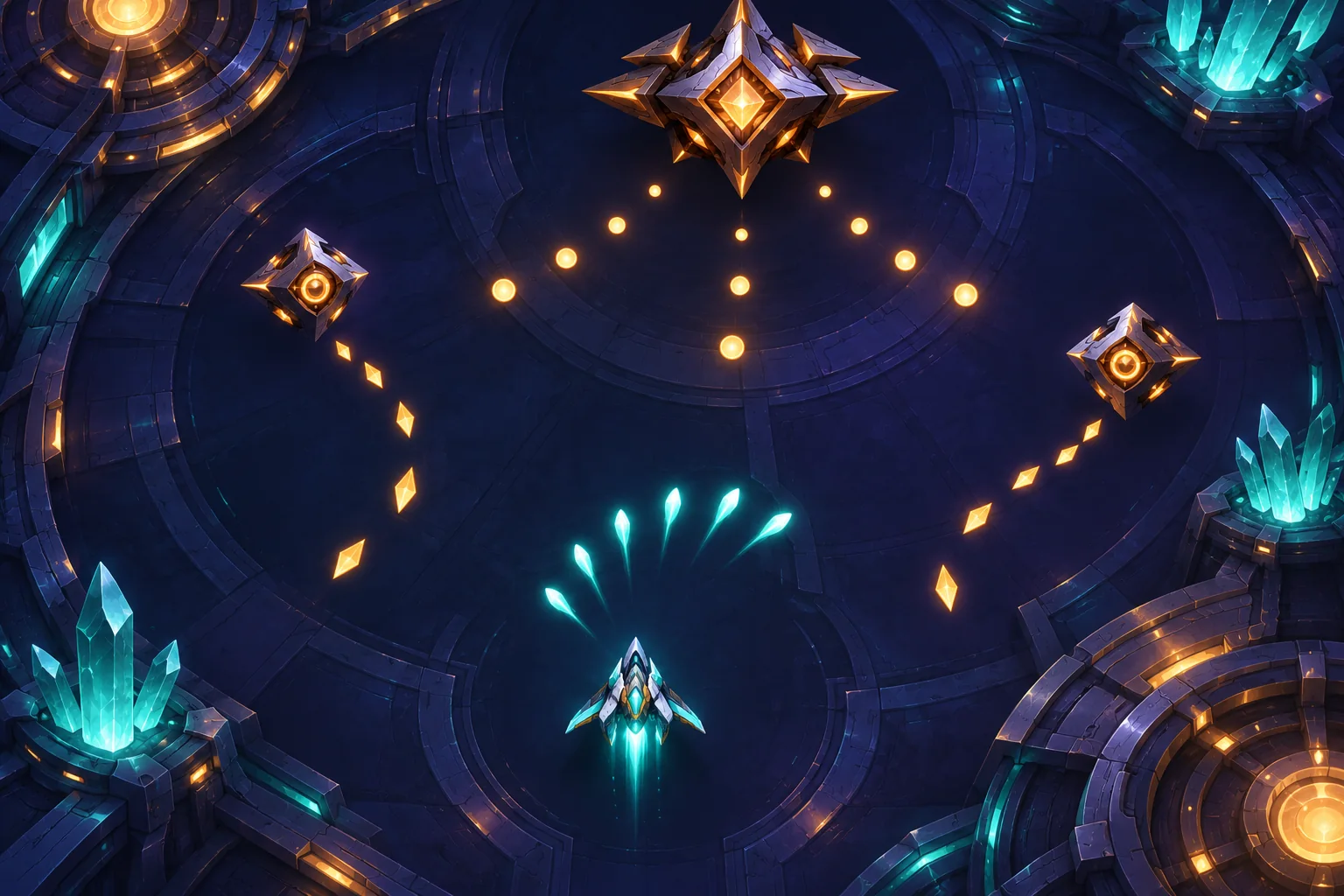
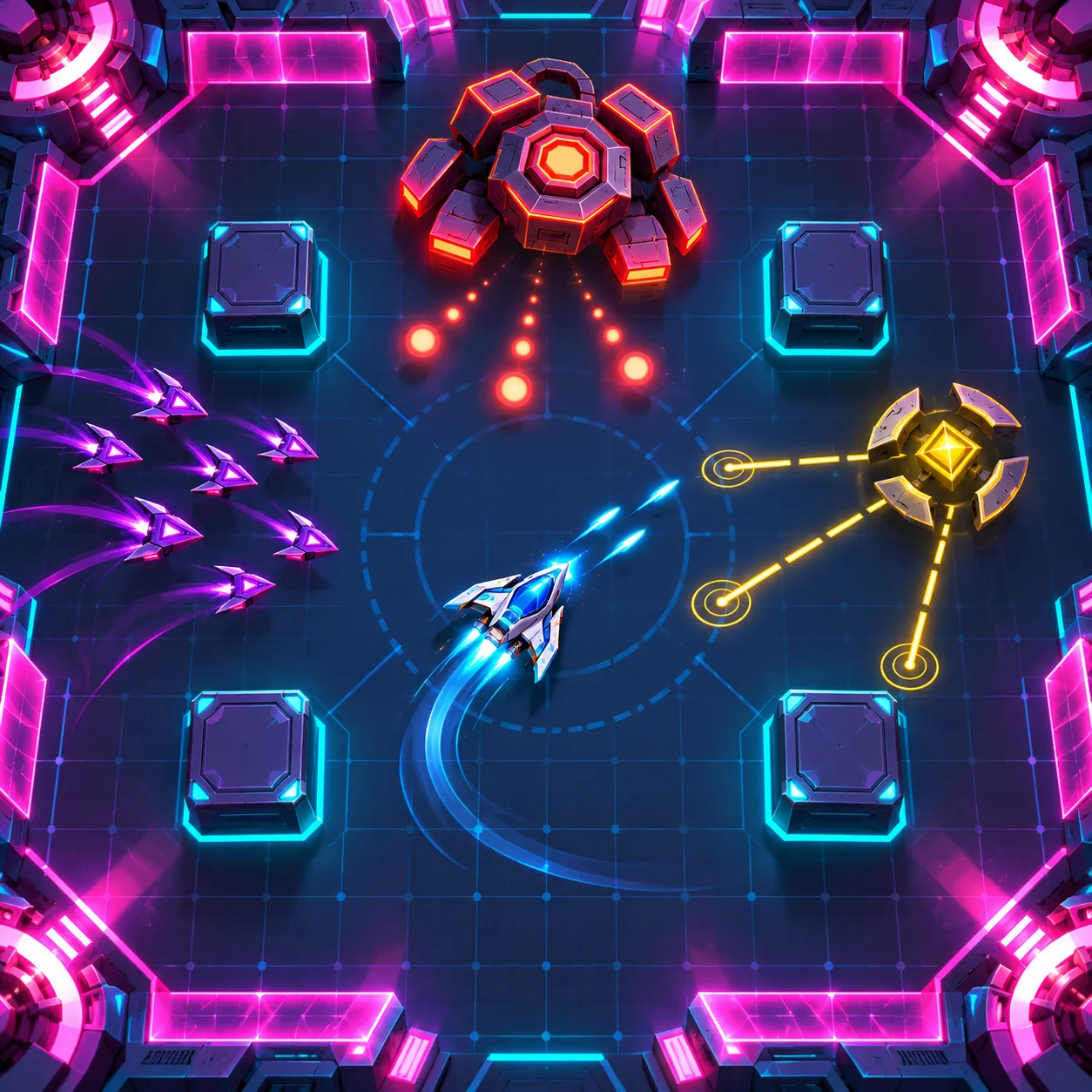
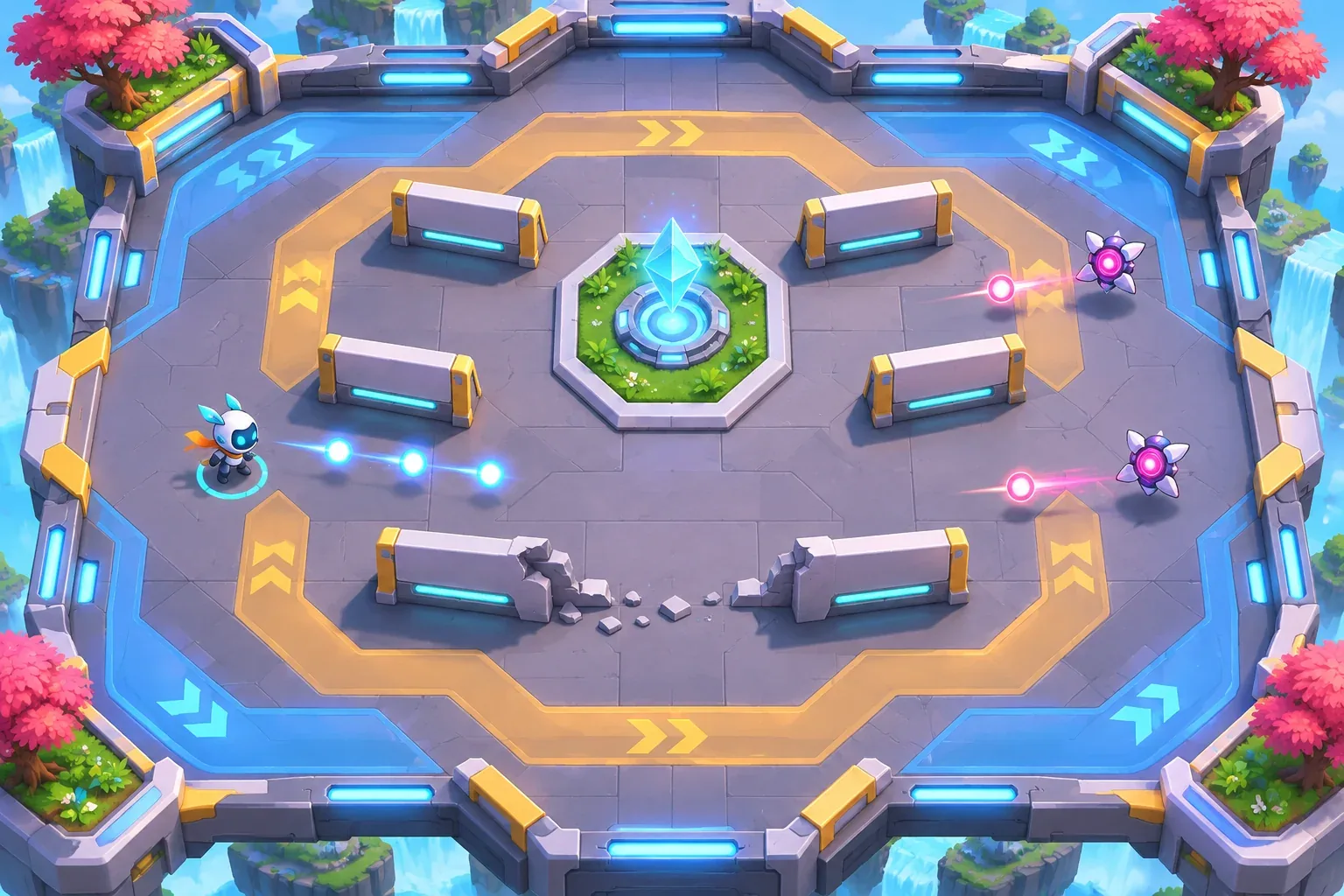
A new weapon class earns its place when it changes how a player approaches an encounter. A larger damage number may be useful, but it does not automatically create a new choice. Define the weapon’s range, timing, movement relationship, target interaction, and cost first. Then connect that behavior to the shooter’s existing weapon and input systems before tuning numerical values.
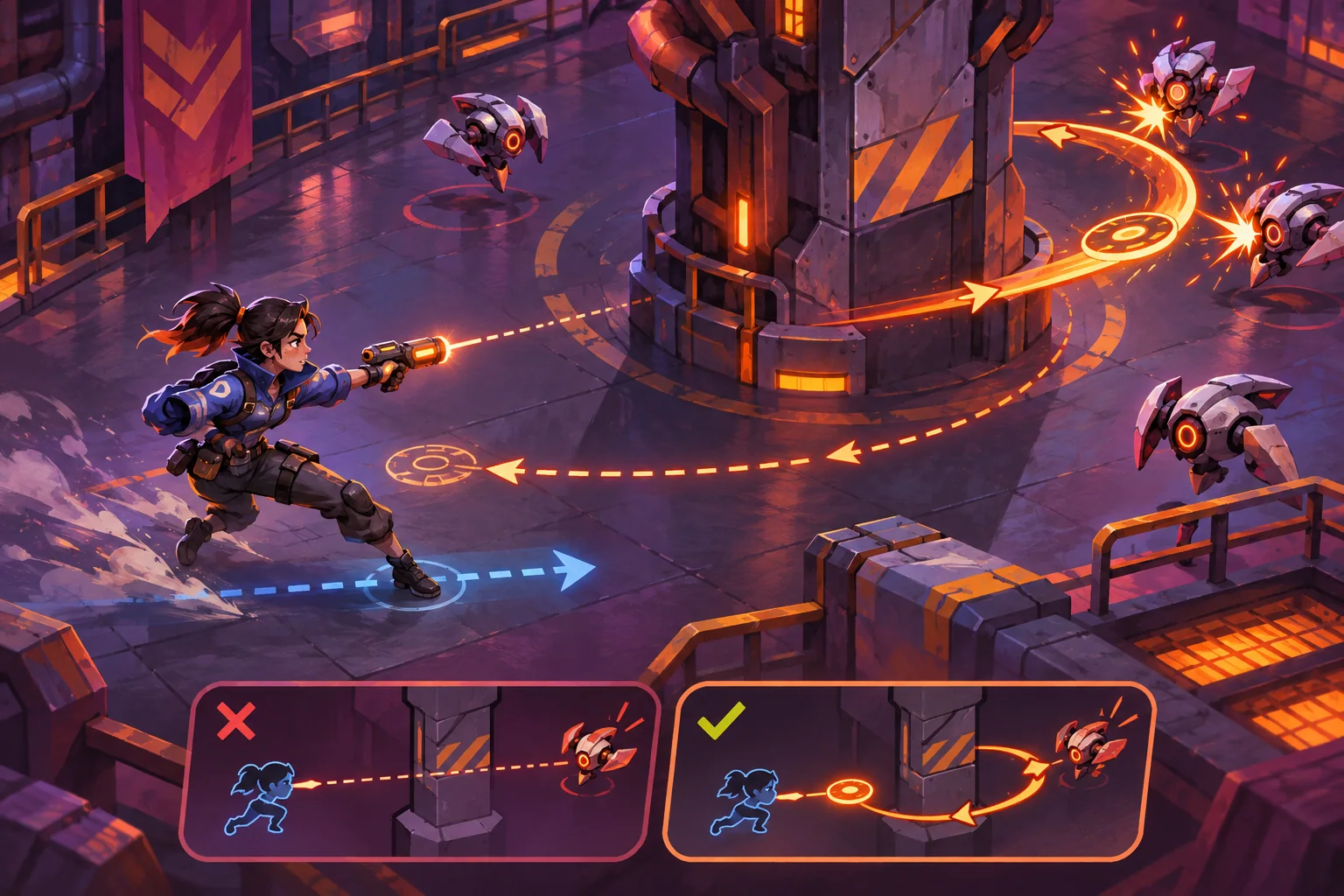
This guide assumes an existing twin-stick shooter where movement and aiming are already separate. The pilot, weapon, drones, and scenarios are fictional. No codebase, build, or playtest was inspected.
Start with the decision the weapon creates
Write one sentence: “I choose this weapon when…” Finish it with a tactical condition, not a stat. Perhaps a projectile curves around cover but must return before firing again. Perhaps a short charge creates a strong area effect, leaving the player exposed while it builds. These behaviors create different positioning and timing decisions. A new label attached to the same shot does not.
| Weapon pattern | Player decision | Tradeoff to keep visible |
|---|---|---|
| Direct rapid fire | Hold a clear lane and maintain pressure | Less useful when cover blocks the line |
| Charged burst | Choose when to stop and release | Exposure during charge time |
| Returning arc disc | Route movement so the projectile can pass and return | Firing rhythm depends on space and recovery |
These are fictional design patterns, not measured weapon classes. Ask whether each changes where the player stands, when they attack, or which target they prioritize. If the answer is no, the concept may be a variant or upgrade rather than a distinct class.
Define the loop before tuning damage
Map the full attack cycle: input, startup, active behavior, hit or miss, recovery, and player feedback. State what happens when the player aims behind a wall, moves during a charge, changes direction mid-flight, or fires while a previous projectile is still active. Edge cases often determine whether the weapon feels intentional or unreliable.
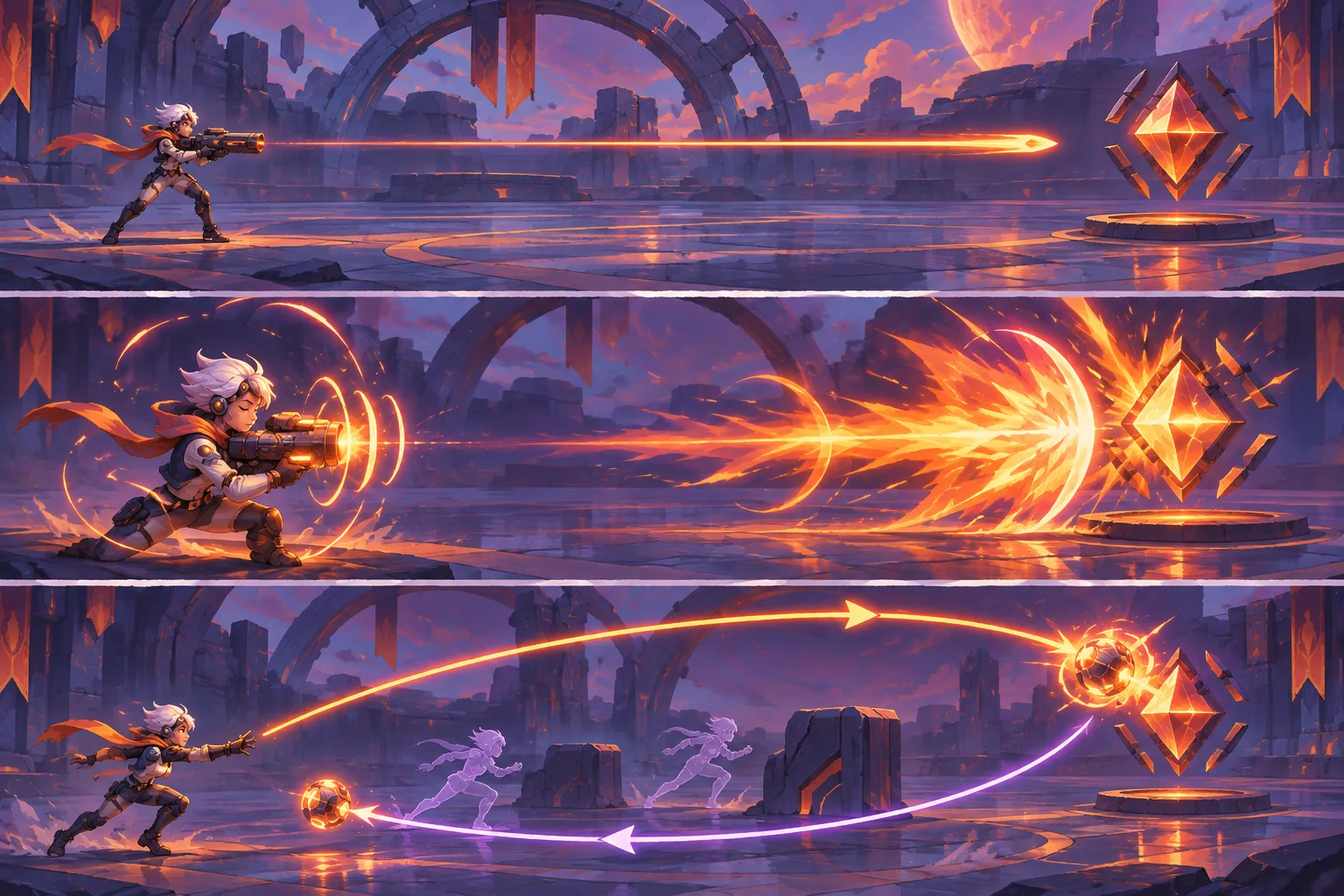
Keep a compact behavior spec. Define the weapon’s intended distance band, target type, timing pattern, movement cost, feedback cue, and counterplay. Avoid committing to precise damage values until the behavior works in representative encounters. A highly visible effect still needs clear rules: players should understand when it can hit and when it is recovering.
| Design question | Example answer for the fictional arc disc | Evidence to collect later |
|---|---|---|
| Where does it work? | Open lanes with room for a return path | Player position and target distance in actual runs |
| What does it cost? | A pause before another throw | Observed downtime and missed opportunities |
| What does it change? | Movement route around cover | Whether players reposition differently |
| How is it countered? | Tight spaces interrupt the return loop | Encounter variety and frustration signals |
Integrate through the existing weapon contract
Trace the current path from fire input to weapon selection, projectile creation, damage, cooldown, effects, sound, upgrades, and HUD. Reuse these systems where their assumptions still fit. If a new weapon needs a different return state, add that behavior behind the existing interface rather than creating a parallel firing pipeline that the inventory or upgrade system cannot inspect.
Preserve movement and aim as independent inputs. If the project uses Godot, the stable InputMap documentation describes named actions and associated input events configured in project settings or code. This is one engine’s input reference, not evidence that the fictional game uses Godot. Keep current bindings intact and add only what the new weapon actually needs.
Ask AI to inspect the relevant files before editing. Provide the current weapon interface, projectile lifecycle, aim source, upgrade path, and supported control schemes. Request a minimal plan, changed-file list, new state fields, risk areas, and rollback steps. Review for a hidden change to movement, aim, input remapping, collision, or existing weapons.
Inspect the existing twin-stick weapon and input flow before editing. Add one weapon whose return path changes player positioning. Preserve independent movement and aim, existing weapon IDs, firing interfaces, upgrades, and control bindings. First list files and edge cases. Then propose a minimal reversible patch and tests for moving while firing, obstacles, cooldown, reload, and existing weapons. Do not claim balance or integration until the project is run.
SEELE’s catalog describes starting a game from an idea and lists playable game categories. It can support a separate concept prototype or visual exploration of a weapon loop. The catalog does not establish that SEELE modifies an existing code repository, so perform integration in the project’s own workflow.
Test distinctness and protect the rest of the game
Use controlled encounters rather than judging from one dramatic screenshot. Compare the new class with the baseline in close, medium, and long range situations, plus an obstacle layout. Observe whether the intended tradeoff appears and whether the weapon creates a new decision. Only report damage, time-to-defeat, or win-rate comparisons after measuring them in a repeatable build and setup.
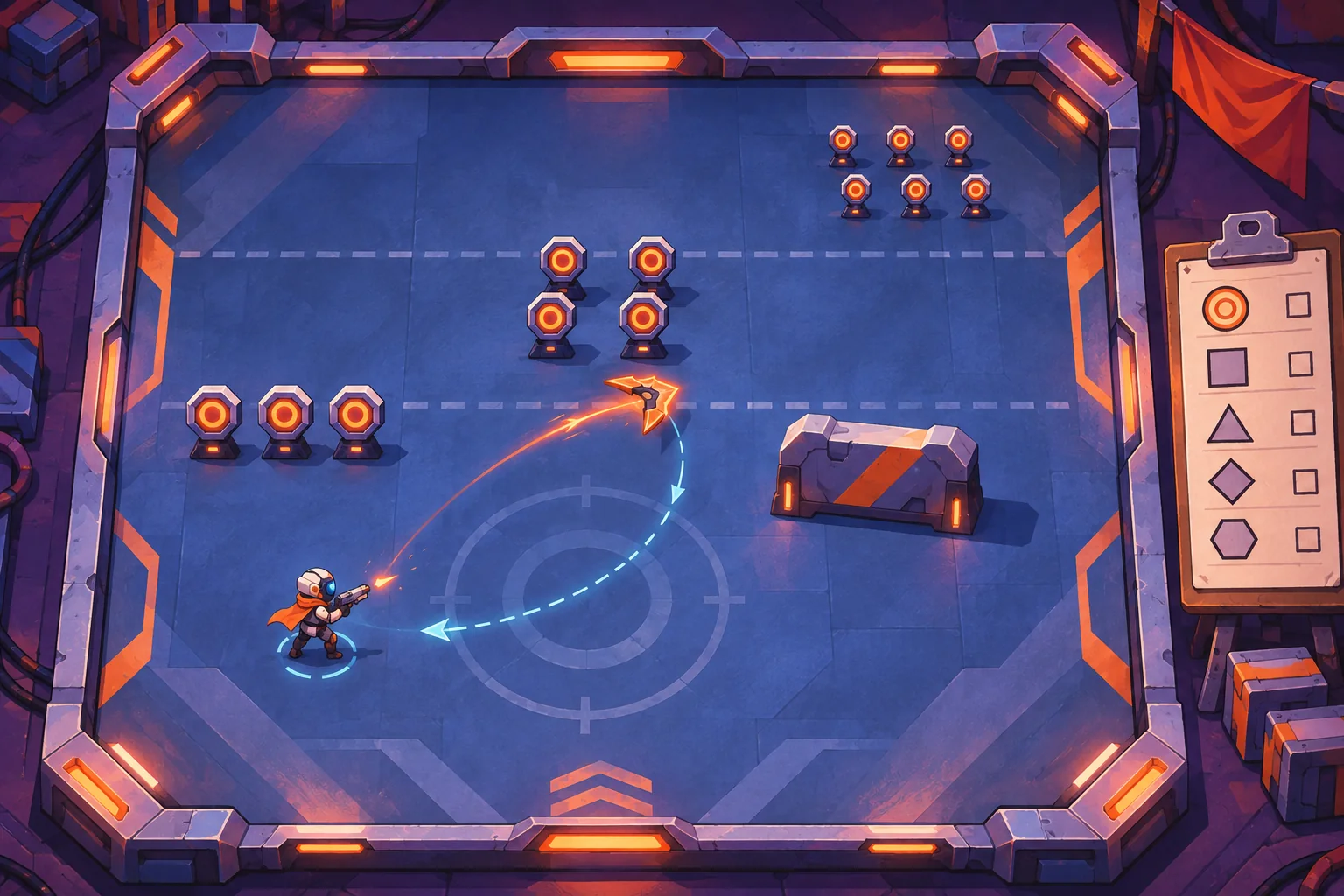
| Check | Scenario | What to verify |
|---|---|---|
| Movement and aim | Move one direction while aiming another | Both inputs remain independent |
| Weapon loop | Fire, miss, hit, and fire again | Return, recovery, and feedback are consistent |
| Geometry | Fire near walls and obstacles | Projectile behavior is understandable and bounded |
| Target mix | Use armored, fast, and grouped targets | Class has a clear niche and counterplay |
| Upgrades | Combine with existing damage or cooldown upgrades | No broken stacking or duplicate effects |
| Regression | Switch among existing weapon classes | Old fire, aim, and HUD behavior remains intact |
Record build, weapon version, target setup, control scheme, steps, and observed behavior. If the weapon is underused, first ask whether its decision is legible and worth the cost. Do not solve every problem by increasing damage; that can erase the intended tradeoff and overpower existing classes.
Frequently asked questions
What makes a new weapon class feel distinct?
It changes the player's decisions, not only the damage number. Give it a recognizable range, timing, movement relationship, target interaction, and tradeoff. Then test whether players choose different positions or attack windows because of that weapon. Look for a changed combat rhythm.
How do I add a weapon without changing twin-stick controls?
Keep movement and aim as separate inputs and route the new firing behavior through the existing weapon interface. Reuse the current cooldown, projectile, damage, and feedback systems where they fit. Test keyboard, mouse, and controller bindings supported by the project.
Should a new weapon use a different damage type?
Only when the type creates a useful interaction the game can explain and maintain. A new trajectory, charge window, or area pattern may create a distinct choice without adding a new damage taxonomy. Check enemy defenses, UI feedback, and existing upgrades before expanding types. Keep the damage model easy to read.
How can AI help extend an existing shooter weapon system?
Give AI the current weapon interface, input assumptions, projectile rules, and files that own upgrades. Ask for a narrow plan and regression list before code changes. Review the diff and test the weapon in the real game; a generated concept or mock arena is not integration evidence.
What tests should a new weapon pass?
Test target distances, enemy types, obstacles, repeated fire, upgrade combinations, death and restart, plus every supported control scheme. Compare time-to-defeat only when measured in a controlled build. Record version and setup so a balance judgment has reproducible context. Use the same fixture on each pass.
Ship a behavior, then tune its numbers
Define the combat choice, connect its loop to existing interfaces, and test the intended movement and timing in representative encounters. Measure balance only after the behavior is repeatable. This lets a new class expand the shooter’s options while preserving the controls and weapons players already know.
To explore a separate playable shooter concept, try SEELE AI Game Maker. It supports concept exploration; it is not an existing-project code editor.