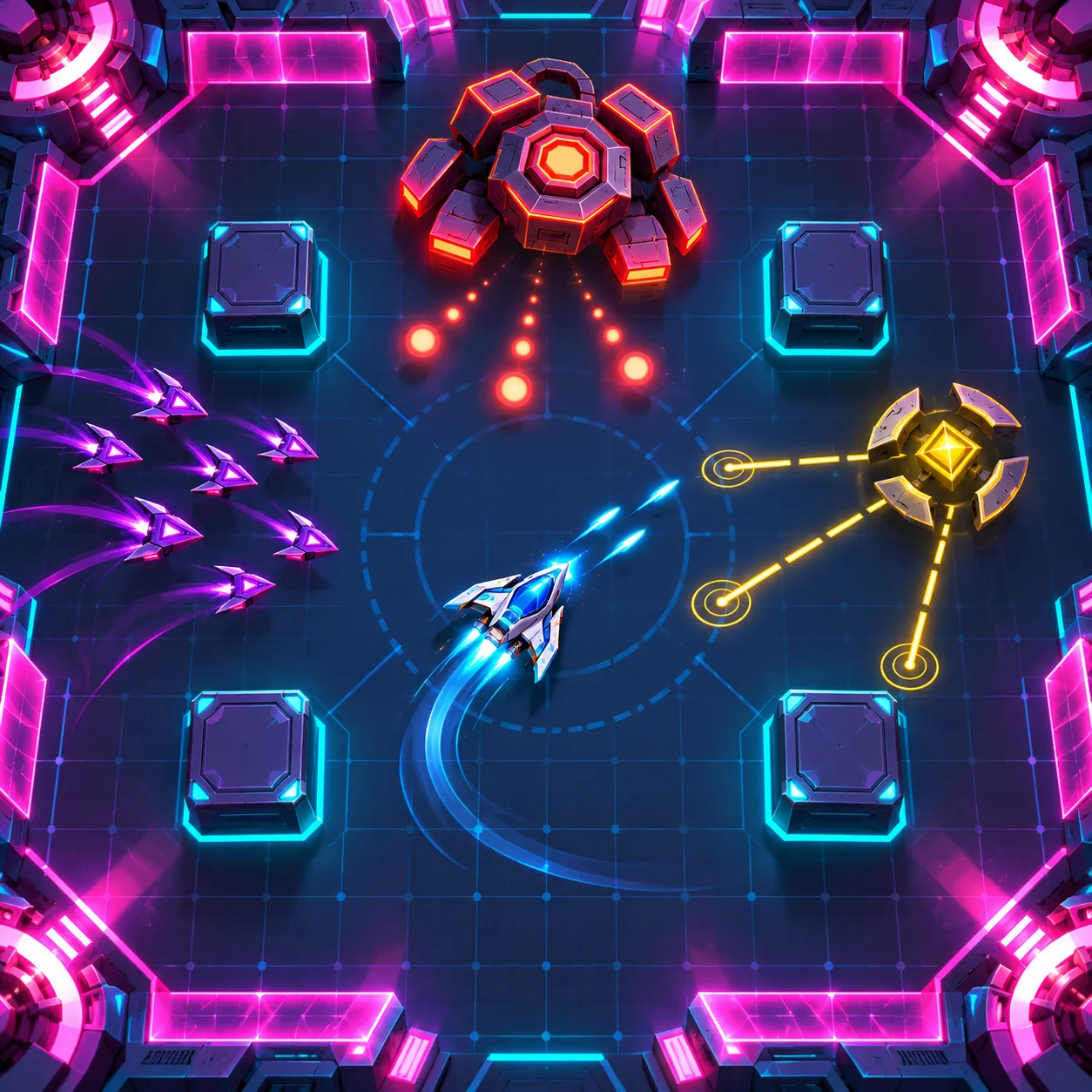
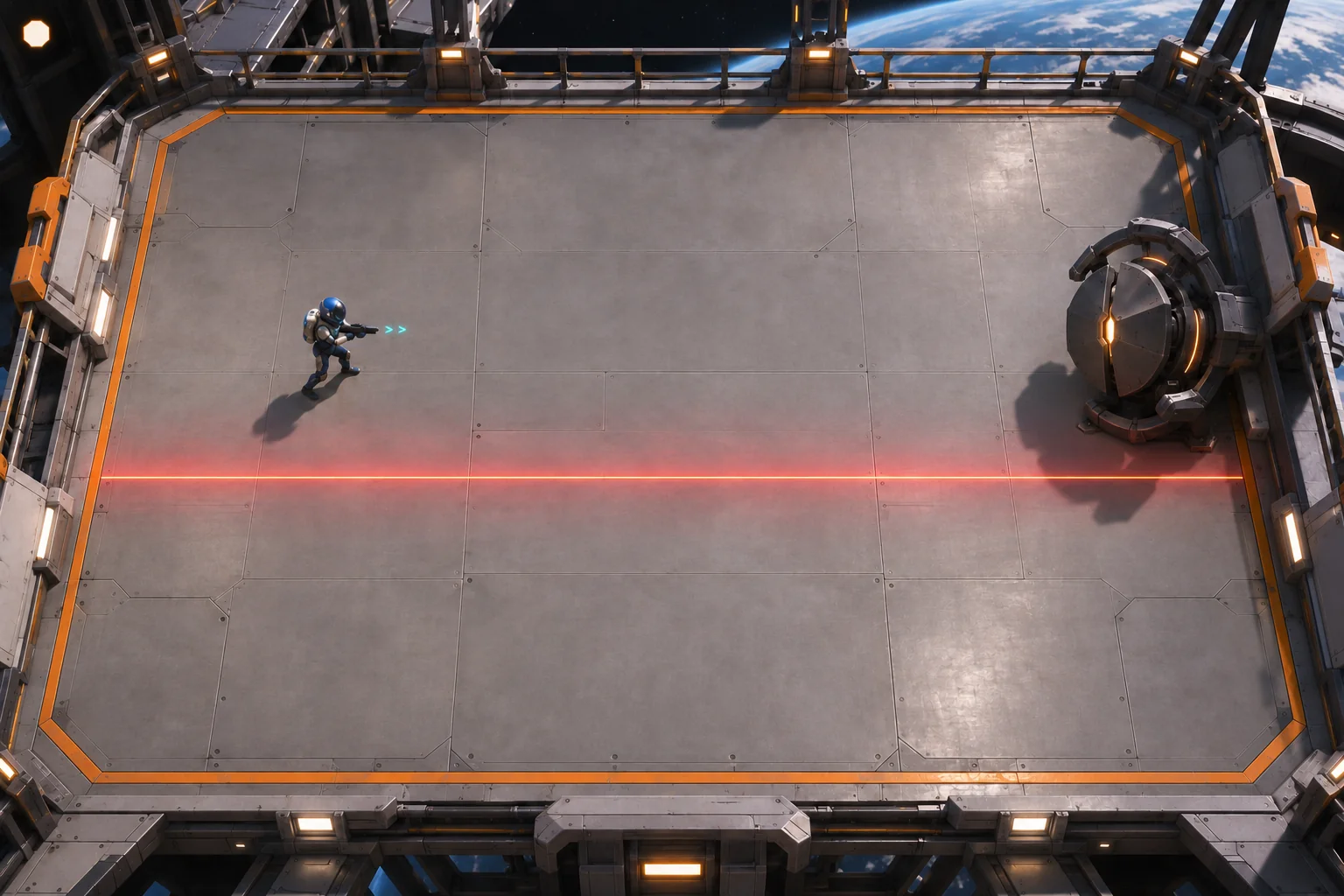
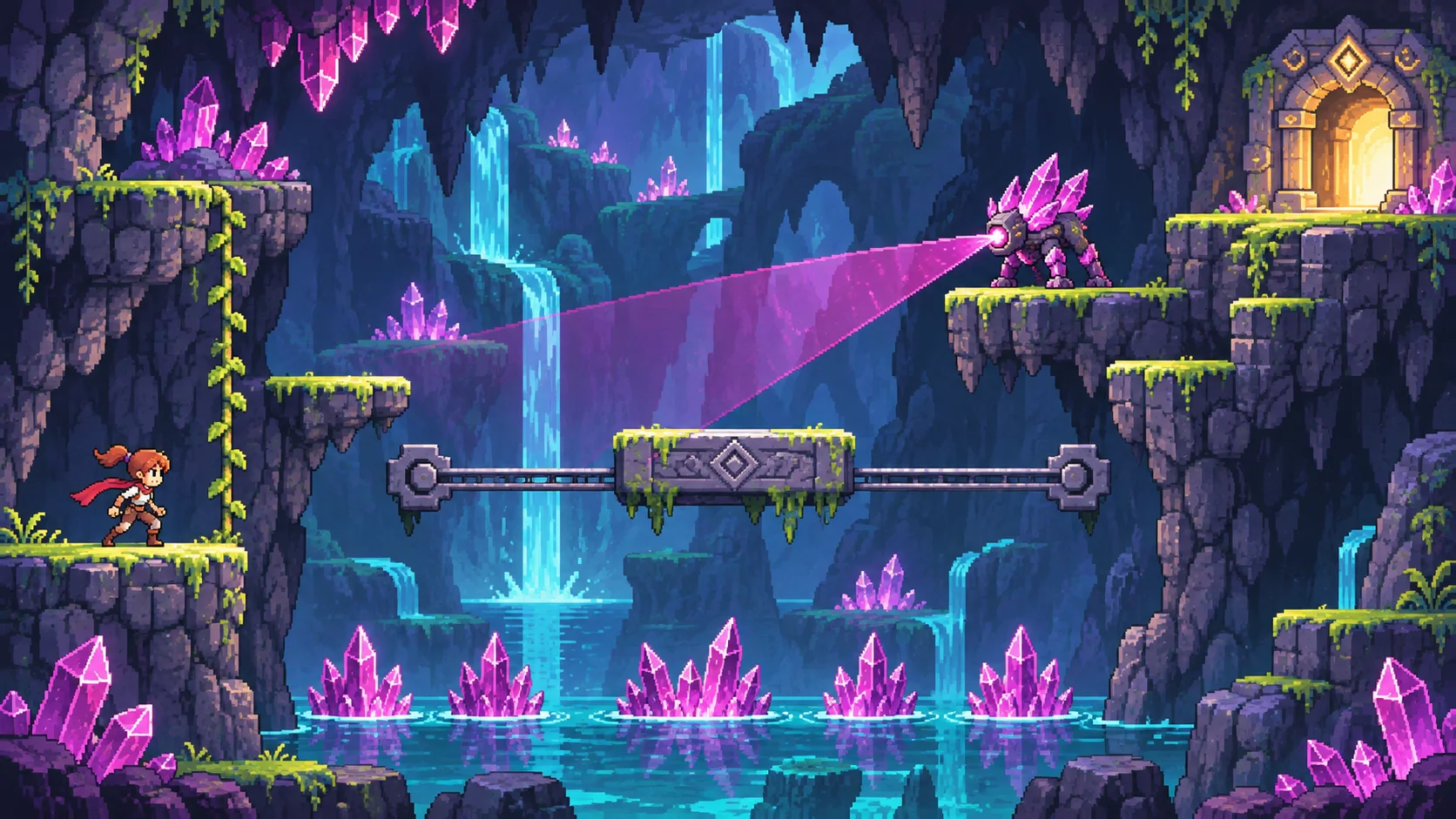
Environmental destruction matters when it changes what a player can do next. In a twin-stick shooter, a breakable barrier might open a shortcut, expose a new line of sight, or remove a safe place to pause. If objects only disappear without affecting movement or aiming, they add spectacle but little tactical choice.
This guide uses a fictional top-down arena and simple barrier rules. The map, hit counts, and outcomes are design examples, not a playtest or a result produced by SEELE.
Keep movement and aiming independent
Start with a small arena where players can move in one direction while aiming in another. Record the movement speed, projectile rule, arena boundary, and how cover blocks shots. Destruction should change the arena state while leaving those controls alone. Otherwise a player may not know whether a missed shot came from aim, movement, or a newly changed obstacle.
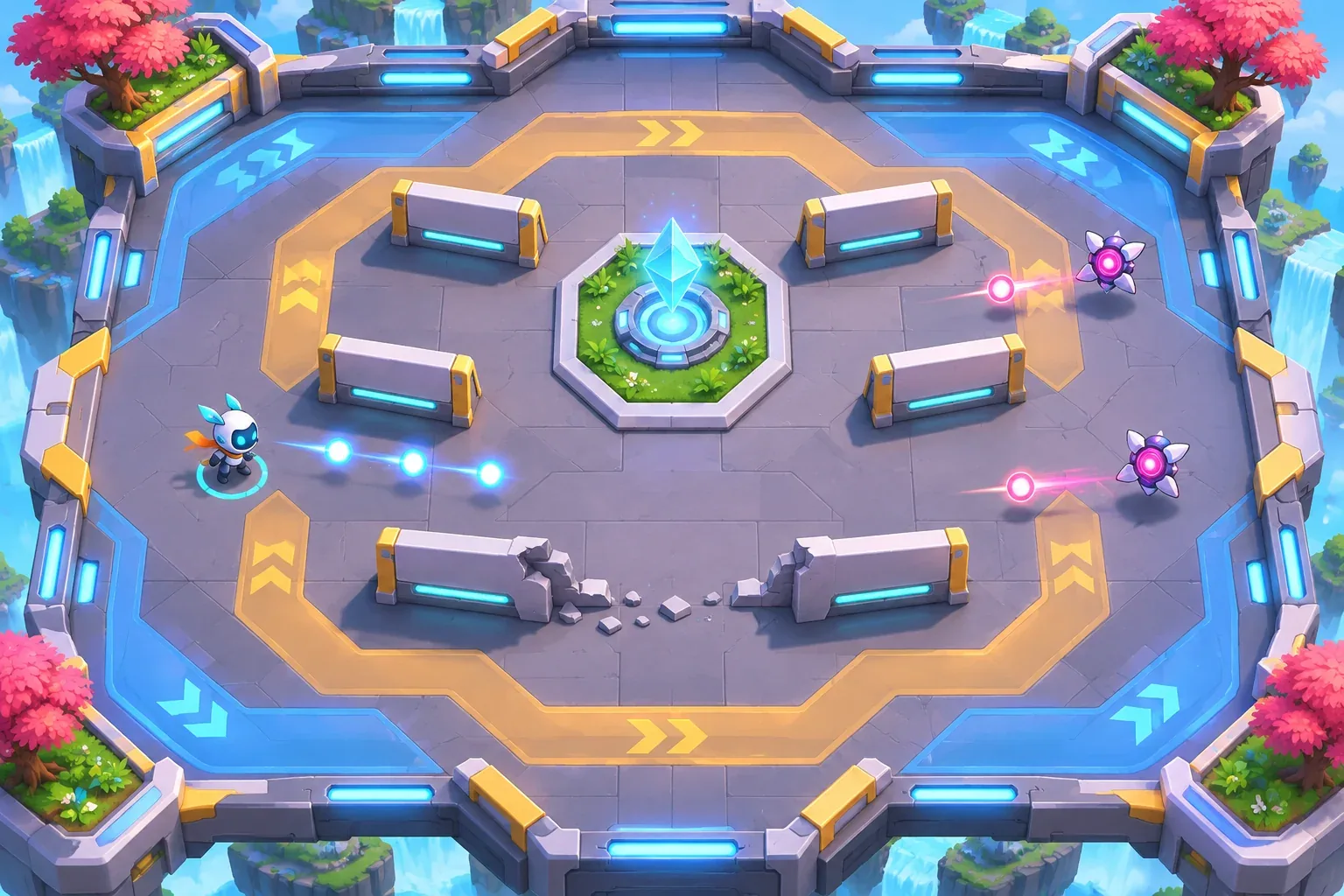
Mark just a few panels as destructible. Use the same material cues consistently: solid cover blocks both movement and projectiles; a damaged panel shows visible cracks; a destroyed panel leaves an open passage. Decide separately whether rubble affects movement or bullets. For this first version, let rubble remain non-blocking so destroyed cover does not create a second hidden obstacle.
A destructible object needs more than a health value. It needs a collision state, projectile response, visual state, damage source, reset rule, and feedback cue. Keep those properties together so the art cannot look broken while the collision still acts intact.
Give cover readable destruction states
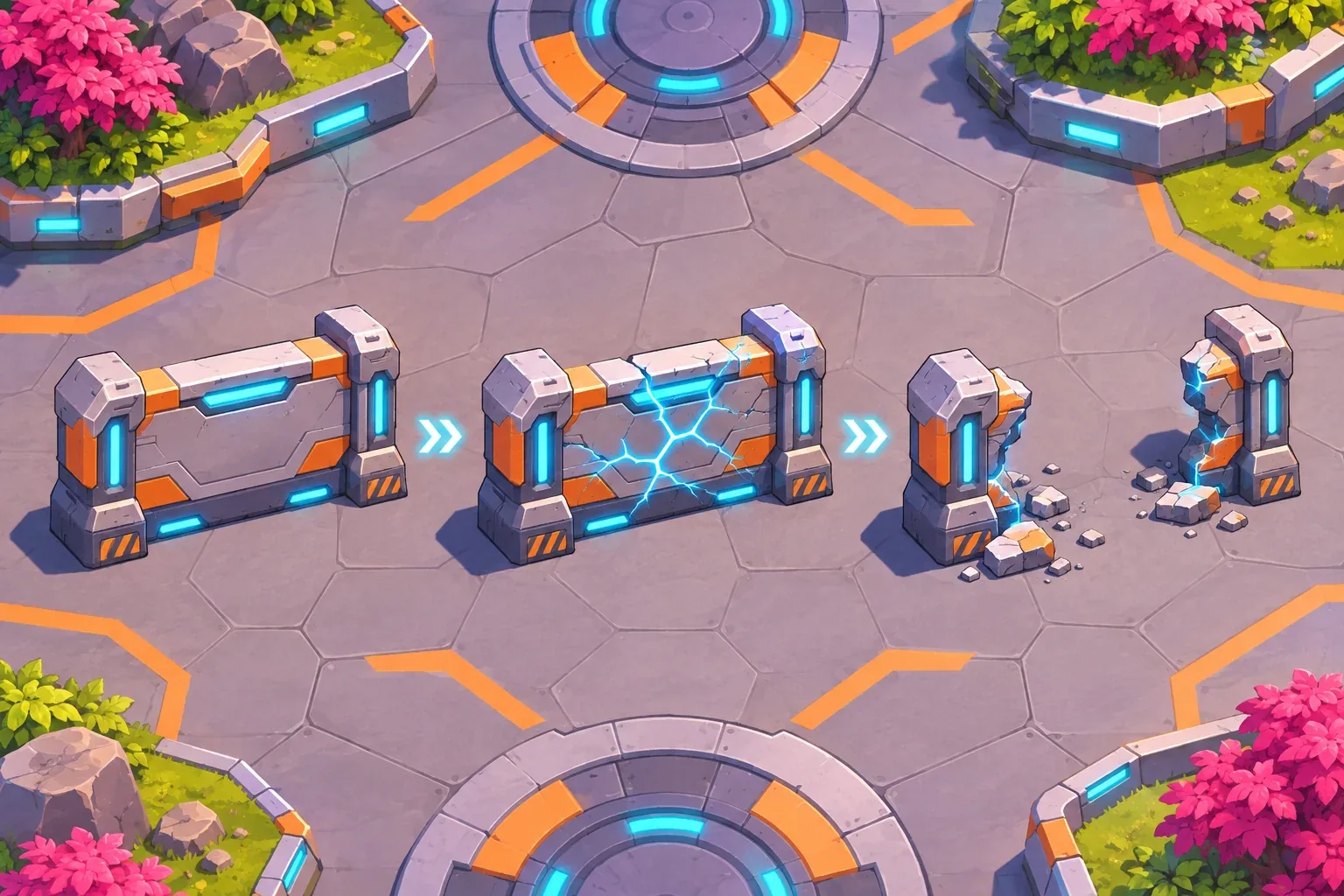
Use a compact state machine before adding pieces that break into many simulated fragments. In this fictional example, a barrier takes three energy hits. The first hit changes intact cover to a cracked state, the second deepens the cracks, and the third changes it to a broken opening. The exact hit count is an illustrative tuning value.
| State | Visual cue | Movement | Projectile and sight rule |
|---|---|---|---|
| Intact | Clean panel with a solid edge | Blocks player movement | Stops projectiles and blocks aim through it |
| Damaged | Bright cracks and a brief impact flash | Still blocks movement | Still blocks projectiles and line of sight |
| Destroyed | Panel disappears into a short dust effect | Opens a passable tile | Projectiles and aim can pass through the gap |
Do not imply that partially damaged cover has a new collision rule unless you mean it. A player should be able to predict whether the next shot opens the route or whether one more hit is needed. If the shooter has several projectile types, decide whether all of them use the same durability rule before multiplying the cases.
Trace one route change
Draw a 12×12 grid and place one barrier panel in the center of a west-to-east corridor. Before destruction, the player must take a northern detour to reach the opposite side. After three hits, the panel becomes an opening and the direct route is available. That creates a choice: spend time and shots to open the short path, or use the longer route while the barrier remains intact.
Trace the change in a small table so every system agrees:
| Situation | Path | Shot rule | Player information |
|---|---|---|---|
| Barrier intact | West-to-east movement uses the northern detour | Shots stop at the panel | Solid surface signals blocked movement and aim |
| One hit received | Detour remains required | Shots still stop | Cracks show progress toward the break point |
| Three hits received | Direct corridor opens | Shots pass through the opening | Dust effect ends; open floor marks the new lane |
This hand trace is a design check, not a result from a running game. In a playable version, check that the pathfinding, player collision, projectile collision, and visual state switch on the same frame or at a clearly defined transition. A brief effect can delay the visual reveal, but it should not leave the player guessing whether the opening is passable.
Prompt for a bounded destruction system
When you ask an AI tool to prototype the system, describe the arena baseline and one object state transition. SEELE's official AI Game Maker page describes creating games from text and iterating on a playable result. The breakable barrier below is a proposed request, not a documented built-in feature.
Build a compact top-down twin-stick shooter arena. The player moves independently from the aiming direction. Add one central breakable barrier panel in a west-to-east corridor. The intact panel blocks player movement, projectiles, and line of sight. It takes three energy hits: show progressive cracks after hit one and two, then remove the blocking panel after hit three. Leave non-blocking rubble. Before the break, the player must use a northern detour; afterward the direct corridor is open. Keep projectiles, movement speed, and arena layout unchanged. Show a clear impact cue and reset the panel at the start of a new round. Do not add chain reactions, loose physics debris, or more destructible materials yet.After you have a first pass, test whether the object uses one shared durability count, whether each collision rule changes as intended, and whether a new round resets the state. Ask for a specific mismatch, such as “the panel still blocks shots after its third hit,” instead of a general request for more destruction.
Test the arena before adding more breakables
Keep a small repeatable test set. Use the same starting position, aim direction, and number of shots before and after a change. This will help you catch cases where visual effects, projectile collision, and movement collision disagree.
- Obstruction check: fire through an intact panel. The projectile stops and the player cannot walk through.
- Damage-state check: apply one and then two hits. Cracks change visibly, while movement and projectile blocking remain consistent.
- Break check: apply the third hit. The panel transitions once, the direct corridor opens, and the next projectile passes through.
- Debris check: cross the broken tile and fire through it. Non-blocking rubble does not create invisible collision.
- Round-reset check: restart the round. The barrier returns to its intact visual and collision state.
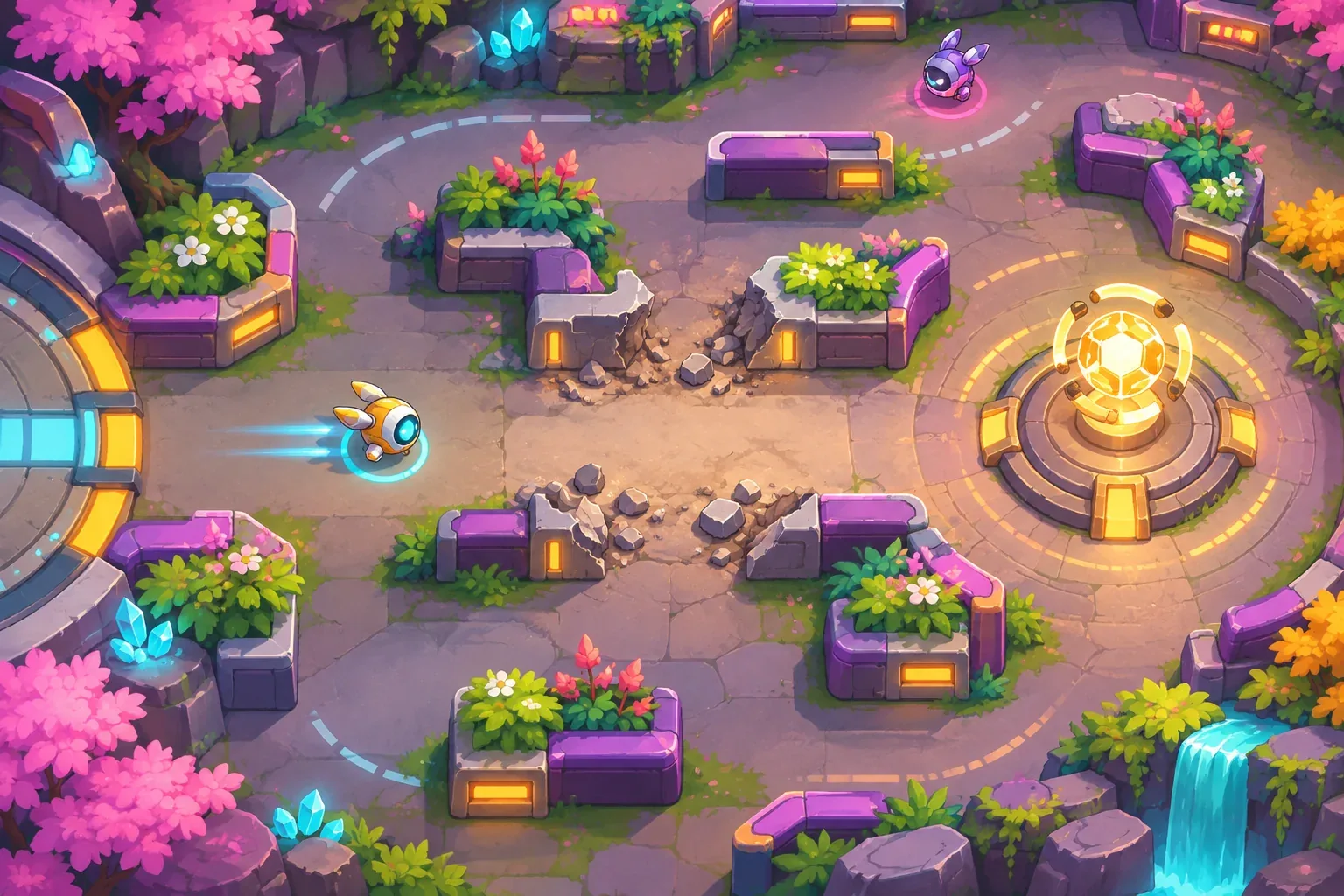
Once the first panel is clear, add another material or a larger object only if it changes a decision. Keep damage thresholds, reset behavior, and collision rules documented alongside the arena. More destruction is useful when the player can read what changed and choose how to use the new space.
Twin-stick destruction FAQs
What should be destructible first?
Start with one or two cover panels whose removal changes a route or firing lane. Avoid making every object breakable before the player can read which surfaces affect play.
Should damaged cover still block shots?
Choose a simple rule and communicate it. In this example, cracked cover remains solid until the final hit, then becomes fully passable. Avoid visual damage that suggests an opening before collision rules agree.
How do I keep destruction from becoming visual noise?
Use a small number of states, clear impact cues, and short effects. The arena should still be readable while the player moves and aims independently.
Should broken debris block movement?
Decide separately from the barrier rule. For a first test, non-blocking debris avoids a hidden collision state. Add physical debris only if it creates a useful decision and remains predictable.
How can I tell whether destruction changes tactics?
Compare the same arena before and after an obstacle breaks. Check whether a route, line of sight, or safe position changes, then record what players do once you have an actual playable test.
Make your own twin-stick shooter
Begin with one arena, one cover panel, and one clear transition from blocked to open. Keep movement and aim stable while the environment changes. For a general game-creation starting point, explore the SEELE AI Game Maker and bring this bounded destruction plan into your prototype brief.