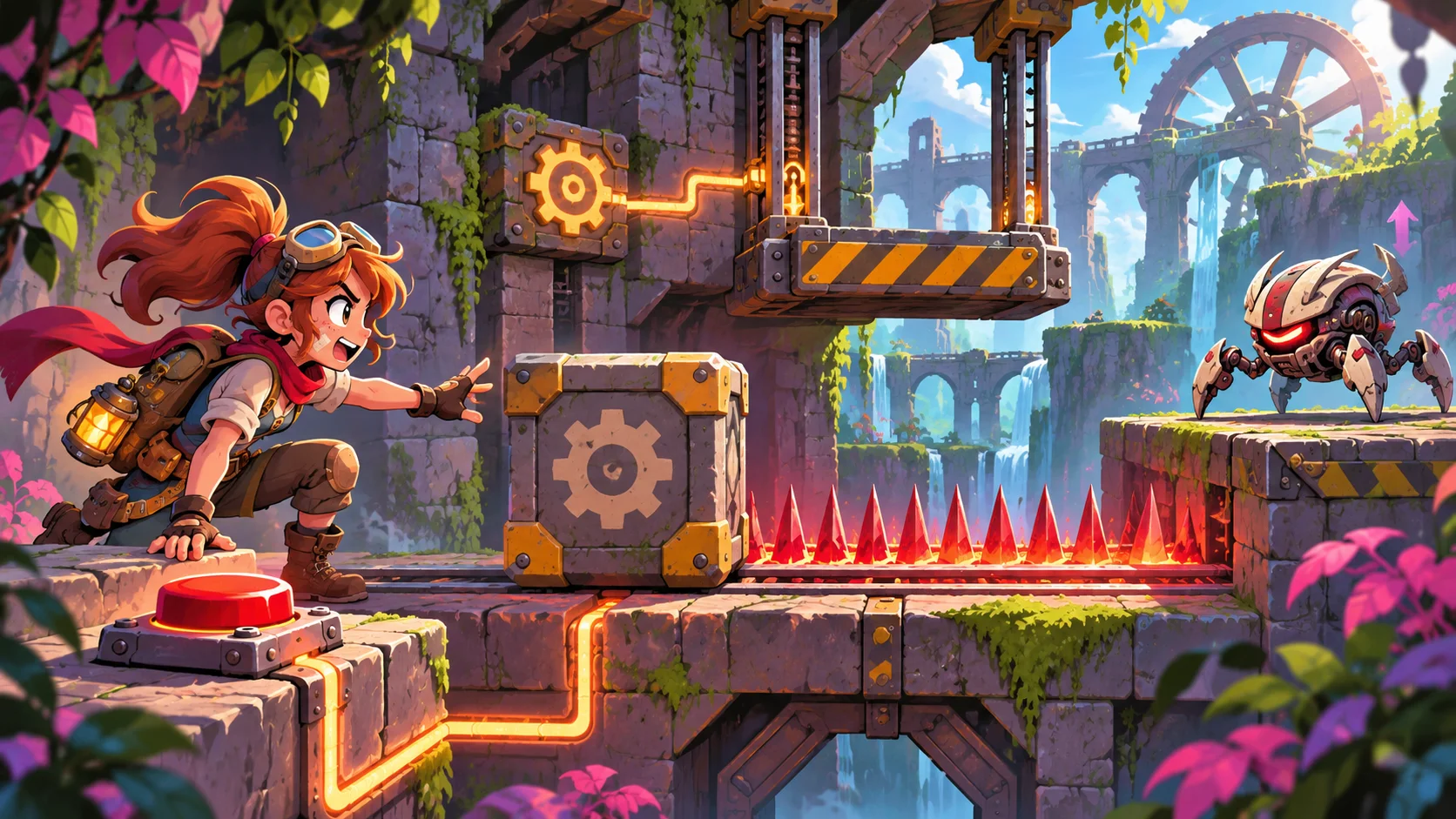
Add environmental interactions that change combat to your precision platformer with AI. Make state changes visible, preserve recovery, and test a repeatable scenario. Start with one room, one enemy tell, and one object that changes the encounter.
Define interactive combat objects
Give each object one clear verb, state change, and cost. A moving platform might carry the player above a sentry’s firing line; a brittle wall might break when an enemy collides with it. Begin with a single enemy and one interactable so you can test whether the player understands the object before precision movement makes the situation more demanding.
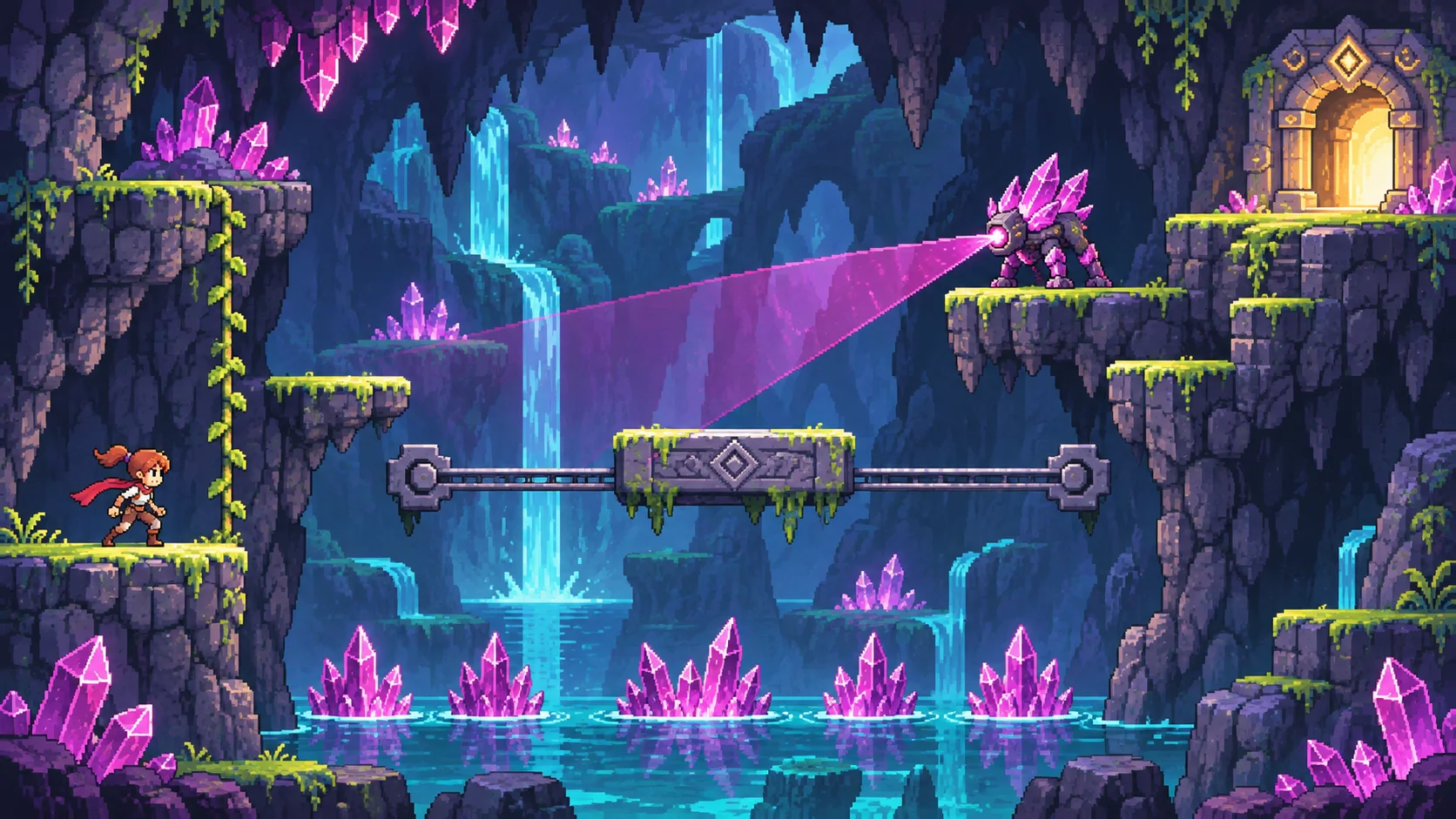
The official Celeste listing from Maddy Makes Games and Extremely OK Games describes a precision platformer built around hand-crafted movement challenges. It supports the platforming context only; environmental combat interactions here are original. Signal an object’s active state through motion and sound, and show the enemy or platform response immediately after interaction.
Connect movement and enemy states
Let a movement action change the combat problem. The player can trigger a platform to interrupt a sentry’s line of fire, then use the new height to land a controlled strike. Define timing windows and reset behavior so the player can tell whether the object is still moving, ready to trigger, or already spent. Avoid requiring a frame-perfect input unless the room clearly teaches that precision.
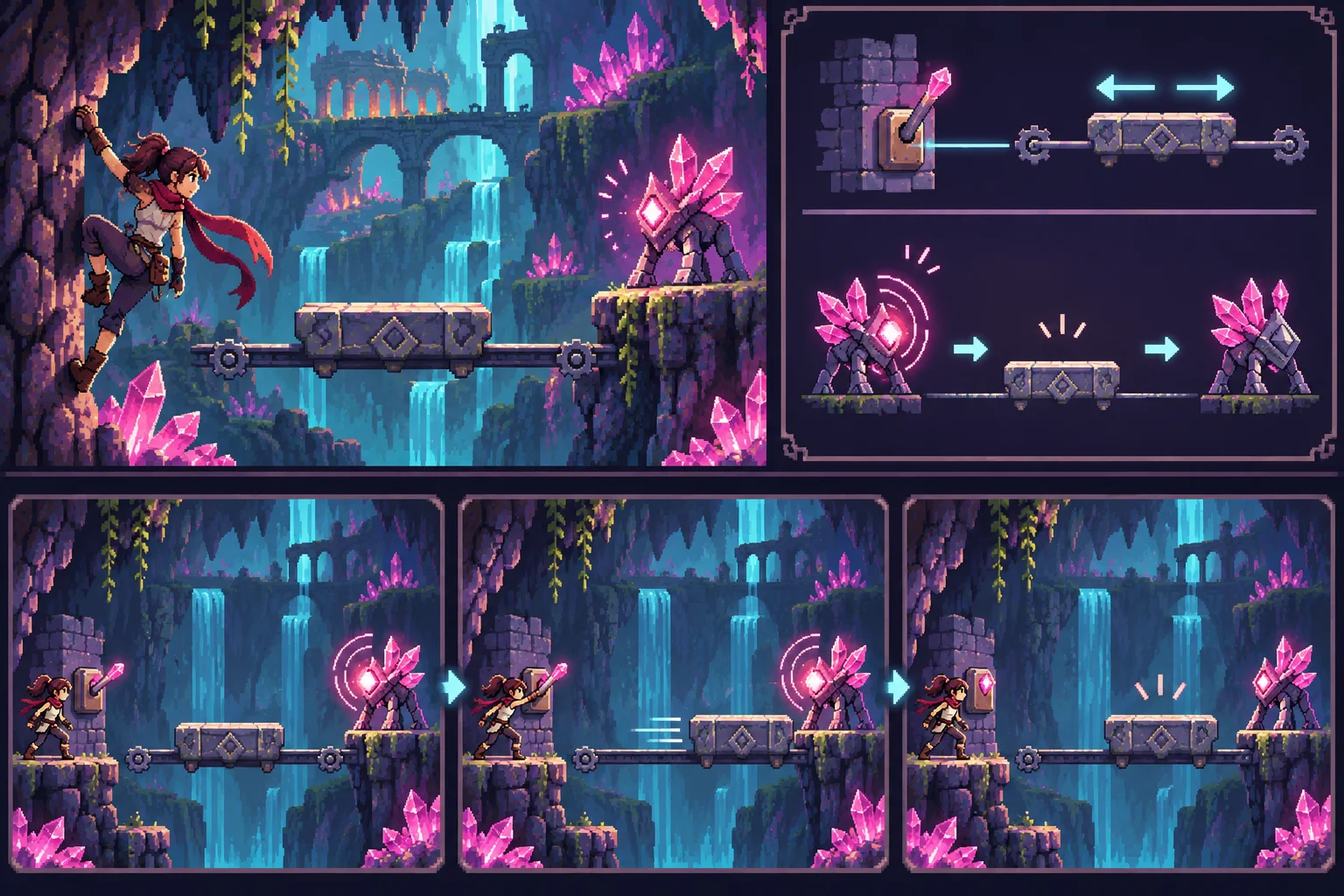
Use the environment to create alternatives rather than a mandatory trick. The player might dodge past the sentry, lure it into a hazard, or use the platform to reach a safer angle. Keep enemy tells visible while the player moves, and make each route’s risk understandable. If an interaction fails, preserve enough space to recover instead of chaining one mistake into unavoidable damage.
Keep interactions precise and readable
Place interaction targets where the player can reach them without obscuring jump arcs or enemy wind-ups. Use a consistent cue for range and activation, then show how long the changed state lasts. A platform should not appear ready in one room and require a hidden timing rule in the next; consistency lets players focus on movement rather than guess at the controls.
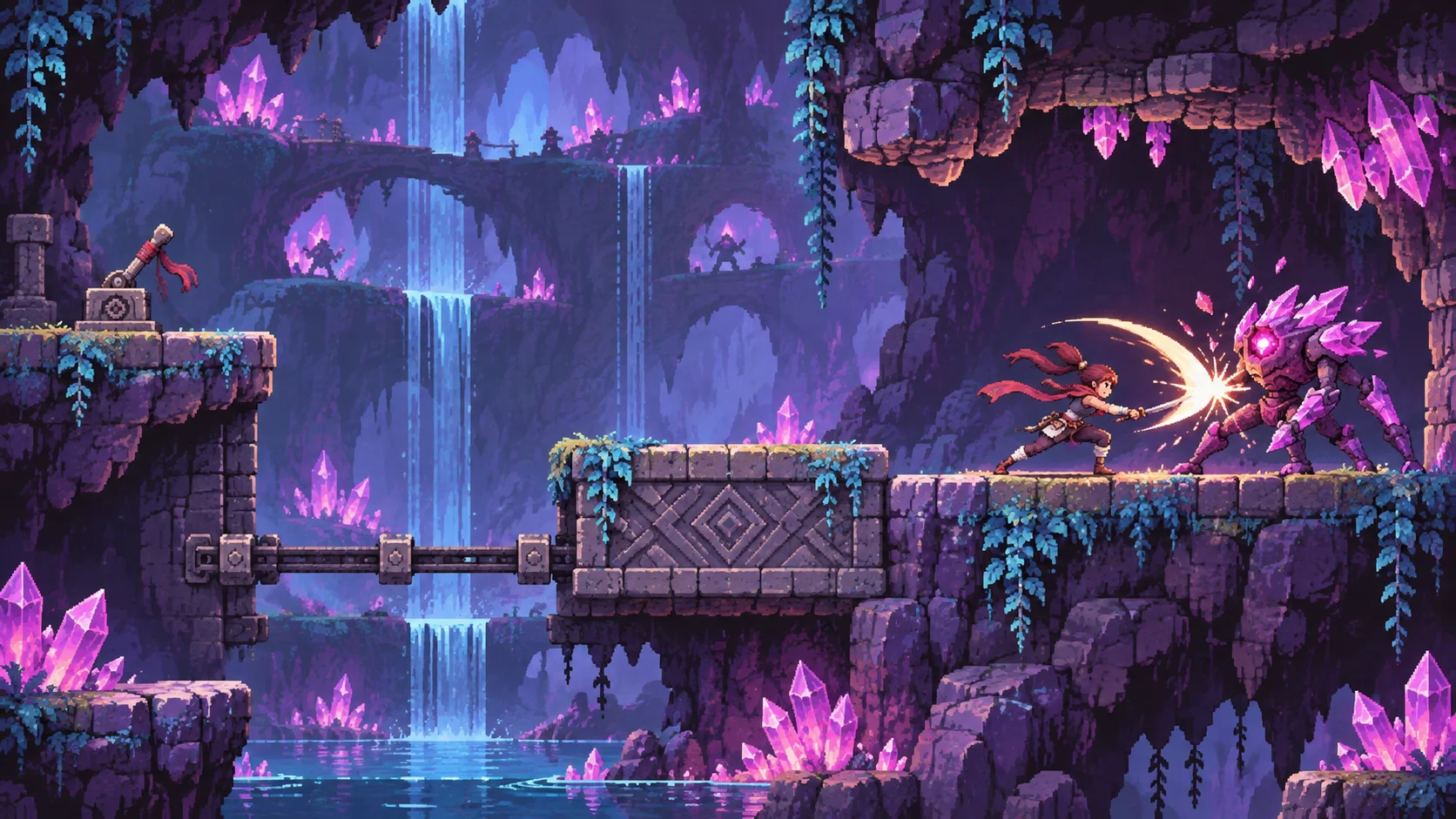
Pair animation and sound so feedback remains legible during a jump. Check contrast against the background and keep hazards distinct from interactive surfaces. If several objects can change combat, introduce them one at a time before combining them. The player should see which object caused the opening and whether the enemy is stunned, displaced, or still threatening.
Test timing and counterplay
Playtest each interaction at normal speed and with a fresh player. Record how many attempts it takes to understand the object, whether the player can see the enemy tell during movement, and what happens after a missed trigger. Repeat the room with the interaction unavailable to check that the intended route has a fallback or that the restriction is clearly taught.
For related examples, see a guide to combat and traversal sharing a resource and a guide to environmental interactions in puzzle spaces. Pass when players can predict the object’s effect and use movement to create a fair combat opening.
FAQ
What environmental interactions work in precision platformers?
Use objects that change enemy position, line of sight, timing, or safe movement space. A moving platform can carry the player above a firing lane, while a brittle wall might break when an enemy collides with it. Start with one object and one enemy so players can learn the effect before the room adds movement pressure.
How can the environment change combat?
Make a movement or object interaction change the enemy state or the player’s available route. The player might trigger a platform to interrupt a shot, lure an enemy into a hazard, or reach a safer angle. Show the result immediately and preserve a fallback so an interaction creates options instead of a hidden required trick.
How do you keep combat interactions precise?
Use consistent activation cues, ranges, and timing windows. Keep targets away from jump arcs and enemy wind-ups, and pair animation with sound so feedback stays readable during movement. Test whether players can see the object state and enemy tell at normal speed, then simplify any interaction that depends on an unclear frame-perfect input.
What should you test in interactive platformer combat?
Test each interaction with a fresh player at normal speed. Record attempts to understand the object, visibility of enemy tells, and recovery after a missed trigger. Repeat with the interaction unavailable to verify there is a fallback or that the restriction is clearly taught, then test combined objects only after each works alone.