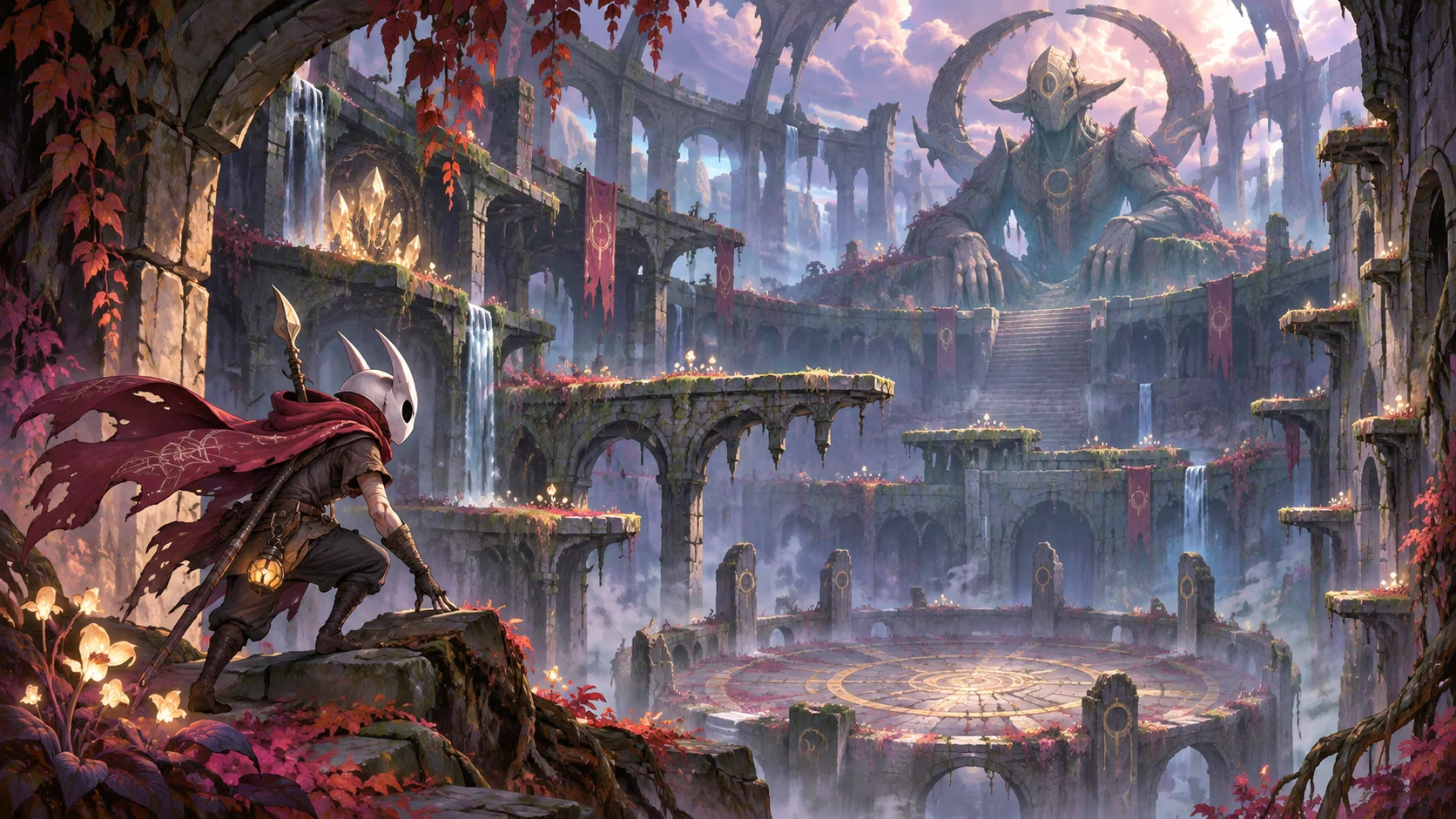
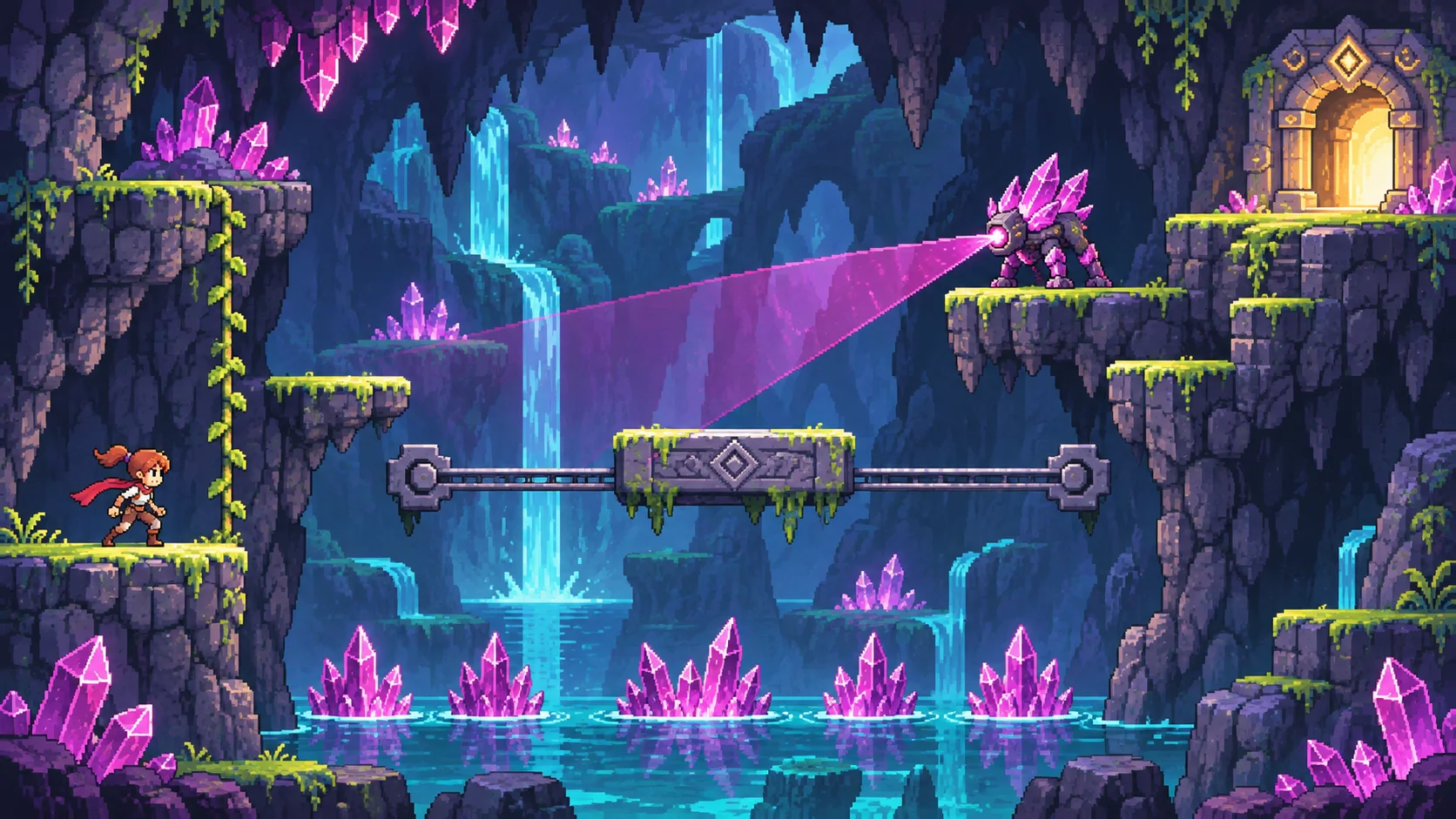
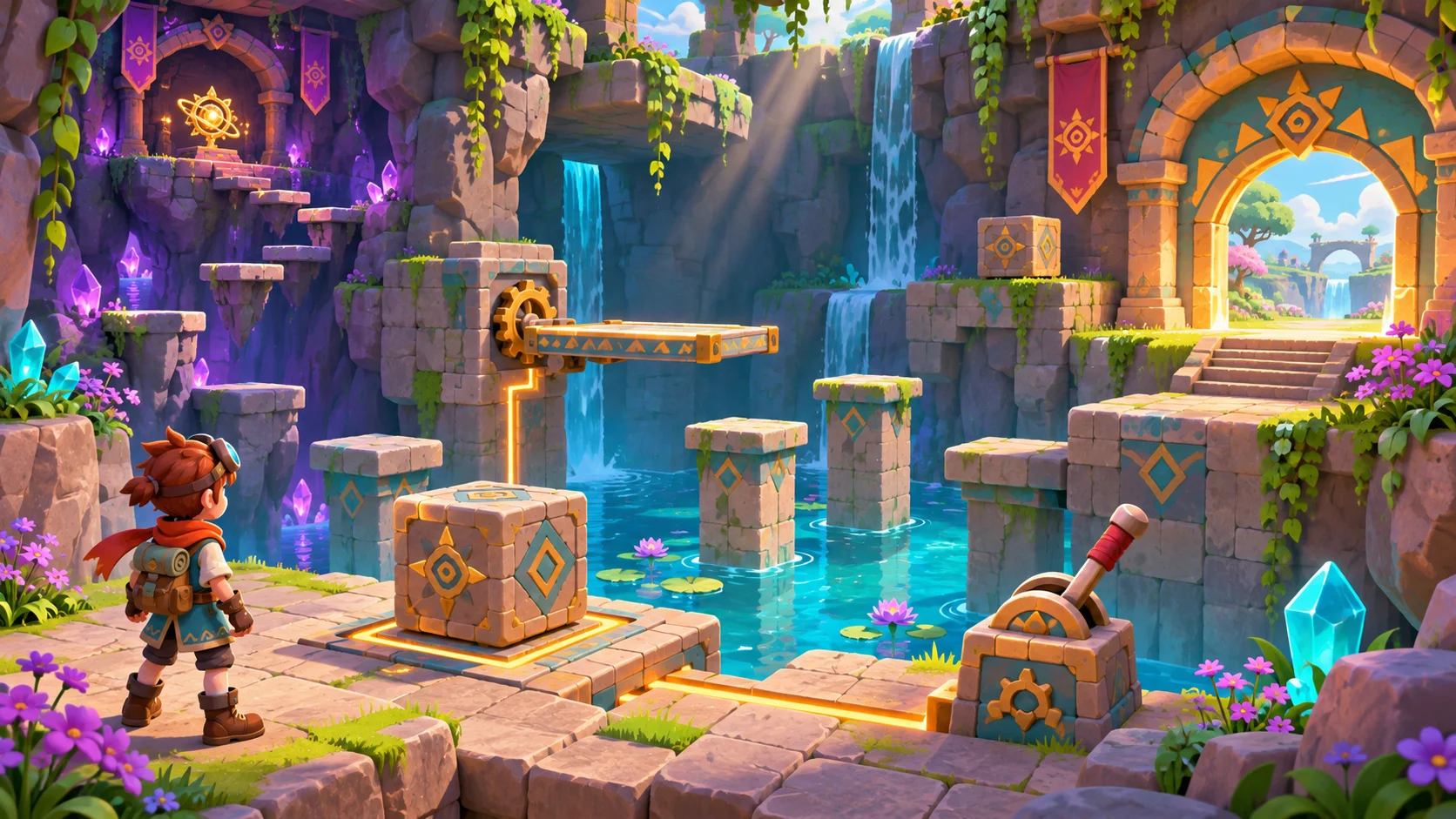
Map the combat and puzzle baseline
Document the player’s movement, the enemy’s detection and attack rules, and every object that can already change the space. A baseline reveals whether a new interaction adds a decision or simply adds a decorative button. Start with one enemy, one object, and one safe route through the arena.
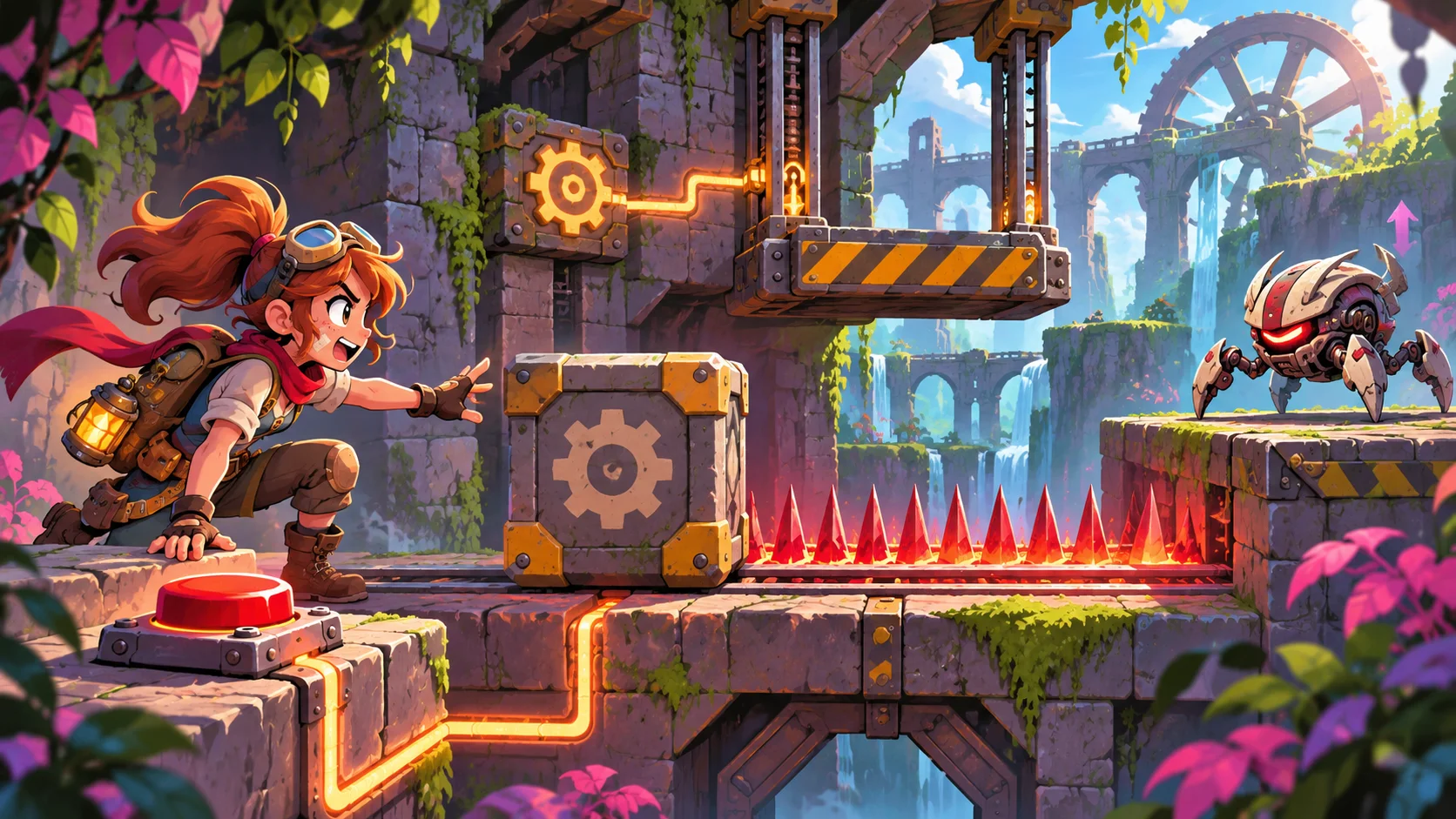
Separate the puzzle’s goal from the combat effect. A switch might open a gate, move cover, change a hazard lane, or redirect an enemy. Tell the player what changed through animation and sound, then leave enough time to use the new state before the encounter moves on.
The official Junklands listing describes an action-platformer with combat, polluted foes, industrial enemies, and environmental puzzles. That listing supplies genre context only; the combat-changing interactions in this guide are original. See the official listing for the genre context. Keep the first experiment small enough to compare against a version without the interaction.
Choose interactions with clear combat effects
Pick objects whose movement can be predicted: a sliding block, lift, pressure plate, breakable barrier, or redirected current. Show the affected space before activation so the player can form a plan. If an object can harm either side, make its active area and timing consistent.
Give each interaction a distinct tactical consequence. Moving cover can interrupt a line of sight; activating a lift can change enemy height; redirecting a hazard can clear a crossing. Avoid stacking several effects on one switch until the player understands the individual rules.
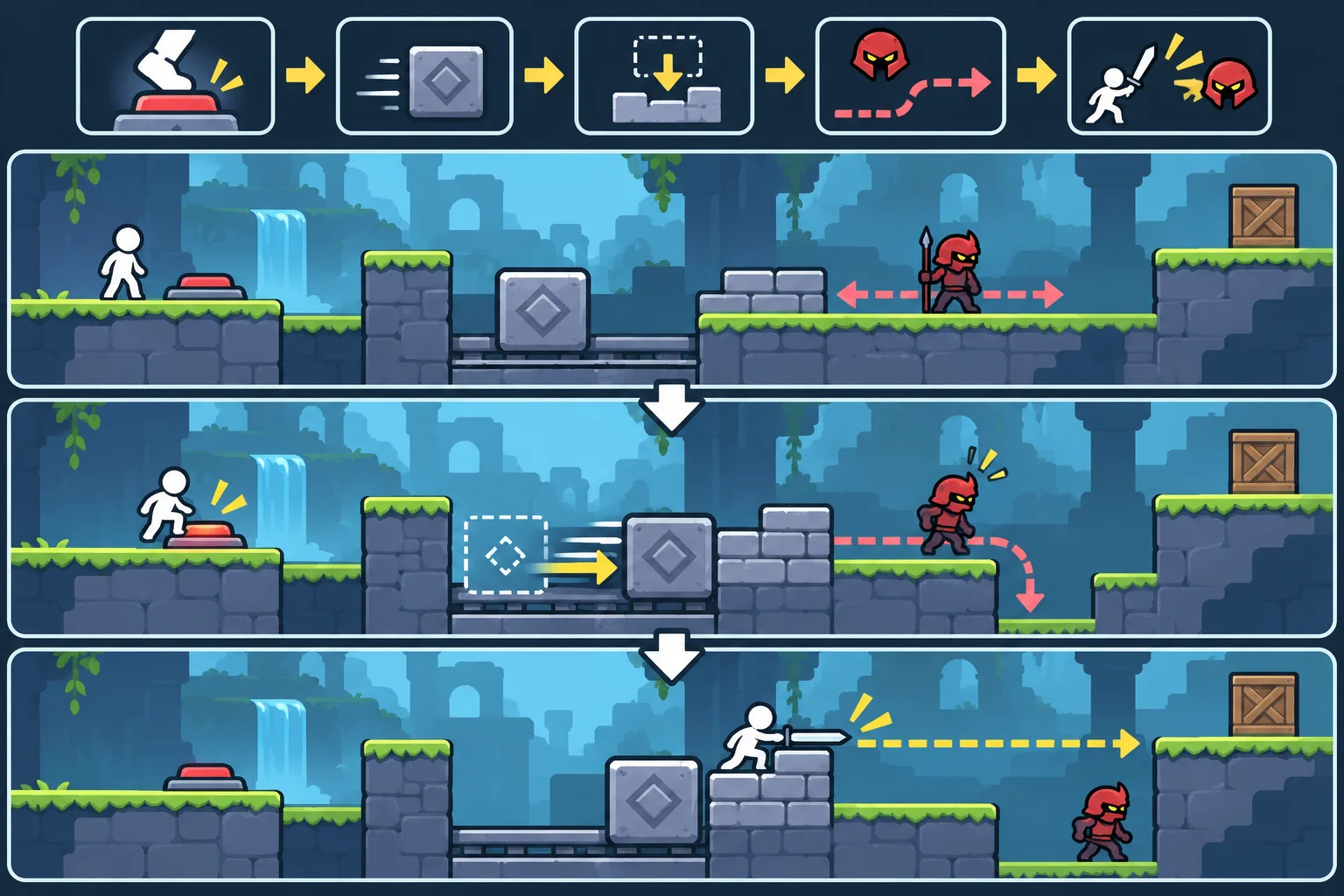
Support more than one useful outcome where possible. The player might use a block as cover, a step, or a way to redirect an enemy. These are meaningful alternatives only if the controls and physics behave consistently, so keep object weight, travel distance, and reset rules visible.
Connect movement puzzles to enemy responses
Let enemy behavior respond to understandable world states. A patrol may investigate a sound, pause when its path is blocked, or move toward a newly opened route. Give the player a tell when the behavior changes, then test whether it is still possible to predict the next move.
Make sure movement remains part of the solution. A player may need to reach a lever, cross a newly safe lane, or climb onto shifted terrain. The puzzle should ask for positioning and timing rather than a long sequence of disconnected interactions during an active attack.
Provide a recovery route when the player activates an object at the wrong moment. A switch can reset after a delay, or the arena can retain another path to progress. A mistake should prompt a revised plan, not create a soft lock that requires restarting the entire level.
Test readability and alternate solutions
Playtest with the object visible before and after activation. Track whether players notice the interaction, understand the change, and choose to use it in combat. Compare a first-time player’s response with someone who already knows the puzzle to catch assumptions hidden in the layout.
Test edge cases such as an enemy crossing the object’s path, the player standing on a moving platform, a switch activated during a hazard, and a failed jump after the environment changes. Ensure collision, animation, and sound agree about the object’s state.
Accept the system when players can explain how the interaction changes the fight and recover from an imperfect choice. See the movement-based boss guide for related spatial encounter ideas. AI can brainstorm variants; implementation and fairness need playtests.
FAQ
How can environmental interactions change combat in a puzzle platformer?
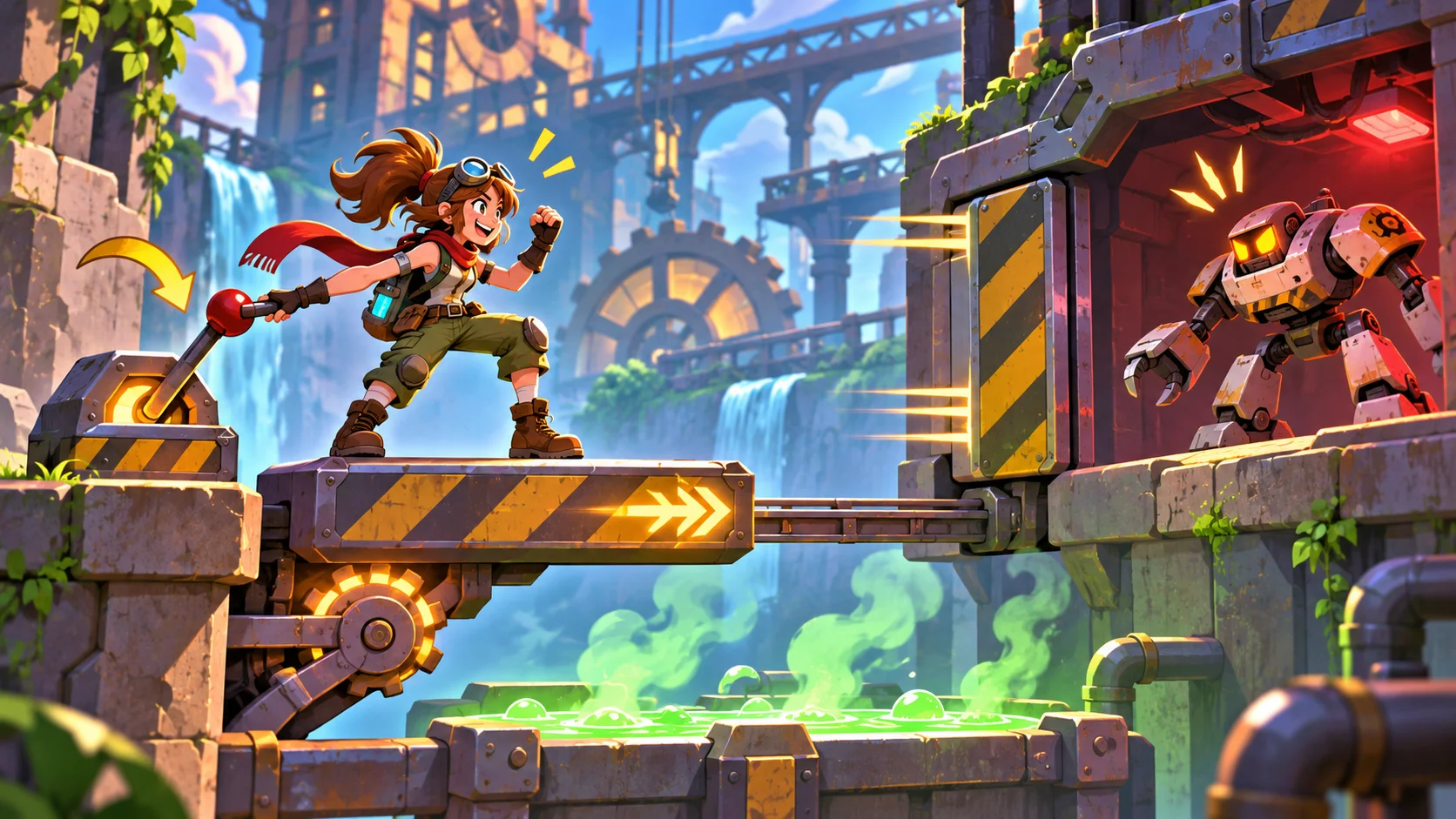
Choose an object or mechanism that changes cover, height, hazards, or enemy movement. Show the effect before the player commits, then make the new state useful for movement or timing. Test whether players can explain the change and predict what it does next.
Which objects work well for combat puzzles?
Start with predictable objects such as a movable block, lift, switch, breakable barrier, or redirected current. Give each one clear rules and a distinct effect. Limit the first prototype to one object and one enemy so its purpose is easy to read.
How do you keep an environmental combat puzzle fair?
Make interaction tells visible, keep enemy responses consistent, and give players time to use a changed arena. Test wrong-time activation and missed jumps. A reset, alternate route, or recovery window can prevent an imperfect choice from becoming a soft lock.
What should you playtest in an interactive combat arena?
Measure whether players notice an object, predict its effect, and use it during combat. Test enemy crossings, moving platforms, hazard timing, collision, and alternate routes. Ask players to explain why an interaction helped or failed before adding more mechanics. This keeps the consequence clear and helps players plan their next step.