Map the player’s movement toolkit
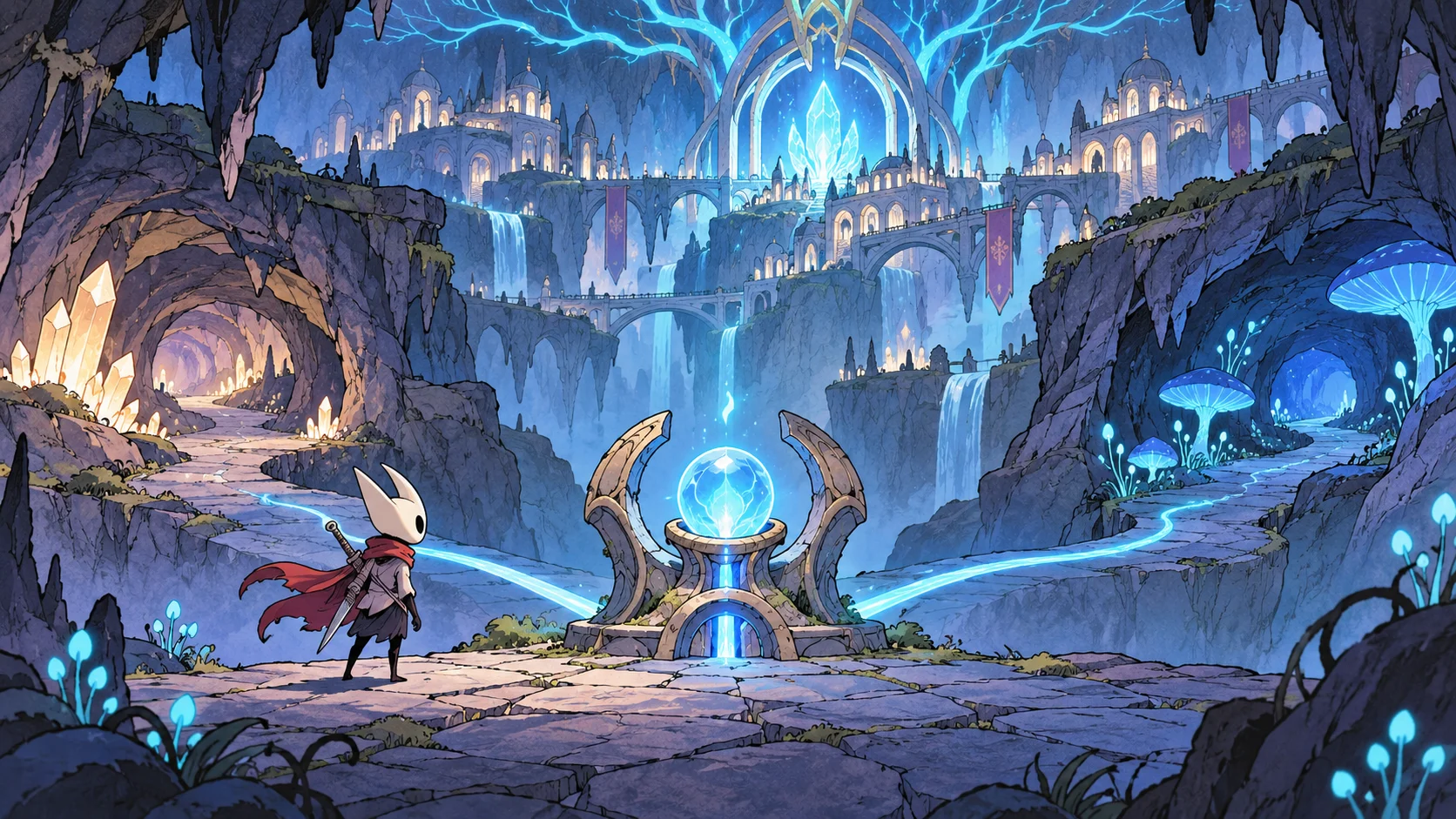
List the abilities available when the boss appears: jump height, air control, dash distance, wall grip, grapple range, and recovery time. Then map which of those abilities the player has likely practiced on the approach. A boss should test known movement in a new context rather than require an unexplained trick.
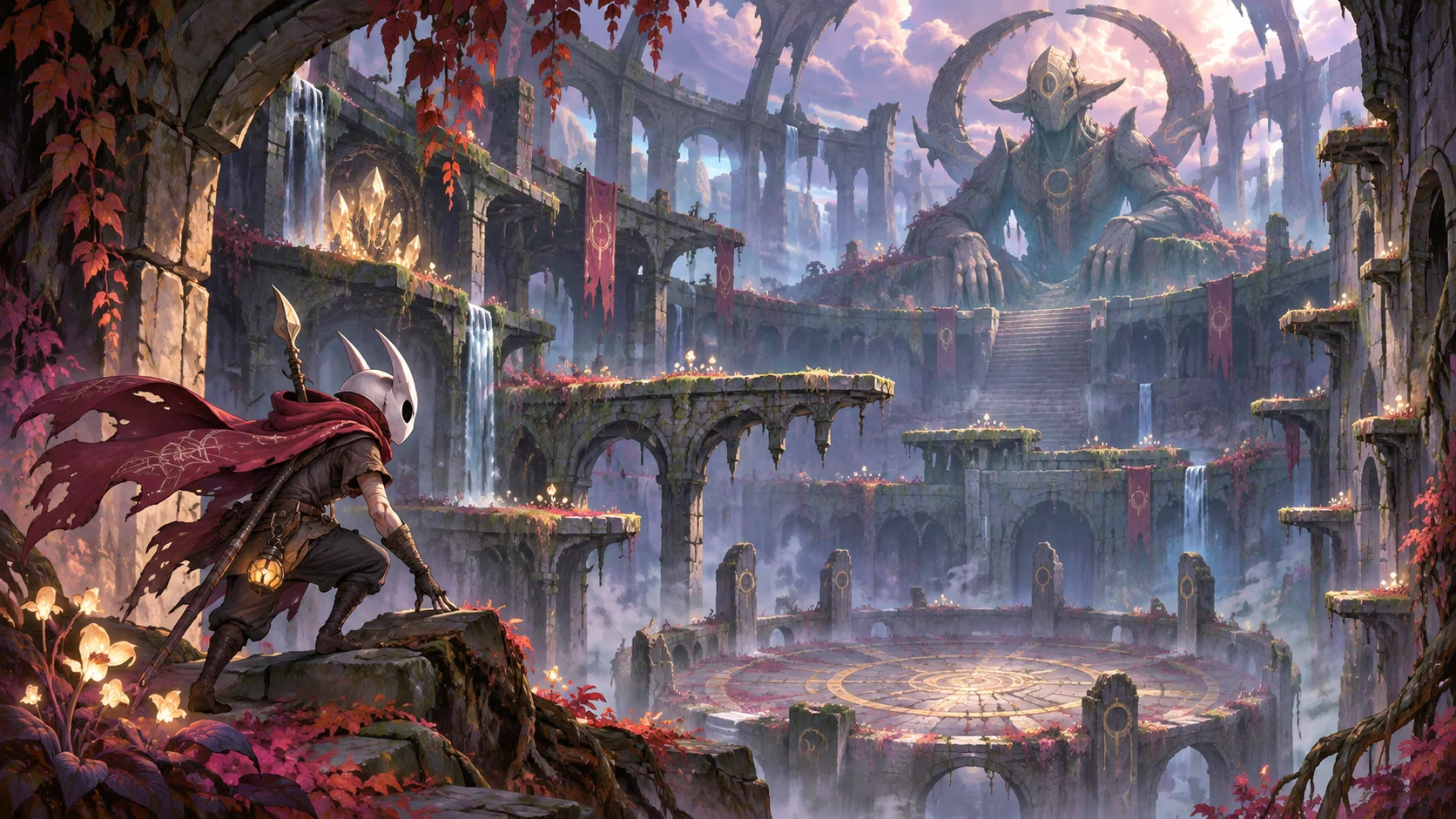
Draw the arena as a route diagram before scripting attacks. Mark floor space, climbable surfaces, platforms, hazards, and safe recovery points. Check whether each route is reachable with the expected ability set and whether the player has room to read a warning before committing.
The official Hollow Knight listing describes an interconnected action-adventure world and official updates with additional boss fights. This supports the exploration and boss context only; the movement tests and encounter guidance here are original. official source.
Design patterns around arena space
Give each attack a clear tell, active window, and recovery period. A low sweep can invite a jump or wall route; a falling hazard can ask the player to cross the floor. Make the safe response depend on movement timing and position rather than a hidden invulnerability rule.
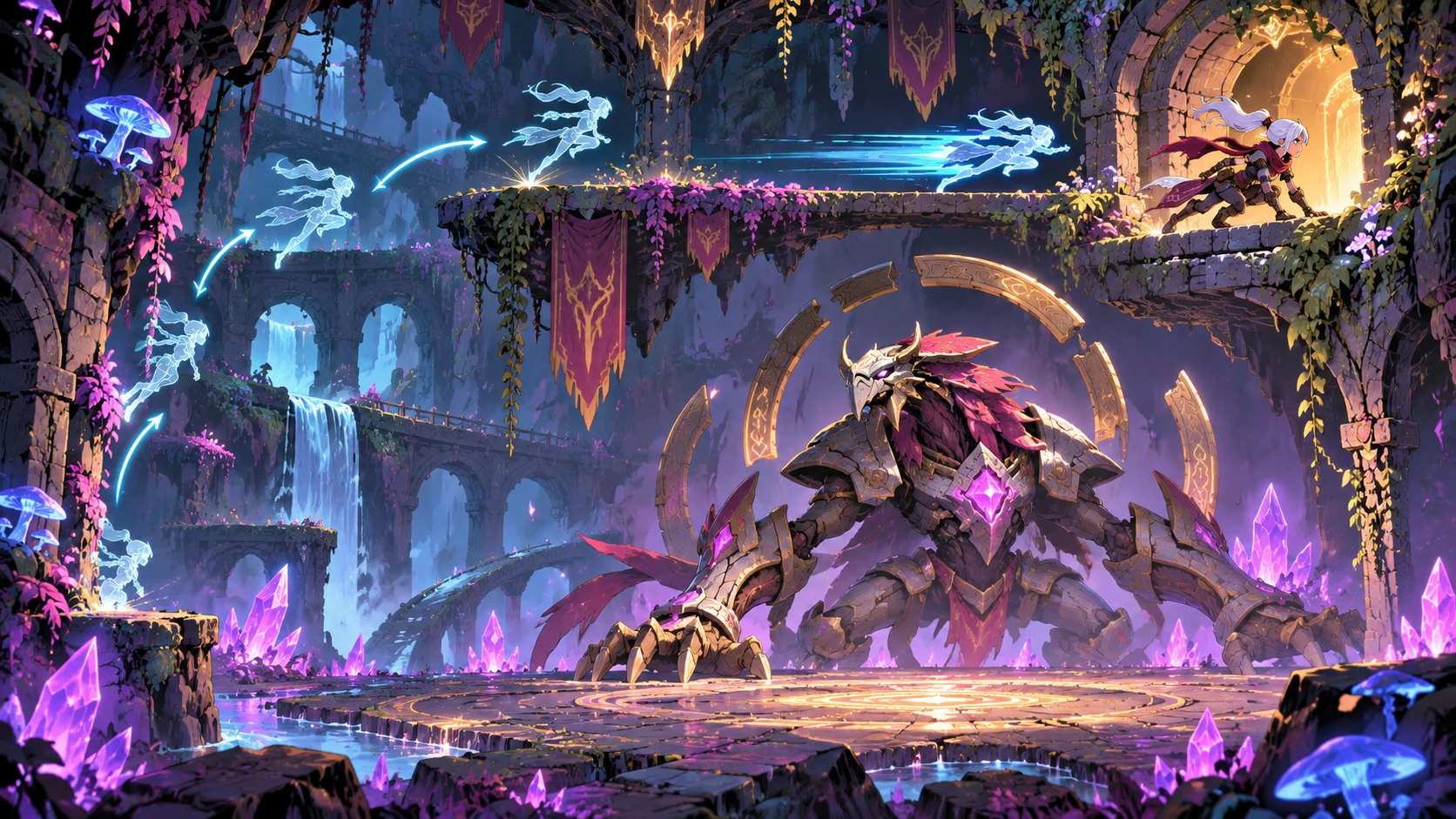
Use the arena to create more than one answer. A long dash may clear a sweeping attack, while a wall climb offers a slower route to a platform. Multiple viable responses help players recover from different positions and keep the encounter from becoming a single memorized sequence.
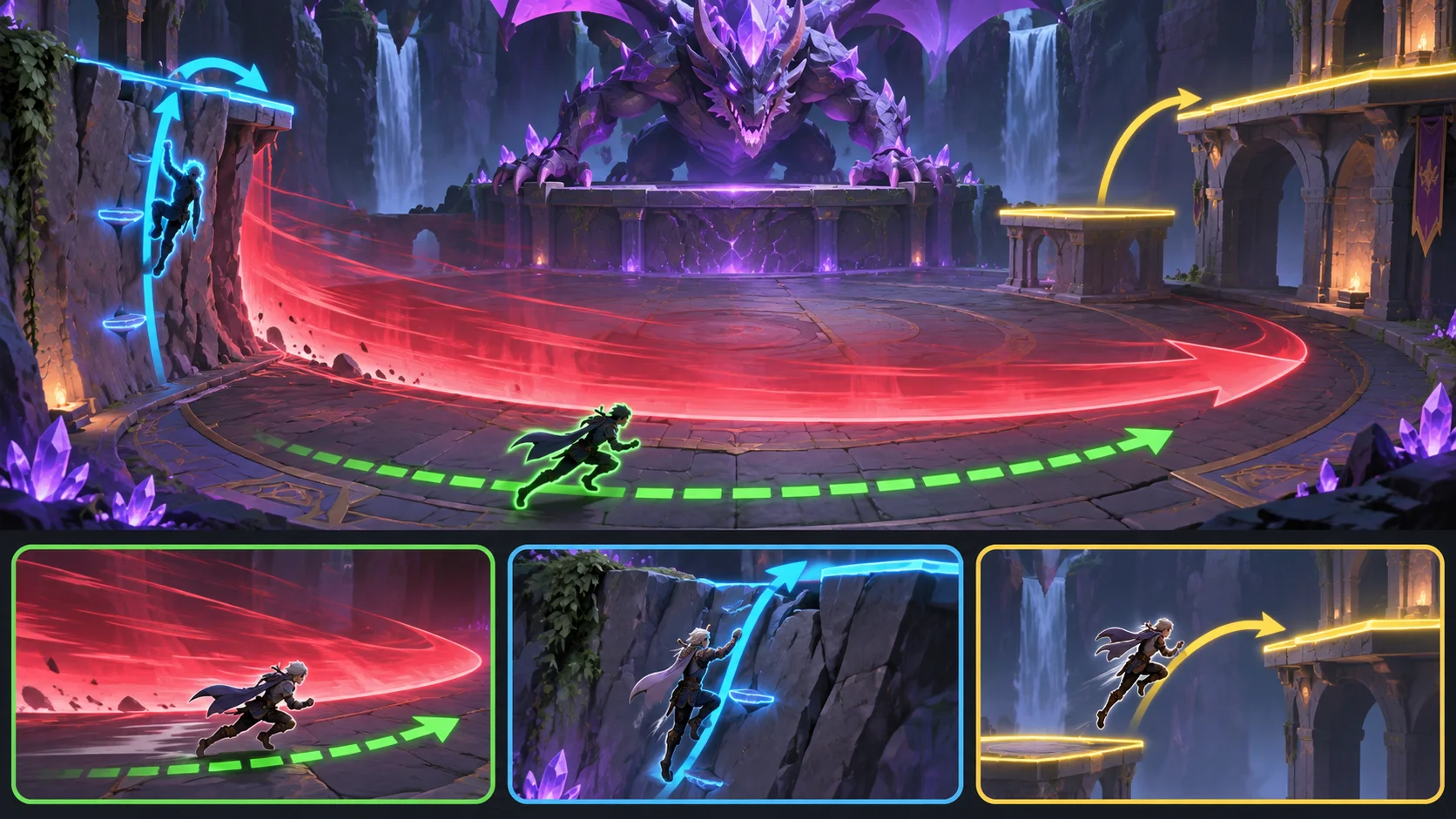
Introduce one pattern at a time, then combine familiar patterns with enough space to identify them. Avoid overlapping effects that obscure the hazard boundary. A player should be able to explain why a movement choice succeeded or failed after seeing the result.
Connect mastery to fair counterplay
Use attack sequences to teach a rhythm. A tell invites positioning, the active frames test execution, and recovery creates an opportunity to respond. If damage is possible only during one narrow animation, make that opening visually and mechanically consistent across attempts.
Let earlier exploration prepare the player. A shortcut, movement upgrade, or optional room can teach the same timing or route grammar used in the arena. Do not make an optional ability mandatory unless the game has clearly gated the boss behind it.
Use checkpoints and phase transitions to reduce repeated friction. Preserve the challenge while shortening the return after a failed attempt. If a phase changes the arena, show the change before it alters a familiar route so players can adapt instead of being caught by an invisible rule.
Test readability and progression
Playtest with players who have just reached the encounter and with players who already know the movement kit. Track deaths by attack, time to recognize each tell, ability use, and successful counterplay. Ask what they expected the arena to let them do before telling them the intended answer.
Test low health, missed jumps, retreating to an edge, and repeated use of one ability. Make sure the boss can be fought from more than one valid position and that the camera does not hide an approaching pattern. Review every hit for a visible cause and a plausible response.
Accept the fight when movement mastery is visible, patterns remain legible, and failure teaches a useful adjustment. For a related encounter behavior example, see the extraction shooter faction guide. AI can suggest pattern variations; frame timing, collision fairness, and animation readability need hands-on playtests.
FAQ
How do you design movement-based boss encounters for a metroidvania?
Start from the abilities players have practiced, map the arena routes, and create attacks with visible tells and recoveries. Offer more than one movement response where possible, then test whether players understand why a dodge, jump, or route worked. This makes the cause of change easier to understand and gives players a clear next step.
Which movement abilities should a boss test?
Choose abilities the player has already encountered or learned nearby, such as jumping, dashing, wall climbing, or grappling. A boss can remix them, but should signal any new requirement and preserve a fair way to learn it through play. This makes the cause of change easier to understand and gives players a clear next step.
How can an arena reward movement mastery?
Build attacks around readable spatial problems and leave routes that reward precise timing or positioning. Provide recovery windows after a successful dodge and keep the arena geometry consistent enough that players can plan movement and improve across attempts. This makes the cause of change easier to understand and gives players a clear next step.
What should you playtest in a movement-focused boss fight?
Track deaths by pattern, tell recognition, ability use, and successful counterplay. Test multiple player positions, low health, missed jumps, camera visibility, and repeated strategies. Every hit should have a visible cause and a plausible response players can learn. This makes the cause of change easier to understand and gives players a clear next step.