Set faction goals and encounter baseline
Define what each group wants before deciding how it fights. One faction may protect a supply route, another may investigate disturbances, and a third may control a valuable location. Goals connect behavior to the world and give players a reason to predict where a group will move.
The official EXFIL listing describes PvE operations with hostile AI factions, patrols, objectives, and extraction. That supports the general extraction context only; the behavior framework here is original. Begin with one encounter on a small map and establish baseline detection range, travel speed, and player escape options.
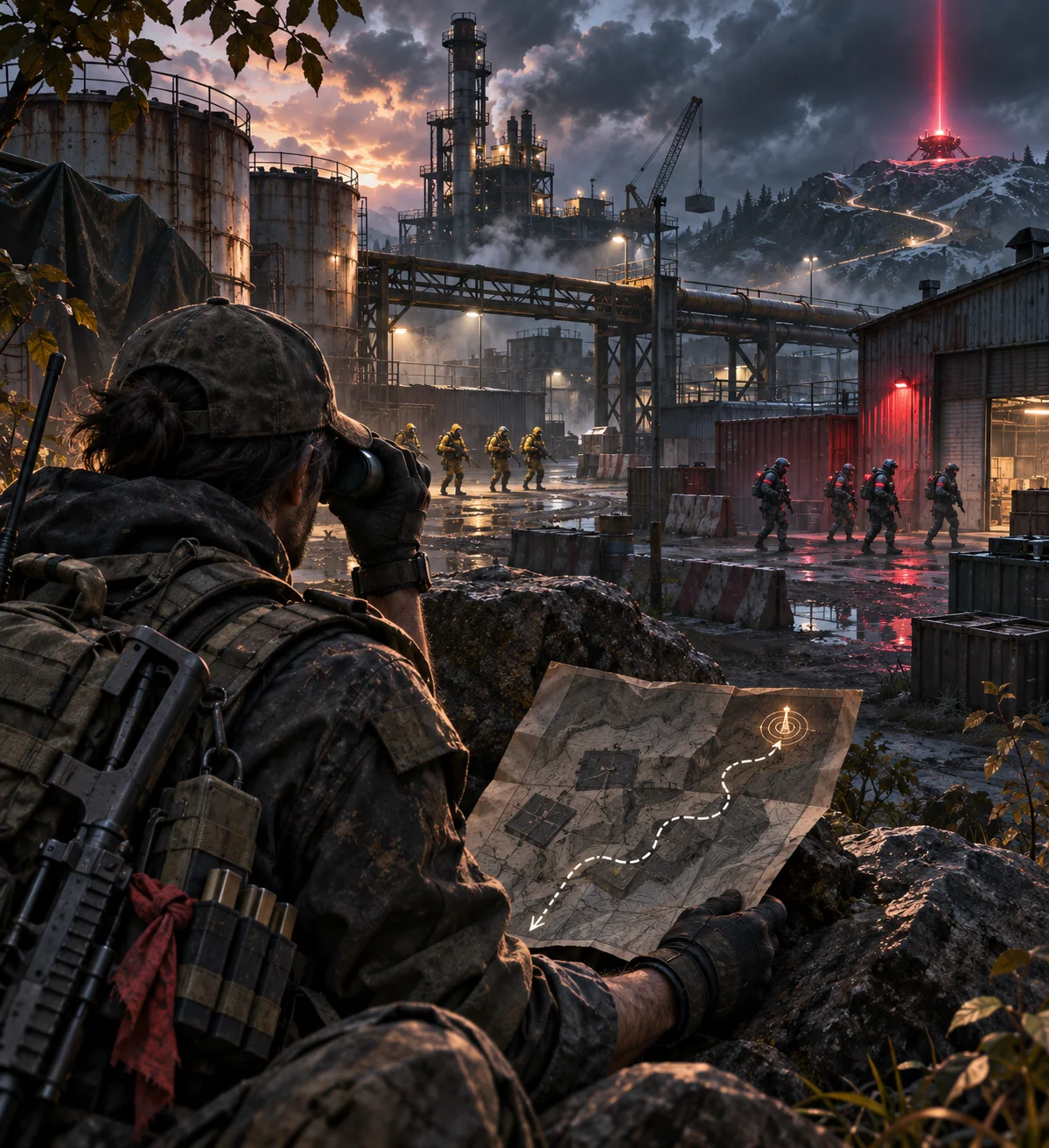
Keep the first faction behavior simple enough to recognize. Mark its territory, objective, and likely response when the player enters. The cover illustration sets up two groups with different visual identities and a route choice, but the actual behavior must be conveyed through play.
Create recognizable behavior signatures
Give each group a small set of consistent actions. A defensive patrol might hold a checkpoint and call nearby allies; a mobile group might sweep a perimeter or investigate a sound. Use movement patterns, spacing, communication cues, and equipment silhouettes to help players tell which response is coming.
Use tells before consequences. A patrol may pause, signal, or change direction before it closes a route. Audio and visual cues should remain distinct without relying only on color. If a faction changes tactics after an objective, show what event triggered the change.
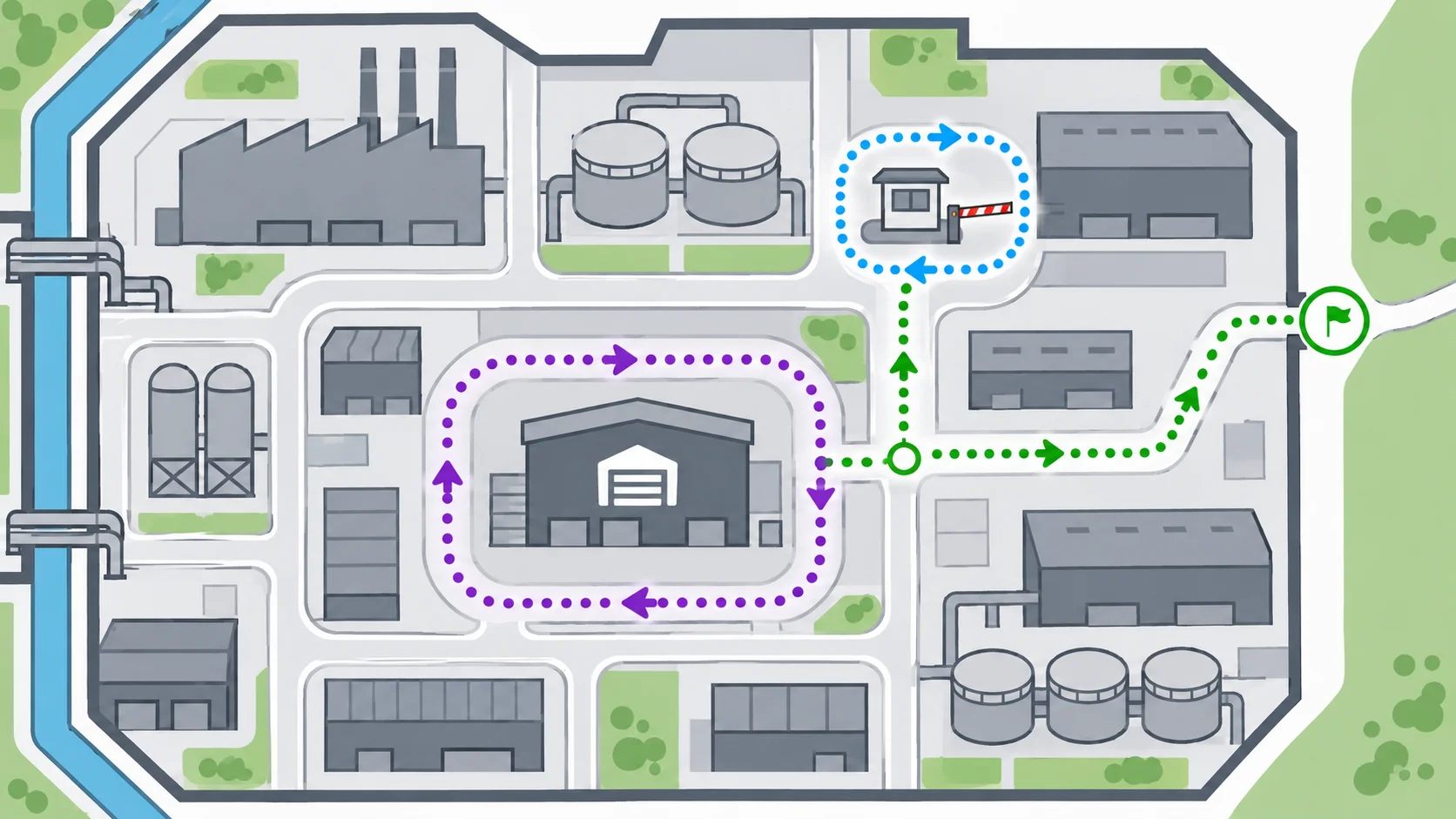
Avoid giving every group every behavior. If all factions flank, pursue, guard, and retreat in the same way, visual differences become cosmetic. The mechanism diagram compares a looping route with a checkpoint route and shows how their patterns create different player options.
Connect behavior to extraction decisions
Faction pressure should affect whether players continue, change route, or leave with what they have. A patrol can make the shortest extraction path risky while another route costs time or supplies. Preview enough information to support planning without revealing every encounter location.
Offer counterplay consistent with the prototype. Players might wait, make a diversion, use cover, or choose an alternate exit. Avoid a behavior that detects the player through any obstacle or follows them indefinitely unless that rule is clearly signaled and central to the challenge.
Tie carried resources to the decision. A player with valuable supplies may prefer a safer route, while an empty run can justify taking a risk. The outcome image emphasizes a successful route adjustment and extraction rather than a forced confrontation.
Test faction readability and fairness
Replay the same map with different loadouts, routes, and objective order. Track the time to recognize a faction’s behavior, detection events, damage, route changes, and successful extractions. Ask players what cue led them to choose a response and whether the result matched their expectation.
Test edge cases such as two factions crossing paths, an objective changing ownership, a player hiding near an exit, or a patrol being interrupted. Keep difficulty fair when group behaviors overlap. Make it possible to recover from a mistaken read through retreat, cover, or a different route.
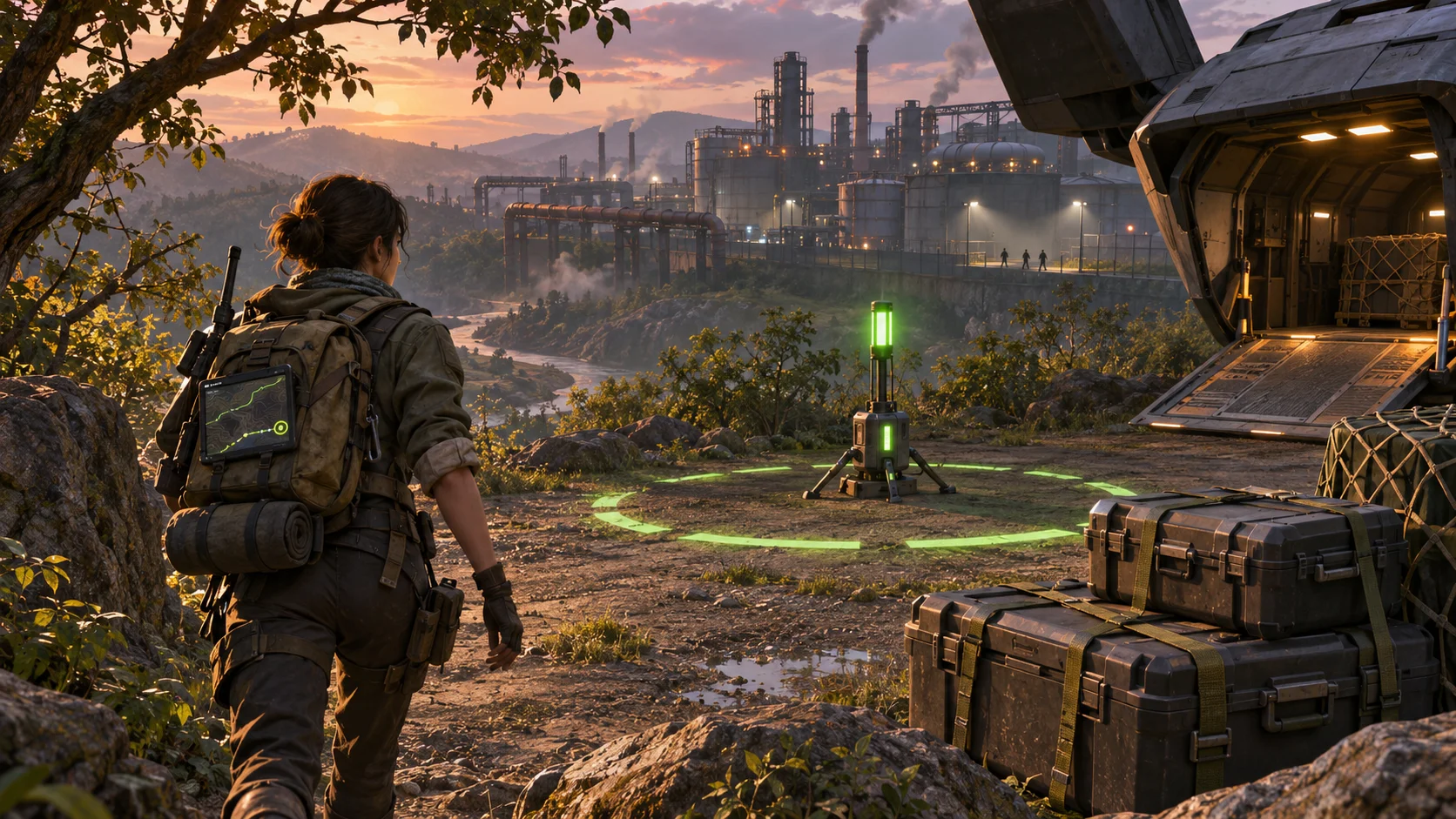
Accept the prototype when groups behave distinctly, players can infer their tactics, and extraction choices respond to readable pressure. See the related guide for risk-based extraction loops. SEELE AI can help sketch alternate faction profiles, but navigation, detection, combat tuning, and multiplayer fairness need implementation and repeated playtests. The exit scene shows a player securing a successful route choice.
FAQ
How do you create distinct enemy factions for an extraction shooter?
Give each faction a clear goal, territory, and small set of consistent behaviors. Make its movement and response patterns recognizable through play, then test whether players can distinguish groups before committing to an extraction route. Repeat with the patrol pattern active and with another route option available.
How can enemy combat behavior signal faction identity?
Use different patrol shapes, spacing, response timing, communication cues, or preferred objectives. Keep tells consistent and show what event triggers a behavior change. Do not rely on color alone to distinguish groups. Repeat with the patrol pattern active and with another route option available.
How should factions affect extraction decisions?
Let their territory and patrol patterns change route risk, timing, or the value of continuing a run. Provide more than one response, such as waiting, rerouting, or leaving early, and communicate enough pressure for players to make an informed choice.
What should you measure in faction encounter tests?
Track recognition time, detection events, route changes, damage, objective completion, and successful exits across different loadouts. Ask players which cue led to their response and whether the faction behaved as expected. Repeat with the patrol pattern active and with another route option available.