Give each faction a recognizable combat rule and a reason to occupy space differently. Make silhouettes and attack tells readable, then combine factions to create choices rather than untelegraphed damage. The official The official listing describes fast-paced first-person combat against demonic enemies supports genre context only; the system guidance below is original.
Choose a combat identity for each faction
Give each faction a spatial job before giving it more health or damage. A charger can force movement from a lane, a ranged unit can make exposed ground unsafe, and a flanker can punish a player who stays focused in one direction. Keep the first prototype to a few enemies whose jobs create different decisions, not a long roster of variants with the same attack.
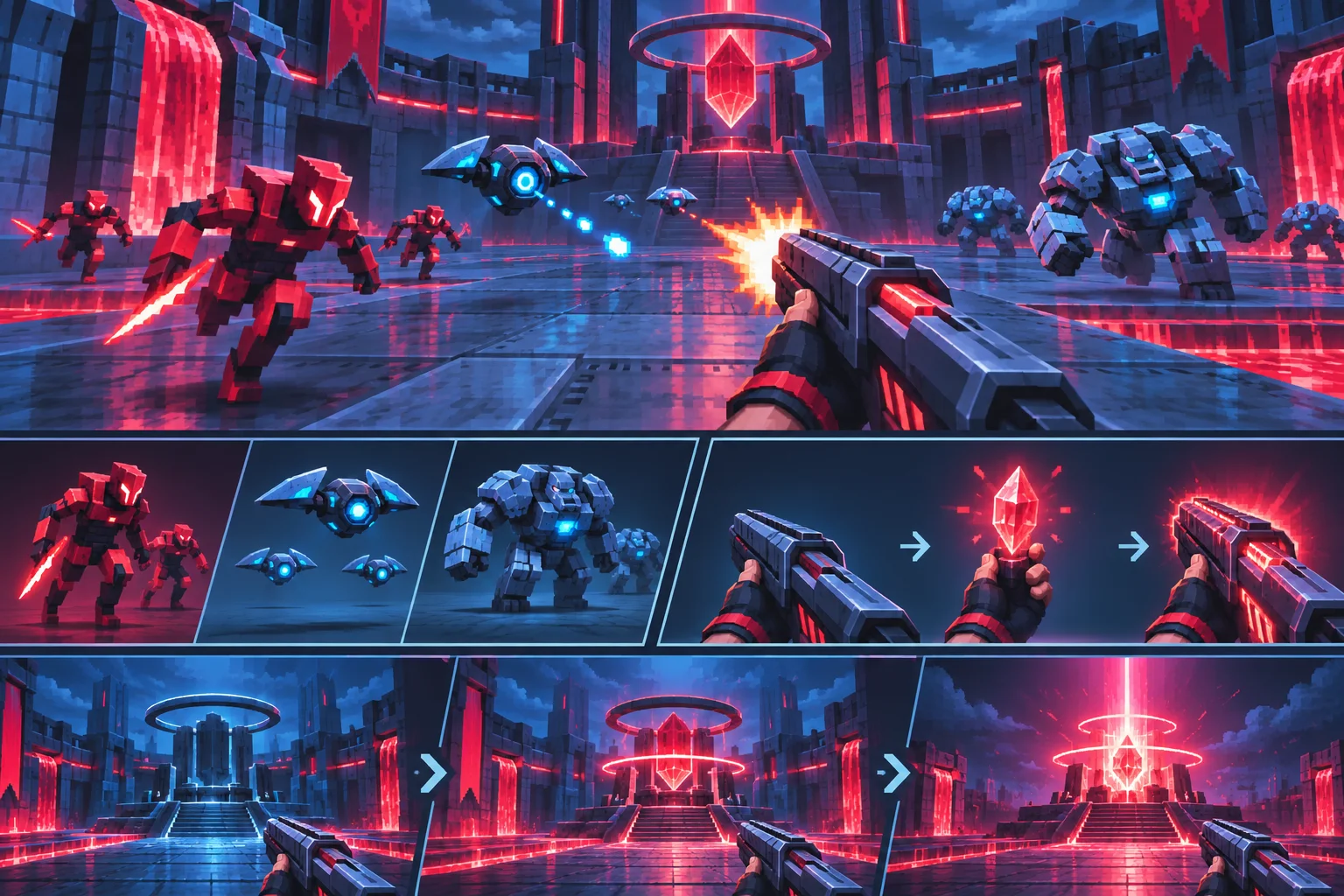
The official DOOM listing from id Software and Bethesda supports the first-person shooter and enemy-combat context only; the faction rules here are original. Make each group recognizable at arena distance with silhouette, movement, and a distinct attack tell. The player should be able to predict the pressure before taking damage, then choose whether to dodge, reposition, interrupt, or focus fire.
Make tells and counterplay distinct
Tie each attack to a readable wind-up and a counter that preserves player agency. A charger can lower its shoulders and commit to a straight rush, leaving a short recovery window if the player sidesteps. A ranged enemy can expose its firing line with a muzzle flash, allowing the player to break sight or move behind cover. A flanker can signal its approach with a lateral sound and a brief silhouette reveal.
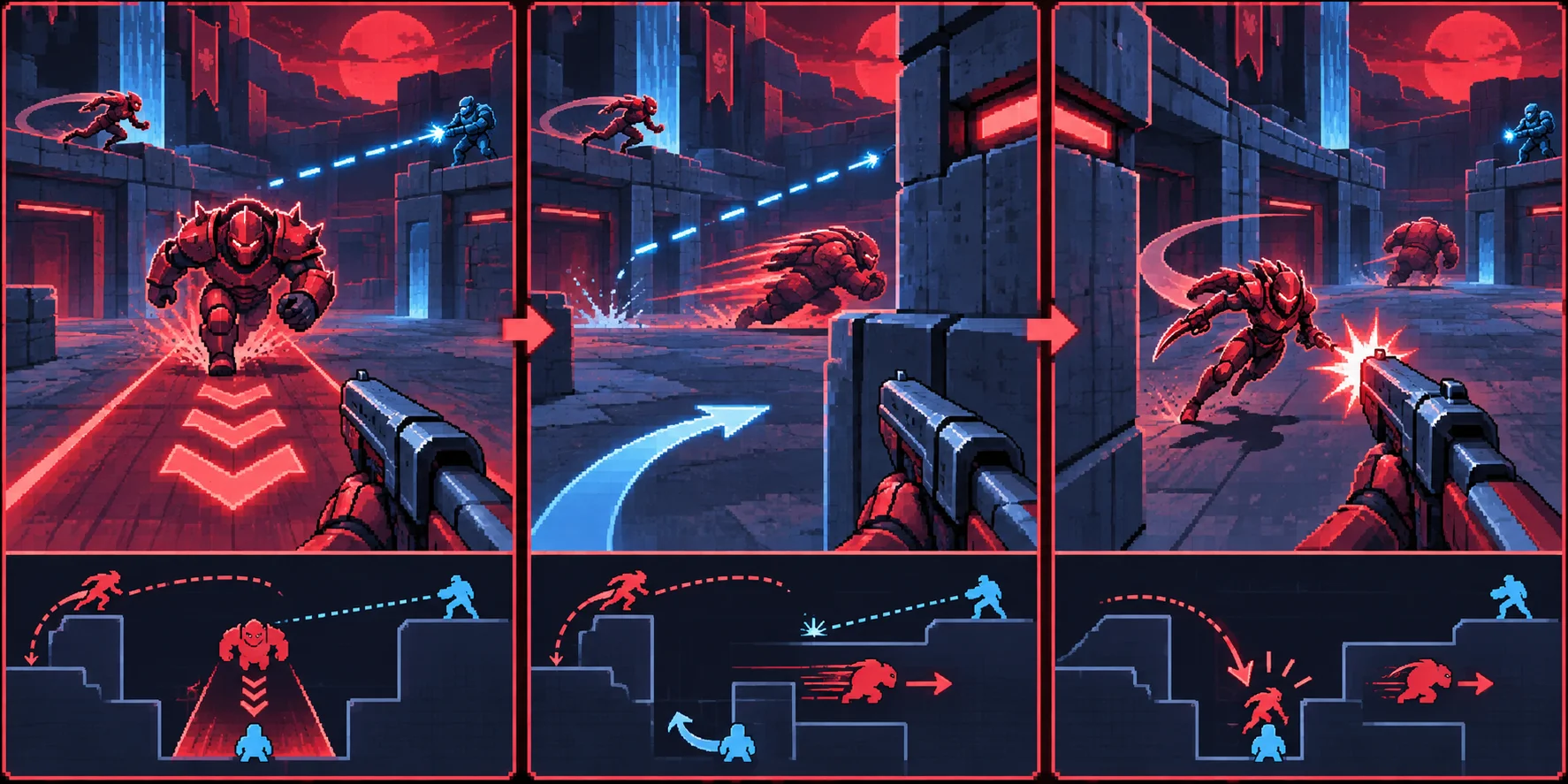
Test tells against ordinary combat noise and camera motion. If the cue is visible only when the player is already looking at the enemy, add a spatial audio cue or a world reaction. Keep counters proportional: dodging should cost position or timing, not require a single rare weapon. The encounter remains fair when players can read danger, make a choice, and see how the enemy responds.
Combine factions to shape arena control
Combine two enemy jobs to create a decision, then add a third only if it changes that decision. A ranged unit may hold a far angle while a charger closes the center lane; the player can remove the ranged pressure first or bait the charger into a collision. A flanker can then make staying in one safe pocket costly, encouraging movement without making the arena feel arbitrary.
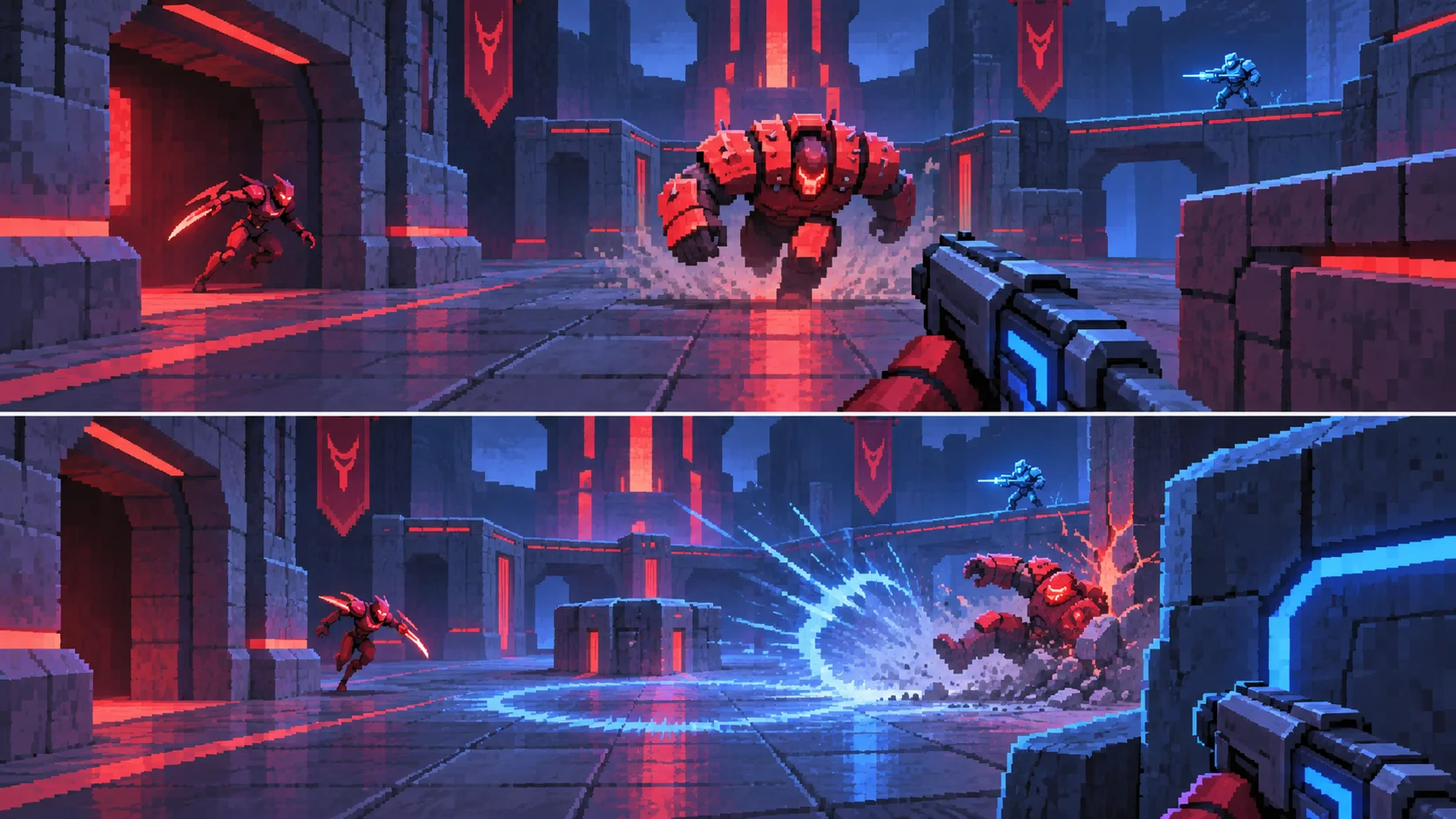
Use simple spawn timing and geometry to keep cause and effect readable. Do not introduce every faction at once or spawn a threat behind the player without a cue. Give each encounter a safe route and a fallback space, but let enemies contest them in different ways. A useful test is whether players describe the space-control problem, not just which enemy had the largest health bar.
Test recognition and counterplay
Run a short arena sequence with each faction alone, then in pairs. Measure hits taken before the first counter, time spent in one position, weapon choice, and whether players can explain the attack tell afterward. Repeat with sound lowered and with different visual effects in the arena to find cues that disappear in combat clutter.
Balance through behavior and timing before increasing health. If players ignore one faction, sharpen its spatial role or make its tell and consequence clearer. If a combination feels unavoidable, stagger its attacks or add an escape route. For a related encounter-system example, see a related guide to distinct enemy behaviors. Pass when players can name the threat, select a counter, and understand why the arena changed.
FAQ
What makes enemy factions feel different in a boomer shooter?
Give each faction a distinct spatial job, movement pattern, silhouette, and attack tell. One can close a lane, another can punish exposed ground, and a third can pressure a stationary player. Make each job change the player’s positioning or target priority so the differences matter during play, not only in the enemy description.
How can you make enemy attacks readable?
Show a wind-up before the attack and pair it with a cue players can recognize at normal combat distance. Test the cue amid movement, effects, and other enemies. Players should have enough time to dodge, break line of sight, interrupt, or reposition, and they should be able to explain what warned them after the encounter.
How many enemy factions should appear together?
Start with one faction, then combine two jobs that create a clear arena decision. Add a third only when it changes that decision in a useful way. Stagger attack timing, preserve a visible escape route, and avoid spawning a threat behind the player without a tell. The combination should feel demanding while leaving counterplay available.
What should you test when balancing enemy behaviors?
Measure hits before a first counter, time spent in one position, weapon choice, and whether players can identify attack tells afterward. Test factions alone and in pairs, then repeat amid visual and sound clutter. Adjust behavior, timing, or cues before adding health; increase durability only when it supports the intended encounter role.