Add optional challenges with persistent rewards to your puzzle platformer with AI. Make state changes visible, preserve recovery, and test a repeatable scenario. Build one optional branch and one persistent reward before extending the idea across a full campaign.
Separate main path and challenge goals
Keep the main route solvable without optional content, then place a side challenge where the player can recognize its extra risk and goal. A relic route might require a harder timing sequence or a less obvious puzzle rule, while the level exit remains reachable through the standard path. Tell players the challenge is optional through layout and reward framing, not a failure message.
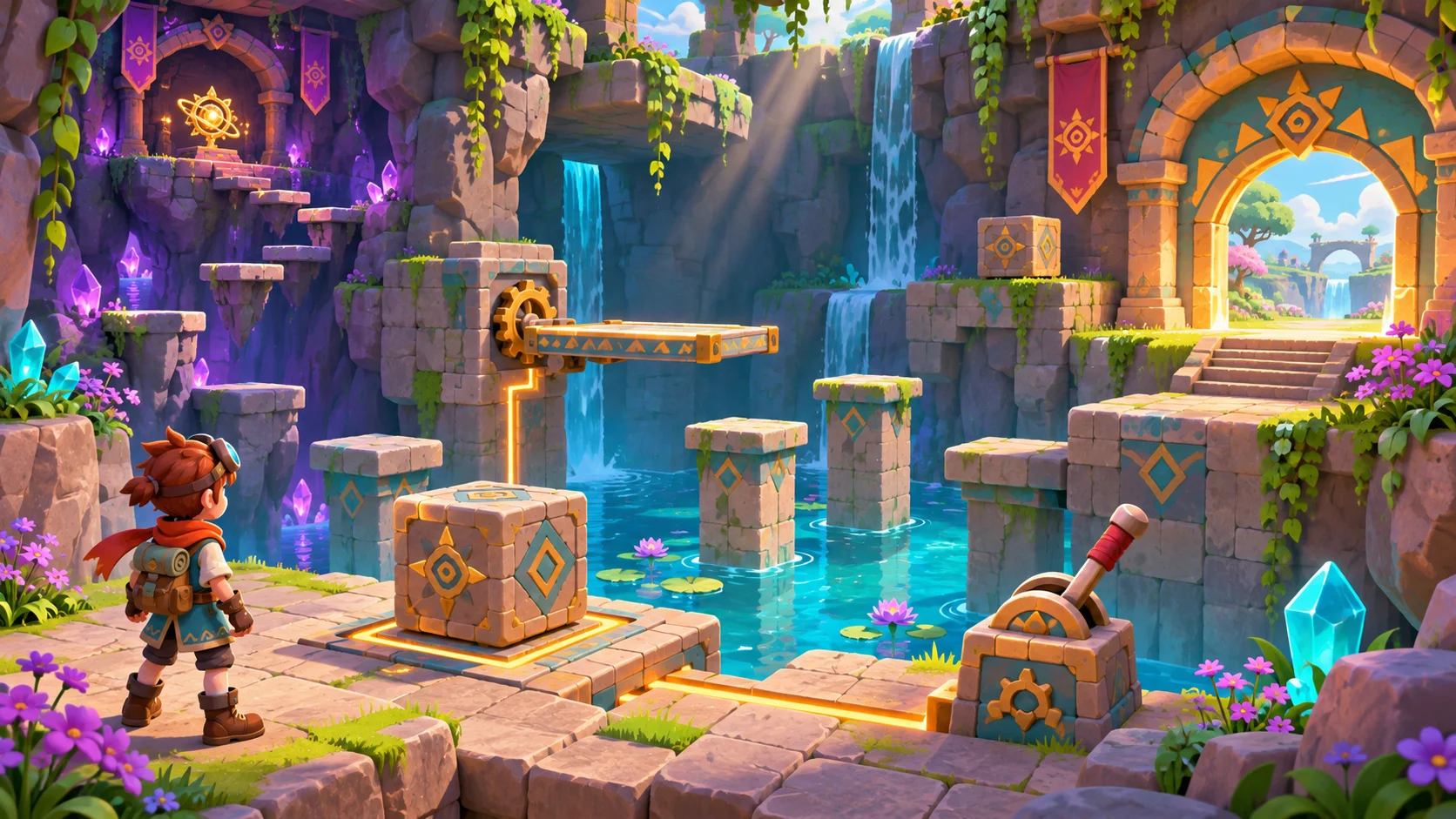
The official Cube Mission listing from Flox Studios describes a puzzle-platformer with hidden relics that unlock rewards and a bonus level. It supports the optional challenge and reward context only; the progression framework here is original. Place the branch before the exit so players can assess the choice and return without losing main-path progress.
Design persistent reward effects
Choose rewards that persist and change a later decision: a new movement option, a cosmetic mark, a shortcut, or access to an extra room. Show the reward at the challenge point and again where it matters later. If the reward changes puzzle rules, introduce it in a safe room before relying on it in a difficult sequence.
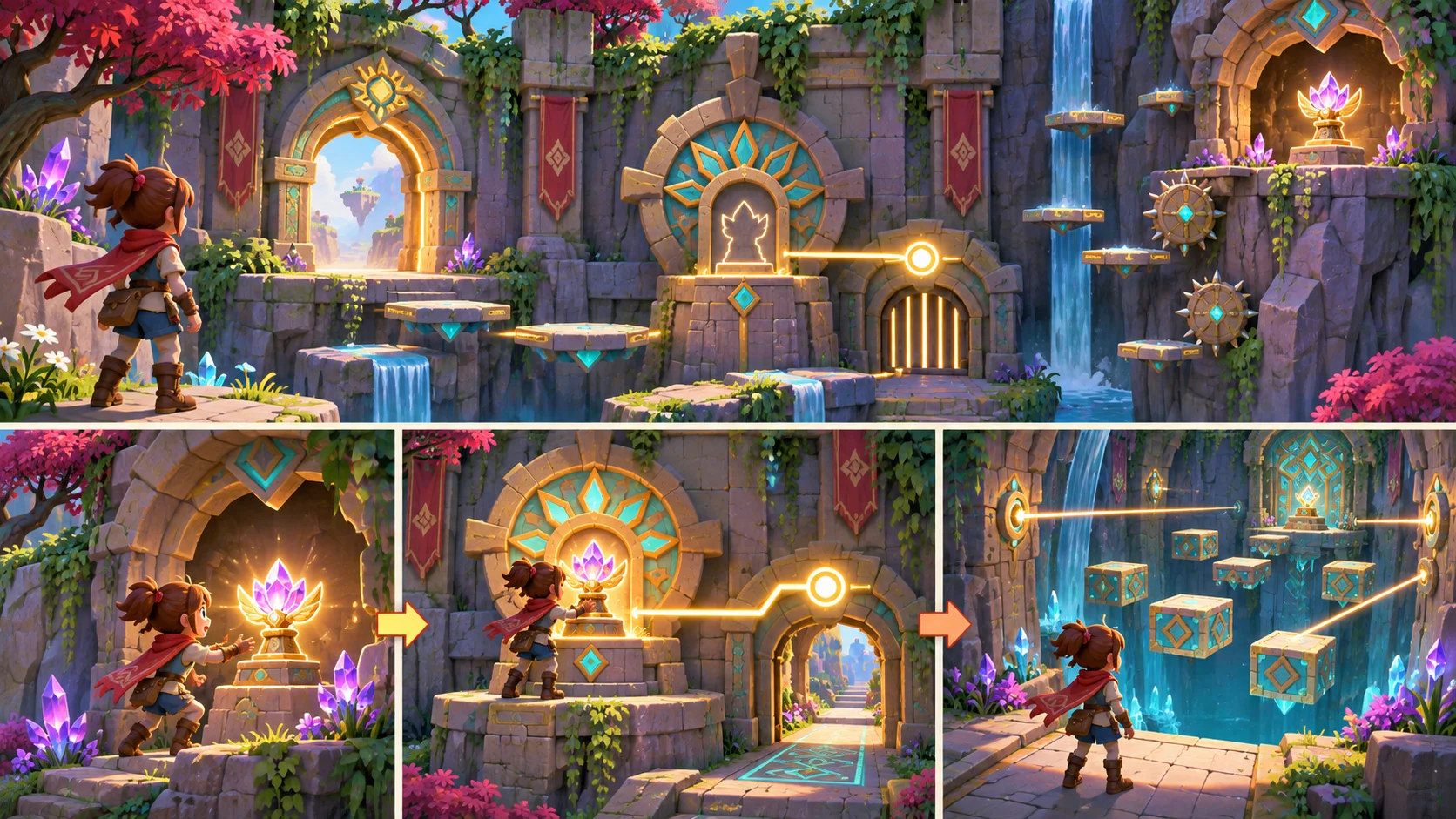
Keep reward value proportional to the challenge. A difficult optional route can grant a satisfying unlock, but the main progression should not assume the player earned it. Store completion state clearly and make the result survive a reload. If the reward is a convenience rather than power, show how it improves choice without making unearned routes feel incomplete.
Signal challenge difficulty and payoff
Preview the kind of challenge before the player enters: a moving platform sequence, a rule variation, or a hazard that tests timing. Do not reveal every step, but give enough information to distinguish a deliberate challenge from a mandatory path that is unexpectedly difficult. Use a checkpoint nearby when a challenge is long or asks for repeated precision.
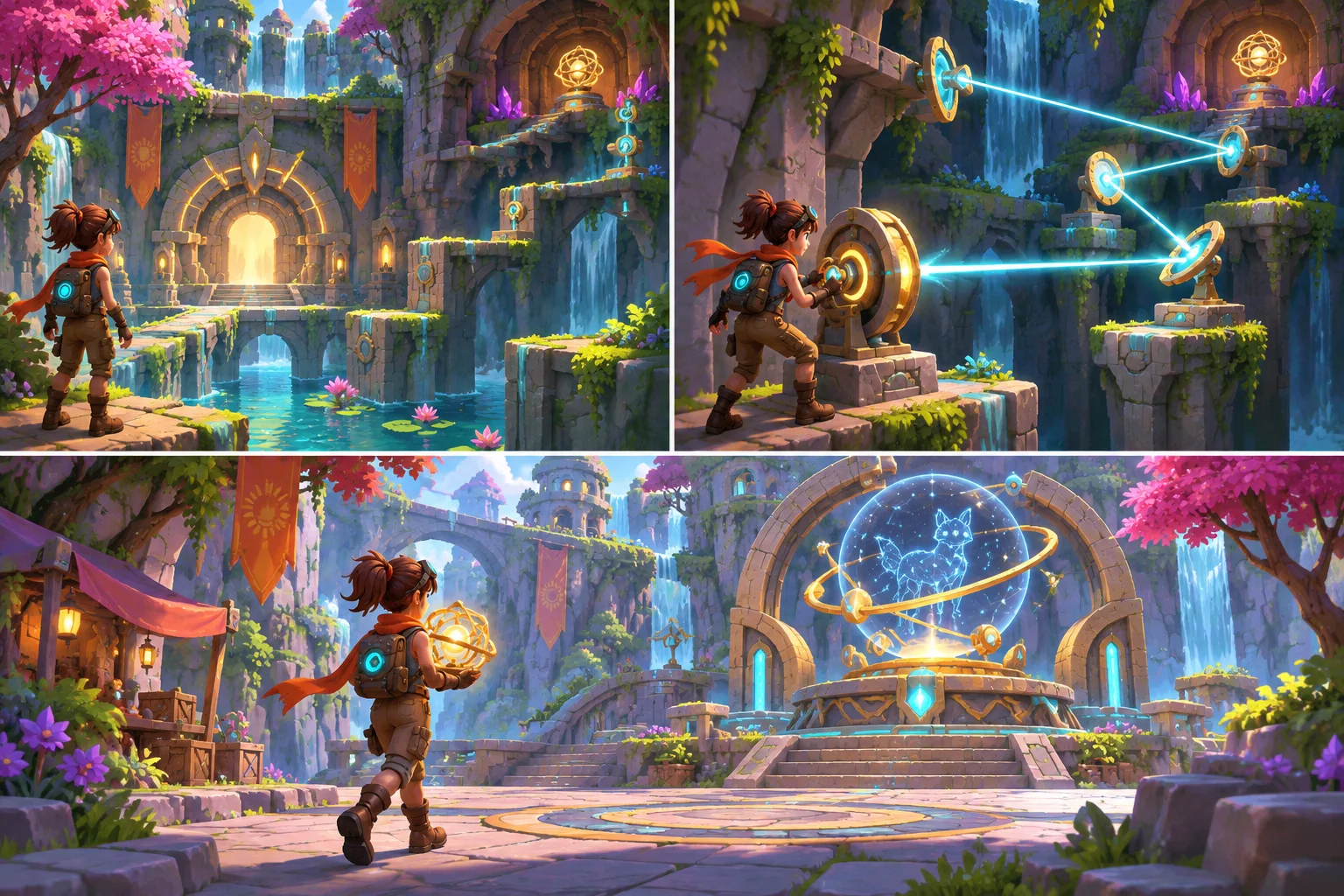
After completion, make the reward state visible in the hub, map, or player inventory. Let players see which optional branch they completed and what changed. A clear before-and-after helps them connect effort to payoff and decide whether another challenge is worth pursuing.
Test reward value and route fairness
Observe players who ignore optional content and players who pursue it. Compare completion of the main route, challenge attempts, retries, reward discovery, and later use of the unlock. Ask whether the reward felt worth the detour and whether the challenge was clearly optional. If most players miss the branch, improve signposting before increasing its payout.
For adjacent puzzle design patterns, see a guide to puzzle experimentation and solving and a guide to puzzle progression. Pass when the main route remains fair, the challenge has a clear purpose, and the persistent reward is noticeable later.
FAQ
What makes an optional challenge worthwhile?
Give the challenge a distinct goal, signal its extra risk, and offer a reward that changes a later choice or gives a satisfying collectible. Keep the main route solvable without it. Players should be able to assess the detour, leave if they choose, and recognize what their effort unlocked afterward.
How can puzzle-platformer rewards persist?
Store challenge completion in the save state and show the result again in a hub, map, or inventory. A reward might unlock a movement option, shortcut, cosmetic mark, or extra room. If it changes puzzle rules, introduce it safely before a later level relies on that ability.
How do you balance optional challenge difficulty?
Preview the kind of challenge without revealing every step, and place a checkpoint nearby when the sequence is long or precise. Compare its effort with the reward, but do not make main progression depend on it. Test whether players understand that the branch is optional and can return without losing their progress.
What should you test about persistent rewards?
Compare players who skip optional content with those who complete it. Track challenge attempts, retries, reward discovery, and later use of the unlock. Ask whether the detour felt worthwhile and clearly optional. If players do not notice the reward later, improve its visibility or its effect before increasing its power.