Define the resource’s core rules
Choose what the meter represents and when it returns. A shared charge might refill through safe landings, timed movement, pickups, or successful hits. State the rule in the HUD and reinforce it in play so the player can predict how an attack or dash affects the next gap.

List every action that spends, reserves, or restores the resource. Include edge cases such as an attack interrupted by damage, a dash at zero charge, or a checkpoint reset. Consistent rules help players plan instead of guessing whether one system secretly has priority.
The official The Wind’s Path listing describes a flow meter filled through movement and used both to power attacks and move faster through platforming worlds. This supports the shared-resource context only; the costs and regeneration model proposed here is original. official source.
Make combat and traversal compete fairly
Put the tradeoff where players can see it. Before firing, show that the attack will leave only part of the meter for a following dash. Before a long gap, let the player notice that spending energy on an enemy could change the reachable route.
Give each action a distinct cost and purpose. A quick shot may be cheap but deal modest damage; a charged attack can use more reserve. A dash may cost enough to matter while still leaving room for small corrections. Avoid one action being strictly better in every situation.
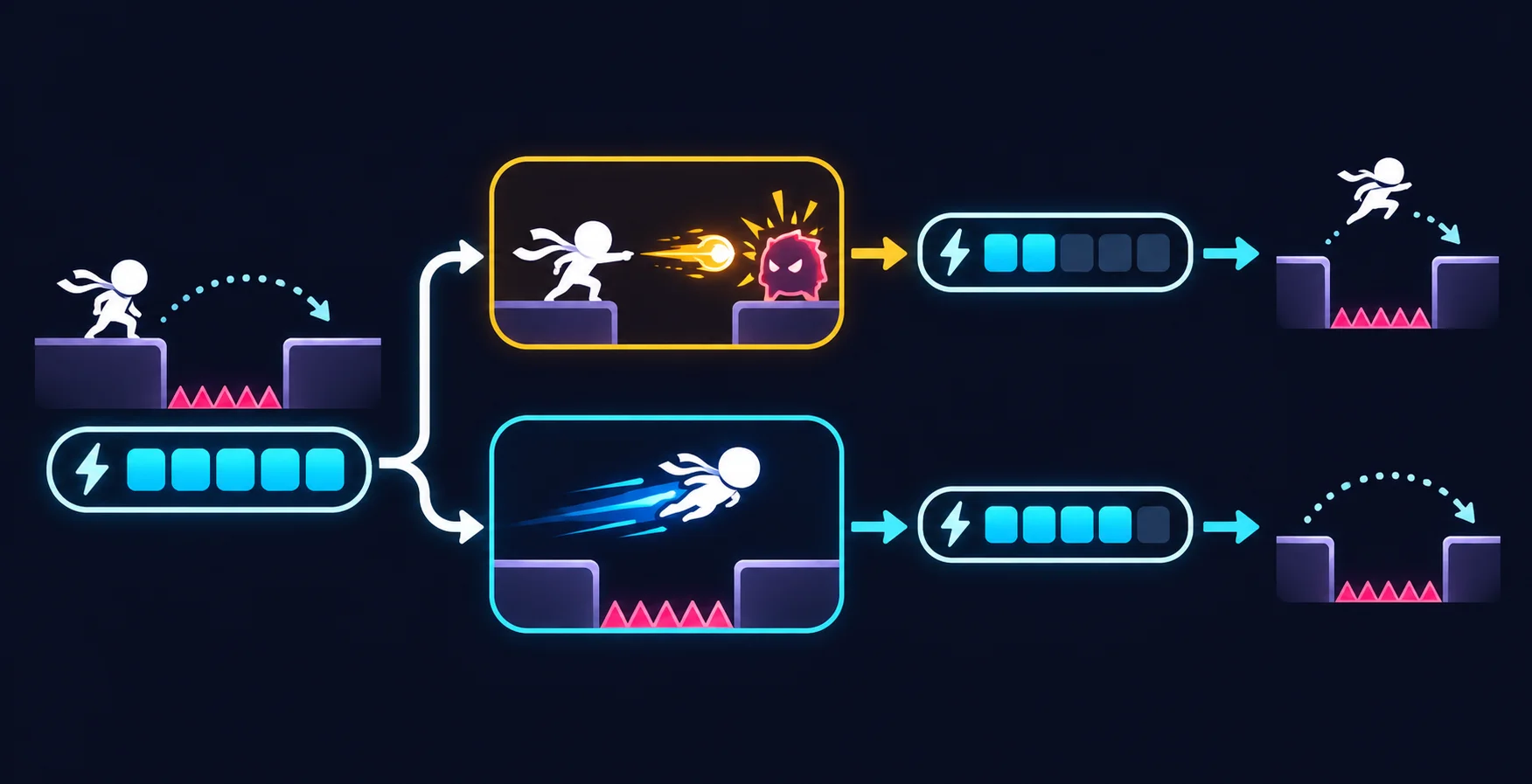
Build encounters where the player can choose to fight, bypass, wait for regeneration, or use the environment. If combat is mandatory, provide a recoverable way to replenish before the next precision jump. The system should create tension without making an unavoidable hit consume the only safe route.
Build readable regeneration and recovery
Choose recovery sources that reward the play style you want. Landing cleanly can reinforce platform mastery; striking an enemy can reward aggression; a safe rest point can support planning. If several sources coexist, show which action caused the gain so players can learn the loop.
Control the pace of regeneration. Instant refill after every action removes the tradeoff, while a long wait can turn a precision platformer into downtime. Tune the amount around the distance to the next safe surface and the likely number of combat interactions along the route.
Place checkpoints after meaningful resource tests and decide whether the meter resets, persists, or refills. Tell players what happens before they commit. Test a retry to ensure a failed jump does not leave them weaker in a way that makes the same challenge unfairly harder.
Test precision and combat pacing
Compare routes that reward combat, routes that reward careful traversal, and mixed encounters. Track attacks chosen, meter left at each jump, failed crossings, damage, waiting time, and route completion. Ask players to predict their reserve before acting and compare that with the game’s feedback.
Test edge cases: full meter at a checkpoint, empty meter before a gap, interrupted attacks, optional enemies, and repeated attempts. Confirm that the interface previews costs accurately and that a player can recover from a low-resource state without a hidden reset.
Accept the system when players make intentional tradeoffs, can read future costs, and encounter recovery at a fair pace. For related combat behavior ideas, see the extraction shooter faction guide. AI can help list action-cost variants; collision tuning, timing windows, and resource balance require hands-on tests.

FAQ
How do you share one resource between combat and traversal?
Define the meter’s spend and recovery rules, then let both attacks and movement draw from it. Show the cost before an action and test mixed routes where using energy in combat changes which traversal options remain available for the next obstacle.
What actions should consume a shared platformer meter?
Spend it on actions with clear tactical value, such as a ranged attack, dash, or movement burst. Give actions distinct costs and avoid making one option best in every situation. Ensure mandatory encounters leave a fair route to recovery. This makes the cause of change easier to understand and gives players a clear next step.
How can players recover energy during a level?
Use recovery sources that fit the game’s rhythm, such as clean landings, successful hits, pickups, or safe rest points. Communicate which action restores energy and tune the amount so players can keep moving without removing meaningful resource tradeoffs. This makes the cause of change easier to understand and gives players a clear next step.
What should you test in a shared-resource platformer?
Compare combat-heavy, traversal-focused, and mixed routes. Track meter at jumps, failed crossings, damage, waiting, and completion. Test empty-meter gaps, interrupted actions, checkpoints, and repeated attempts to ensure costs stay predictable and players can recover. This makes the cause of change easier to understand and gives players a clear next step.