Set an encounter and difficulty baseline
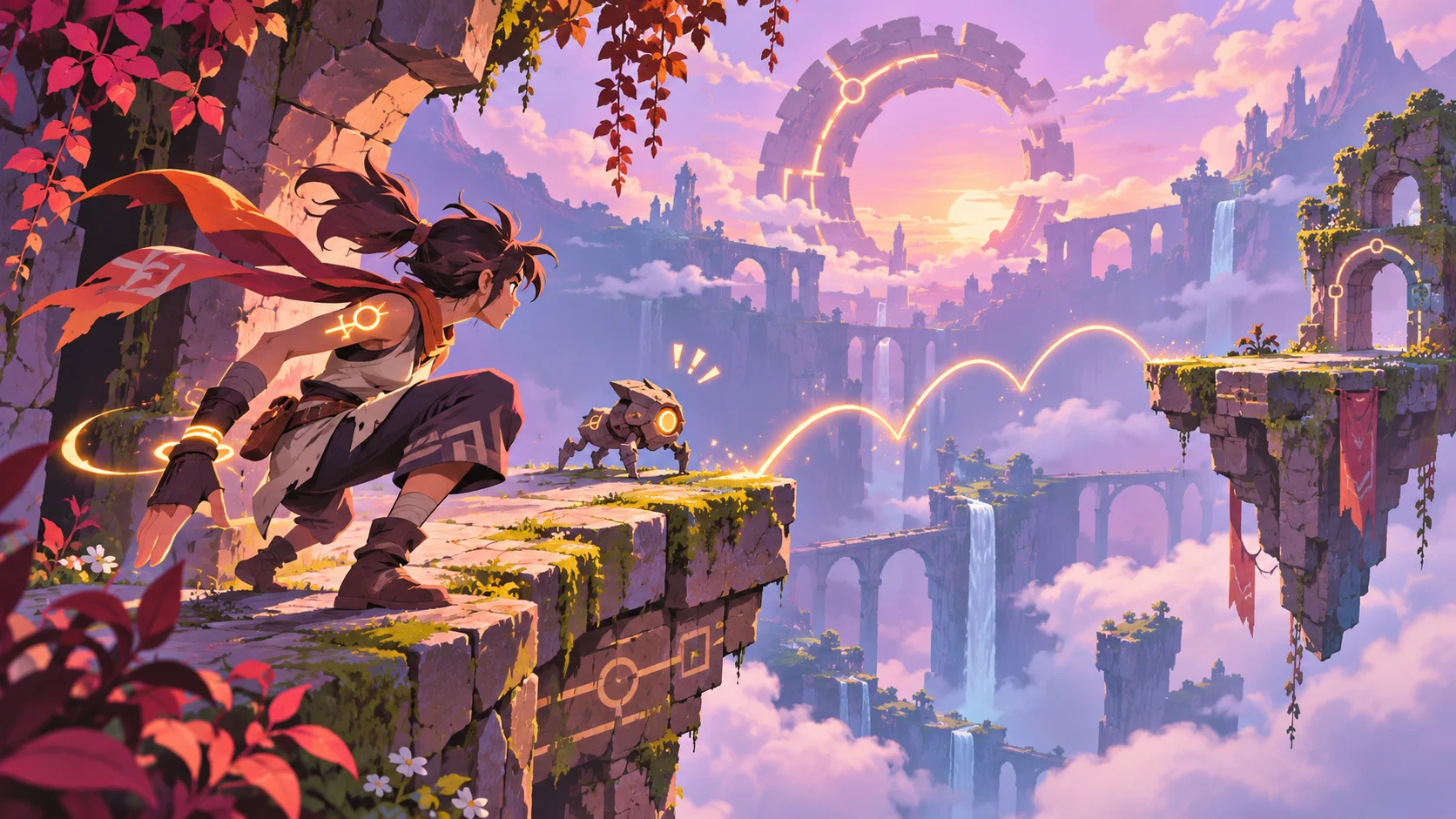
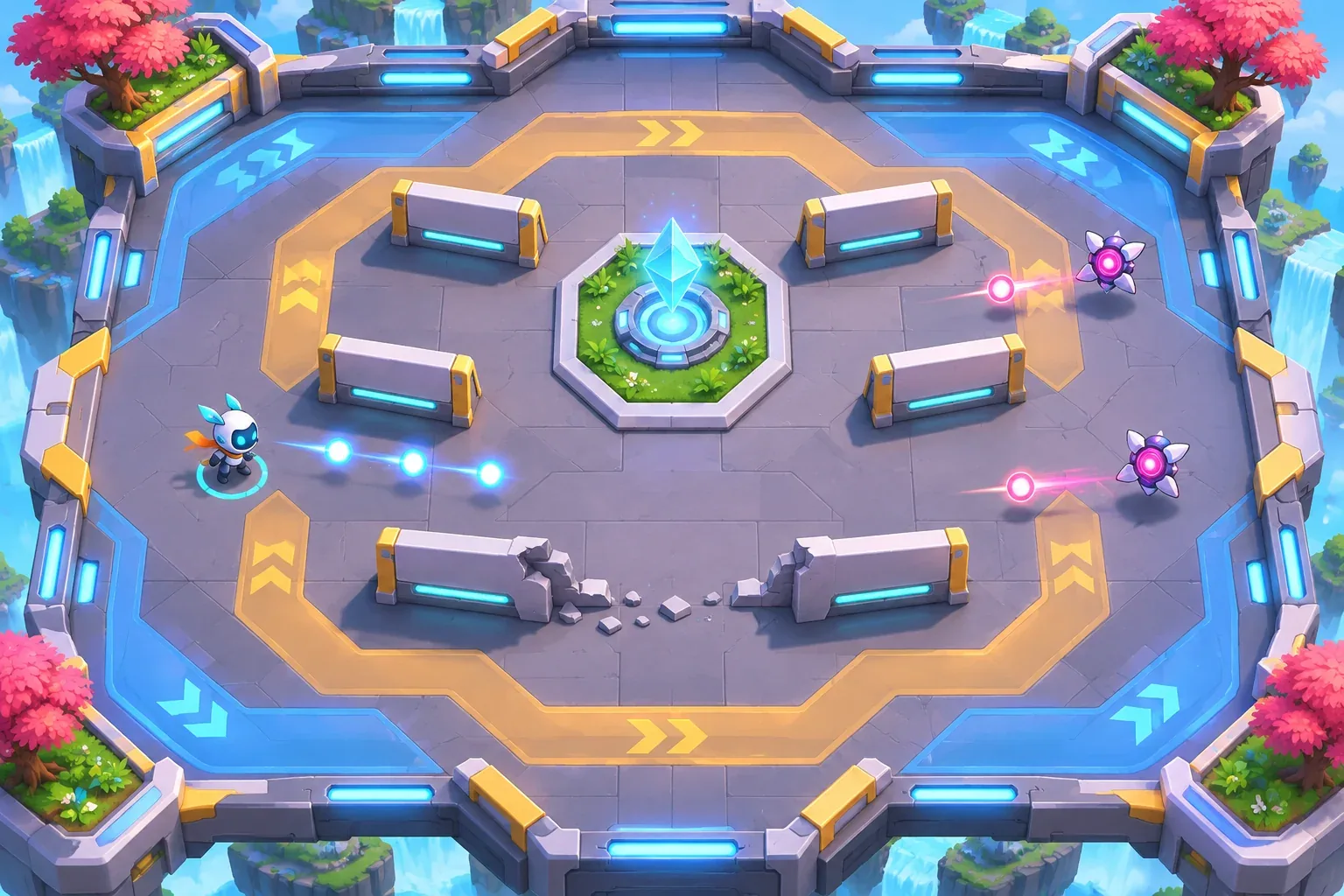
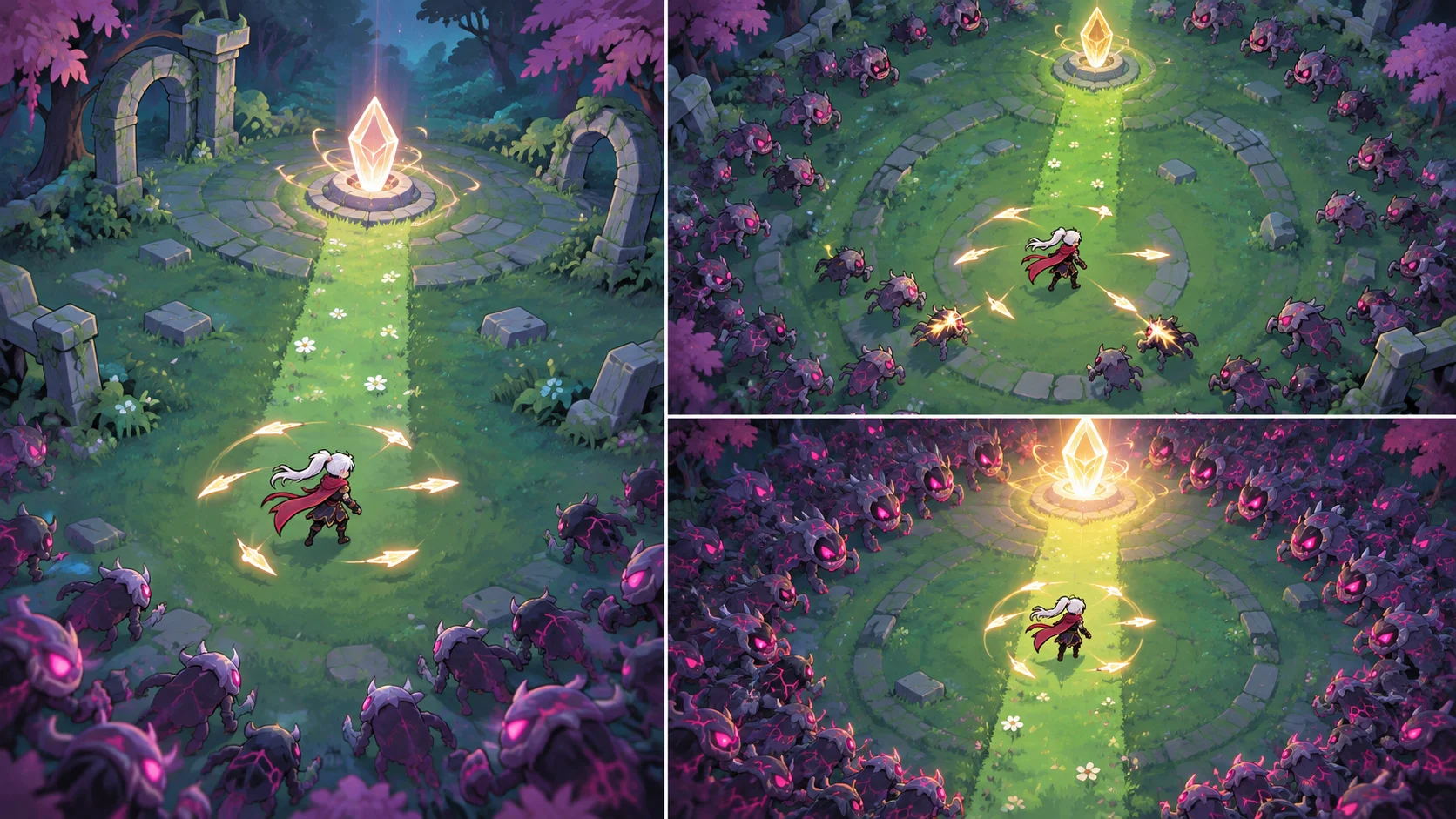
Measure an ordinary encounter before adding adaptation: enemy count, role mix, spawn timing, player damage, arena occupancy, and duration. This baseline lets the team identify whether the director improves pacing or merely makes runs harder. Start with a small set of enemy roles that already have distinct tells.
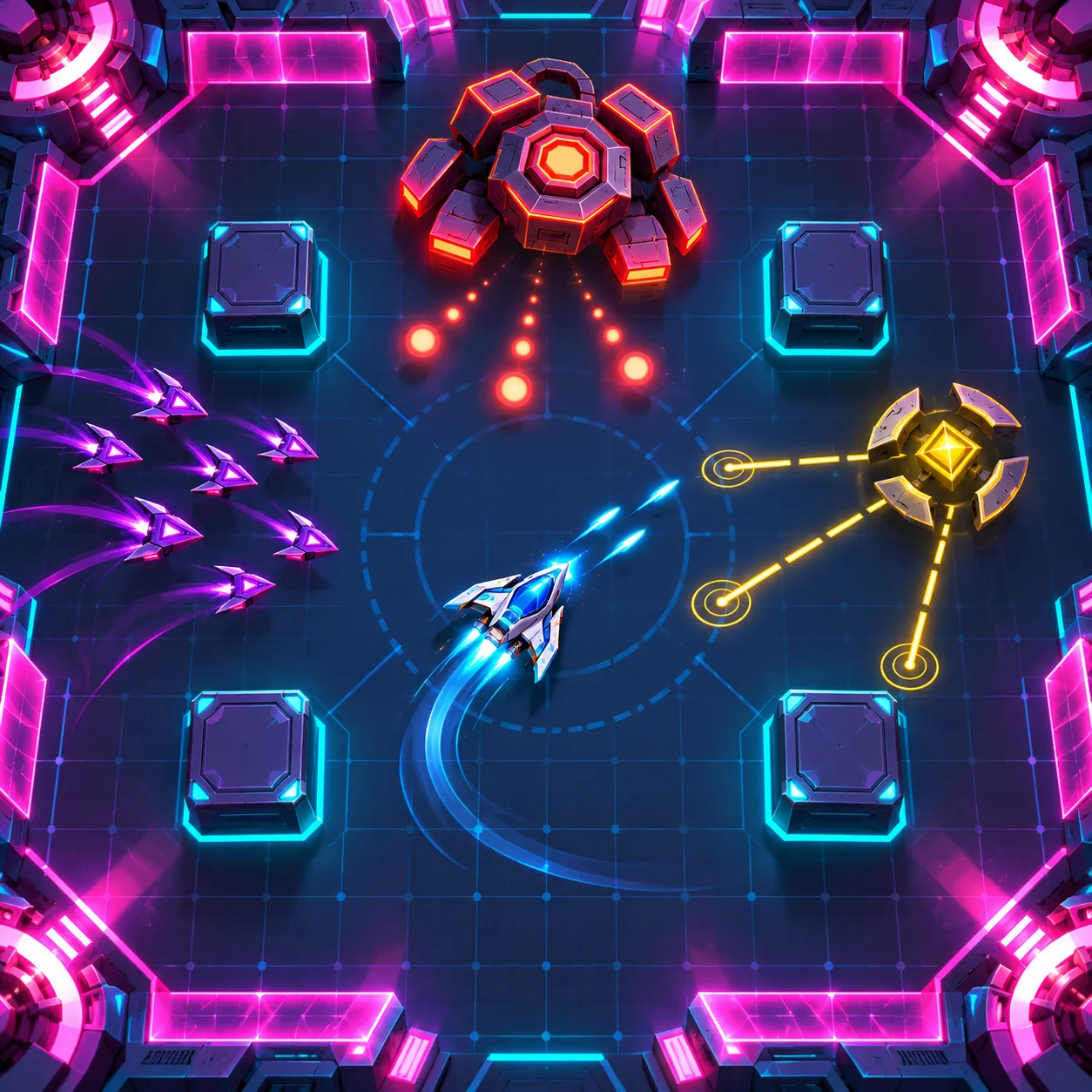
Choose signals the system can use reliably, such as recent damage, time spent in one area, distance from threats, and how many enemies are active. Avoid inferring frustration or skill from a single event. A director should react to observable play state rather than guess at player intent.
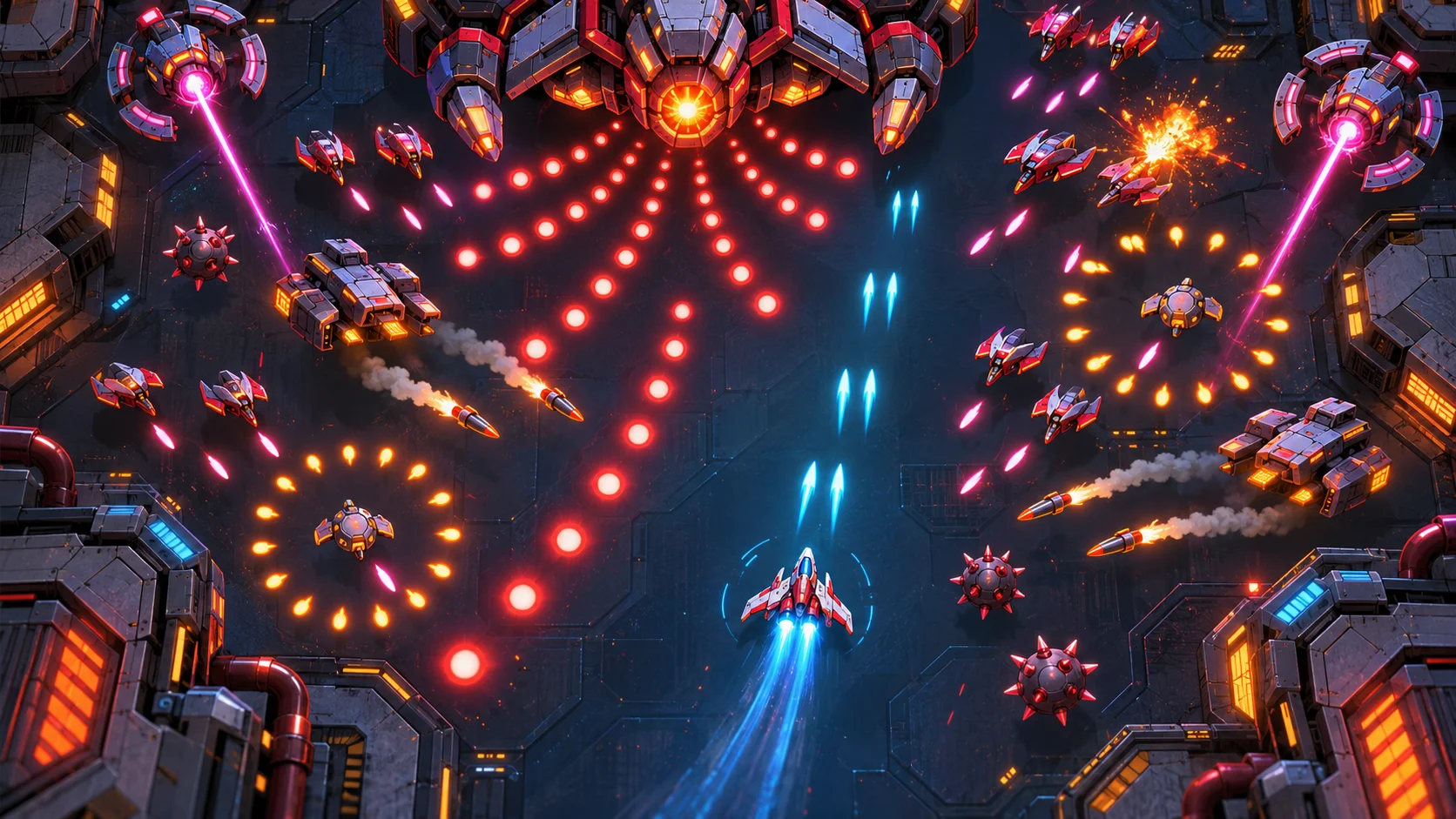
The official Kinetic Storm listing describes twin-stick controls, enemy waves, and distinct enemy designs in a top-down arena shooter. This is genre context only; the adaptive director and balancing approach here are original. See the official listing for the genre context.
Define director inputs and composition limits
Use a bounded set of inputs and a simple response table. A player pinned in one corner might see a flanker role arrive later, while a nearly empty arena can receive a basic pursuer. State clear caps for active enemies, ranged attacks, and overlapping hazards before tuning adaptation.
Keep the director from repeating one counter too often. Add a cooldown, a minimum time between composition changes, and a rule that avoids selecting threats the player cannot currently see. Predictable response windows help players learn how the arena is changing.
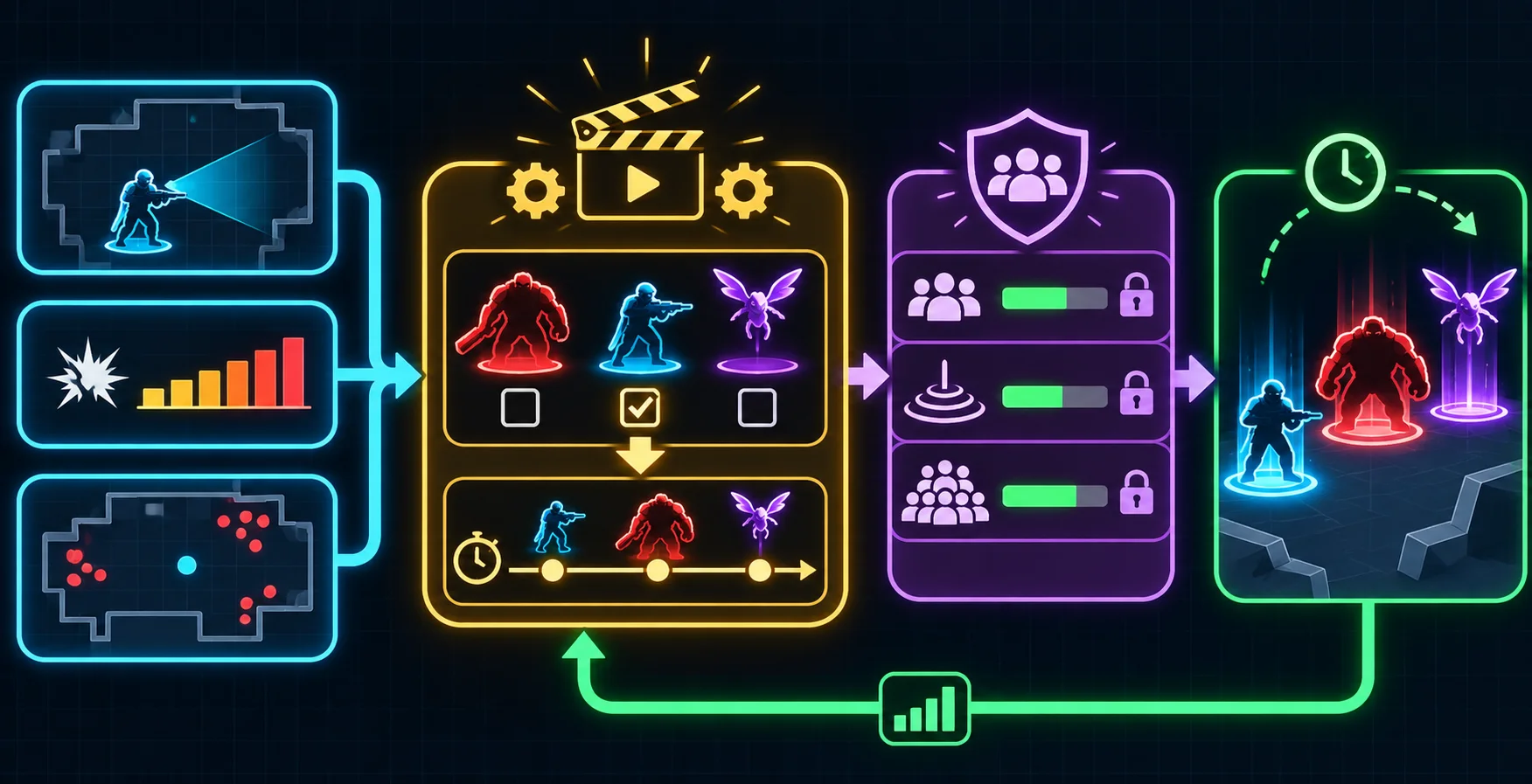
Separate pacing adaptation from difficulty scaling. A director can vary roles or arrival lanes while keeping health and damage stable. This produces variety without silently making enemies tougher when players perform well or easing every moment after a hit.
Adapt pressure with readable counterplay
Give each new role a visual or audio tell before it can meaningfully threaten the player. Leave a dodge lane, target priority, or environmental response that fits the role. If several enemy types arrive together, make their attack rhythms different enough to read.
Use adaptation to distribute pressure across the arena, not to surround the player without warning. Spawn outside the camera only when the direction is communicated through sound, a floor marker, or a short arrival animation. Keep safe movement routes open in every tested composition.
Let players learn the system through repeated runs. A brief post-wave summary can show which enemy roles appeared and what behavior triggered their arrival. Avoid exposing a technical formula; communicate enough to help players recognize patterns and prepare.
Test fairness across player styles
Replay the same level with players who move constantly, stay near cover, focus on one target, or take frequent damage. Track active enemy roles, attack overlap, damage, time under pressure, and successful recovery. The goal is responsive variety, not a hidden punishment for a preferred style.
Test edge cases such as a full arena, a paused game, a player near a spawn point, and a boss transition. Verify that the director respects enemy caps, does not spawn into the player, and resets cleanly after a checkpoint or restart.
Accept the system when encounters vary while remaining readable and players can identify counterplay. See the shared action-resource guide for combat-movement tradeoffs. AI can draft role combinations; fairness and pacing require playtesting.
FAQ
How do you build an adaptive enemy director for a twin-stick shooter?
Establish a normal encounter, choose a few observable player signals, and map them to bounded changes in enemy roles or arrival timing. Keep active-enemy and hazard caps, then test whether adaptation adds variety without hiding a punishment for one play style.
What inputs should an enemy director use?
Use stable signals such as recent damage, player movement, arena occupancy, or time spent in one region. Combine several observations and add cooldowns so one event does not trigger a sharp response. Avoid guessing at player frustration or skill from a single action.
How can an enemy director stay fair?
Preserve clear tells and a dodge route for each composition, avoid spawning threats directly on the player, and cap overlapping hazards. Adapt enemy roles or timing before changing damage values. Test aggressive, defensive, and stationary play for different hidden difficulty spikes.
What should you measure when testing enemy composition?
Track enemy roles, arrival timing, attack overlap, damage, time under pressure, and recovery across several player styles. Test full arenas, pauses, boss transitions, and restarts. Players should be able to identify a threat and explain a plausible counterplay option. This keeps the consequence clear and helps players plan their next step.