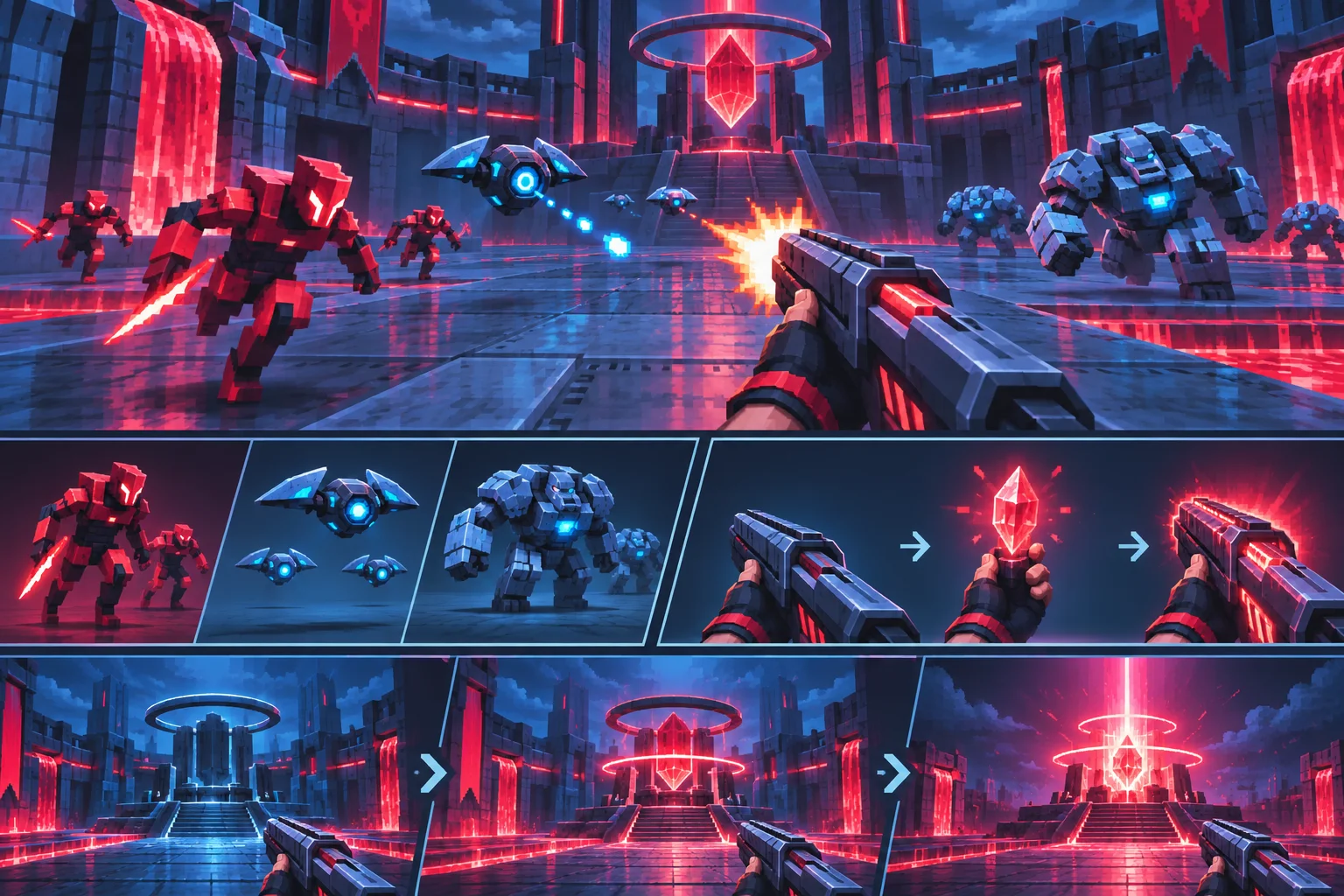
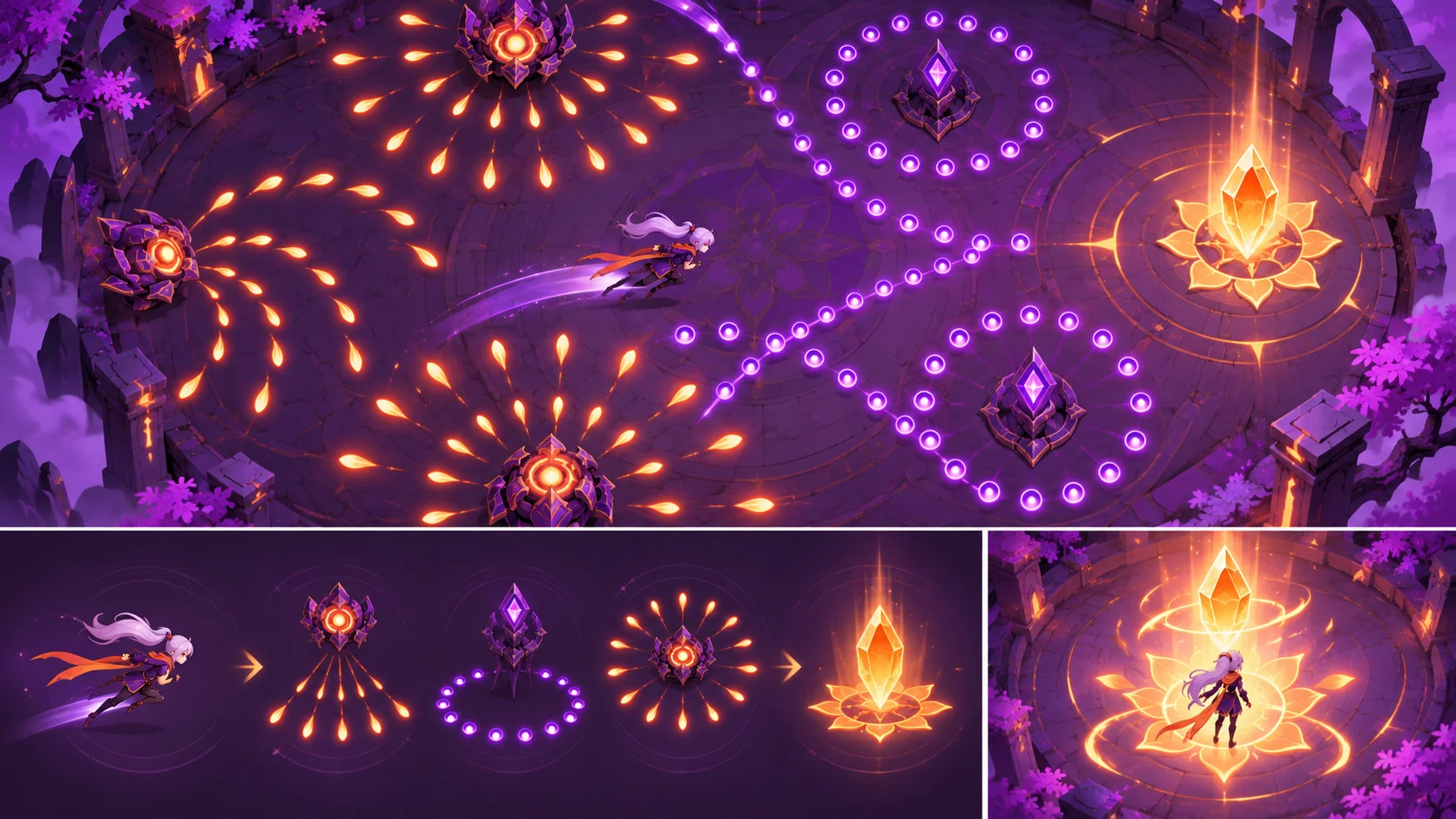
Add an enemy director that changes encounter composition to your survivors-like game with AI. Make state changes visible, preserve recovery, and test a repeatable scenario. Start with a small role roster and a fixed wave cadence before adding personalization across a full run.
Track player build and encounter state
Choose a small set of signals that help the director respond to play style: attack range, movement speed, recent damage, enemy clear time, and current upgrade mix. Sample them at defined checkpoints rather than reacting to every frame. This keeps the system predictable enough to debug and avoids making enemies appear to read player intent instantly.
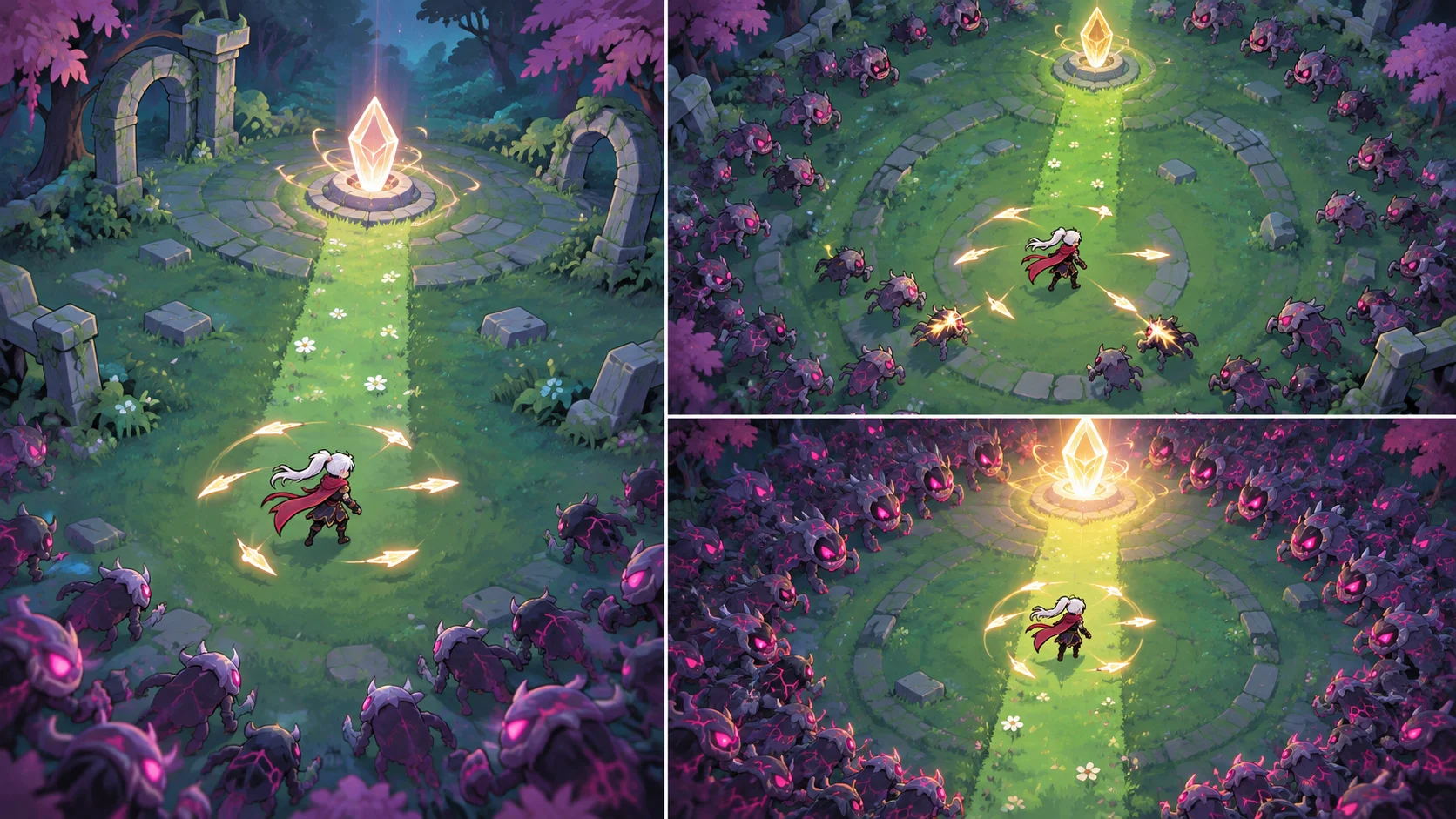
The official Vampire Survivors listing from poncle describes time-based survival with roguelite choices and large monster waves. It supports the survivors-like context only; adaptive composition rules here are original. Log the signals and composition decision for each wave so a designer can compare the system’s response with what the player actually experienced.
Choose composition by tactical purpose
Build each wave from enemy roles, not just a larger count. Slow blockers can contest the center, ranged enemies can pressure open lanes, and fast flankers can challenge a stationary build. The director should pick a mix that asks a new positioning question while leaving enough room for the player’s automatic attacks and upgrades to matter.
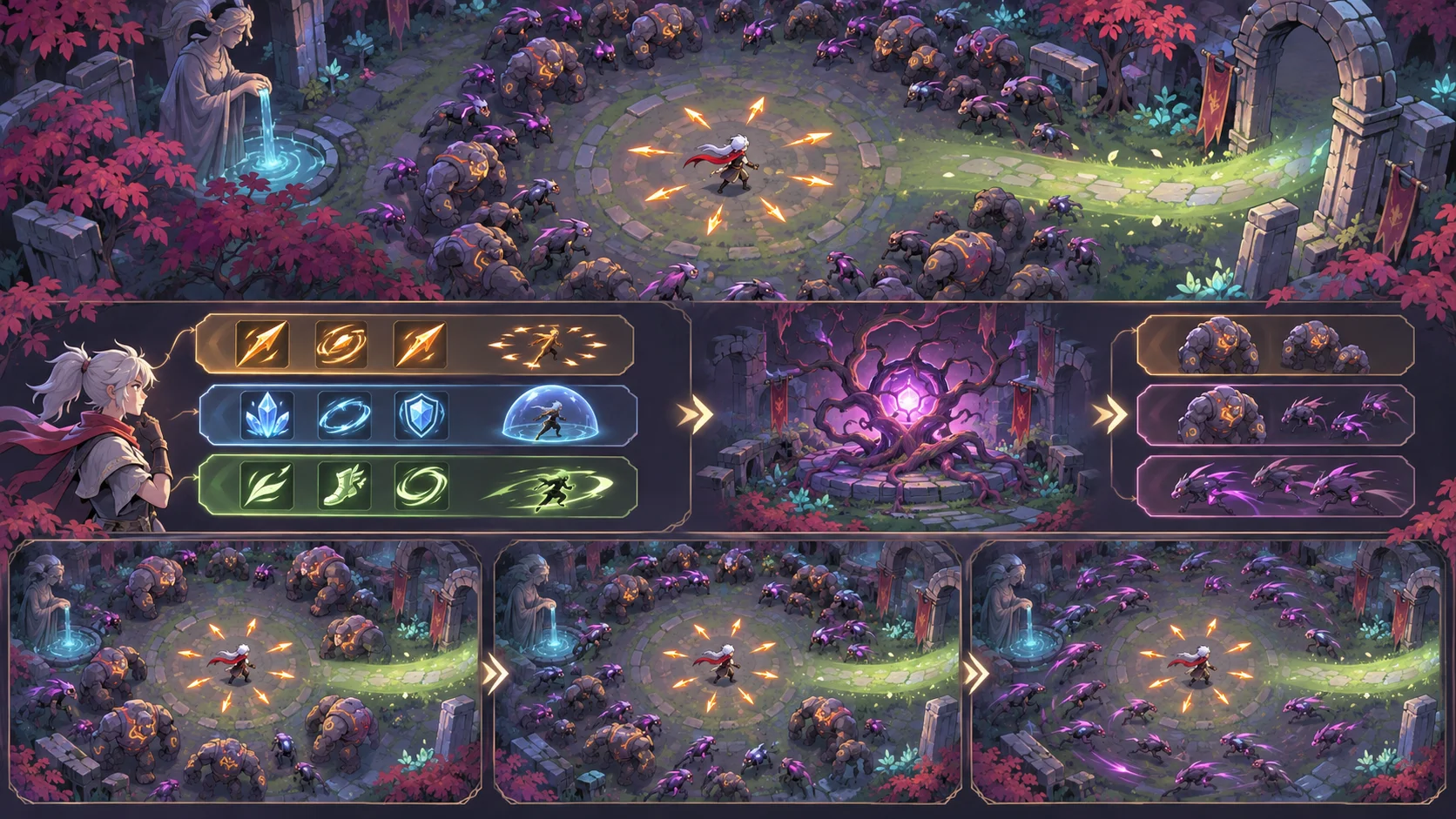
Use bounded response rules. If the player has strong area damage, add a small number of spread-out threats rather than a full wave of counters. If the player relies on close-range attacks, add a ranged unit but preserve a route to approach it. Limit how often the same counter role appears and telegraph a composition change before the wave arrives.
Preserve readable pressure and recovery
Keep adaptation within a difficulty envelope. The director can vary enemy roles, spacing, and timing, but should not remove every safe lane or overwhelm a player already under pressure. Use health, recent damage, and prior wave completion as guardrails. A struggling player can receive a composition with more recoverable gaps, while a dominant build faces a new tactical demand rather than a sudden damage spike.
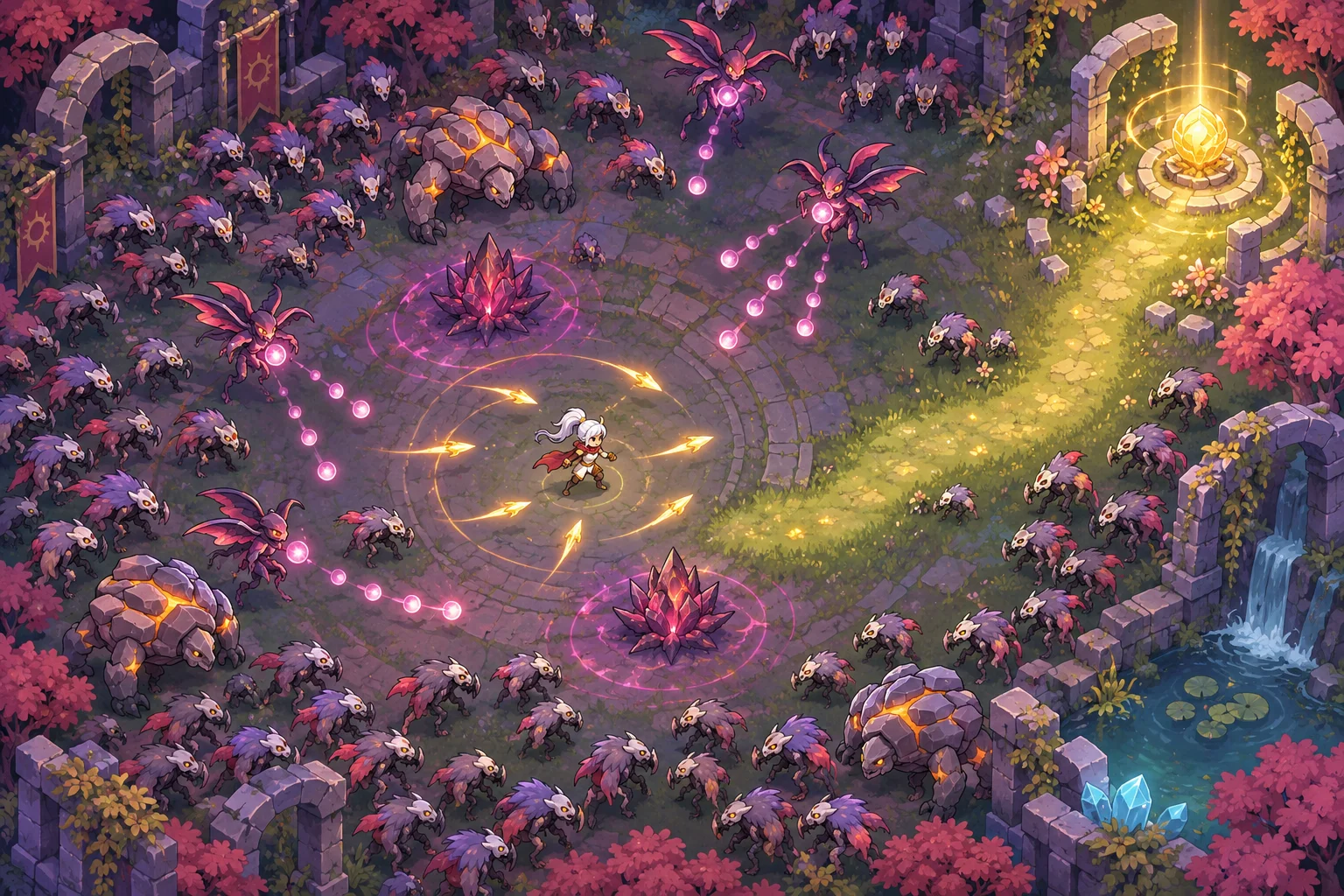
Give players time to respond between waves. Show an incoming pattern through silhouettes, environmental cues, or a brief preview. Preserve recovery opportunities such as experience pickups, healing items, or a break in pressure. The goal is to make each wave feel responsive while allowing the player to understand why the mix changed.
Test adaptation and fairness
Run identical seeds with different builds: close-range, long-range, and area damage. Record each director input, chosen enemy roles, player damage, clear time, and recovery window. Check that compositions change for a reason and do not repeatedly punish one build before it has a chance to adapt. Also test a player who is already near defeat so the director does not amplify an unrecoverable state.
For related encounter design, see a guide to distinct enemy behaviors and a guide to objectives beyond survival. Pass when players notice variety and can read the pressure, while each build still has a viable response.
FAQ
How should an enemy director change encounter composition?
Track a small set of player and encounter signals, then choose enemy roles that create a new positioning decision. Use blockers, ranged threats, or flankers to change space and timing rather than simply increasing enemy count. Limit repeated counters and preview each new composition so players have time to adapt.
What player data should an enemy director use?
Use a small, interpretable set such as attack range, movement speed, recent damage, clear time, and current upgrade mix. Sample at defined checkpoints instead of reacting every frame. Log the sampled values alongside the selected wave so designers can explain why the director chose that composition.
How do you keep adaptive waves fair?
Set difficulty bounds and use recent damage or failed waves as guardrails. Adapt enemy roles, spacing, and timing without removing every safe lane or creating a sudden damage spike. Preserve recovery between waves and limit how often a build-specific counter appears so the player can understand and respond to the pressure.
What should you test in a survivors-like director?
Run identical seeds with close-range, long-range, and area-damage builds. Record director inputs, enemy roles, damage, clear time, and recovery windows. Test a player near defeat as well as a dominant build, and verify that each composition changes for a reason while leaving every build a viable response.