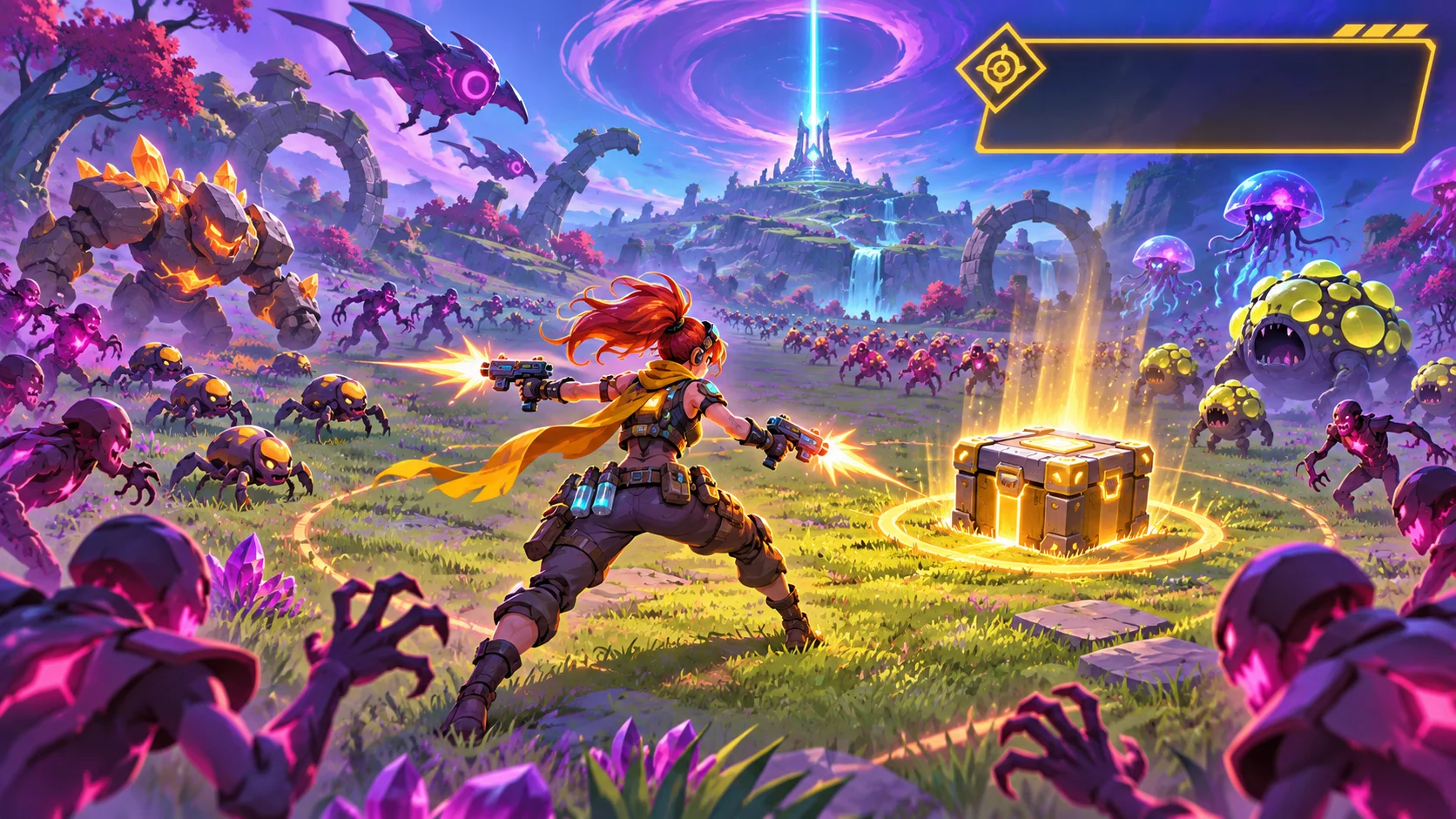
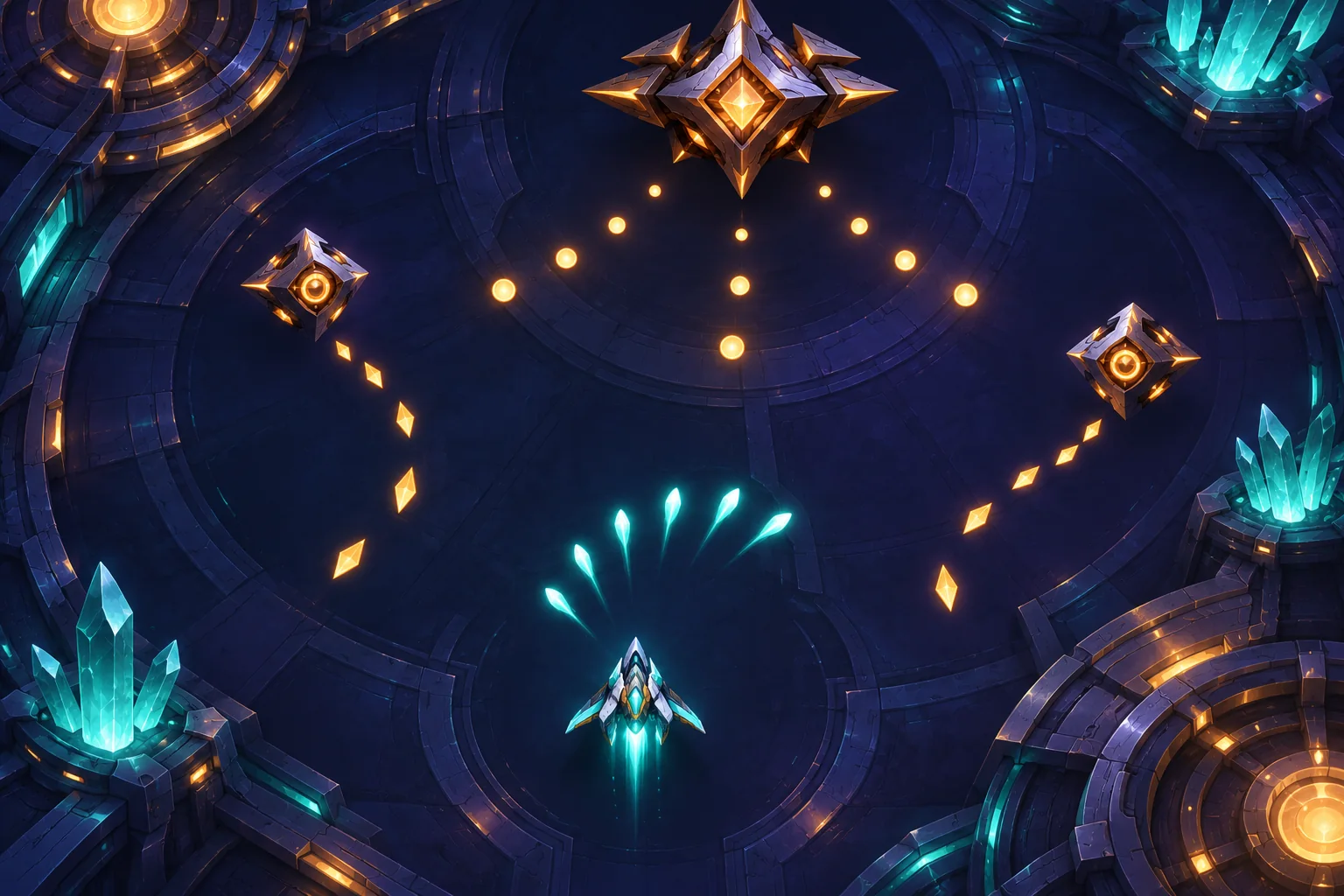
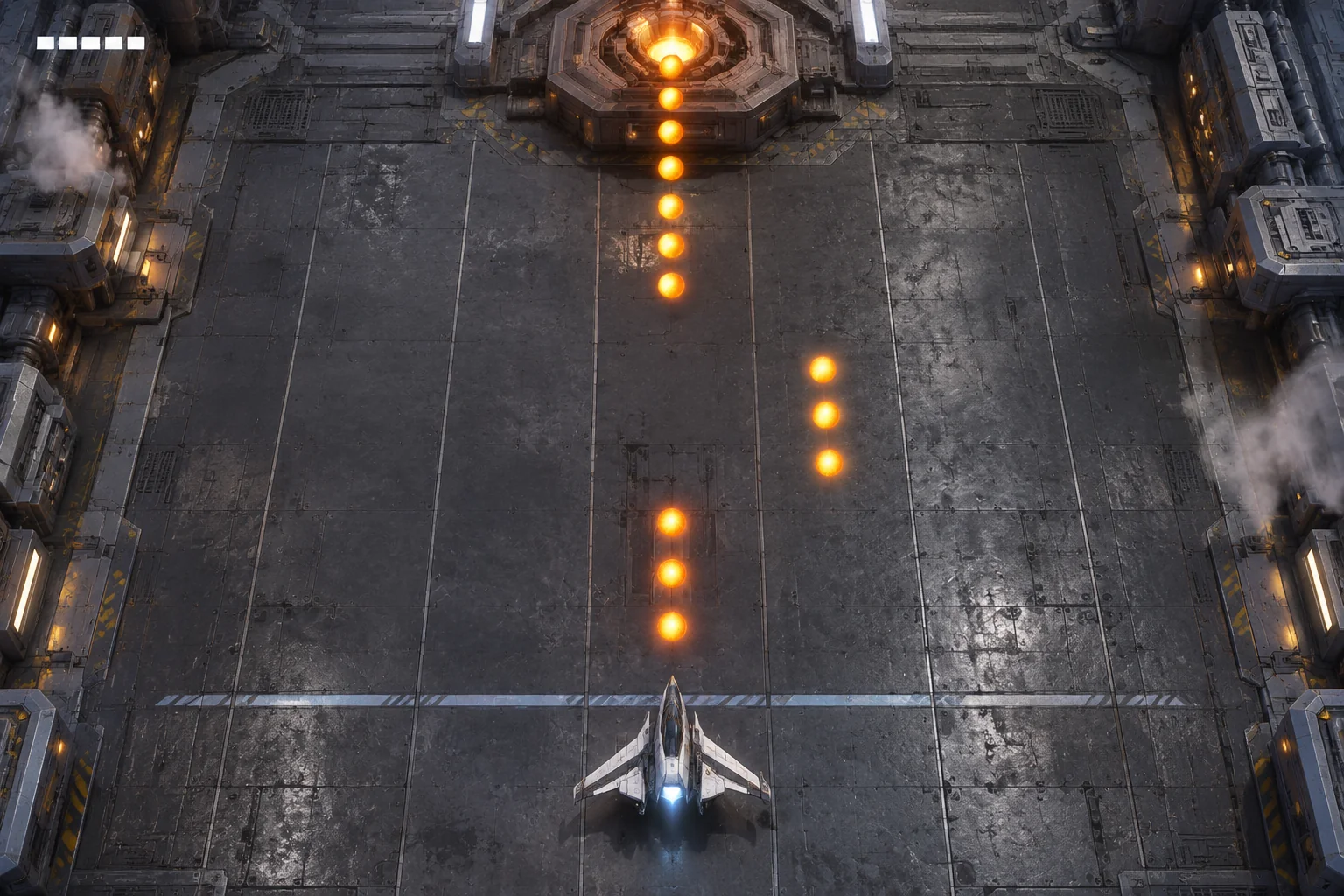
Add short objectives that make players route through the arena or prioritize targets while still surviving. Tell players how progress works, keep objective risk readable, and rotate goals so they change decisions rather than interrupt combat. The official The official listing describes surviving waves of monsters in a time-based bullet-hell experience supports genre context only; the system guidance below is original.
Choose an objective that changes the run
Give the run a goal that asks the player to do something beyond endure another wave. A beacon may need three fragments gathered from dangerous lanes, or a gate may open after a set of switches is activated. State the completion condition, the expected route, and what changes once the player succeeds. Keep ordinary survival skills useful while giving the player a reason to move through the arena.
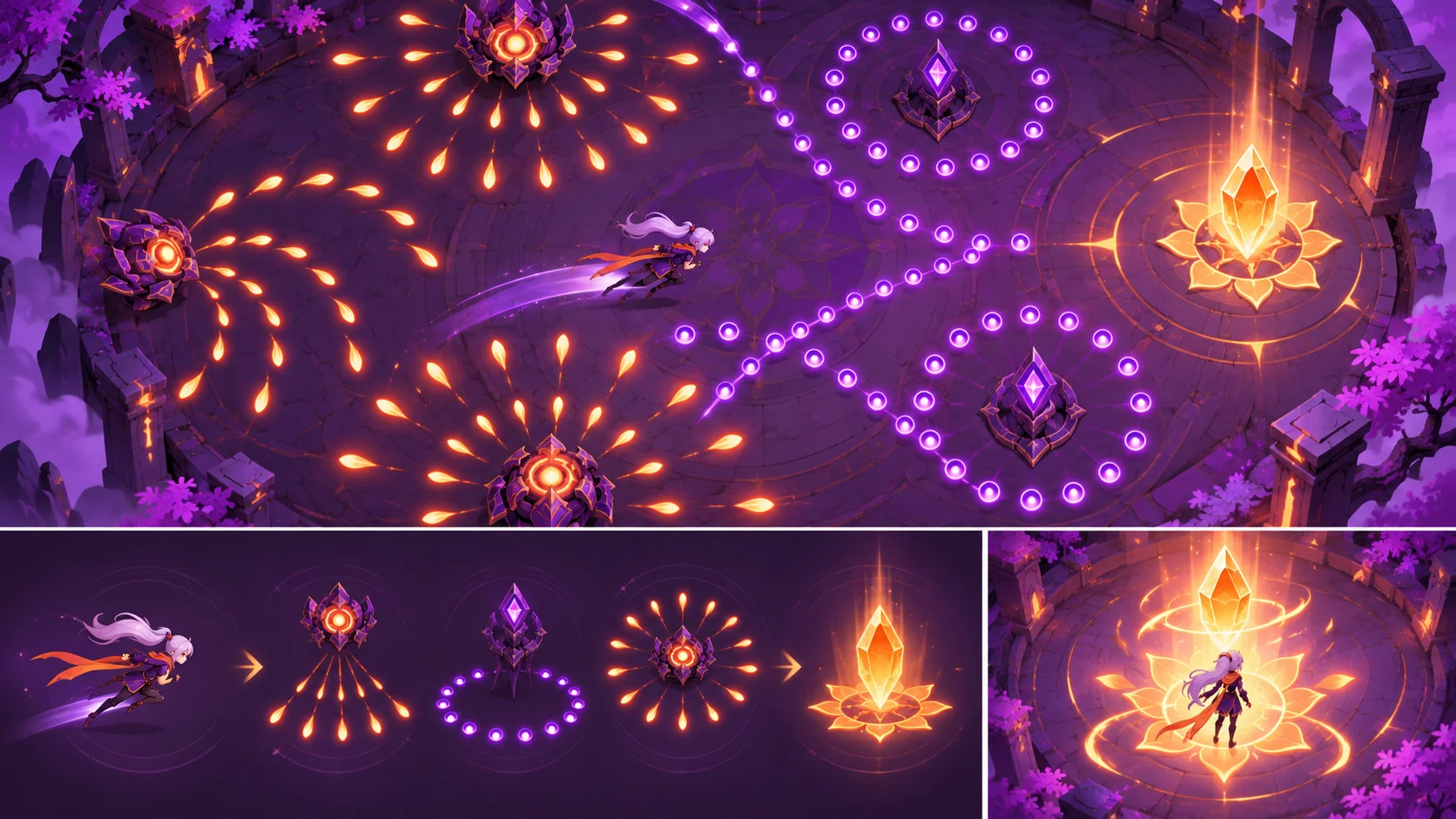
The official Vampire Survivors listing from poncle supports the time-based bullet-hell survival context only; the objectives proposed here are original. Place the goal where it can be seen amid projectiles, and communicate progress with a world change such as a beacon filling or a portal stabilizing. Avoid relying on a small counter that players must read while dodging.
Make an objective readable during combat
Use a short objective loop: approach a marked zone, complete an action, observe progress, and choose whether to continue or retreat. Fragments can be distributed along different arcs so the player picks a route through projectile patterns. Each pickup should visibly change the beacon, making progress legible without stopping movement or opening a menu.
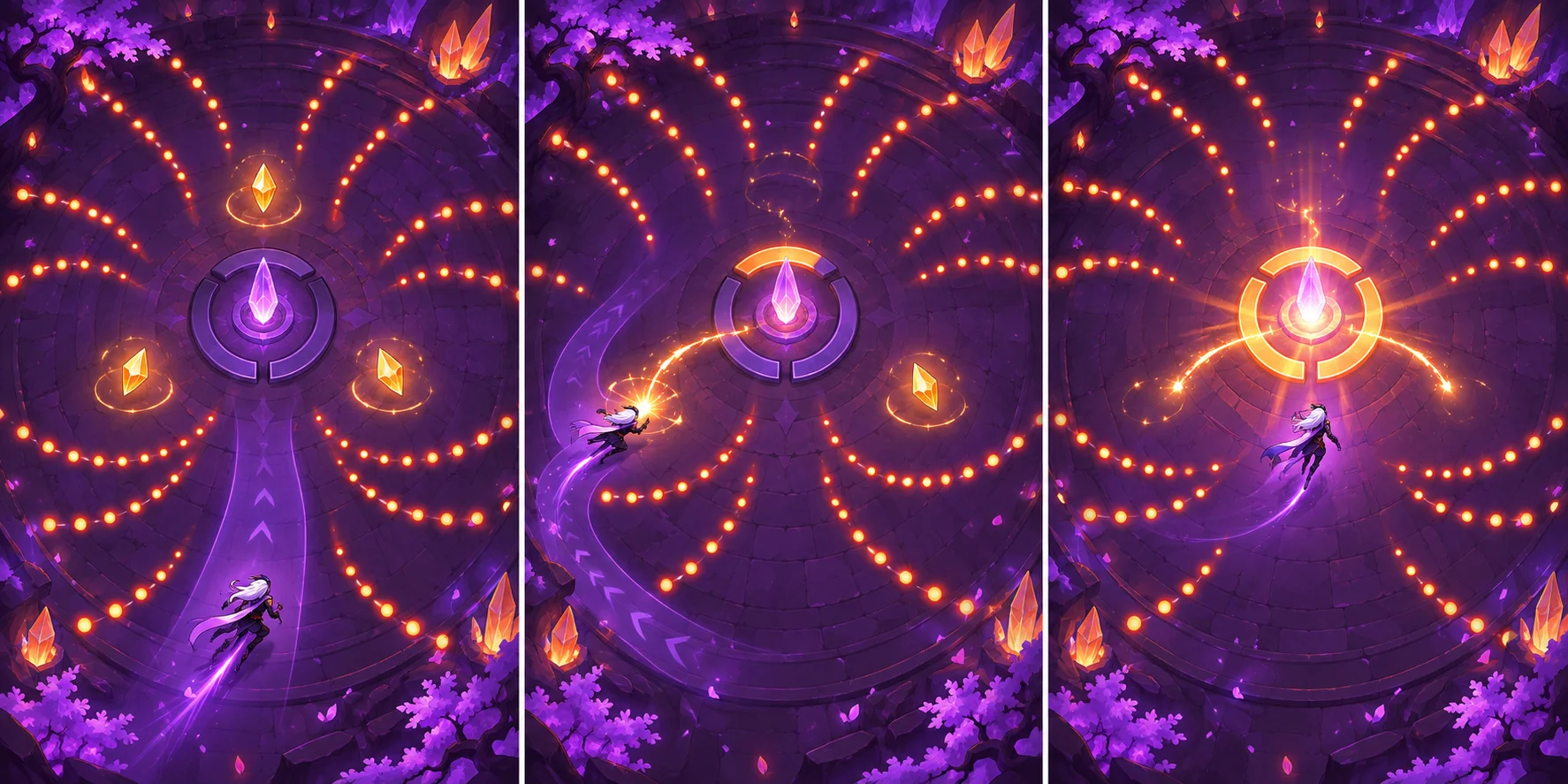
Protect readability with contrast and spacing. Keep the objective shape distinct from enemies and projectiles, and avoid placing its progress effect directly over a dangerous attack tell. Test whether players can identify the next fragment and predict how many remain from the game view alone. If progress can be interrupted, show which state was preserved and how the player can resume.
Balance objective risk and survival
A useful objective creates tension between collecting progress and keeping health, time, or a defensive resource. Put the most valuable fragment on a risky route but allow a safer, slower alternative. Let players pause the objective to recover or clear a lane, and make that choice costly in time rather than silently resetting prior effort.
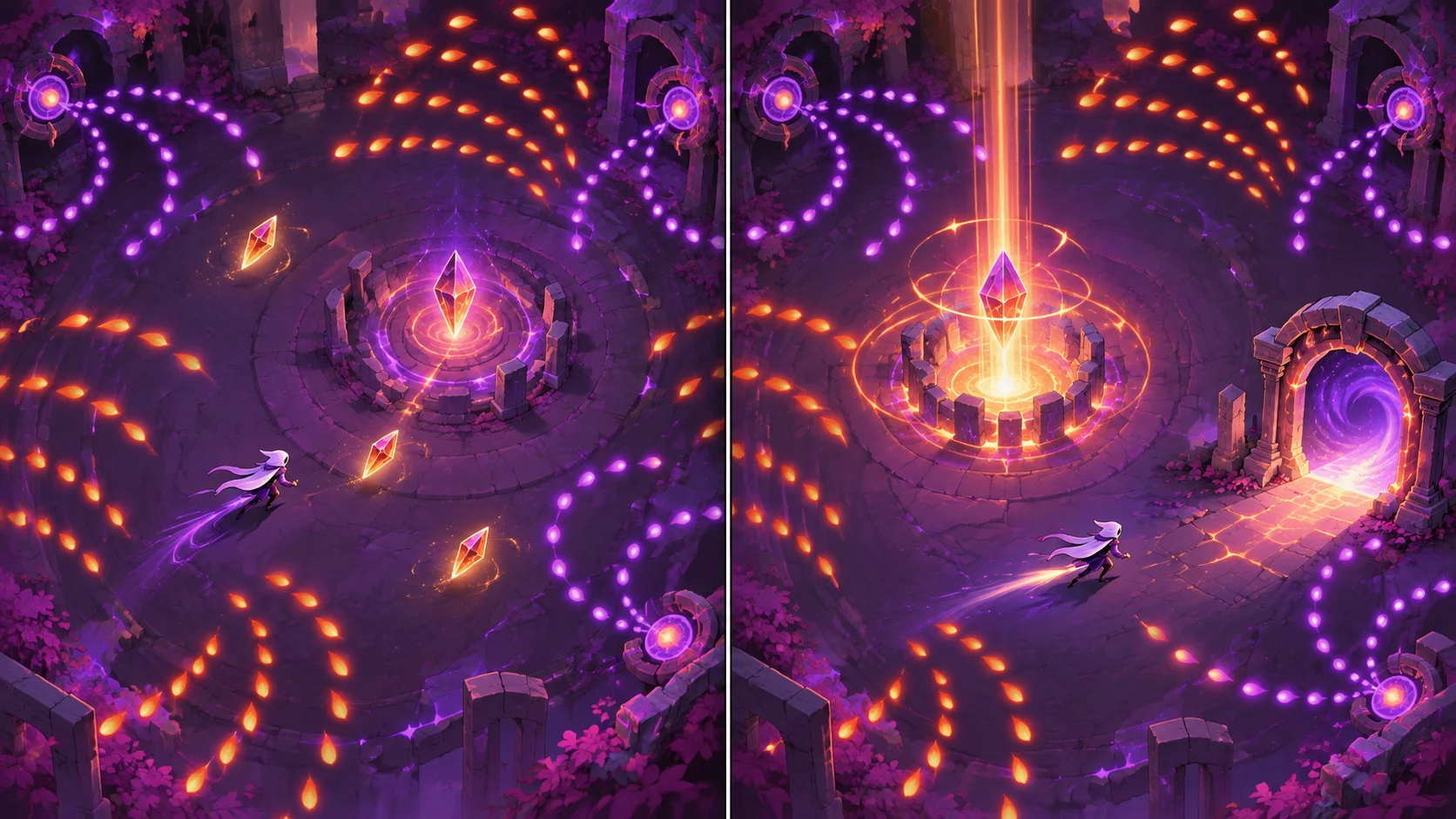
Define the completion payoff and the cost of staying. Activating a beacon might open an exit while enemies remain active, asking the player to decide whether to leave or continue for extra rewards. Keep the extraction route readable and avoid extending the encounter after the stated goal is complete without a clear reason. The objective should resolve the run’s question, not become another endless survival timer.
Test objective clarity and completion pacing
Playtest the objective without explaining it first. Record time to first action, abandoned attempts, damage taken along each route, and how often players notice the completion signal. Ask them to describe the goal and the trade-off after one run. If they keep fighting instead of acting, improve placement and progress feedback before increasing reward value.
Run tests with different projectile densities and movement speeds. Confirm that optional rewards do not obscure the primary completion route, and that a player can recover from one missed pickup. For a related design approach, see a related guide to objectives beyond survival. Pass when players can state the goal, see their progress, and choose when the reward justifies the risk.
FAQ
What kinds of objectives fit a bullet-hell shooter?
Use a goal that changes movement or target priority, such as collecting fragments, activating a beacon, or reaching an exit. Make the completion condition visible and keep the basic survival loop useful while the player pursues it. The objective should create a new decision about route, timing, or risk rather than simply add another wave.
How can players track an objective during combat?
Place the goal in the playable space and show progress through a clear world change, such as a beacon filling or a portal stabilizing. Use shape and contrast that remain distinct from enemies and projectiles. Test whether players can identify the next step and remaining progress without opening a menu or stopping movement.
How do you balance objective risk and survival?
Offer a risky route with a valuable payoff and a safer, slower alternative. Let players pause to recover without silently erasing earlier progress. Decide what changes when the objective is complete, such as opening an exit while enemies remain active, so the player chooses whether to leave or accept more danger.
What should you test about objective pacing?
Test the objective without explaining it first. Measure time to the first action, failed attempts, damage by route, and whether players notice completion. Repeat at different projectile densities and movement speeds, then ask players to describe the goal and trade-off. Revise visibility or feedback if they keep fighting without understanding what to do.