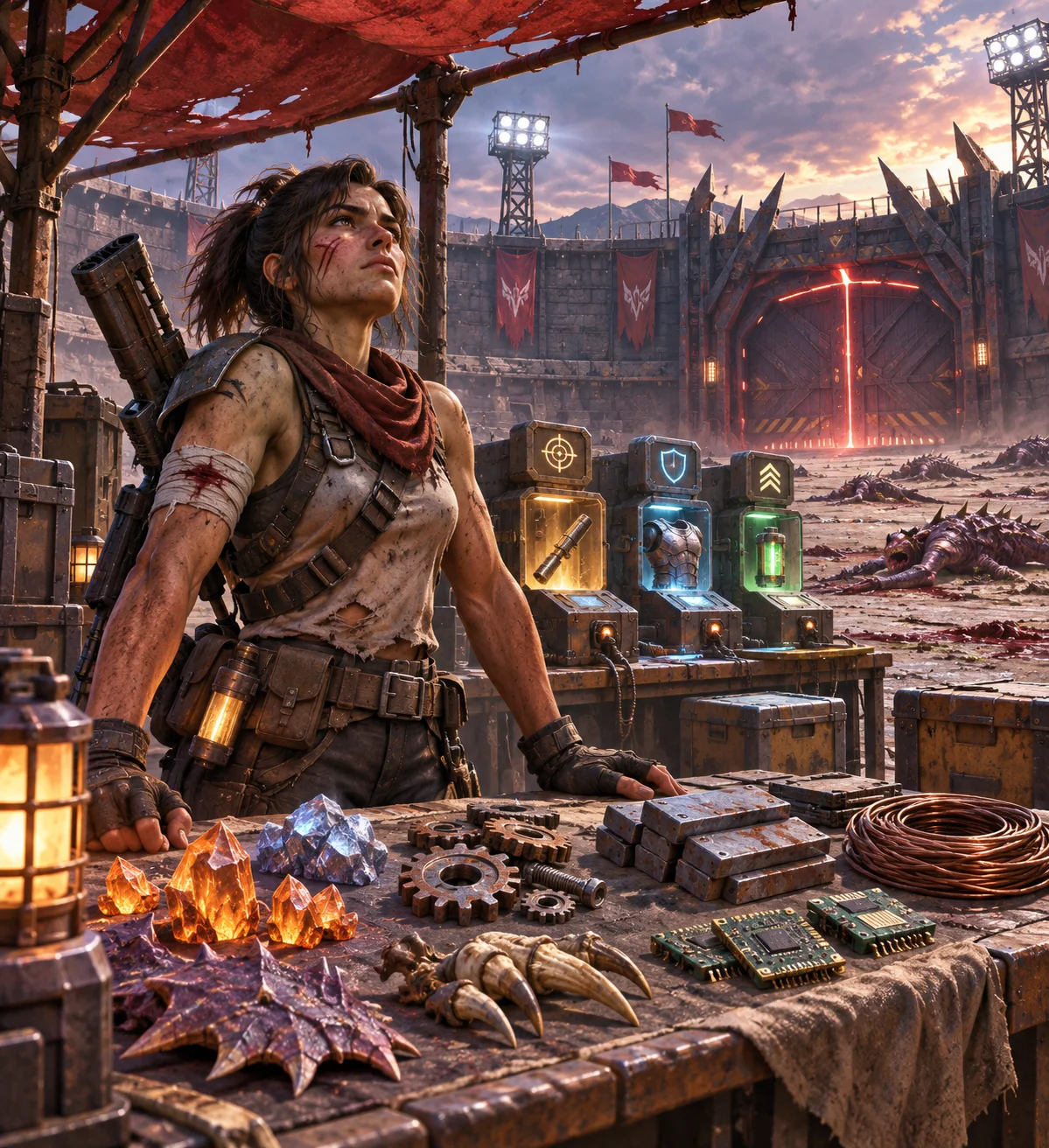
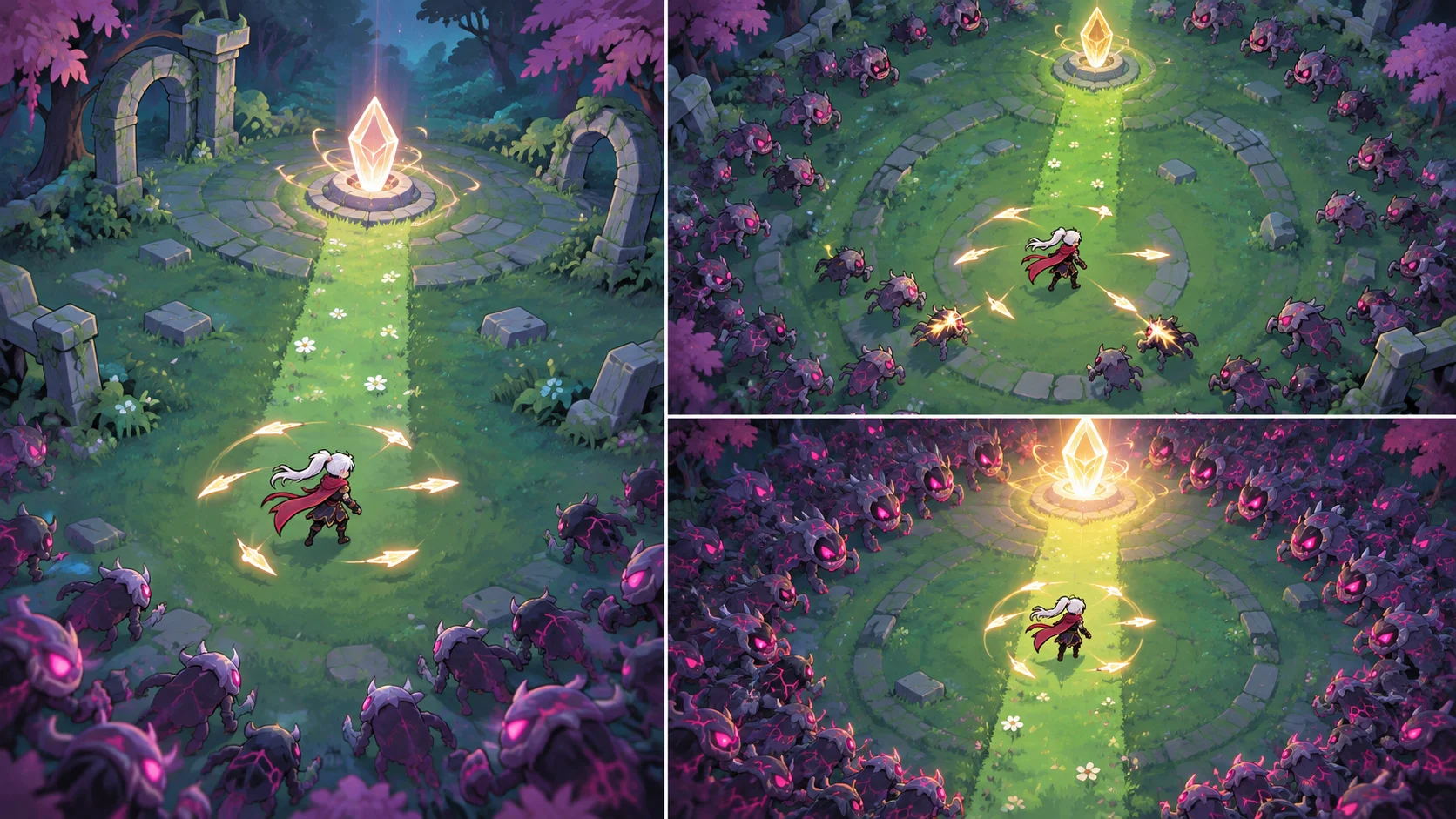
Define the run’s survival baseline
Record how long a run lasts, when enemy pressure rises, how automatic attacks behave, and when the player usually chooses upgrades. A secondary objective must fit inside this rhythm. If players cannot identify the central survival loop, adding errands will make the run feel scattered.
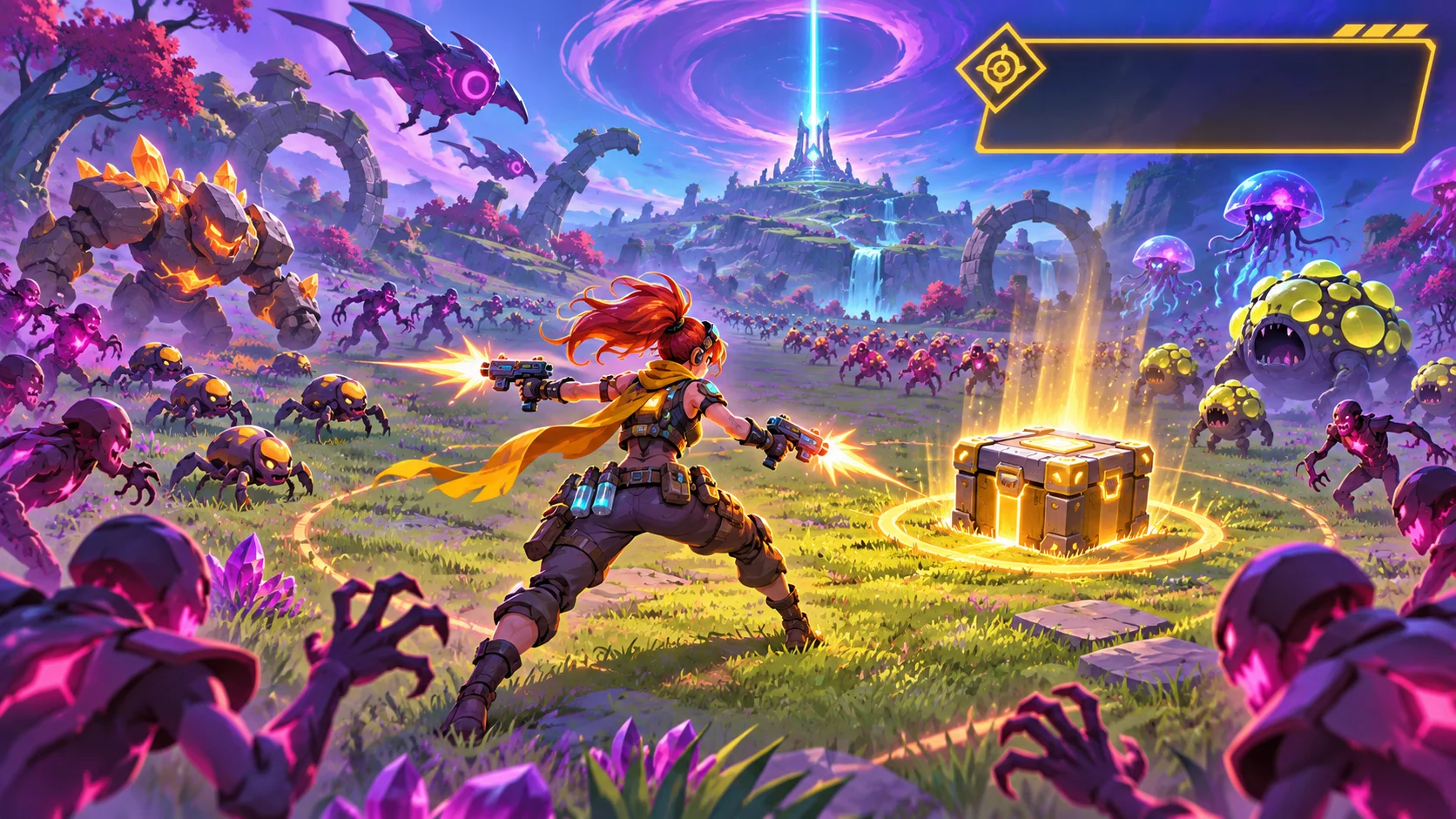
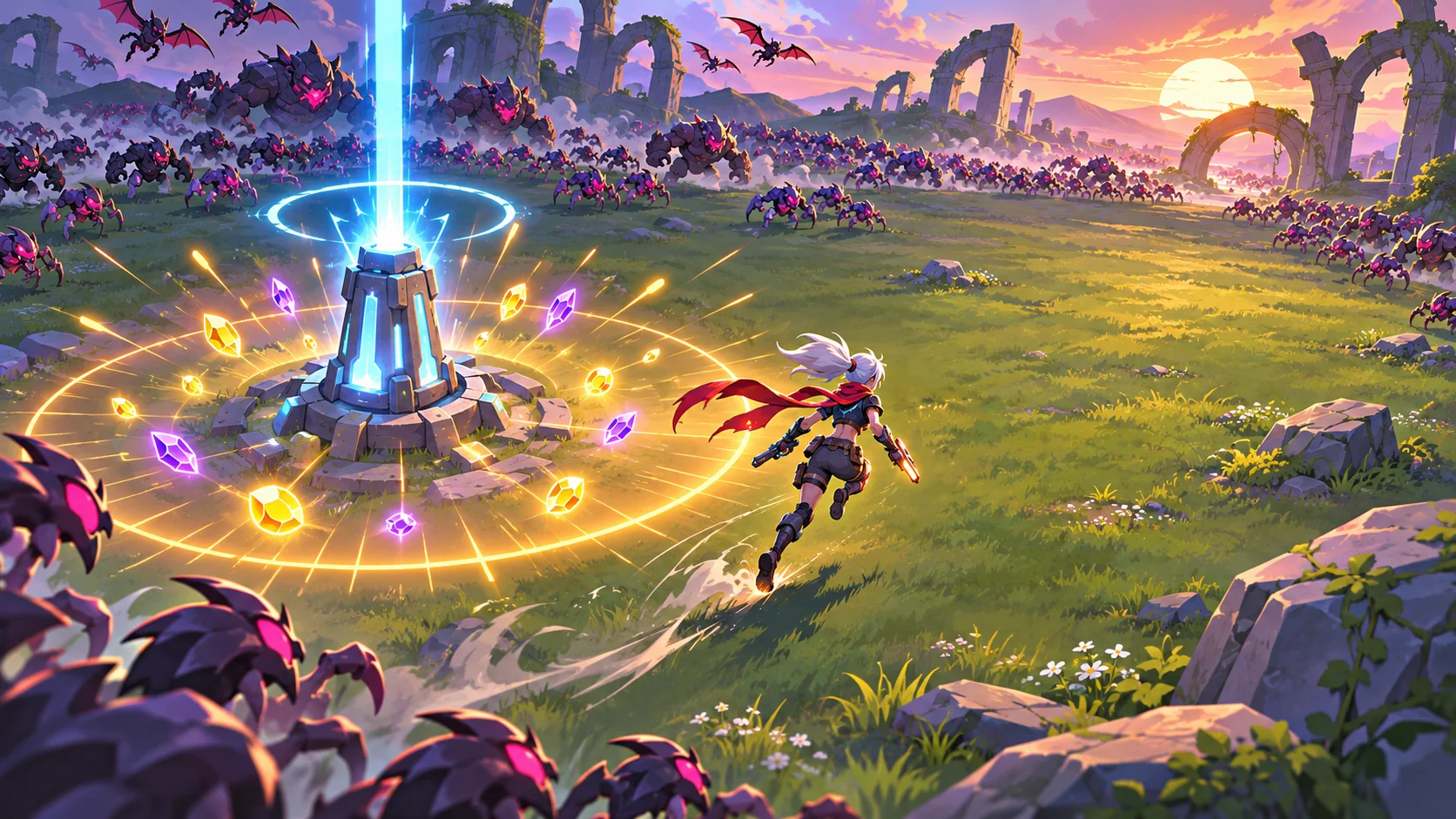
Choose what the objective is meant to change: route, target priority, positioning, or build direction. A beacon might reward reaching a dangerous edge; gathering a cache may encourage a loop through open space. The goal should affect decisions rather than ask for an unrelated interaction.
The official Sidequest Survivors listing describes short survival runs, automatic attacks, a boss encounter, and dangerous sidequests with extra rewards. This is genre context only; the objective structure here is an original design proposal. See the official listing for genre context.
Create objectives that redirect play
Use a small objective set with different spatial and build demands. One goal may reward movement to a marked zone, another may require surviving near a resource, and a third might encourage eliminating a specific threat. Explain progress and failure conditions through simple, persistent UI.
Let the objective shape upgrades without dictating a single winning build. A reward could offer a defensive item, a movement option, or a resource boost. Present alternatives that respond to the run’s current state so the choice feels connected to what the player has done.
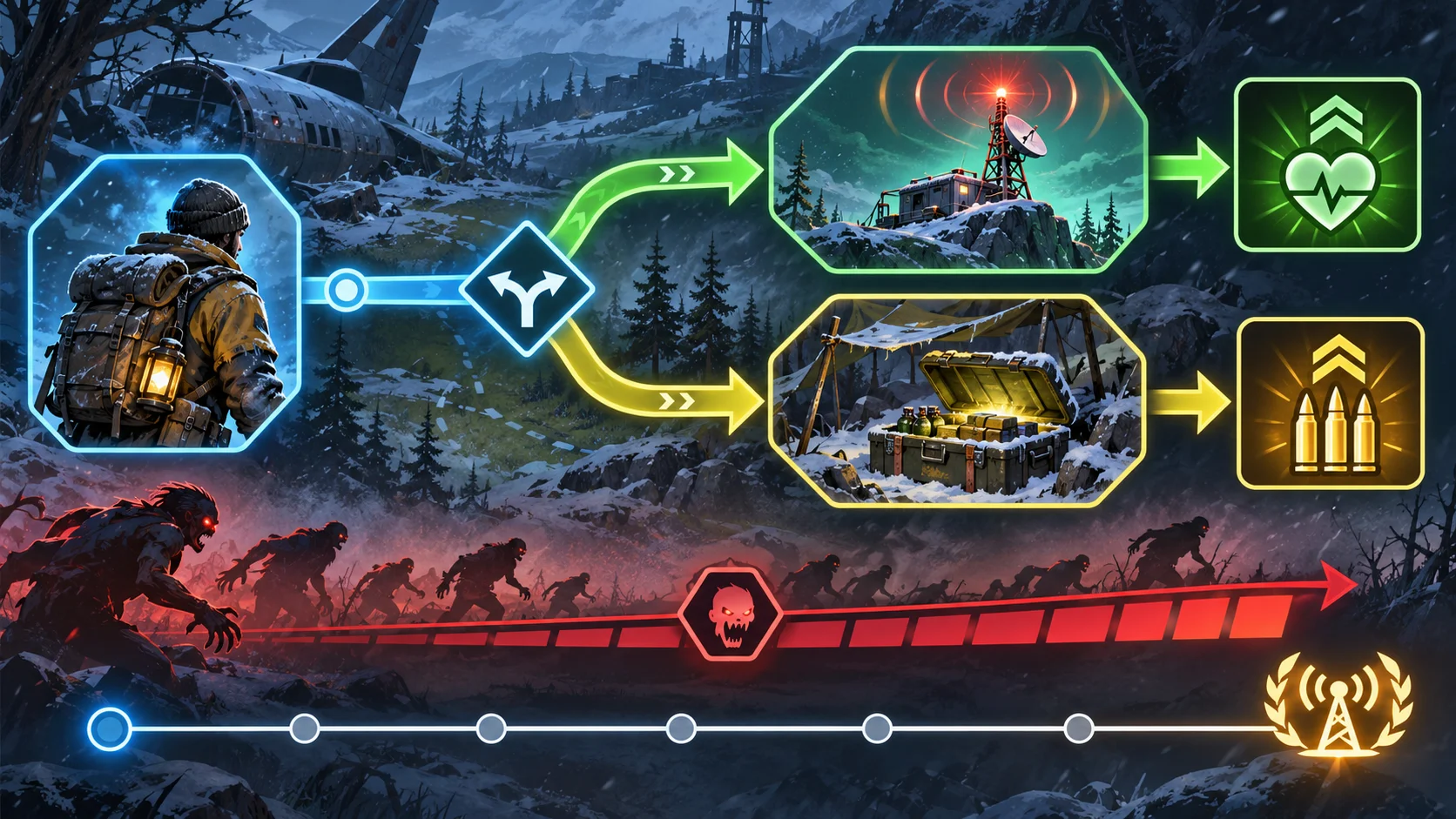
Keep objective timing compatible with enemy escalation. Avoid placing an interaction that requires standing still while the arena is at peak pressure unless that risk is the point. A progress meter can persist while the player moves, allowing survival actions to continue during the task.
Reward completion without ending pressure
Deliver the reward promptly and make its effect visible. A completed task might reveal a safe pickup, adjust the next upgrade choices, or open a temporary route. The reward should support a run decision and avoid automatically winning the next encounter.
Decide whether objectives are optional, time-limited, or chained. State the consequence of ignoring one before its window closes. Optional content should remain optional; avoid quietly placing an essential survival upgrade behind a task that players can easily miss.
Let the player abandon or fail an objective without losing run readability. Show which goals remain, whether the reward is still available, and how the run continues. Failure can change the build or route, but the core survival loop should keep functioning.
Test objective choices across builds
Replay runs with different starting weapons, upgrade paths, and movement habits. Track objective acceptance, completion time, route changes, damage, and run duration. Ask players whether they pursued the goal because of its reward or because its prompt seemed mandatory.
Test simultaneous objectives, objectives that spawn near dangerous terrain, and goals whose required target is defeated before progress completes. Give every objective a clear resolution and prevent duplicate reward triggers after a pause, revive, or reload.
Accept the system when objectives create new decisions and survival remains central. See the arena wave progression guide for pacing context. AI can suggest objective variations; reward tuning and run balance need playtests.
FAQ
How do you add objectives beyond surviving waves?
Start from the run’s existing survival rhythm, then add a secondary goal that changes movement, targeting, or build choices. Keep progress visible and rewards useful but bounded. Test whether players choose the task willingly and still understand that survival remains the central challenge.
What objectives work in a survivors-like game?
Try location goals, rescue beacons, resource caches, target priorities, or short defense tasks. Choose objectives that make the player move or adapt a build. Keep tasks readable during automatic combat and avoid requiring long stationary interactions at peak pressure. This keeps the consequence clear and helps players plan their next step.
How do objectives affect upgrade choices?
Offer rewards that complement different builds, such as defense, movement, or resource gain. Let the current run shape the alternatives without forcing one correct upgrade. Explain each reward before selection so players understand how it changes their next encounter. This keeps the consequence clear and helps players plan their next step.
How do you balance optional objectives against survival?
Show their time limits and consequences clearly, and let players ignore or abandon them without breaking the main run. Avoid hiding an essential upgrade behind a missable task. Playtest completion timing and difficulty across different builds and movement styles. This keeps the consequence clear and helps players plan their next step.