Separate mission rewards from persistent resources
Define what happens to each resource when a mission ends. A temporary pickup may buy a weapon during the current sortie, while a mission credit may unlock an upgrade in the staging area. Show the distinction in the HUD and the debrief so players know what they are earning and what resets.
Keep the conversion rule visible. If collected materials turn into persistent credits after a successful extraction, say so before the mission. If a failed run still awards partial progress, explain the condition. A surprise reset can make an otherwise fair progression system feel arbitrary.
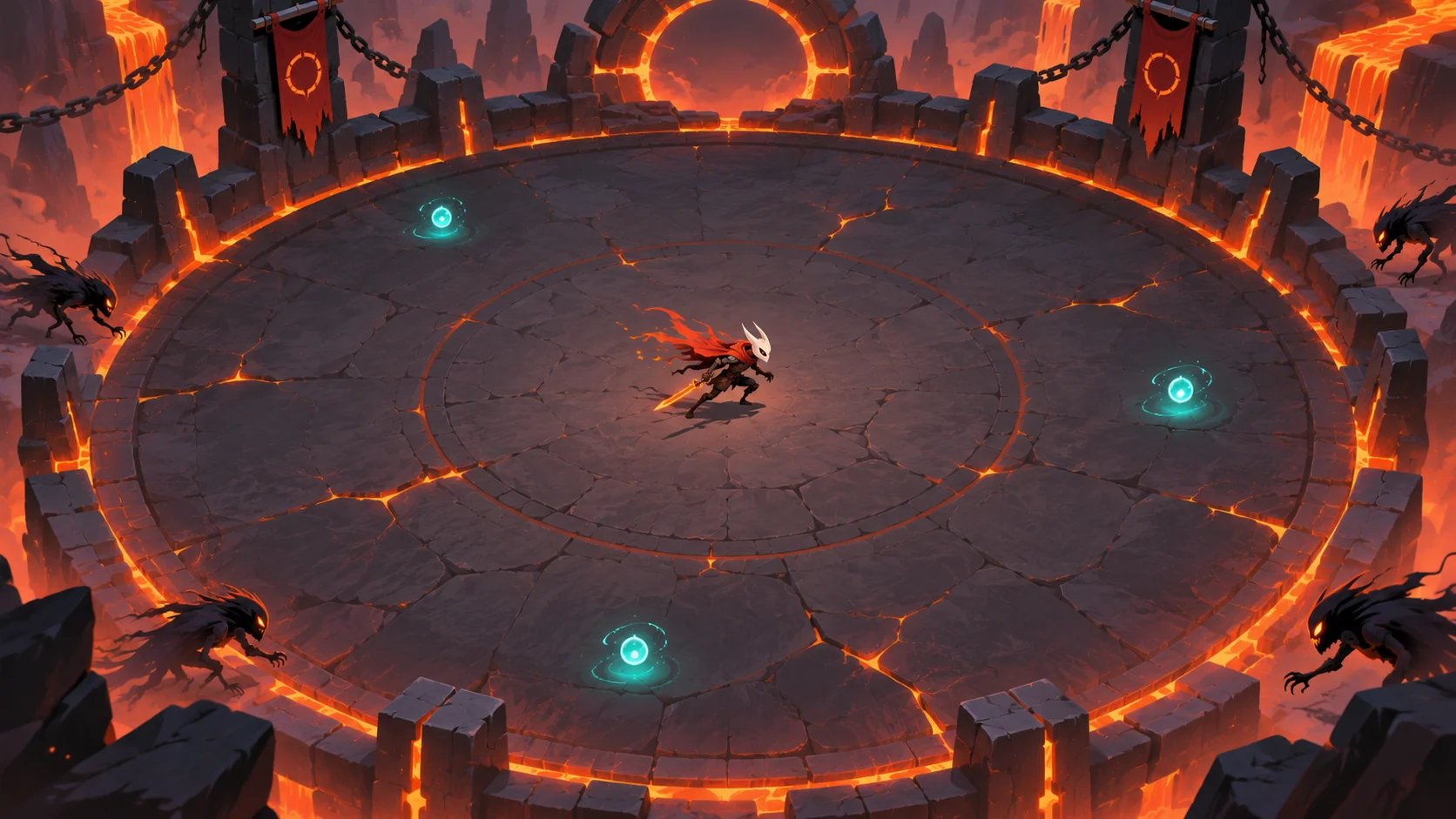
The official Brotato listing describes arena waves, collecting materials, and shopping between waves. This supports the arena survival and resource-choice context only; the persistent between-mission hub proposed here is original.
Offer upgrades with visible tradeoffs
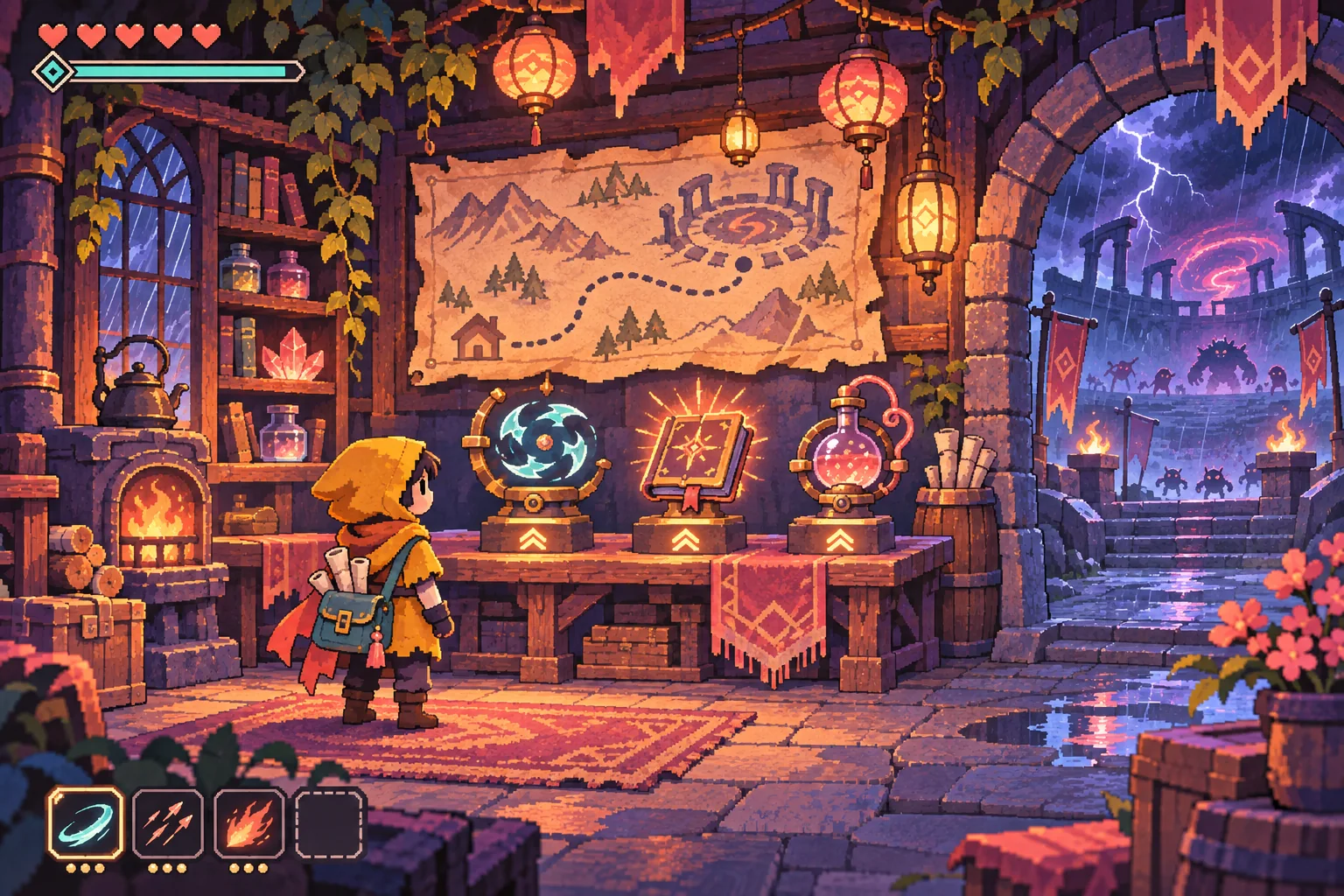
Between missions, present a small set of upgrades that change tactics rather than simply increasing every number. Extra starting armor might compete with a mobility module or a resource-gathering tool. Show the cost, the effect, and any limitation before purchase. A player should understand what they give up when they choose one path.
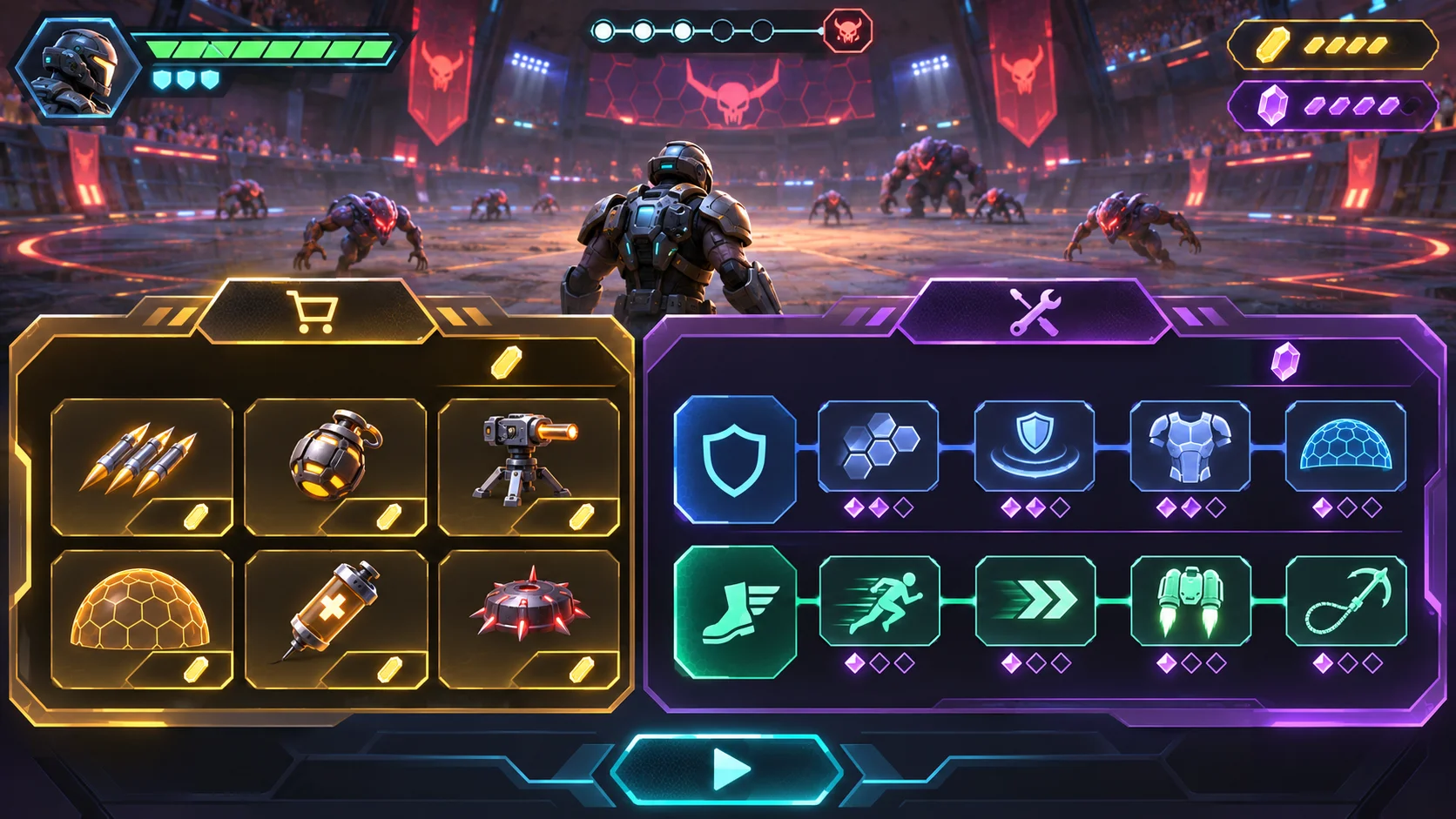
Make upgrades complementary to different play styles. A defensive option can support careful positioning; a mobility option can help players cross a dangerous arena. Avoid a permanent bonus that dominates every build. If the best purchase is always the same, the menu is a price list rather than a decision." alt="Mission scrap and long-term credits lead to separate upgrade choices." width="1672" height="941" loading="lazy">
Use a limited upgrade budget or mutually exclusive choices to make the decision concrete. Players can unlock additional options over time, but the first menu should be small enough to compare. Let them inspect a preview and, if the economy allows it, refund before the next mission begins.
Connect upgrades to arena pressures
The next mission should give the chosen upgrade a chance to matter. A mobility module may help evade slow heavy enemies; armor may provide room to recover after a mistake. Use waves that test different capabilities without guaranteeing a hard counter to every threat. The player should still need movement, timing, and situational decisions in the arena.
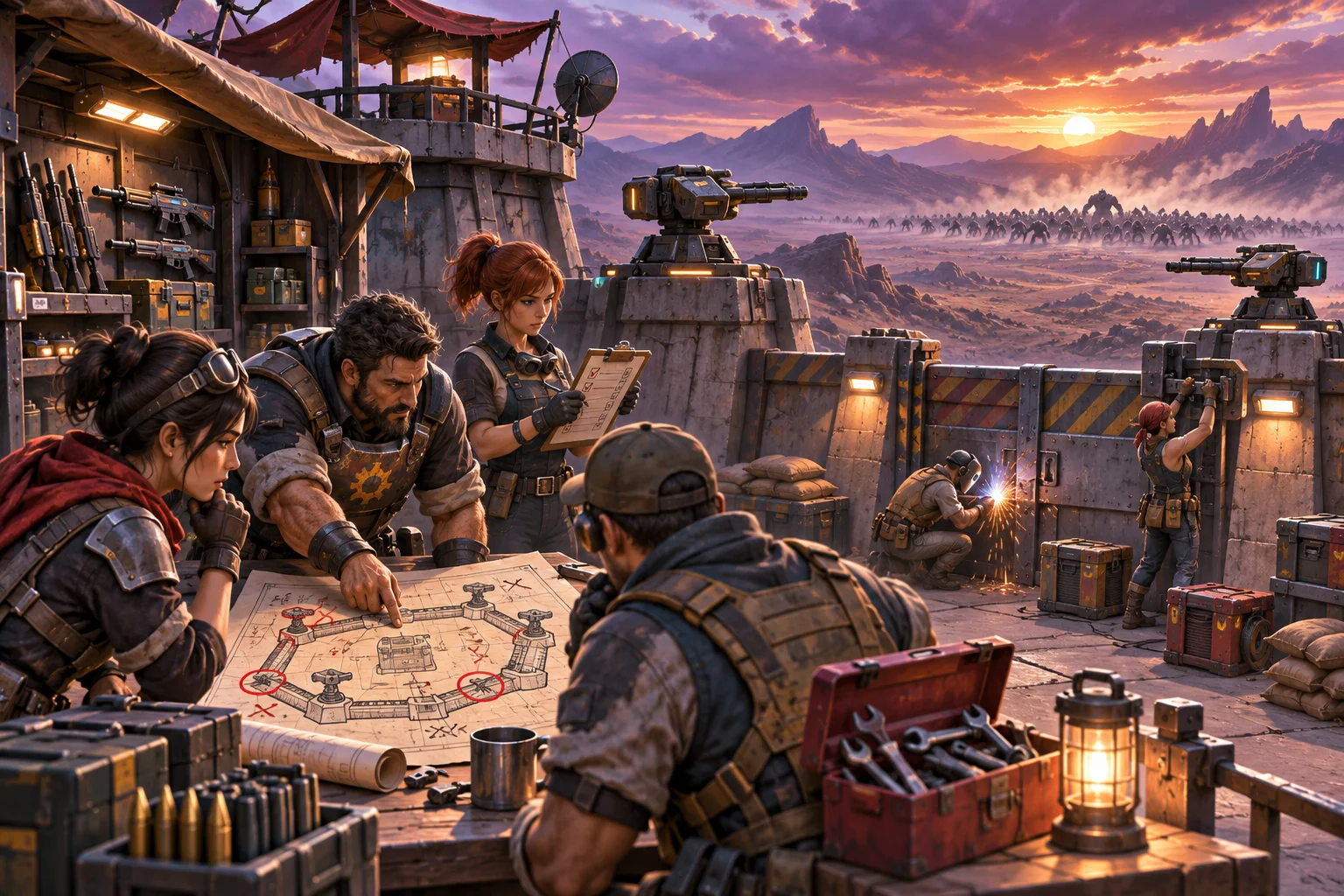
Preview the broad pressure of the next sortie. If the mission contains a dense swarm or hazards that limit movement, players can decide whether their current build is suitable. Avoid revealing every enemy placement if discovery is part of the fun, but show enough for preparation to feel intentional.
Let upgrades interact with the temporary shop without making it redundant. A permanent starting bonus can widen options, while temporary purchases respond to the current run. Separate these roles so the player does not feel that one currency is simply a weaker version of another.
Test progression across several missions
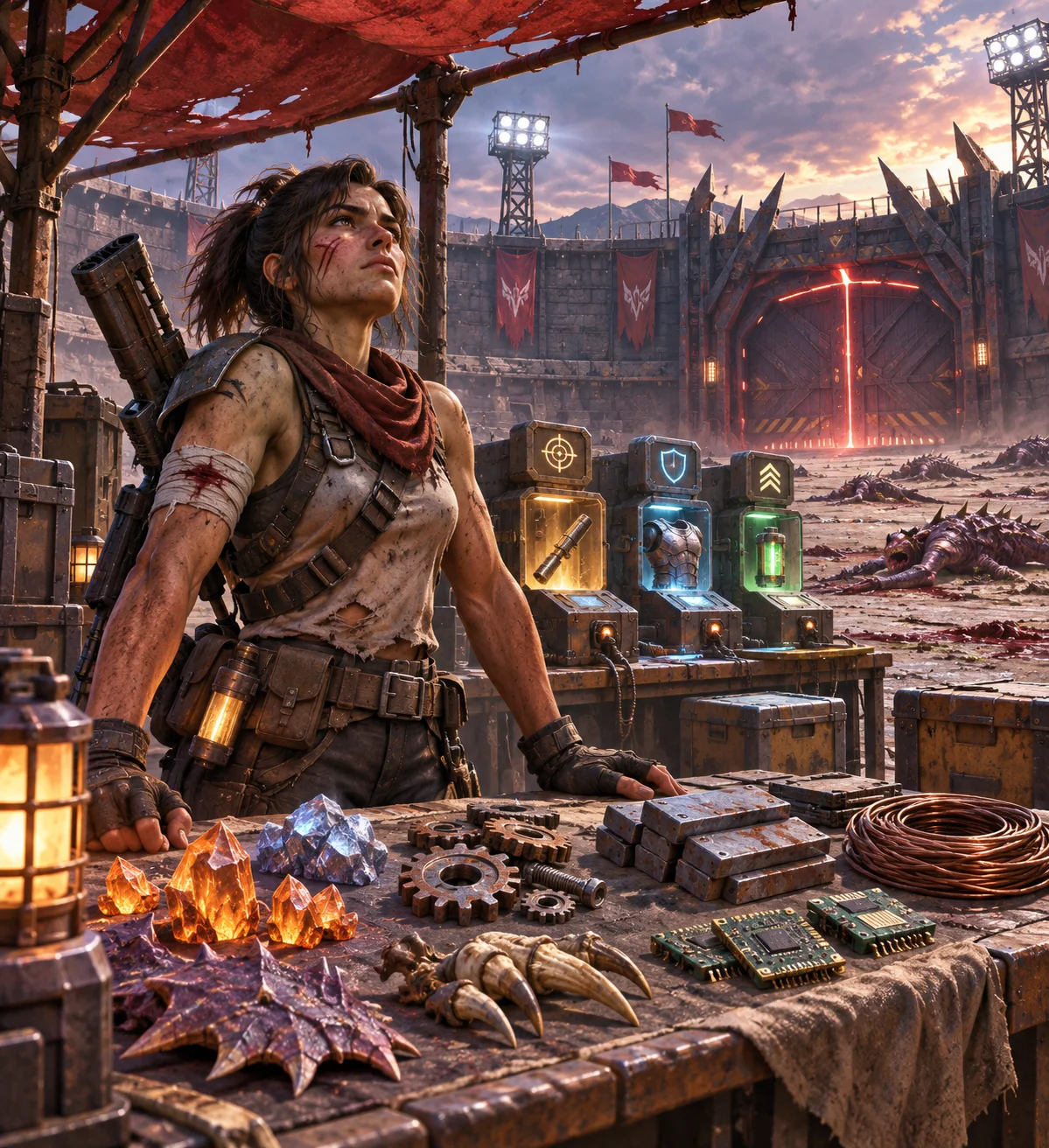
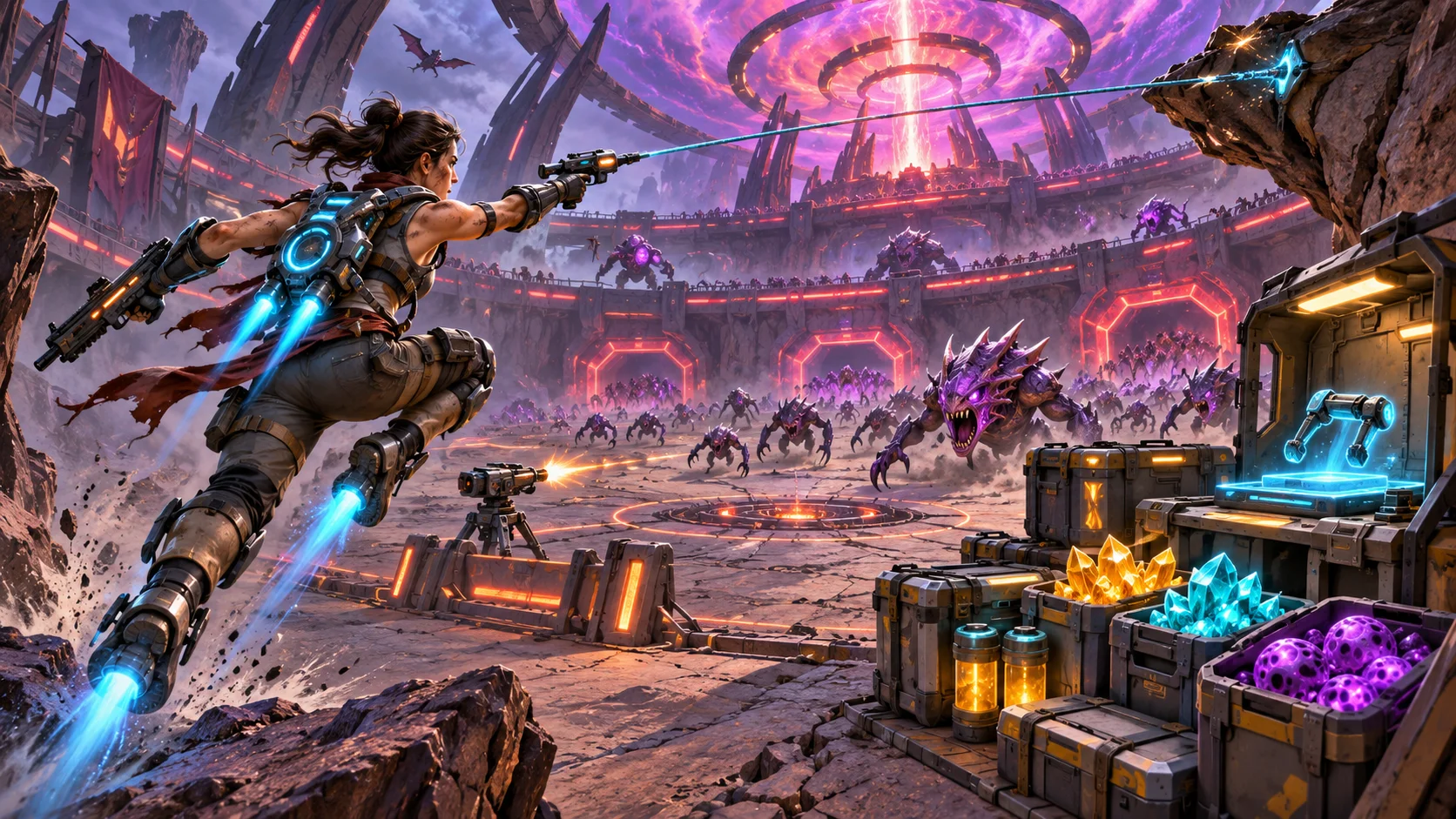
Replay several escalating missions with different upgrade paths. Compare a defensive setup with a resource-focused or mobility setup, and see whether each can survive without perfect play. Track mission completion, damage taken, resource income, purchases, and how often players feel forced to grind. " alt="A survivor prepares salvage and upgrade modules in a staging area before returning to the arena." width="1199" height="1536" loading="lazy">
Check difficulty spikes after an unlock. A new upgrade may trivialize early waves while a later enemy assumes the player owns it. Keep a viable baseline and offer more than one path through the campaign. Let a player recover from a weak purchase through mission rewards, a respec, or a side objective if that fits the game.
The acceptance test is the next sortie: buy an upgrade, launch the arena, use it under pressure, and review the debrief. See the arena survival prompt guide for the core wave loop. SEELE AI can help outline an original arena game, but currency persistence, upgrade pacing, and combat balance need implementation and playtesting.
FAQ
How do you add between-mission upgrades to an arena survival game?
Define which rewards reset during a sortie and which credits persist. Offer a small preparation menu where upgrades have distinct effects and costs. Test the next mission with different upgrade paths and confirm that each changes play without replacing movement, timing, and combat decisions. Check the persistence rule after wins, failures, and retreats before a mission starts.
What resources should persist between missions?
Persist only resources that support a clear long-term choice, such as credits for unlocking modules. Temporary pickups can remain limited to the current mission. Explain conversion, success, and failure rules before a run so players know what they will keep. If one option dominates, update the costs and compare several play styles again.
How should players choose survival upgrades?
Present a few options with visible costs, benefits, and limitations. Let defensive, mobility, and resource-focused upgrades support different approaches. If one option is always best, adjust its cost or create situations where other upgrades are valuable. across several difficulty levels and player builds.
What should you test across arena missions?
Replay escalating missions with defensive, mobility, and resource builds. Track completion, damage, currency, purchases, grind pressure, and whether the chosen upgrade mattered. Check early difficulty, later spikes, and recovery after a weak purchase so progression stays fair. Include a low-resource recovery path for players.