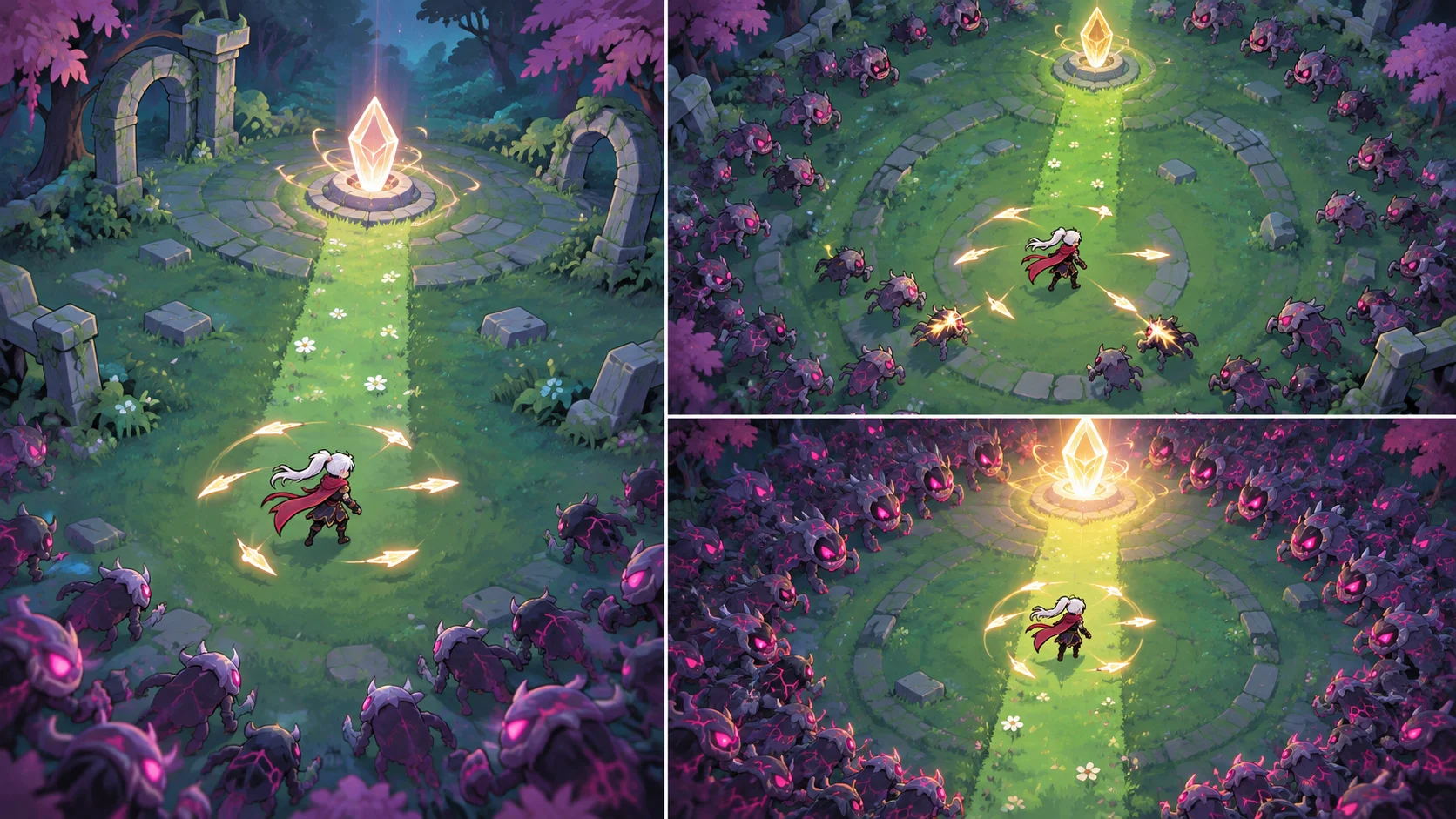
Turn each mission result into a resource choice that changes the next defense plan without creating a dominant upgrade path. A useful first prototype connects the player action, its feedback, and the next decision so the system can be tested as a complete loop.
Measure the wave-defense baseline
Measure the current defense loop first: what a player can build, what damage persists, how a mission ends, and what carries into the next deployment. This baseline reveals whether a new inter-mission choice will add planning or merely add another menu between waves.
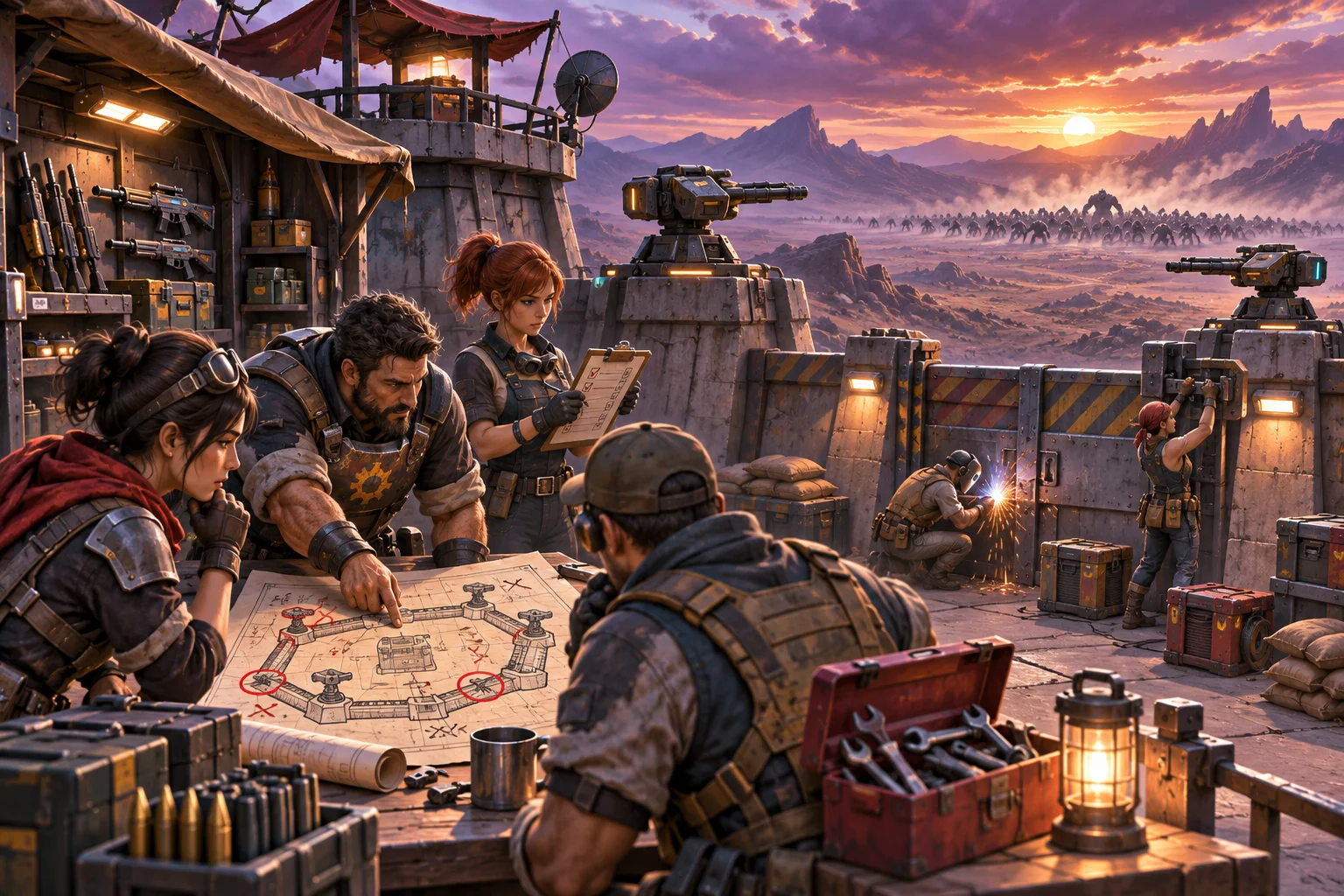
The official Wave Defense: Trappist listing describes defending outposts against waves, gathering resources, and upgrading a base and mech. Those facts support the genre context; the limited resource choices and tests below are original design guidance. See the official Wave Defense: Trappist listing for this context.
Create a bounded upgrade economy
Give mission rewards a clear source and a bounded use. A small supply pool could fund repairs, a weapon module, or a utility defense, but not all of them. Show each choice’s effect and cost before confirmation. The goal is a tradeoff the player can reason about, not a random penalty for choosing a preferred play style.
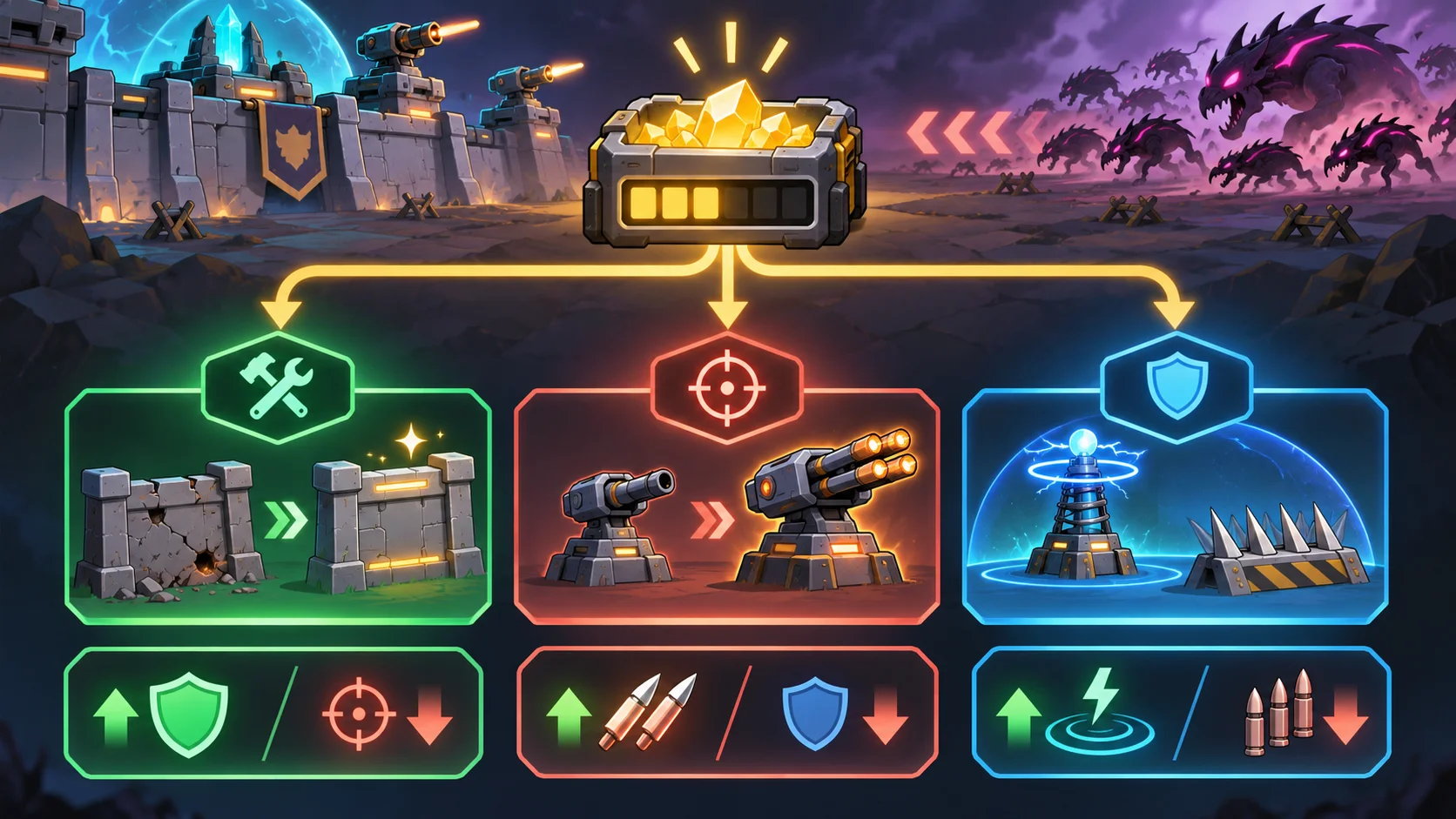
Separate persistent upgrades from mission-specific preparation. Persistent options can add gradual identity, while temporary purchases let players answer the next threat. Keep the first prototype small enough that a designer can compare the same encounter under several upgrade plans.
Connect choices to the next mission
Connect the chosen upgrade to a readable change in the next mission. A repair should affect the starting condition, a weapon choice should change a tactical option, and a utility choice should open a different positioning plan. Avoid upgrades whose only value is a larger hidden number if the player cannot see the effect during play.
Use a catch-up or recovery option if a failed defense leaves too little currency to make another meaningful choice. A minimal repair allowance or low-cost fallback can prevent a loss from creating a spiral while keeping the next plan distinct.
Test build variety and recovery
Build a repeatable test encounter and compare three resource allocations. Record survival, objective state, player actions, and perceived usefulness, rather than looking only at win rate. If one option dominates, reduce its scope, add a cost, or improve the alternatives so each choice answers a different situation.

Retest after a loss and after a successful mission to ensure the economy remains legible in both states. The related a related between-mission upgrade loop shows another between-mission resource loop. SEELE AI can help brainstorm upgrade variants; balance, implementation, and playtesting remain necessary.
FAQ
How should between-mission upgrades work in a wave-defense shooter?
Let the player convert mission results into a small set of visible choices that alter the next defense plan. Separate long-term progression from temporary preparation, show costs before selection, and make the resulting effect observable during the next encounter. Start with one repeatable encounter.
How many resources should players choose between missions?
Start with one bounded resource pool and a few clearly different uses, such as repair, offense, or utility. This makes tradeoffs easier to understand and test. Add another resource only when it creates a distinct decision that cannot be expressed by the first pool. Keep the choices distinct and readable.
How do you keep upgrades from creating one dominant build?
Compare several allocations in the same repeatable encounter and examine what situations each option helps. If one choice is useful everywhere, narrow its effect or make alternatives answer different threats. Measure player decisions and perceived value alongside completion results. during repeated playtests.
What should you test in a wave-defense upgrade loop?
Test a successful mission, a failed mission, and a recovery run. Confirm that the reward is understandable, the player can afford at least one meaningful action, and the upgrade changes the next plan. Record cases where a choice has no visible impact or blocks recovery.