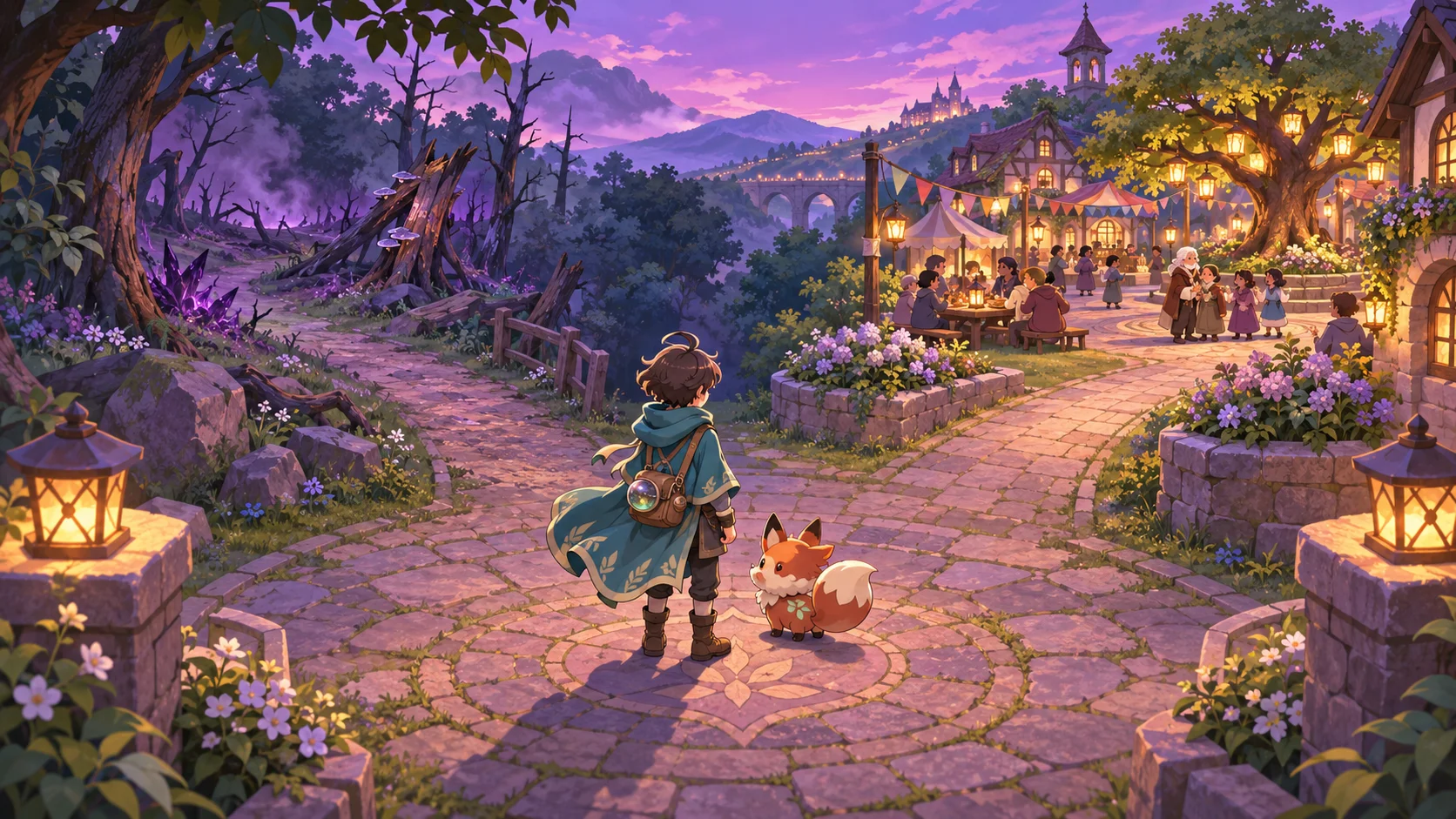
Plan a campaign spine with choice points
A persistent quest campaign needs a clear main direction so consequences do not turn into an unmanageable web. Define a central objective and a sequence of milestones. At selected points, let the player make a choice that affects a later scene, resource, relationship, or route. Optional quests can add context or change the payoff without blocking the campaign’s main ending.
Sketch each milestone as a state change, not only a dialogue scene. The player might earn a village’s trust, discover a route, or promise help to a companion. Then decide where the campaign acknowledges that state. A consequence feels persistent when it is noticed later, not merely stored in a hidden variable.
The official Fae & Fauna listing describes a creature-collecting RPG where players complete quests, explore, craft, and adventure with pet companions. This supports the broad quest and companion context only; the persistent consequence campaign below is original design guidance.
Connect consequences to the world and bonds
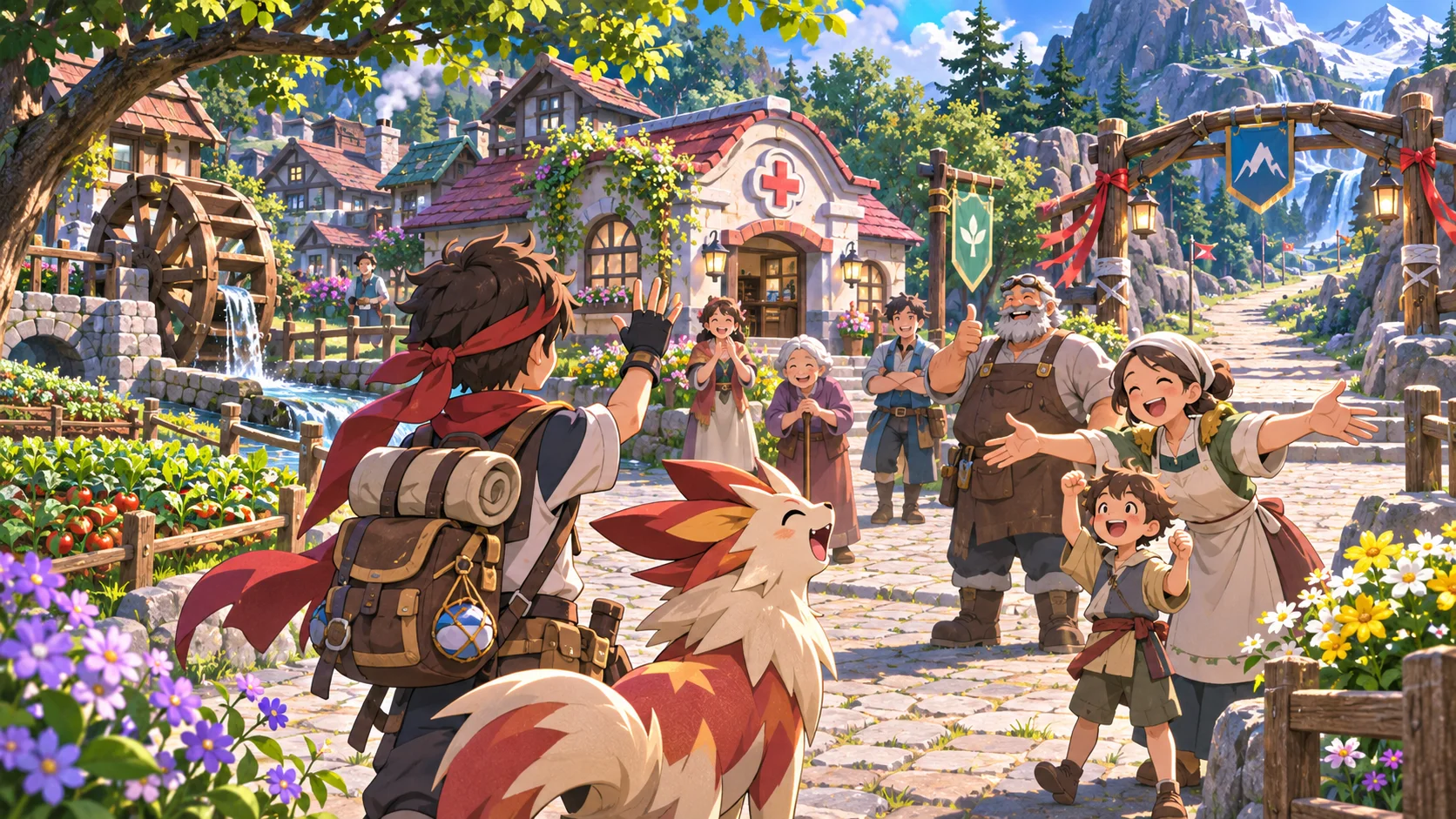
Choose a limited set of outcomes that players can see: a town service opens, an NPC changes their response, a route becomes safer, or a companion reacts to a promise. Keep the effect proportional to the decision and make the callback specific. If the player shared a scarce cure with a village, a later scene might show its clinic helping another character.
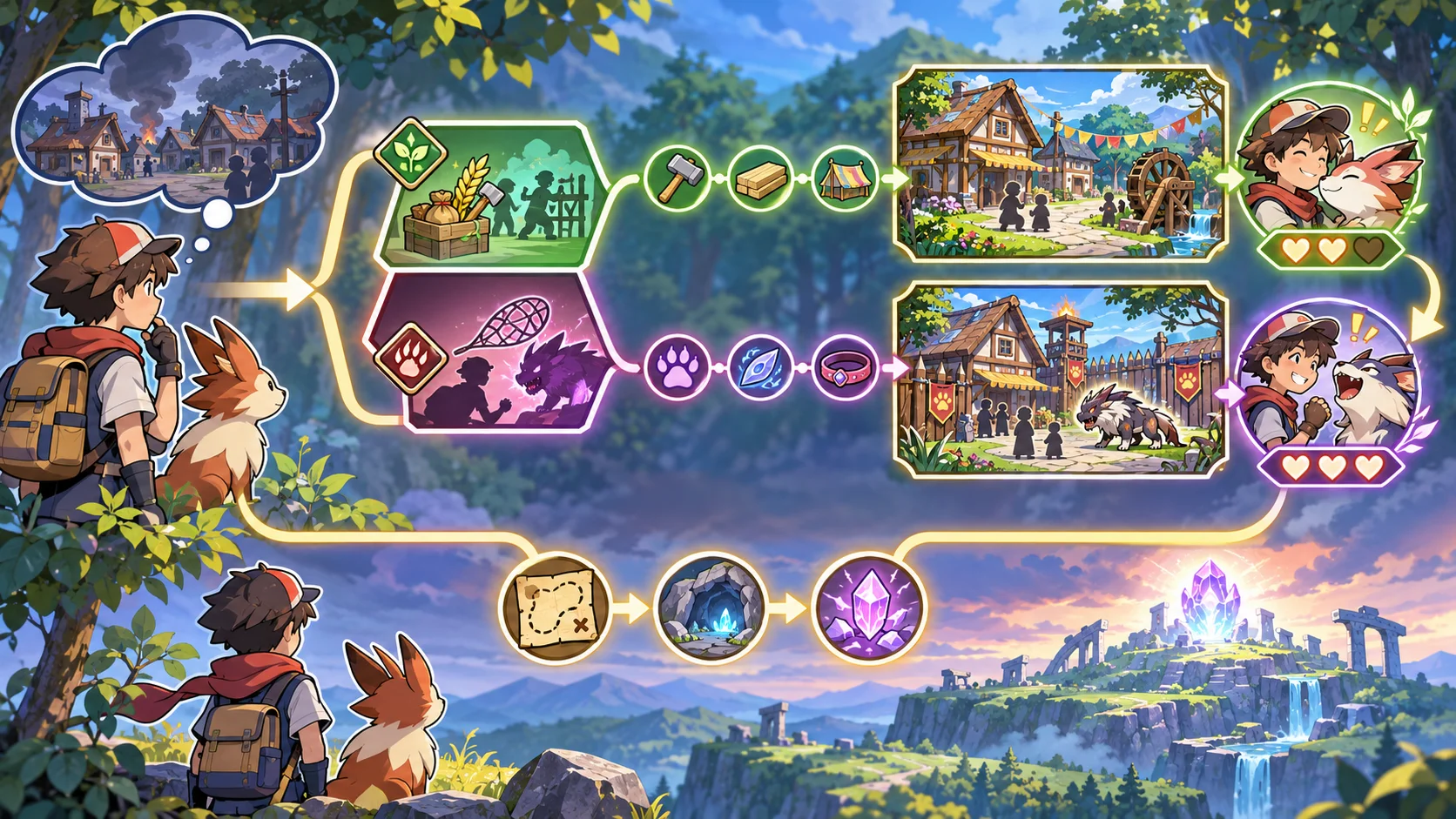
Companion bonds can reflect how the player treats creatures and people, but avoid turning every action into a hidden approval score. Use a few meaningful thresholds or remembered events, then write a response that names what the companion noticed. Give the player feedback soon enough that they can connect the reaction to the choice.
Make alternate outcomes playable rather than framing one as the secretly correct path. If helping one settlement means another group receives less aid, show the tradeoff and preserve a viable route forward. Players should be able to understand consequences without needing to reload repeatedly to guess the intended answer.
Track quest state without brittle branching
Use named milestones and explicit outcome states. A quest can record whether the player accepted, completed, declined, or resolved an objective in another way. Later dialogue or location logic reads those states. This is easier to reason about than maintaining a separate copy of every future scene for every possible combination.
Keep flags scoped and documented. Define default values, which choices are mutually exclusive, and whether a state can change again. If a town’s status affects one shop and a side quest, name that connection in the quest data. Avoid flags that mean different things in unrelated systems. Clear ownership makes content review and save migration simpler.
When choices merge back into a campaign milestone, preserve a small callback so players still feel remembered. The story can reconverge without erasing the difference. One changed line, companion animation, available service, or route detail can carry the consequence forward without multiplying the entire quest tree.
Test alternate campaign paths
Create a consequence matrix with each decision, immediate effect, later callback, and completion condition. Test every major outcome from a clean save, including a player who skips optional quests. Confirm that the main campaign remains finishable and that companion bonds update in the intended order. This catches contradictions such as an NPC reacting to help the player never gave.
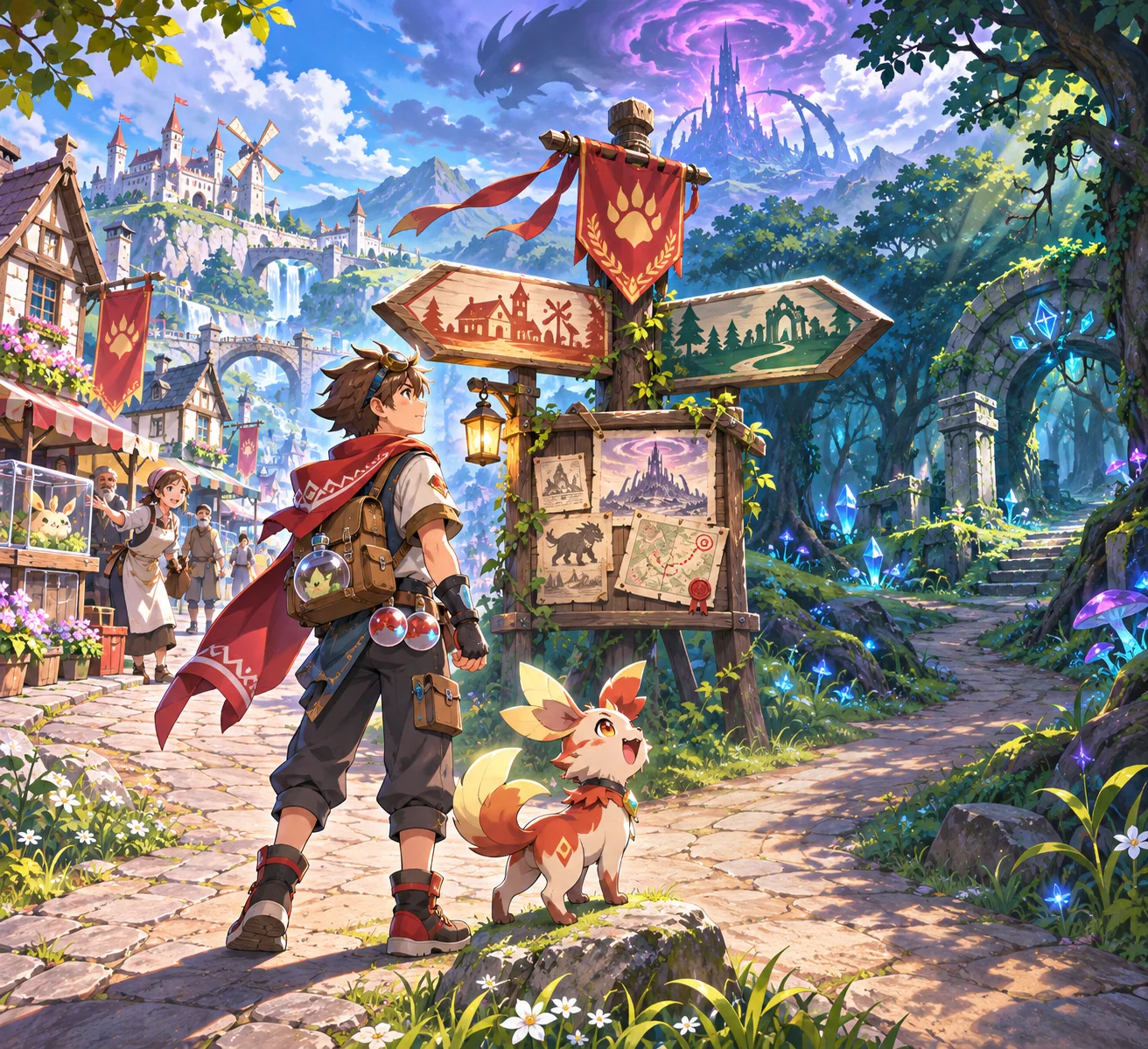
Ask playtesters to predict what a choice will affect. If their expectations differ from the later callback, either signal the consequence more clearly or change the story state. Also test repeat visits, reloading after a milestone, and any feature that lets players revisit old routes. Persistent choices need consistent behavior across the whole campaign.
For a related way player decisions can shape creature encounters, see the monster-taming negotiation guide. SEELE AI can help outline an original campaign, but quest flags, save persistence, and companion responses need implementation and playtesting.
FAQ
How do you add persistent consequences to monster-taming quests?
Choose a small set of decisions that change future locations, NPC responses, available services, or companion reactions. Record each outcome as an explicit quest state and include a later callback. Test the full campaign paths so outcomes remain consistent and the main story can still be completed.
What should a quest choice change?
A choice can change a route, a community service, a relationship, a reward, or how a later encounter begins. Pick consequences that match the stakes and show the immediate result. Keep alternatives viable so players can make a different choice without being punished by an unclear dead end.
How can companion bonds reflect campaign choices?
Let companions react to a few meaningful events, promises, or acts of care rather than every small action. Show the player what the companion noticed and reflect it later through dialogue, behavior, or a team interaction. Test bond changes across save reloads and alternate quest routes.
How do you test a branching quest campaign?
List each major choice, immediate effect, later callback, and completion condition in a consequence matrix. Replay each path from a clean save, skip optional quests, revisit locations, and reload after milestones. Look for missing callbacks, contradictory dialogue, or branches that prevent campaign completion.