Establish an operation and resource baseline
Define what a run carries forward: ammunition, equipment condition, injuries, information, or team readiness. Give each resource a clear scale and recovery rule. Route choice matters when it changes something the player will notice in this operation or a later one.
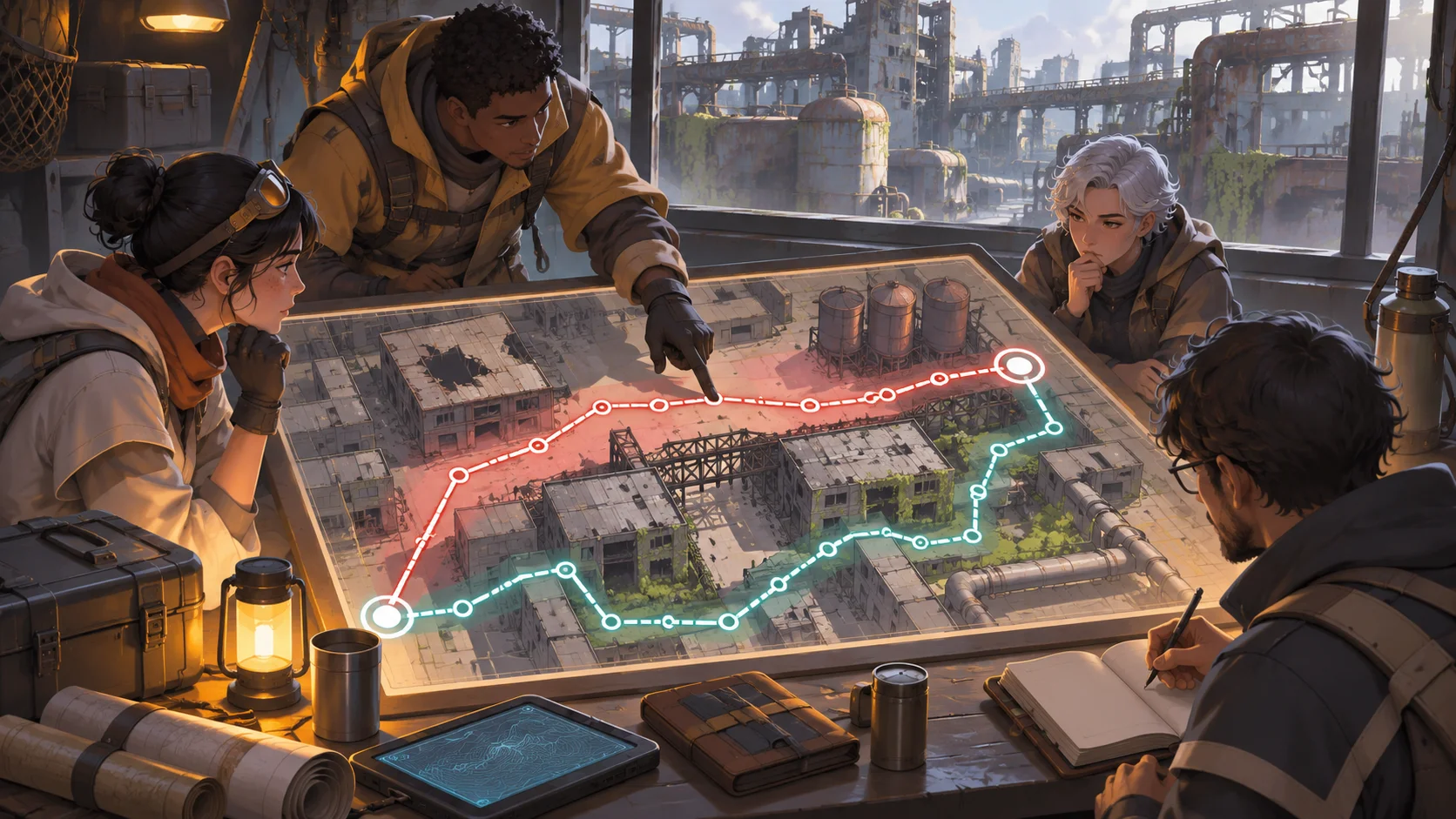
Start each operation with a clear objective and several viable approaches. A route may differ in travel time, visibility, cover, equipment needs, or available intelligence. Avoid labeling one route as “easy” if the actual tradeoff is a resource cost the player cannot see.
The official GROUND BRANCH listing describes non-linear missions and multiple entry points. Its campaign format and effects on future engagements are marked as planned or upcoming. This provides tactical-shooter context only; the run structure here is original. See the official listing for the genre context.
Design route choices with distinct risks
Show route information before deployment. A map can indicate likely exposure, a locked approach, or the chance to gather intelligence. Keep uncertainty where it creates tension, but communicate its range so a surprising result does not feel like a hidden rule.
Give the branches different strengths rather than one optimal route. A longer approach might preserve equipment but consume time; a direct route may start closer to the objective but reveal less of the area. Let loadout and team state influence the choice.
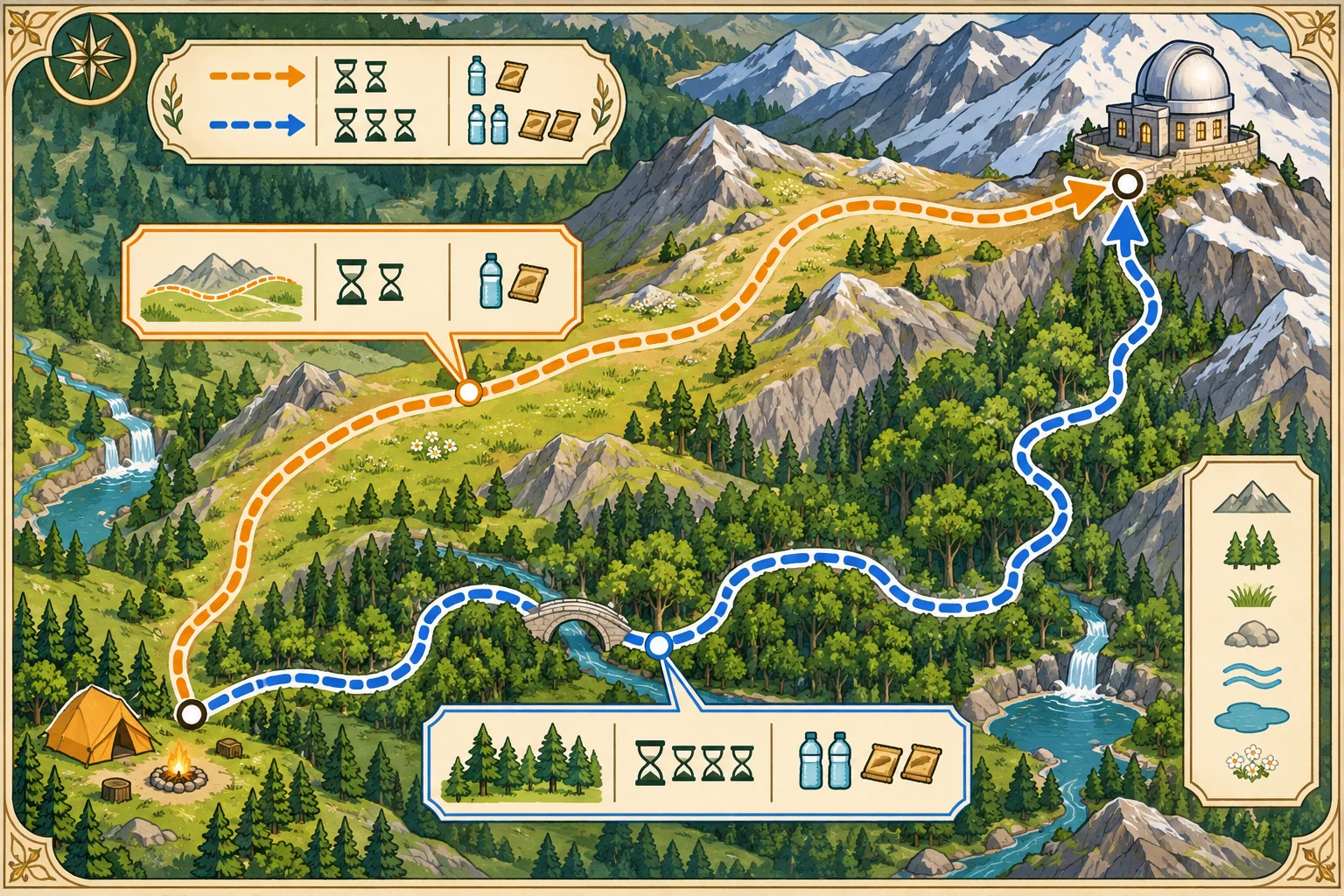
Make route outcomes legible during play. Update the map when the team discovers a new passage or blockage, and preserve a record of why the plan changed. The illustration shows two choices with different travel and supply implications rather than a guaranteed success path.
Carry consequences into later operations
Translate route decisions into a small number of persistent campaign states: intel gained, equipment spent, team readiness, or a new contact. Keep the consequence proportional. A single missed clue should not make later missions impossible unless that risk was clearly explained beforehand.
Use later briefings to acknowledge what happened. A discovered entry point can become available, a noisy approach can increase readiness elsewhere, or an optional supply cache can appear. Show the connection between earlier choice and current condition in the mission summary.
Provide recovery between operations. Players might resupply, repair, choose a safer assignment, or accept a cost to restore readiness. A run should remain tense without compounding one early mistake until there is no viable next move.
Test tactical clarity and campaign recovery
Replay a short campaign with different route choices and equipment plans. Track route selection, mission duration, resource use, objective completion, and later readiness. Ask players which information influenced the choice and what they expected the next operation to change.
Test a blocked route, incomplete objective, lost equipment, and a weak team state. Make sure the campaign offers a response such as alternate deployment, resupply, or a lower-risk mission. Verify that saves and restarts preserve the correct run state.
Accept the campaign when route choices create distinct but fair consequences and players can recover between operations. See the encounter planning guide for spatial challenge principles. AI can help brainstorm route branches; mission balance and persistence need implementation tests.

FAQ
How do you design route choices for a run-based tactical shooter?
Give each route a visible tradeoff in time, exposure, information, equipment, or team readiness. Preserve uncertainty without hiding the cost. Test whether players can explain their choice and whether it creates a meaningful difference during the mission or later. This keeps the consequence clear and helps players plan their next step.
How can route choices affect future operations?
Carry forward a few clear states such as gained intel, spent supplies, team readiness, or unlocked approaches. A later briefing can acknowledge the result and present a new choice. Keep consequences proportional and preserve at least one viable follow-up operation.
How much information should a tactical route map reveal?
Show enough to compare meaningful tradeoffs, such as distance, known obstacles, and likely supply needs. Keep some uncertainty for discovery, but give it a clear range or signal. Update the map when players learn new information during an operation. This keeps the consequence clear and helps players plan their next step.
What should you test in a run-based tactical campaign?
Replay the campaign with different paths and equipment plans. Track choices, resources, completion, and later readiness. Test blocked routes, incomplete objectives, and weak team states, then verify players can understand consequences and recover between missions. This keeps the consequence clear and helps players plan their next step.