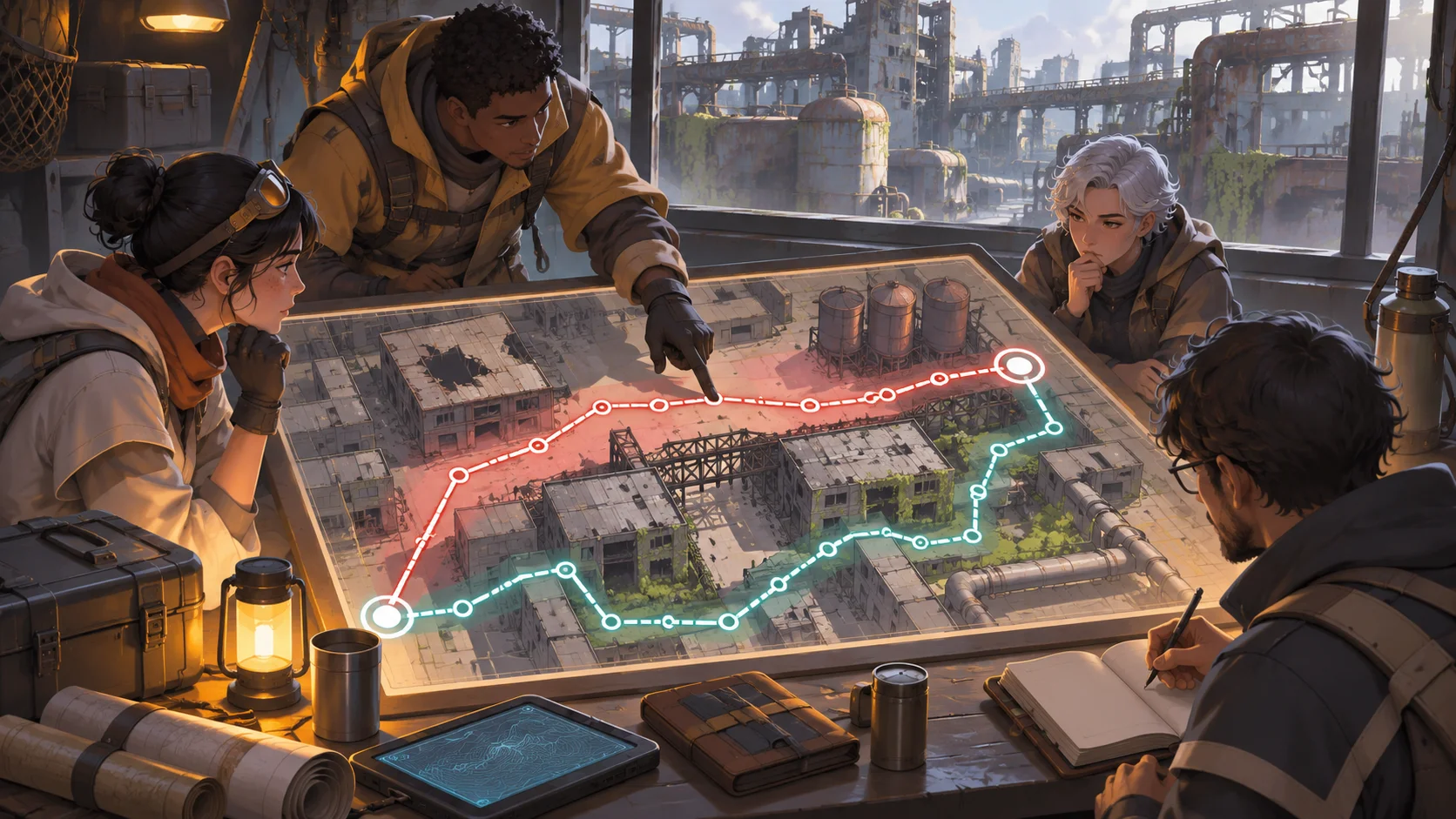
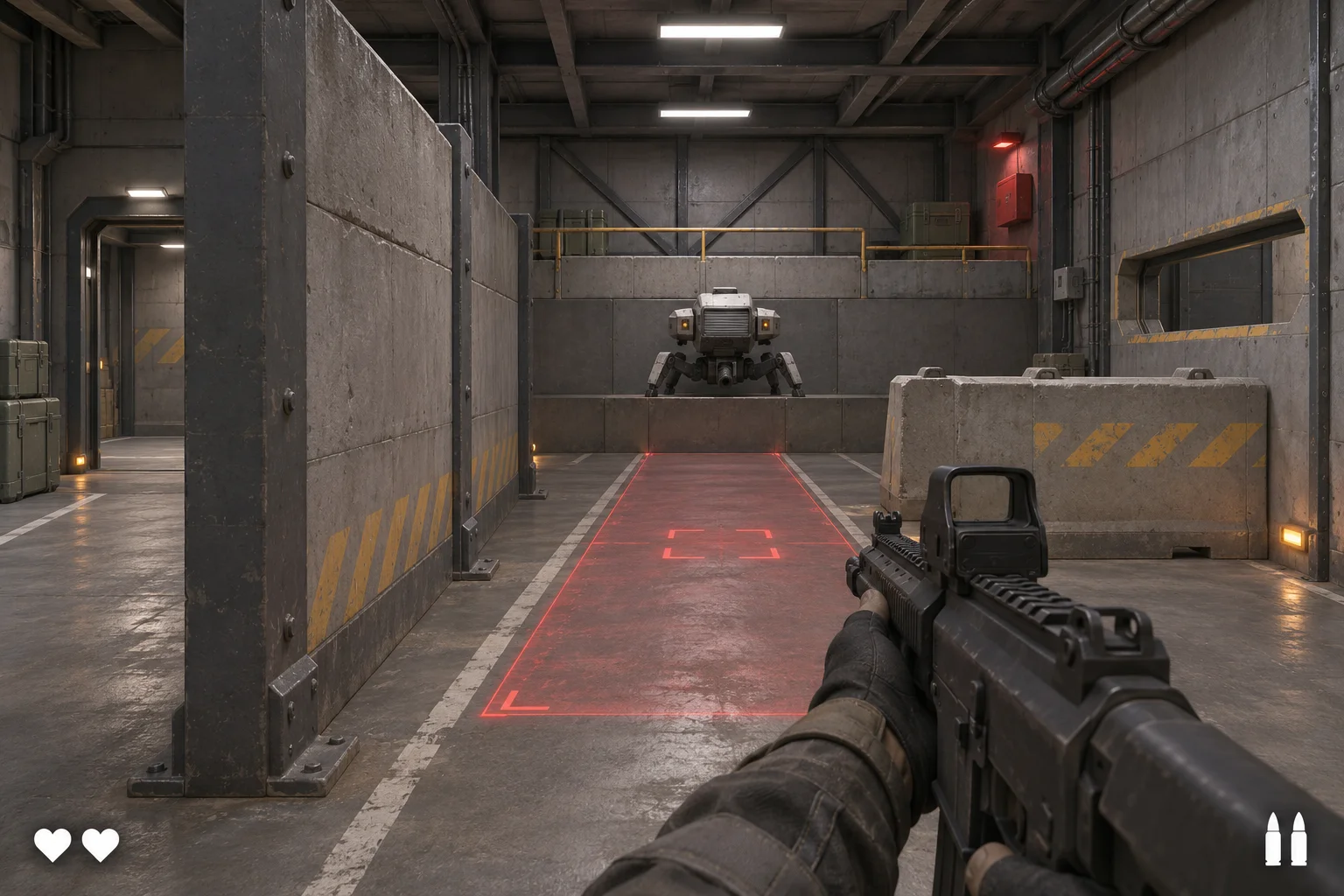
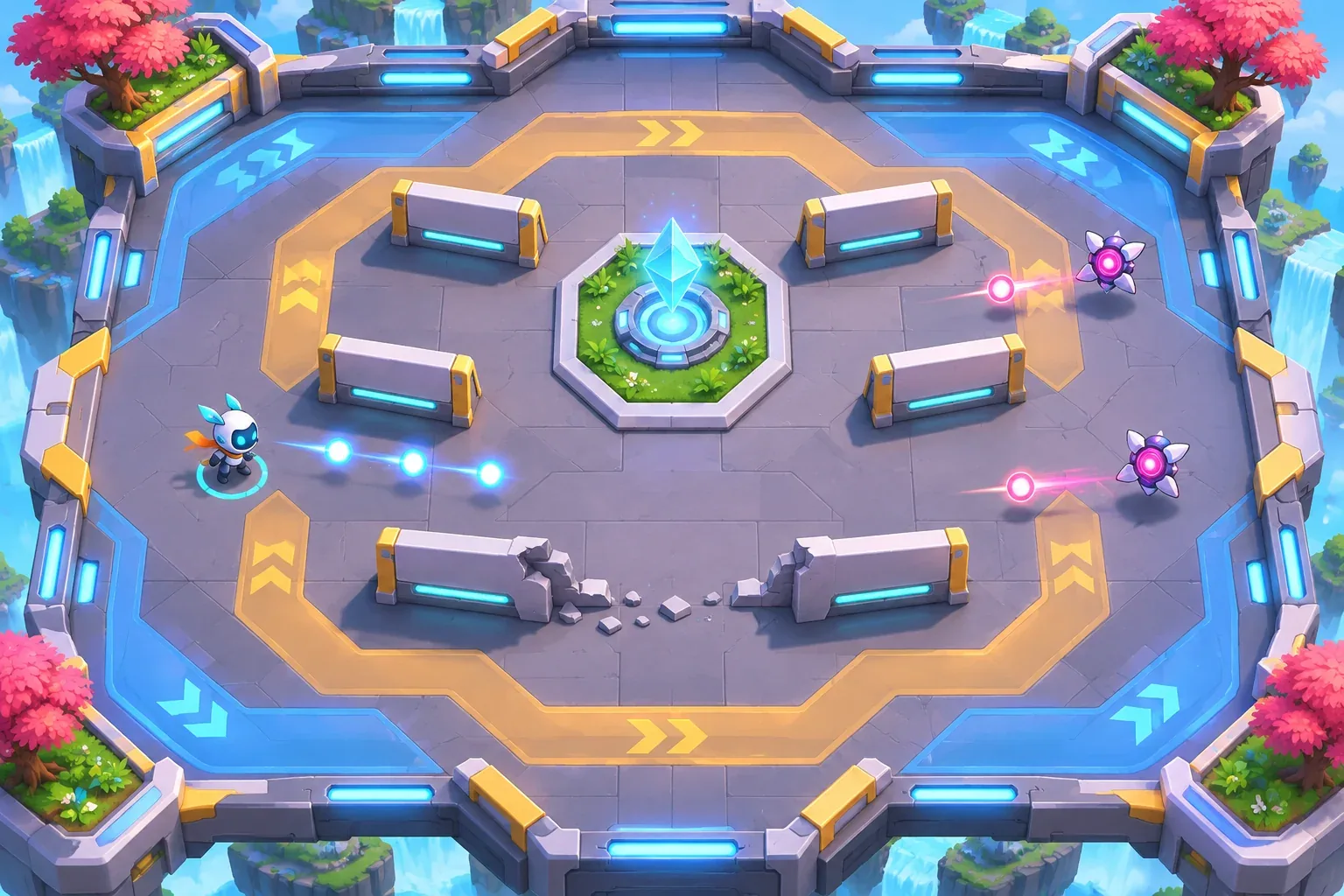
Distinct playable characters make a tactical shooter more interesting when they change team decisions. A Scout might reveal nearby objective activity, an Anchor might place short-lived cover, and a Support character might carry one resupply charge. Those roles should create options while keeping the same basic movement, health, and objective rules for everyone.
The roster, abilities, and costs in this article are fictional design examples. They are not real-world tactical guidance, a playtest, or a result generated by SEELE.
Keep the combat baseline shared
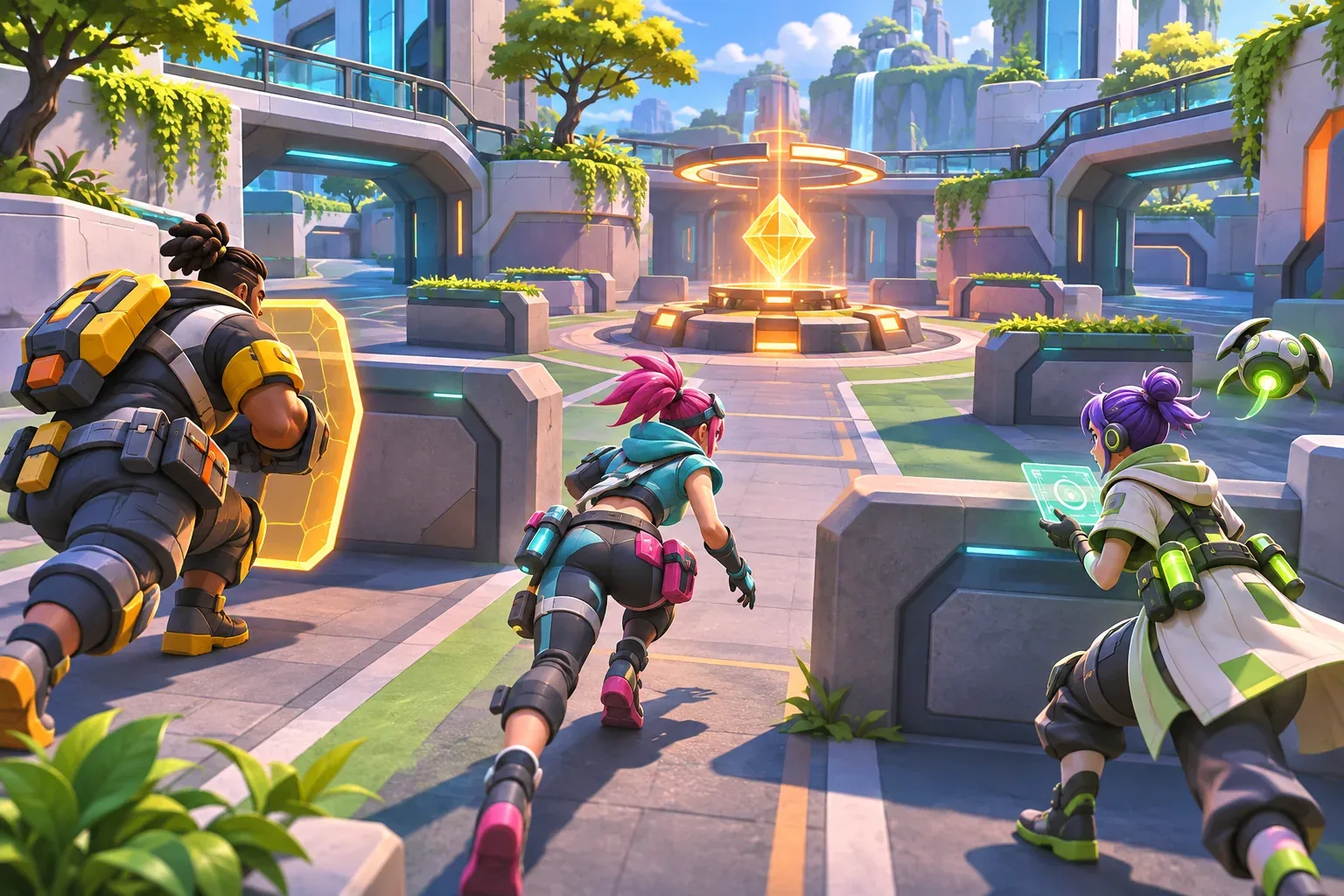
Start with one character and a small objective loop. Write down the rules that every character shares: health, movement speed, interaction time, starting resources, and the conditions for winning a round. A shared baseline helps you see whether a new role adds a decision or simply receives a hidden advantage.
For this fictional example, use a compact 3v3 round with one neutral relay objective. A team scores by holding the relay long enough to complete its capture bar; first to three round points wins. All characters start with 100 health, the same movement speed, one primary equipment slot, and one utility slot. These numbers only make the paper exercise concrete.
Keep the objective useful to different roles. A character who gathers information may help a team decide when to rotate. A defender may make a brief approach safer. A support character may help a teammate recover after the team spends a resource. If an ability only improves a duel, check whether the role still matters when a round is decided by the objective.
Give each character one clear job
Begin with three roles whose actions are easy to explain and counter. Do not give every character several abilities, passive bonuses, and unique equipment at once. One signature ability per role gives you a smaller balance surface and clearer feedback from a prototype.
| Role | Signature ability | Limit | Counterplay |
|---|---|---|---|
| Scout | Briefly pings nearby activity around the relay | One short scan charge per round | The ping gives an area, not an exact opponent position |
| Anchor | Deploys a temporary waist-high cover beacon | One beacon; it expires after a short interval | The team can wait, flank, or use another approach |
| Support | Offers one resupply charge to a nearby teammate | One use per round; cannot restore health | The ability helps resource planning but does not win a duel |
Describe each ability with four pieces of information: what it changes, when it can be used, how long it lasts or how many charges it has, and how an opponent can respond. If you cannot state the counterplay, the ability may be too broad for a first prototype.
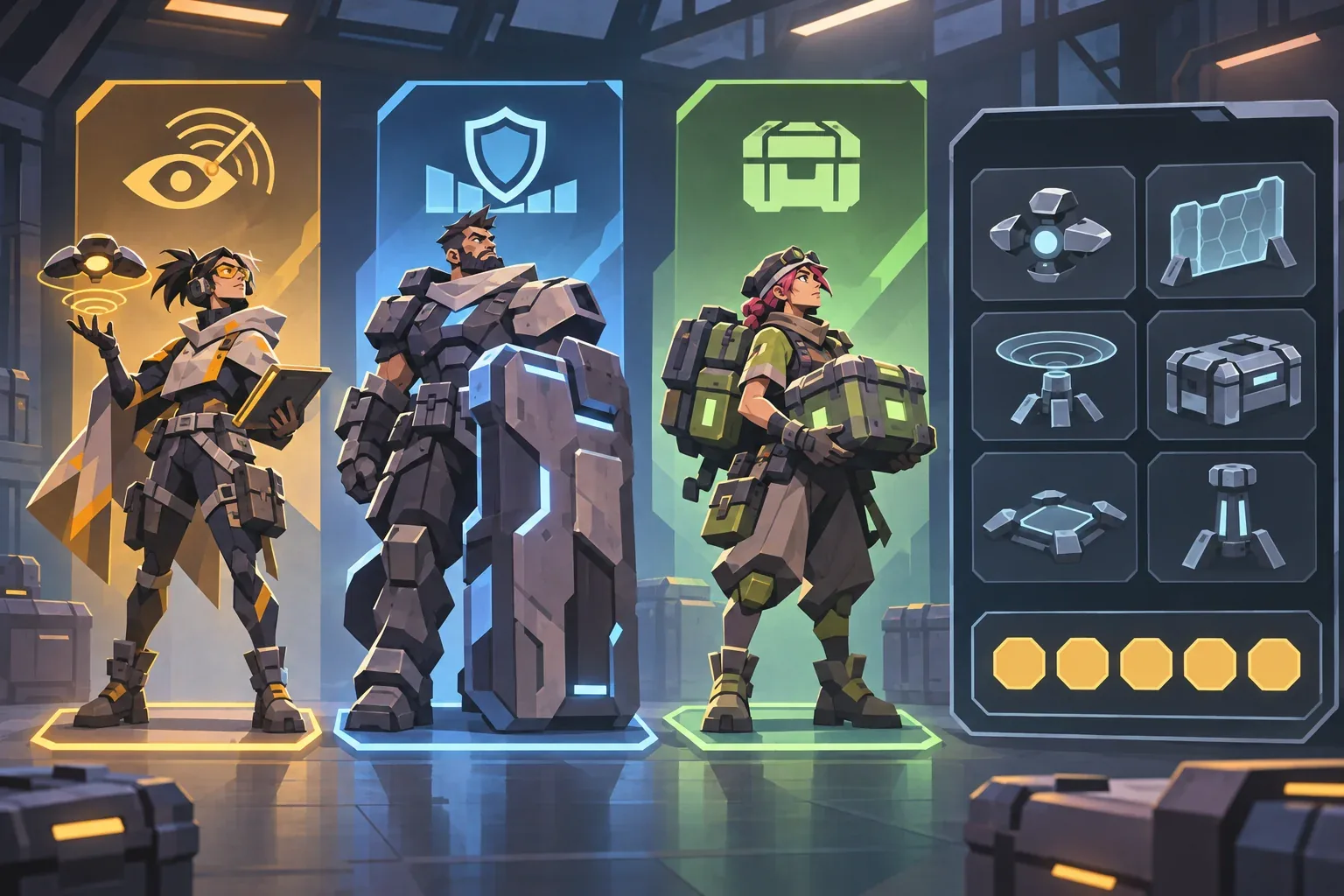
Make loadouts a trade-off
Loadouts are easier to compare when each choice spends from a visible budget. For a simple paper model, give every character six equipment points. A heavy primary archetype costs three, a light primary costs two, and utilities cost one or two. The exact values are invented for this example. Their purpose is to make trade-offs visible, not to prescribe a balance formula.
| Choice | Point cost | Trade-off to test |
|---|---|---|
| Heavy primary archetype | 3 | More reliable at a narrow role; leaves fewer points for utility |
| Light primary archetype | 2 | More budget for team utility; lower reach in the fictional model |
| Observation utility | 2 | Provides a delayed clue; takes a larger share of budget |
| Smoke-like visual screen | 2 | Interrupts sightlines for both teams; does not deal damage |
| Simple decoy | 1 | Creates a brief false cue; low cost but easy to ignore |
Use the same budget for all roles at first, then add role-specific restrictions only when the shared choices fail to support distinct play. A six-point cap stops a character from taking every strongest option in this toy model. It does not prove the roster is balanced; you still need to compare actual round decisions.
Keep equipment names and descriptions fictional and focused on game systems. Test information, timing, visibility, and resource costs rather than trying to mirror real weapons. The design goal is readable choices inside the game, not real-world instruction.
Prompt for a small roster
When using an AI game maker to explore a roster, state the shared round loop before requesting character differences. SEELE's official AI Game Maker page describes text-based game creation and follow-up iteration. The characters and equipment below are your proposed design, not a documented built-in feature.
Create a compact fictional 3v3 arena shooter prototype with one neutral relay objective. All characters share 100 health, the same movement speed, one primary slot, and one utility slot. Add three readable roles: Scout has one short area ping per round that reveals an approximate zone; Anchor deploys one temporary low cover beacon; Support gives one nearby teammate a single equipment resupply. Each ability must have a clear duration or charge limit and counterplay. Give each player a six-point loadout budget: heavy primary costs 3, light primary costs 2, utilities cost 1 or 2. Show remaining points before a round. Keep the arena compact, the objective rules identical for all characters, and the abilities non-lethal. Do not add more characters, progression perks, or monetization yet.Review the first result for four things: whether the player can distinguish roles before choosing, whether abilities have clear limits, whether loadout points add up correctly, and whether a round still revolves around the relay. Ask for one correction at a time and preserve the shared baseline while testing it.
Compare roles in the same scenarios
Do not compare characters by a single score such as eliminations. Give each one the same fictional situations and ask whether it offers a useful, counterable contribution. Keep team composition and equipment constant when you change one ability value. That makes a balance revision easier to interpret.
| Scenario | Scout contribution | Anchor contribution | Support contribution |
|---|---|---|---|
| Team approaches the neutral relay | Shares a rough nearby activity zone | Creates a brief protected angle | Preserves one teammate's utility for later |
| Team must hold the relay briefly | Checks one approach before the scan expires | Helps shape a temporary defensive position | Supplies one chosen utility if the team spent early |
| Team retreats after a lost round | Offers a clue for the next route | Provides no permanent barrier or free escape | May have spent its only charge already |
These are design questions, not results from a playable match. After you have a real prototype, record what happened and under which conditions. Until then, keep the matrix labeled as a plan. Change one value, such as the Scout's scan duration, and check whether the information is useful without becoming exact or constant.
Once the basic roster produces understandable choices, add a second map or a new utility. Keep a change log for ability duration, range, charges, and cost. A roster becomes easier to tune when a player can tell what changed between versions and why.
Tactical shooter character and loadout FAQs
How many playable characters should I start with?
Three is enough to test different team jobs such as information, temporary defense, and resource support. Keep the shared combat baseline fixed while you compare them.
Should every character have unique equipment?
Not at first. Give each character one signature ability and let the rest of the loadout come from a shared budget. That makes role differences easier to inspect and balance.
How do I stop one loadout from taking every strong option?
Use a point cap, clear costs, and slot limits. Then compare the choices in the same objective scenarios. The cap prevents a simple stacking problem but does not replace testing.
What makes a character ability fair?
Players should understand what it changes, when it can be used, how long it lasts, and what the other team can do about it. Keep those limits visible in the prototype.
How should I balance a new roster?
Use repeatable scenarios with the same objective and team setup. Change one ability or loadout cost at a time, then record the conditions and observed result once you have a playable build.
Make your own tactical shooter
Start with a shared objective loop, three roles, and a loadout budget players can understand. Give each character one distinctive but counterable contribution, then revise one variable at a time. For a general game-creation starting point, explore the SEELE AI Game Maker and bring this roster plan into your own prototype brief.