A second business model can give a cleaning-company management game a new planning loop, but it also changes contracts, schedules, equipment use, staff capacity, and cash flow. A recurring service plan can complement one-off jobs when the existing game already tracks customers and visits. Keep one shared schedule and one economy, define how recurring work behaves when plans go wrong, and introduce it as an optional first slice.

This guide proposes an expansion to an existing cleaning-business game. Customers, service plans, workers, equipment, and outcomes are invented. No source code, build, save, or simulation was available. The checklists are planned validation, not a report of tested profitability or scheduling.
Map one-off contracts and business capacity
Trace a current job from customer request to quote, booking, staff assignment, travel, equipment use, cleaning result, invoice, and payment. Identify which systems own the calendar, worker hours, vehicle capacity, supplies, contract status, customer satisfaction, and cash. Capture a normal day with jobs overlapping travel or equipment needs. Save a copy before changing the business model.
Write down how existing jobs are canceled, delayed, rescheduled, refunded, or marked incomplete. If staff can be upgraded or equipment expanded, identify where the current game checks limits. A recurring plan should create future scheduled work through those existing systems; it should not reserve phantom staff or skip travel and setup rules.
| System | Baseline | Protect |
|---|---|---|
| Contracts | Customer, scope, price, status | One-off job lifecycle |
| Scheduling | Visit time, duration, travel | Real staff availability |
| Equipment | Tools, vehicle, maintenance | Current capacity checks |
| Staff | Skills, shifts, assignments | Work hours and progression |
| Finance | Costs, invoices, refunds | One ledger and transaction owner |
Define what a recurring service promises
Choose one plan type and make its terms concrete: service scope, location, cadence, start date, price, included visits, exclusions, renewal, cancellation, and late or missed visit behavior. Avoid calling a plan “unlimited” if each visit uses worker time, supplies, travel, and equipment. The player should know what is scheduled and what the customer expects before accepting the contract.
In the fictional Brightline Cleaning example, a small office requests a weekly clean with a defined set of rooms and a monthly deep-clean visit. The example uses invented prices, worker availability, and outcomes. A real game may not model rooms or a monthly schedule. The feature should express only what its existing service and time systems can actually support.
Keep the recurring plan’s definition separate from each visit instance. A plan describes future terms; a visit records one date, assigned staff, status, and result. This makes cancellation and history clearer. Decide whether a canceled plan removes future visits immediately and what happens to a visit already in progress. Never silently charge for work the game marks canceled.
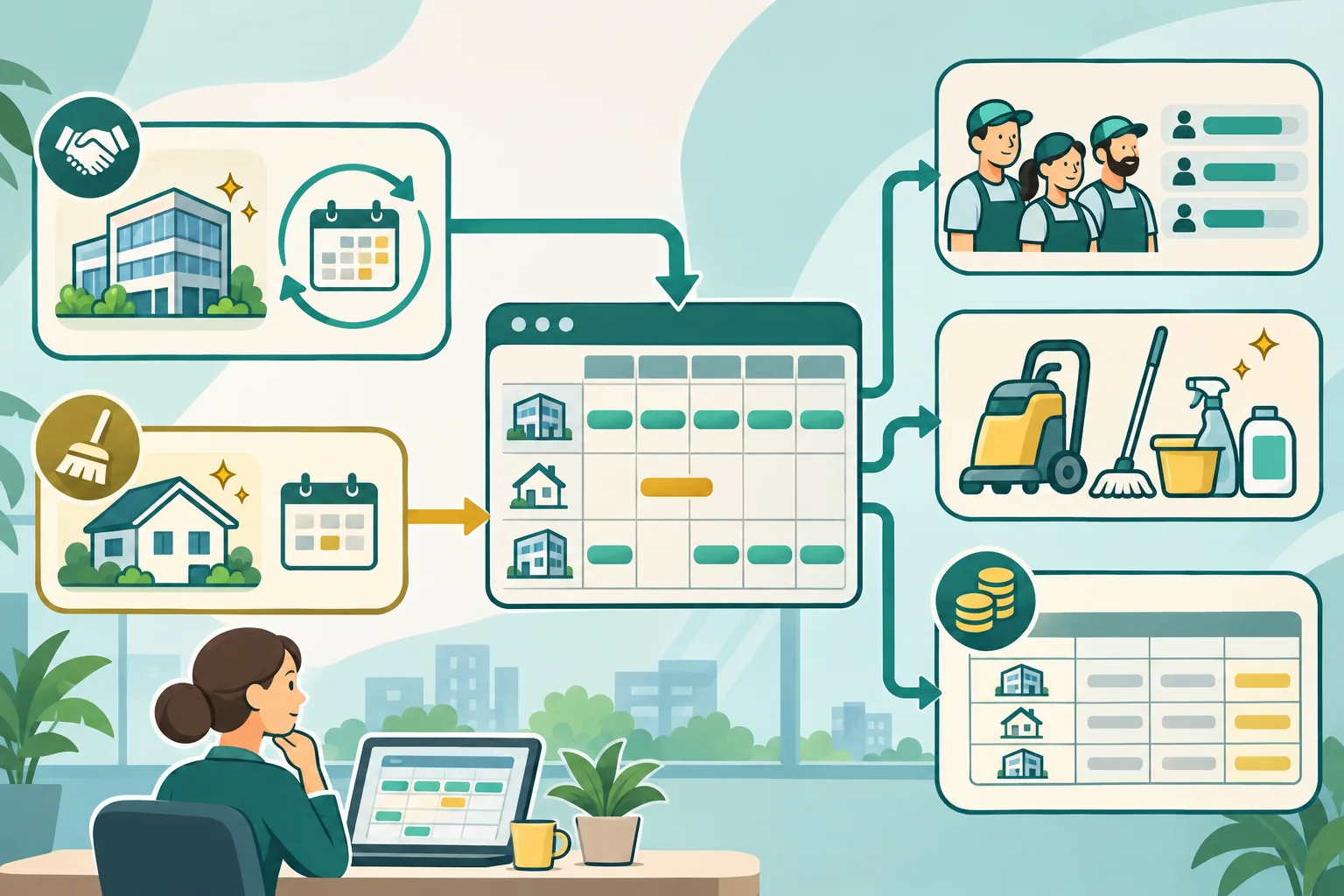
Use one schedule for all business models
One-off jobs and recurring visits should compete for the same staff hours, travel windows, vehicle space, and equipment. When a plan is accepted, preview the next scheduled visits against existing jobs. If a recurring slot cannot be serviced, define whether the game suggests a different time, warns before signing, or allows the player to negotiate. Do not let recurring work bypass the workshop’s existing capacity constraints.
Resolve the moment a visit is committed. A scheduler may create a visit record when a day begins, when the player accepts a plan, or at another existing boundary. Pick one and keep it stable across reloads. If a customer changes a date or the player cancels a plan, update only the affected future visits. Preserve completed visit history and the original contract terms for reference.
For workers and equipment, use the current assignment and maintenance owners. If a required machine breaks, the plan should follow the same repair or substitution rules as a one-off job. If staff are absent, explain whether a visit is delayed or missed. Tests should include several contracts whose visits land on the same morning, not just one easy schedule.
Define billing, cancellation, and missed visits
Choose whether customers pay per visit, per billing period, or after a completed service. Reuse the existing invoice and cash ledger. State how refunds work if the player cancels after a charge or if a scheduled visit cannot be completed. Keep one transaction ID for each bill so a save reload or repeated event does not collect payment twice.
Make plan cancellation and renewal explicit. A player may stop future visits while a current appointment remains active. A customer may decline renewal. If the game has reputation or satisfaction, decide which event affects it and avoid using a hidden penalty that does not appear in the contract terms. Keep the original one-off customer path working unchanged.
| Event | Rule to decide | State to retain |
|---|---|---|
| Visit completed | When is service accepted? | Visit result and invoice ID |
| Staff absent | Reschedule, substitute, or miss? | Original slot and new status |
| Equipment failure | Repair or alternate tool? | Required equipment and repair state |
| Customer cancellation | Stop current or future visits? | Contract and cancellation timestamp |
| Renewal | Auto-renew or ask first? | Term boundary and consent state |
| Billing | Per visit or period? | One ledger transaction per charge |
Keep definitions and save progress compatible
Store a stable plan ID and version with each contract. Keep authored service terms separate from a player’s active plan and its visit records. If an existing save lacks recurring-plan fields, load it with no recurring contracts and leave one-off jobs intact. Test a save made before signing, during the term, after cancellation, and after a visit completes.
If the project uses Godot, its official Resource documentation describes serializable data containers that can be saved on disk. This is an engine-specific capability, not a required cleaning-contract format. Godot’s saving tutorial demonstrates one approach where persistent objects return data for serialization and loading. It does not establish the target game’s calendar, billing, or migration rules.
Ask AI to inspect contract, calendar, staff, equipment, finance, and save files first. Require a proposed state model and file list before edits. Limit the first release to one plan type, one cadence, the existing schedule, and one visible contract panel. Keep upgrades, customer generation, staff AI, and all one-off job rules outside the change unless code inspection shows a dependency.
Test capacity, cancellation, and revenue honestly
Test a new save and a copied existing save. Accept a plan that fits, one that overlaps with a full schedule, and one that conflicts with required equipment. Remove a worker, fail a tool, cancel a plan before and during a visit, and reload around billing. Compare the one-off path before and after the change. Record costs and service outcomes rather than assuming recurring revenue means profitability.
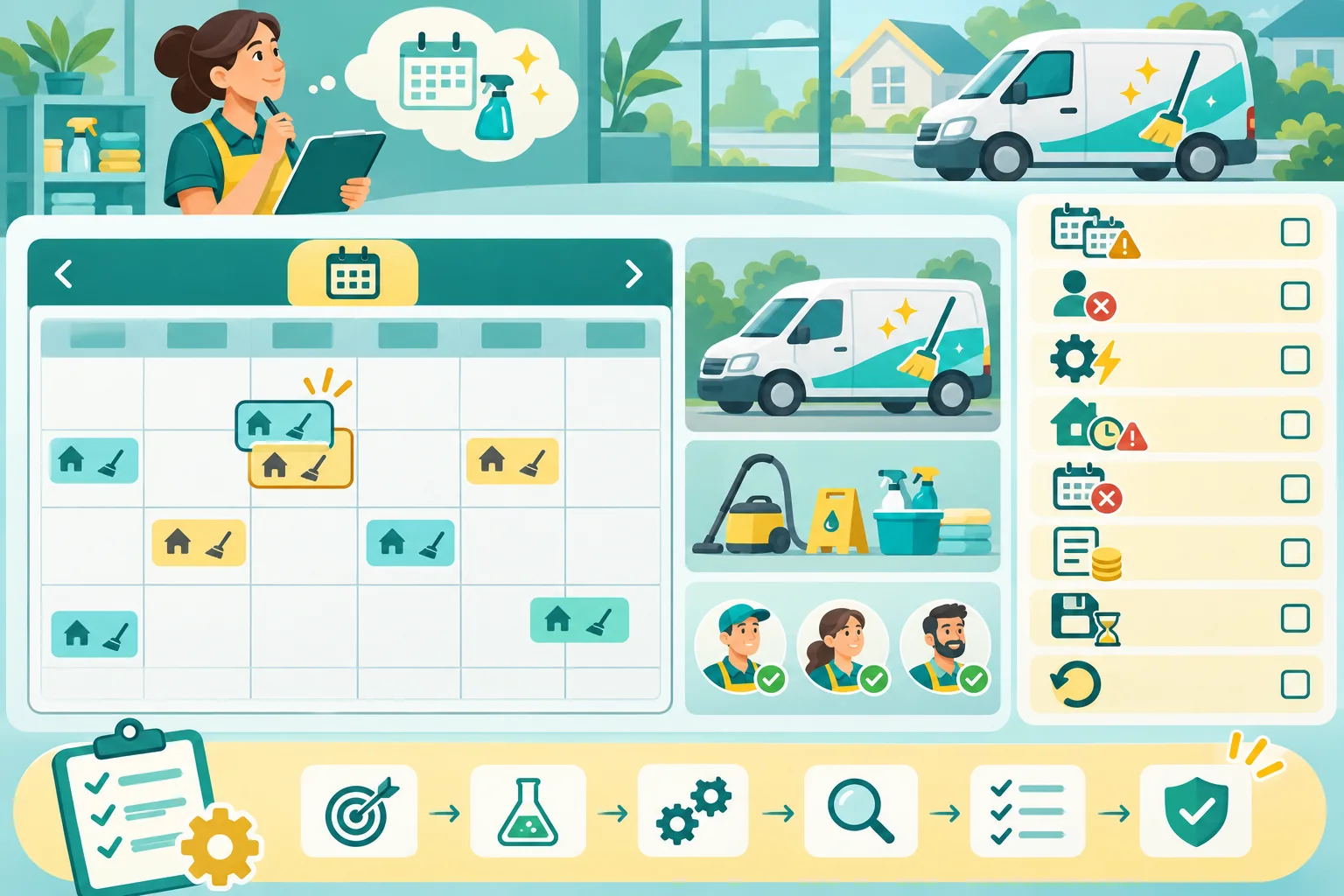
| Proposed check | Action | Evidence |
|---|---|---|
| Capacity | Schedule multiple visits on one day | Staff, travel, vehicle, and equipment assignment |
| Overlap | Accept plan during a full schedule | Warning or rejection reason |
| Missed visit | Remove staff or break required tool | Visit status, customer response, refund rule |
| Cancellation | Cancel before and during appointment | Future visits and current job state |
| Billing once | Reload and retry payment event | Transaction ID and balance delta |
| Old save | Load pre-feature copy | One-off work and safe default |
| Rollback | Restore baseline build | Original contracts and staff progression |
This is a proposed matrix, not an executed test. Record build, save version, plan ID, visit dates, staff and equipment assignments, invoices, cancellation timing, and expected versus actual behavior. A mock calendar cannot prove that a service model is profitable or balanced.
Make recurring work understandable
Show upcoming visits, assigned workers, required equipment, billing timing, and cancellation terms together. Warn about conflicts before accepting a plan, and make missed-visit recovery clear. Let players see how recurring work uses capacity alongside one-off contracts. Keep the expansion optional until the player understands its schedule and obligations.
To explore a separate cleaning-business game concept, try SEELE AI Game Maker. It is a concept tool, not an editor for an existing project.
Frequently asked questions
What second business model fits a cleaning-company game?
A recurring service plan can complement one-off cleanup contracts if the existing game already supports customers, schedules, staff, equipment, and payments. Define the service cadence and scope clearly, and keep it optional. The right model depends on the game’s current loop, not on a generic assumption that subscriptions always improve a business sim.
How should recurring cleaning visits use staff capacity?
Reserve time and equipment through the existing scheduling system. A recurring contract should create a visit demand, not silently bypass travel time, worker availability, or machine limits. Test several plans landing on the same day and define whether the game reschedules, rejects, or asks the player to adjust them.
What happens when a recurring visit is missed?
Define whether a missed visit is delayed, skipped, refunded, or recorded as a service failure. Keep the result visible to the player and consistent with current contract rules. Test staff absence, equipment failure, customer cancellation, and a save reload around the scheduled visit so the same visit is not charged or delivered twice.
How can old saves support the new service model?
Give older saves a safe default with no active recurring contracts and leave one-off job data unchanged. Store a stable service-plan ID and schedule state through the current save owner. Test a copy of a pre-feature save, a scheduled visit, a canceled plan, and a save taken between visits.
Can AI add another business model to my cleaning game?
AI can inspect supplied contract, staff, equipment, scheduling, and economy files, propose a bounded service plan, and draft tests. It cannot validate profitability or workload balance without the real project and executed simulations. Provide baseline saves, capacity rules, an edit allowlist, and rollback revision.
Start with one service plan
Add one recurring contract through the existing schedule, staff, equipment, and billing owners. Make missed visits, cancellation, renewal, and old-save behavior explicit. Test schedule pressure and payment idempotency on copies before expanding the model. Treat Brightline Cleaning and the generated calendar as teaching aids, not evidence of a working or profitable business.