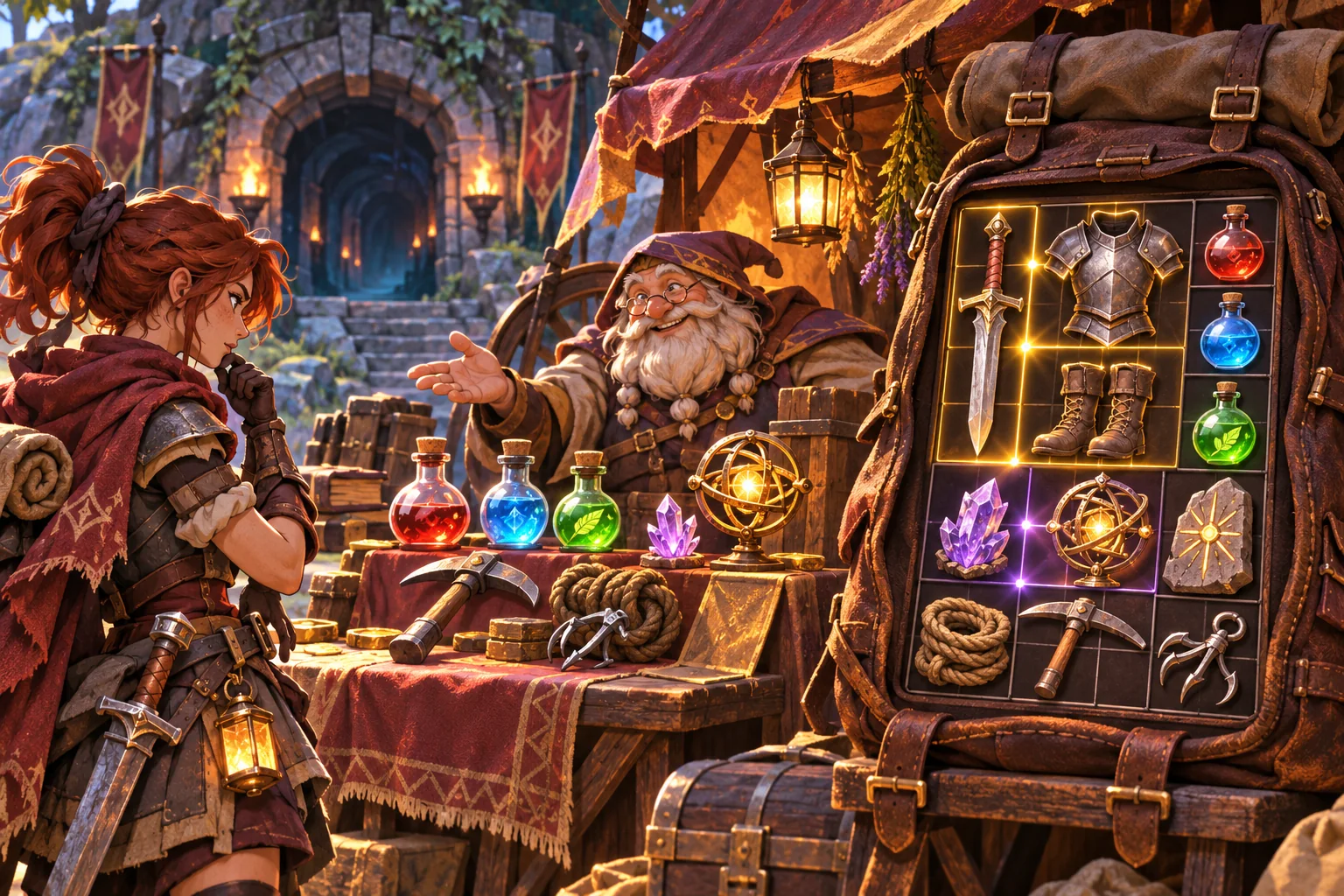
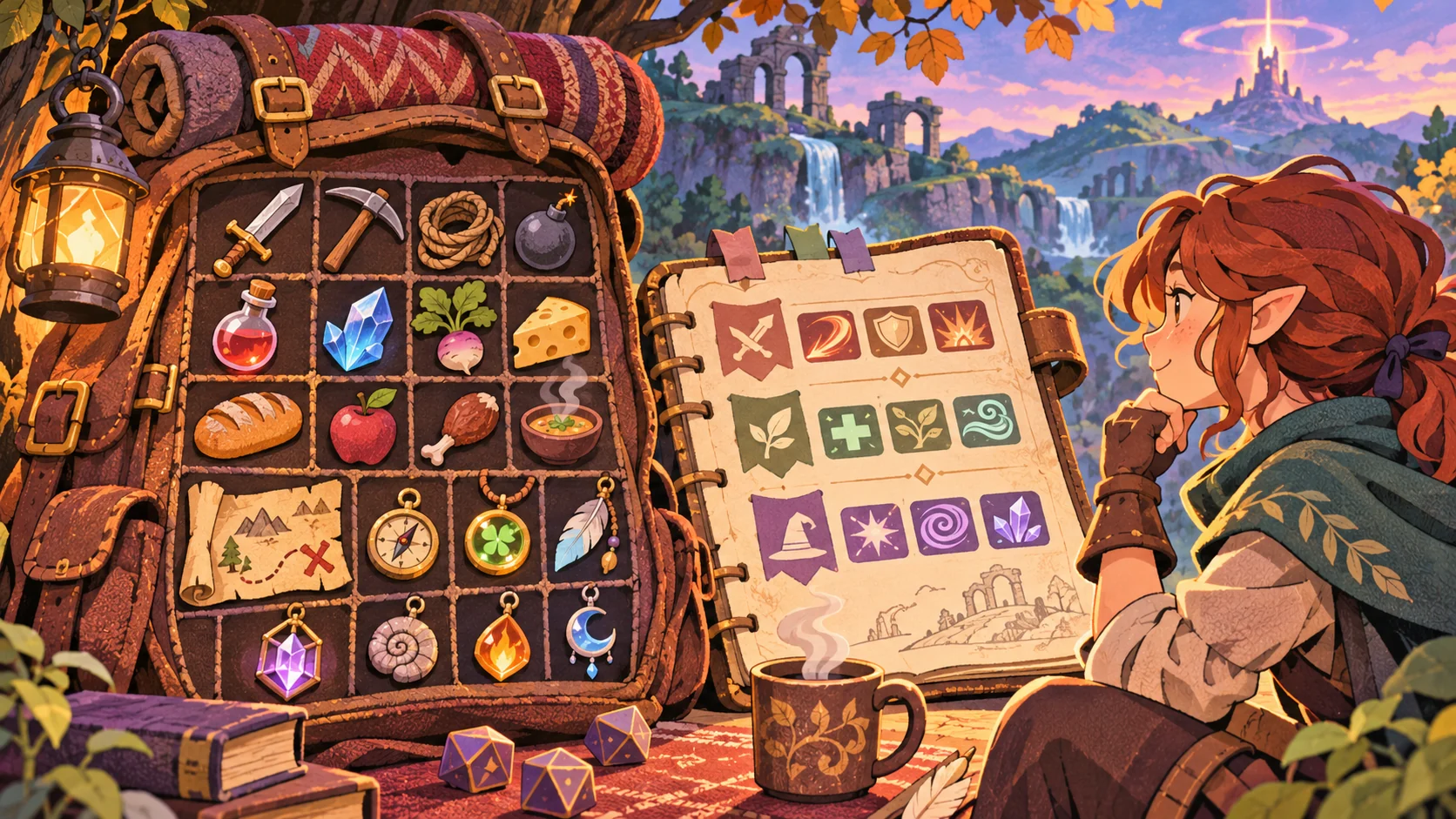
Make shop offers reshape inventory decisions through placement, adjacency, and scarcity rather than simply adding stronger items. Start with one bounded prototype, make its rules visible, and connect player choices to outcomes the team can observe. Expand the system only after the core loop works in a short repeatable test.
Map the inventory and run baseline
Document grid dimensions, item shapes, adjacency effects, current currency, and the run’s existing reward loop. Observe how often players rearrange the pack and which constraints already create interesting choices. The official Backpack Hero listing describes item placement affecting power and includes buying and selling items; this supports context only, while the strategy-changing shop model here is original.
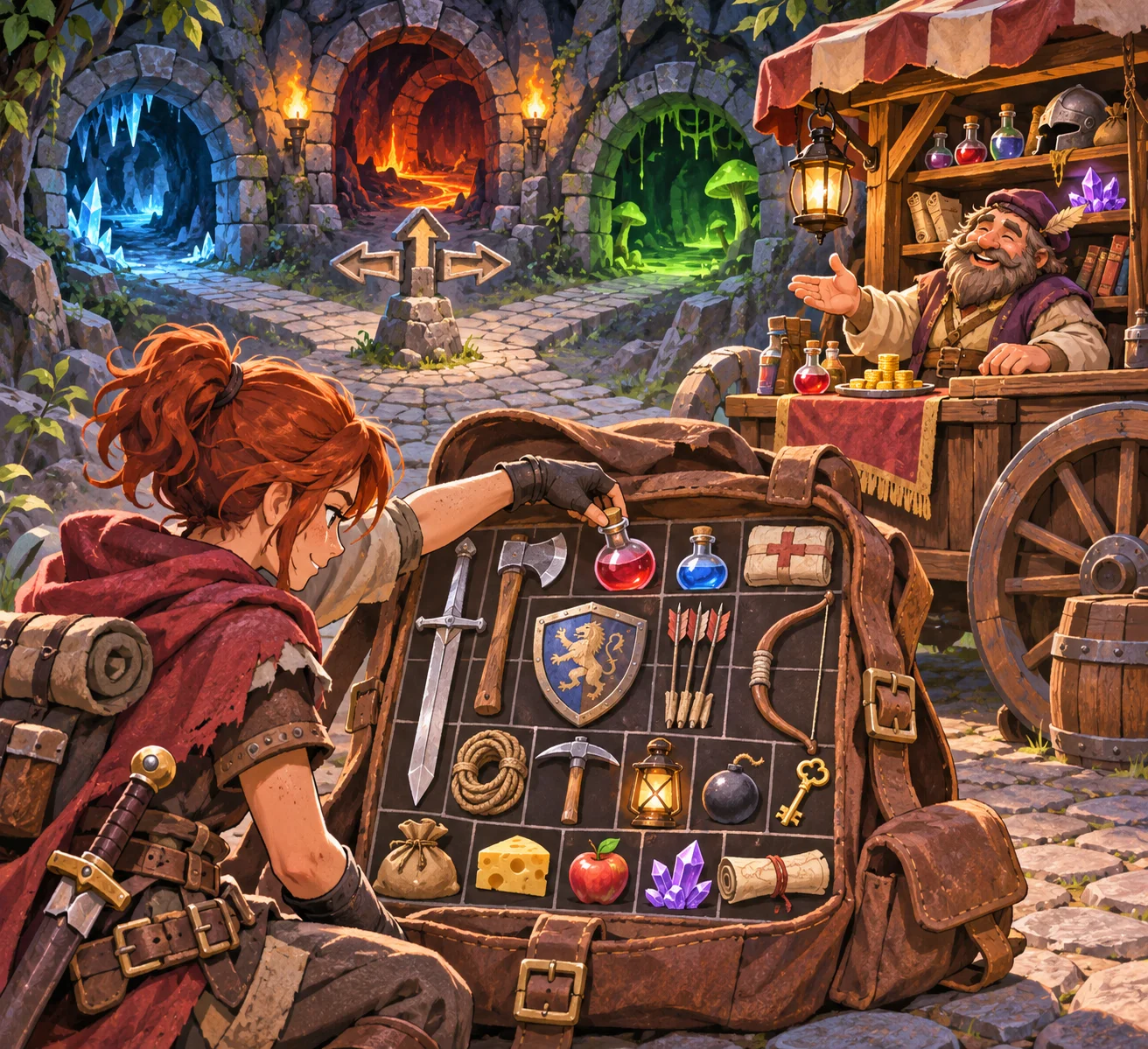
Treat each offer as a spatial problem. A long weapon may provide reach but consume a valuable row; a charm may boost adjacent items but force the player to move a reliable tool. Show the item silhouette and relevant adjacency before purchase so the player can test a placement mentally. See the Backpack Hero official Steam product listing for the scoped genre context.
Design offers around spatial choices
Make shop inventory create alternatives rather than a direct upgrade ladder. Offer a few items with different shapes and synergies, and make the player decide whether to replace, store, sell, or leave an item behind. If the bag is full, communicate the consequence before currency is spent.
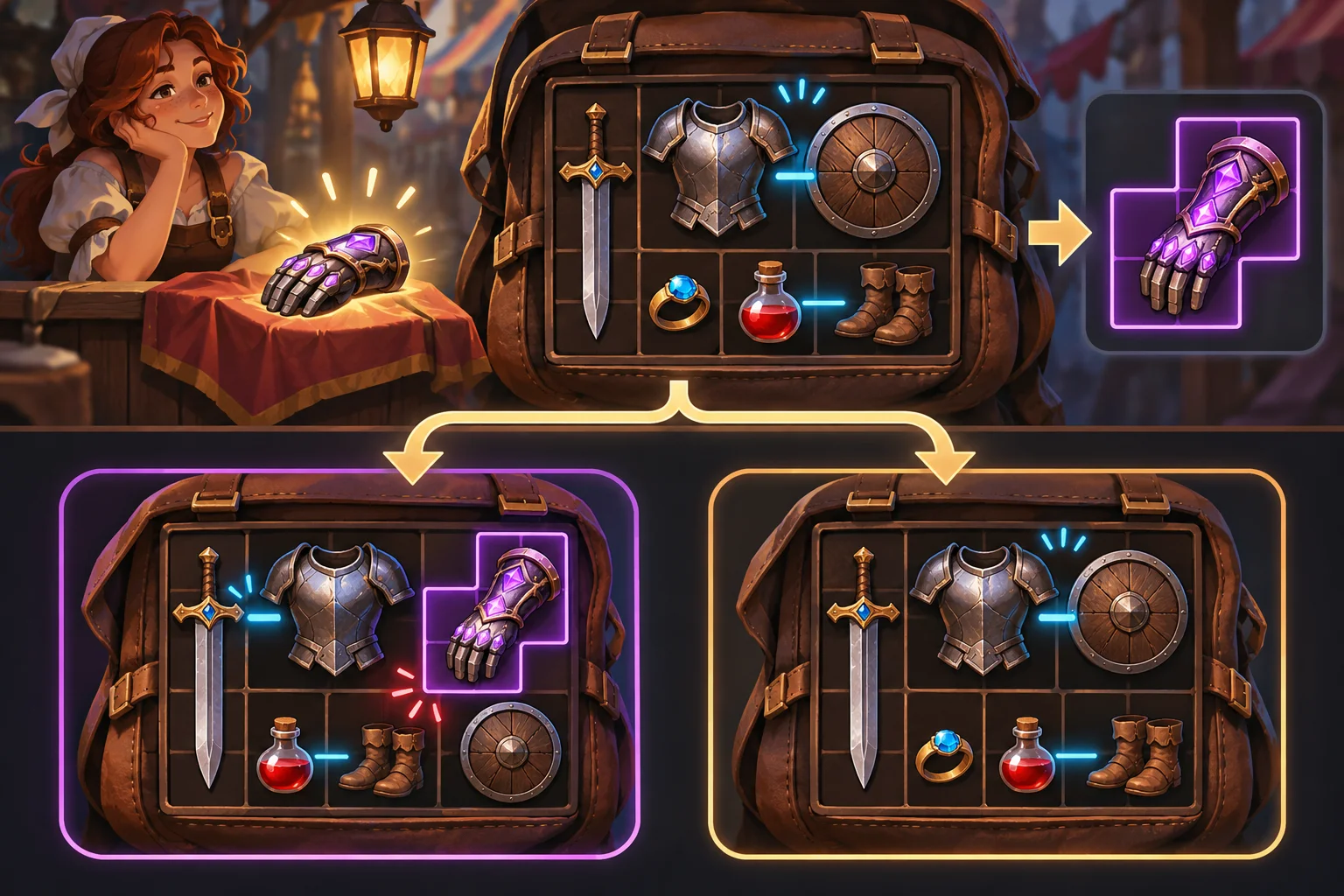
Price according to the run economy and the opportunity cost of space. A powerful item can be cheap if it is awkward to place or consumes a scarce resource, while a compact utility item can be valuable because it preserves flexible layouts. Show the price and any ongoing effect at the same time.
Price items to force a strategy decision
Use a limited budget to ask a tradeoff the player can explain: buy a synergistic item now, save for a later offer, or sell a piece that no longer fits the build. Keep enough information visible about upcoming encounters to make preparation useful without revealing every random outcome.
Vary shop placement and stock carefully. A guaranteed early shop can teach the rule, while later shops can introduce rarer shapes or temporary discounts. Preserve a baseline viable run if the player declines every offer, and avoid making a single shop purchase mandatory for survival.
Test purchases and later encounters
Test the same seed with different purchases and record pack layouts, currency remaining, and decisions in the next encounter. Include an already-full inventory and verify that replacing or selling items is clear. Ask players to explain why they bought or passed on each offer, then tune shape, price, and effect based on actual reasoning.
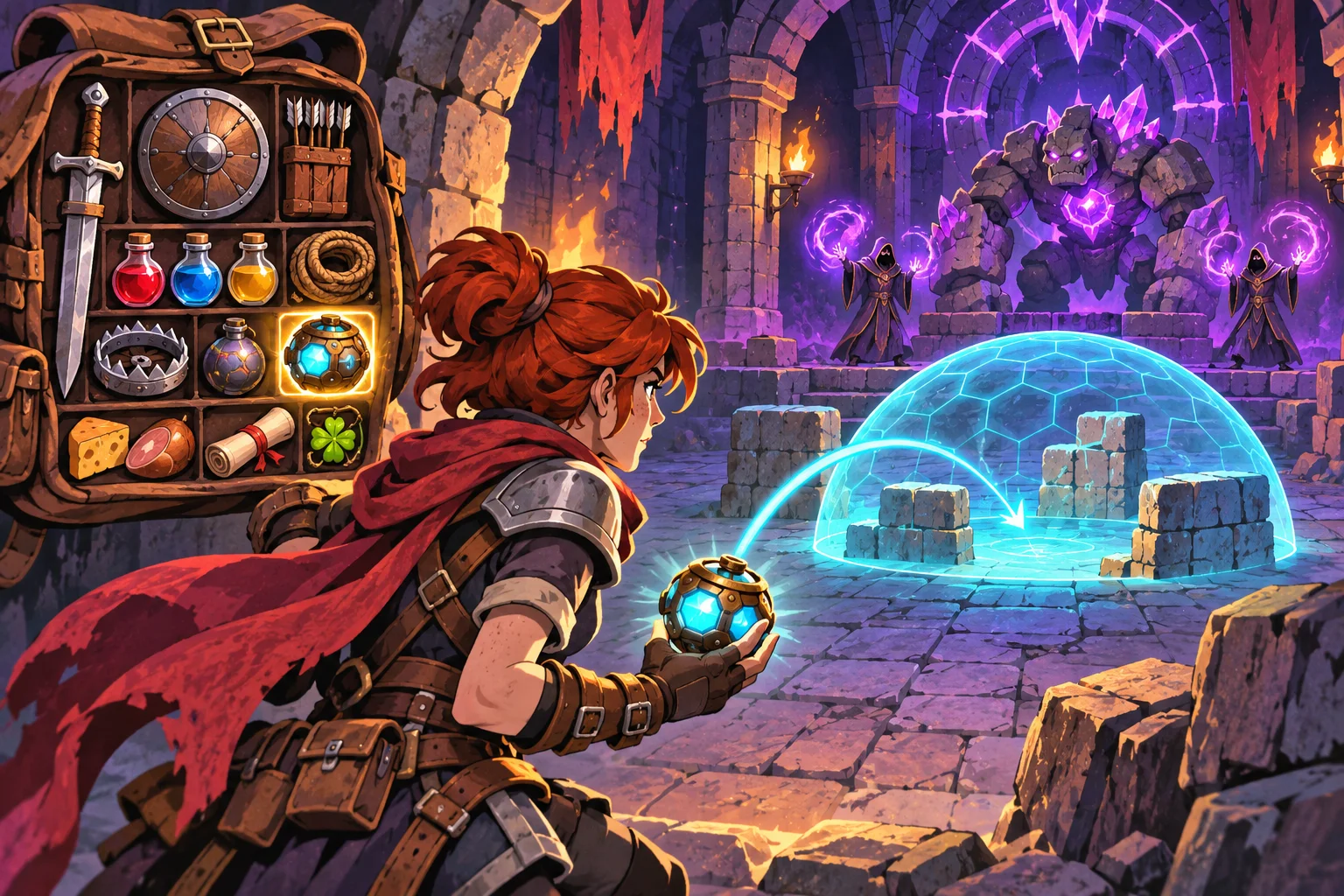
The acceptance case is a purchase that changes both the spatial arrangement and a later tactical choice without becoming an automatic upgrade. See a spatial-inventory design guide for more on grid constraints. SEELE AI can help brainstorm offer pools; item balance, economy tuning, and run-length playtests remain necessary.
FAQ
How can a shop change an inventory roguelike run?
A shop can offer items whose shape, adjacency, and price force the player to reconsider an existing layout. Make buying, selling, replacing, or passing all understandable options. A purchase should create a later tactical choice rather than simply increase a number with no spatial consequence.
How should shop items interact with spatial placement?
Show the item footprint and adjacency effect before purchase. A long item may take a valuable row, while a compact item may support neighboring gear. Let players preview a placement or rearrangement so they can evaluate the opportunity cost before spending run currency.
How do you balance limited run currency?
Set prices against expected income, encounter risk, item utility, and the value of saving for future offers. Players should be able to decline purchases and still have a viable run. Test multiple seeds and purchase paths, including a full pack and low-currency state, to catch an economy that demands one exact item.
What should you test in a run-changing shop?
Compare several purchase choices on the same seed and observe how layouts and later tactics differ. Include a full inventory, a low budget, and an offer the player rejects. Check that prices and effects are clear, purchases persist, and no single item becomes an automatic solution for every run.