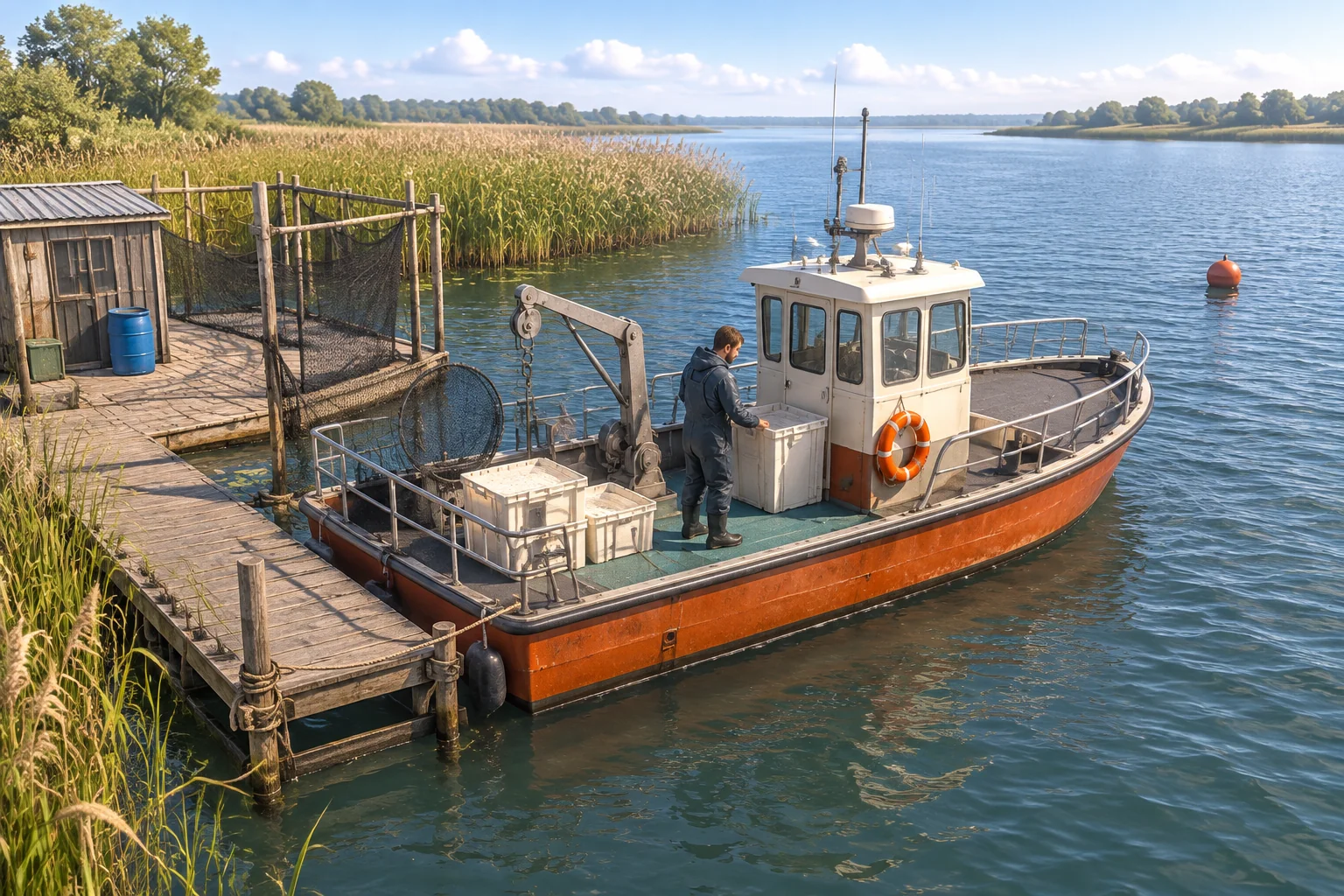
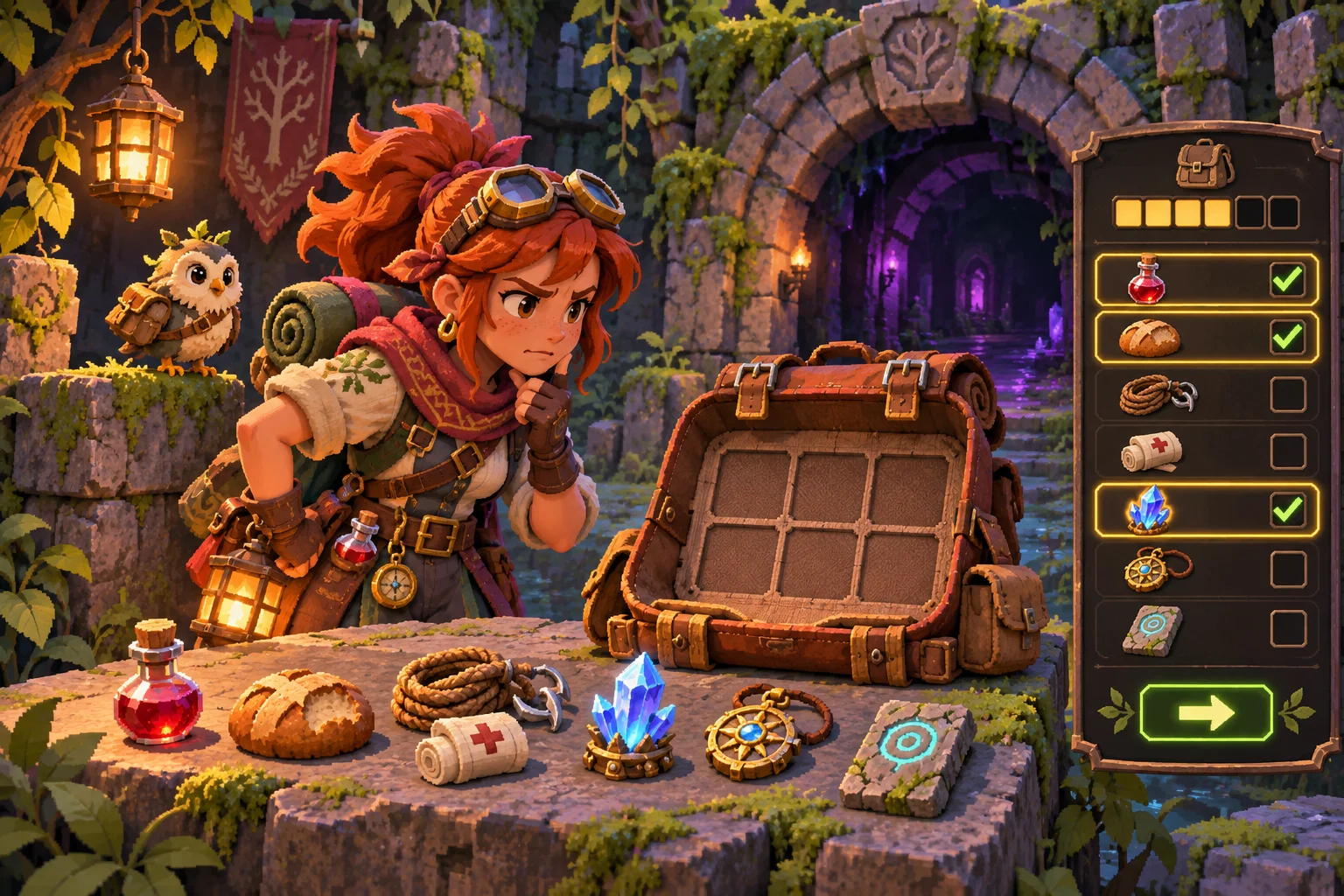
A spatial hold can make a fishing trip feel like a series of decisions: what is worth keeping, what fits, and whether to turn back. Black Salt Games’ official DREDGE listing describes a single-player fishing adventure with boat upgrades, and its store tags include inventory management. This supports the broad genre context only. The grid, item shapes, capacity rules, and sample cargo choices below are original design examples.
Choose a grid that supports readable cargo
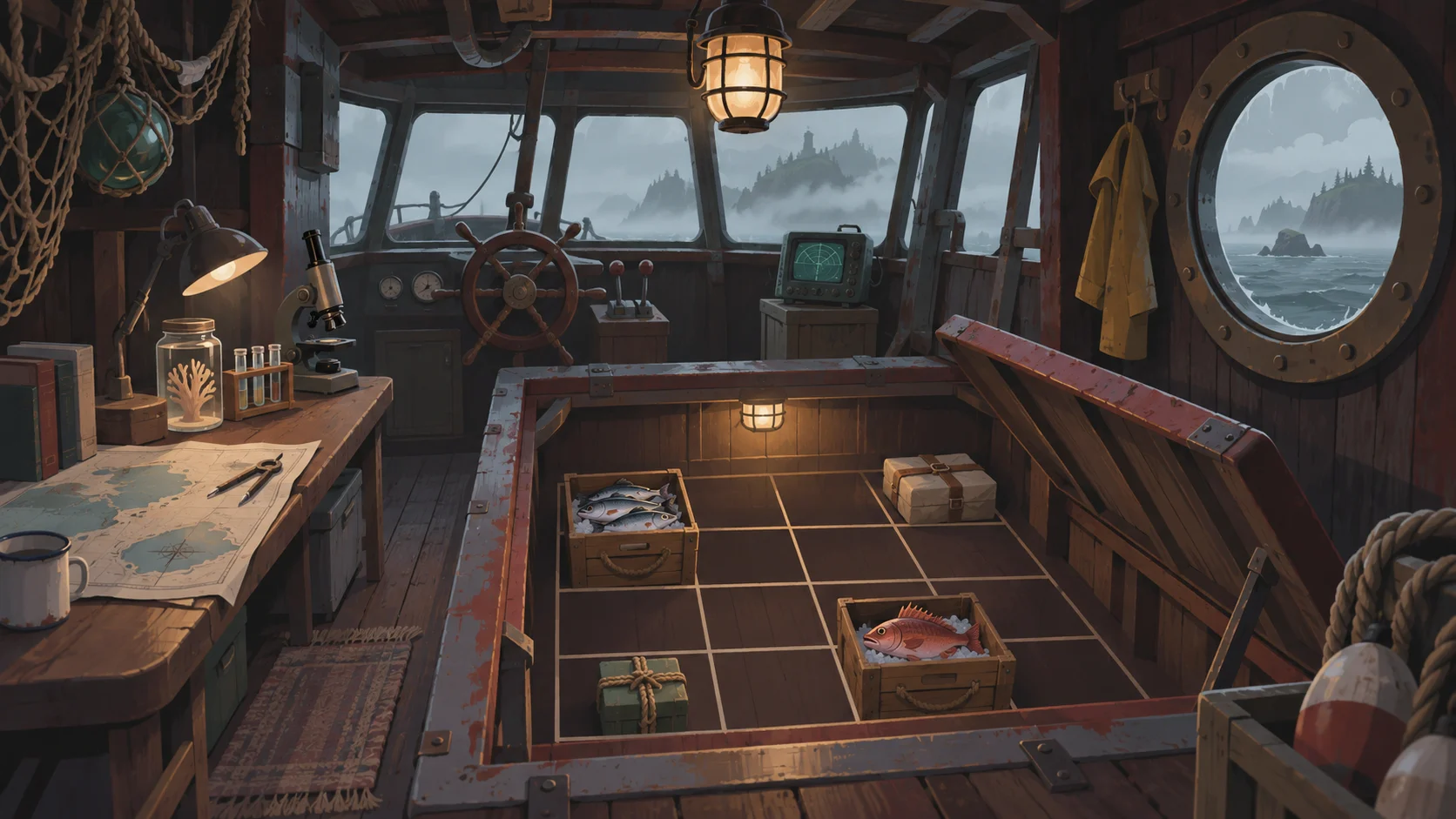
Pick a compact hold whose shape communicates capacity at a glance. A five-by-four grid is simple to count and gives you room to introduce differently shaped cargo. A narrow hold can make long items interesting, while a wider one creates more sorting freedom. Keep the grid small enough that players can inspect it without scrolling or zooming.
Decide which objects occupy space and which do not. Fish, samples, tools, and supplies might use cells, while currency or quest flags can remain outside the hold if they should not compete with cargo. Be consistent: an item that sometimes occupies space needs an explanation visible before a player collects it.
Use a single source of truth for grid dimensions, occupied cells, item orientation, and saved position. A placement check can translate an item’s local footprint into hold coordinates, then reject out-of-bounds or overlapping cells. Test the smallest and largest items at corners and edges before adding a long catalog.
Give items shape, value, and fit rules
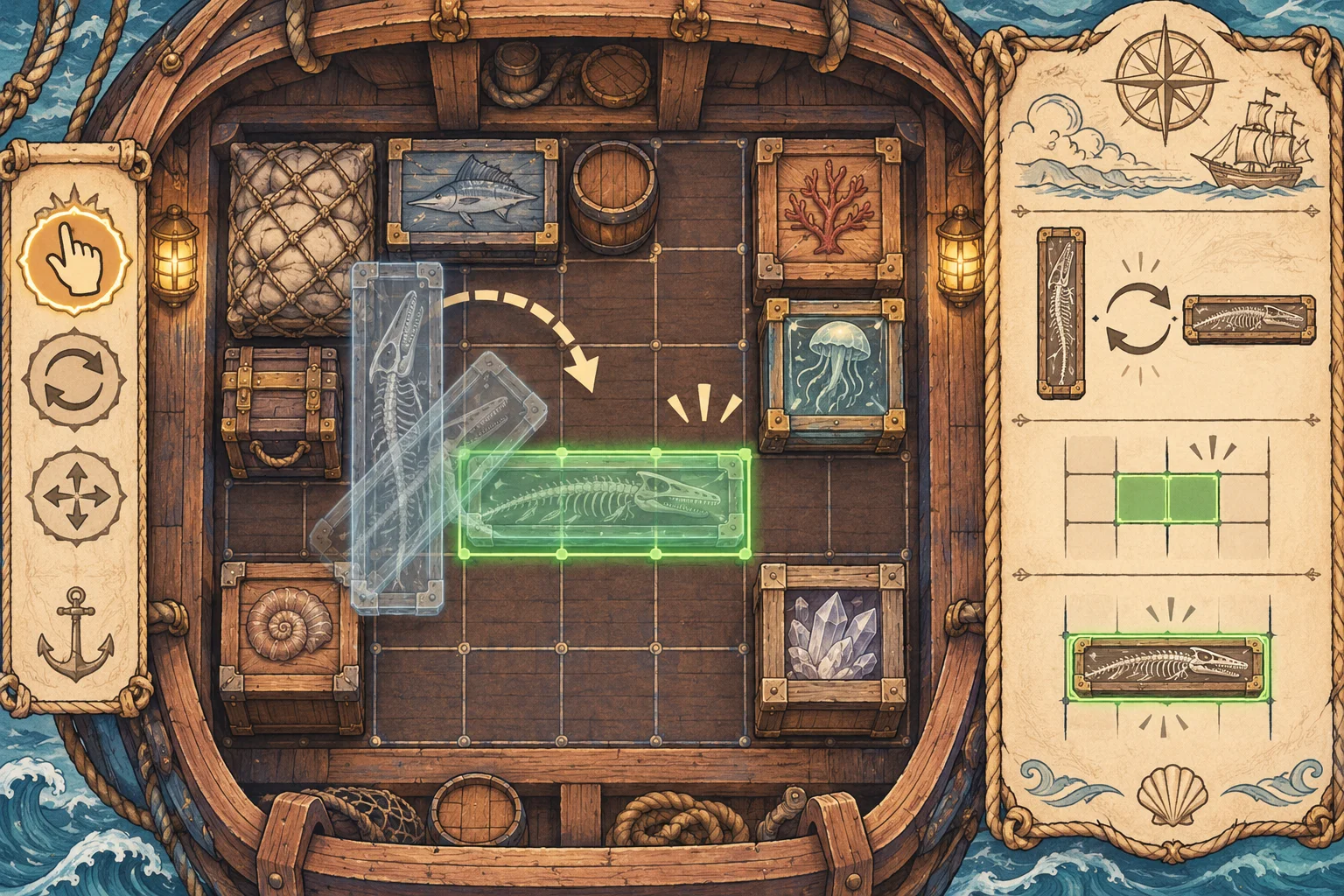
Items can differ by footprint, orientation, value, fragility, or handling risk. Start with a few shapes, such as a one-cell parcel, a two-cell fish crate, and a long specimen case. Rotation should be available only when it makes sense for that item, and the preview should show all cells it will occupy.
Make the player’s action reversible while they are sorting. Keep an item attached to the pointer until a valid position is confirmed. Highlight occupied cells and distinguish a boundary overflow from overlap. If a placement fails, leave the item in hand and let the player rotate, move, or cancel it instead of silently relocating the cargo.
Separate fit from value. A rare specimen might be valuable but awkward to pack; a small supply crate could be less lucrative and more useful for a planned route. Avoid making every large object automatically superior. If items have fragility or temperature rules, introduce those after players understand shape and rotation, not all at once.
Make capacity a route-planning choice
Let a full hold change the player’s options. They might return to sell a catch, leave an item behind, move to a nearer destination, or use a different boat upgrade later. Give enough information to compare those choices: show remaining space, likely travel cost, and any known purpose of a cargo item.
Capacity pressure should create tension without making every trip end the same way. If the highest-value catch always fills the last cells, players may repeat one obvious choice. Mix value and utility: a compact supply can unlock an option, a large specimen can pay more, and an item connected to a quest can compete with both.
Do not punish players for an item fitting in a way the interface encouraged. If an upgrade changes hold dimensions, preserve cargo positions when possible and explain any item that no longer fits. The player should be able to review the new layout before starting another trip.
Test sorting, feedback, and edge cases
Watch a first-time player drag, rotate, place, and remove each item. Test corners, boundaries, overlaps, undo, saving, reloading, and what happens when hold capacity changes. Record rejected drops and time spent sorting. If the inventory becomes a chore, simplify footprints or add a sort assist that still leaves the meaningful choices to the player.
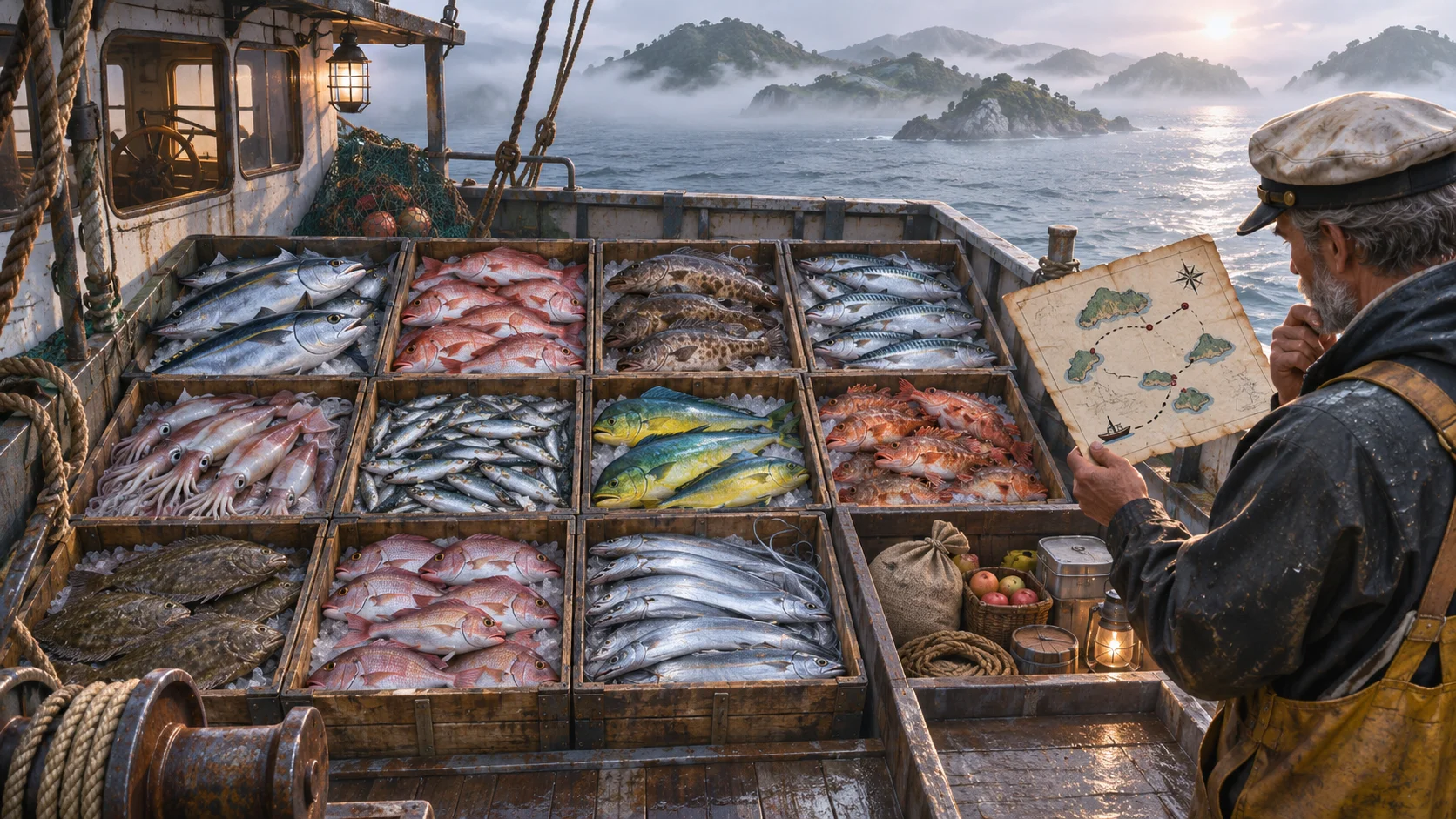
Compare varied trips rather than only a single ideal route. Test a mixed catch, one large item, and a run where the player saves space for supplies. Ask what they would keep and why. If answers depend on hidden item rules or players cannot predict whether something will fit, make those rules visible before the next expedition.
SEELE AI can help draft an original fishing-adventure concept, but grid placement, drag behavior, hold limits, and the trip economy need implementation and hands-on testing. For a broader premise, read the original fishing-adventure guide. Prototype an original fishing adventure with SEELE AI.
FAQ
How do you build spatial inventory for a fishing game?
Choose a visible cargo grid, define item footprints and legal rotations, and make the fit preview explicit. Then connect hold capacity to trip choices such as what to keep, sell, or leave behind. Start with a few shapes and test drag, rotation, saving, and removal before growing the item catalog.
How should inventory communicate that an item will not fit?
Show the full footprint as the player moves an item, highlight the cells it would occupy, and distinguish overlap from boundary overflow. Preserve the item in the cursor until the player cancels or finds a valid spot. A short visual cue is usually clearer than moving the item automatically.
How can cargo capacity create meaningful choices?
Make cargo compete between different useful outcomes. A large valuable catch might displace supplies or a smaller item needed for a quest. Ensure that capacity pressure arrives with enough information and time for a choice, and avoid making every trip end in the same obvious sell-or-return decision.
What should you playtest in a spatial inventory?
Check item placement at edges, rotation, overlap, removal, storage persistence, and what happens when capacity changes. Observe whether players understand why an item does not fit and whether sorting becomes tedious. Track rejected drops and return decisions, then simplify shapes or feedback if the grid feels like busywork.