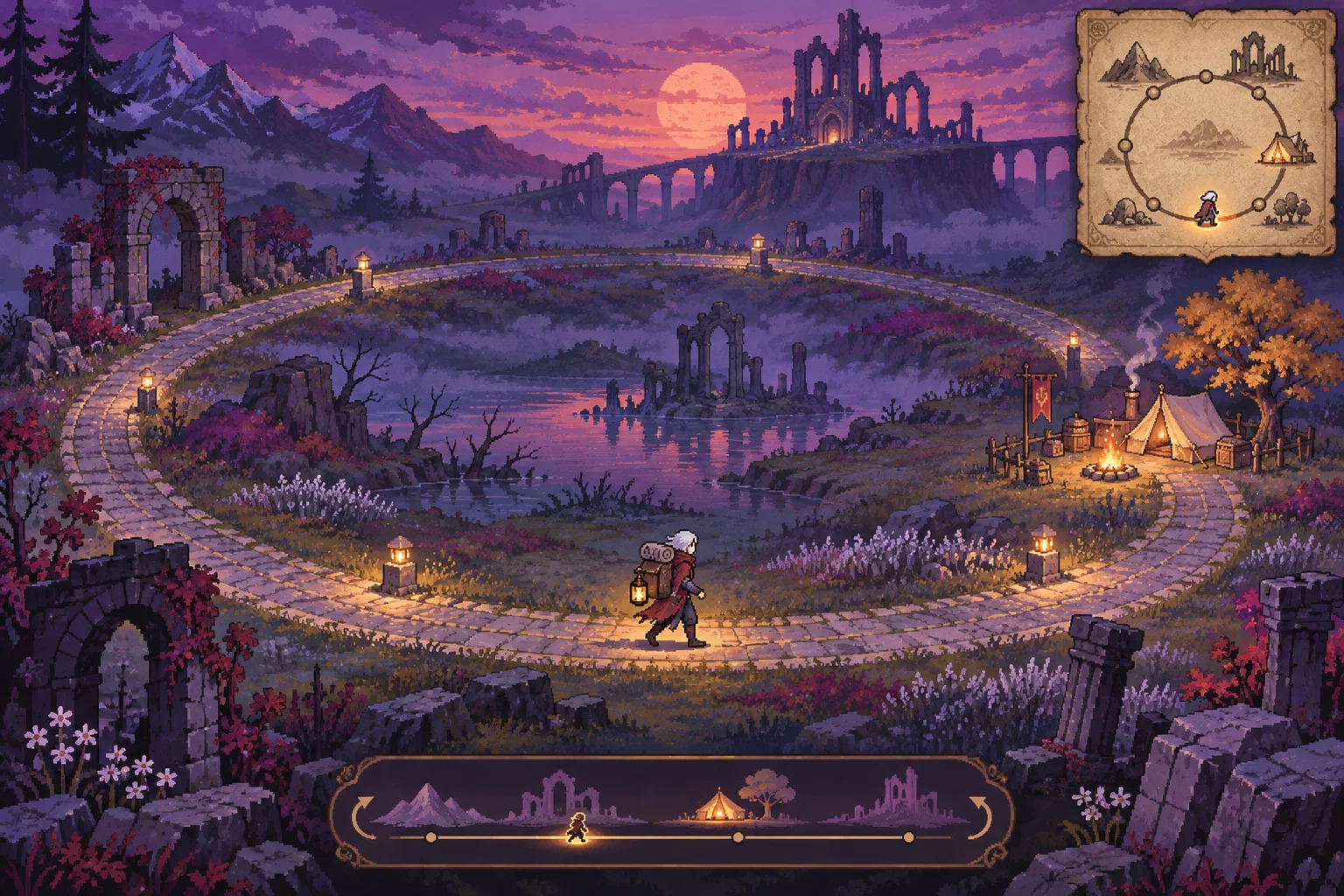
Inventory expansion feels meaningful when it changes what a player can plan, carry, or build. In an inventory roguelike, adding space can make room for another weapon or useful tool, but every new slot also changes scarcity and item placement. Backpack Hero’s official store page presents it as an inventory management roguelike centered on collecting and organizing items. Treat that as a high-level reference for the genre, then set expansion rules that support your own combat and progression.
Define the baseline inventory constraint
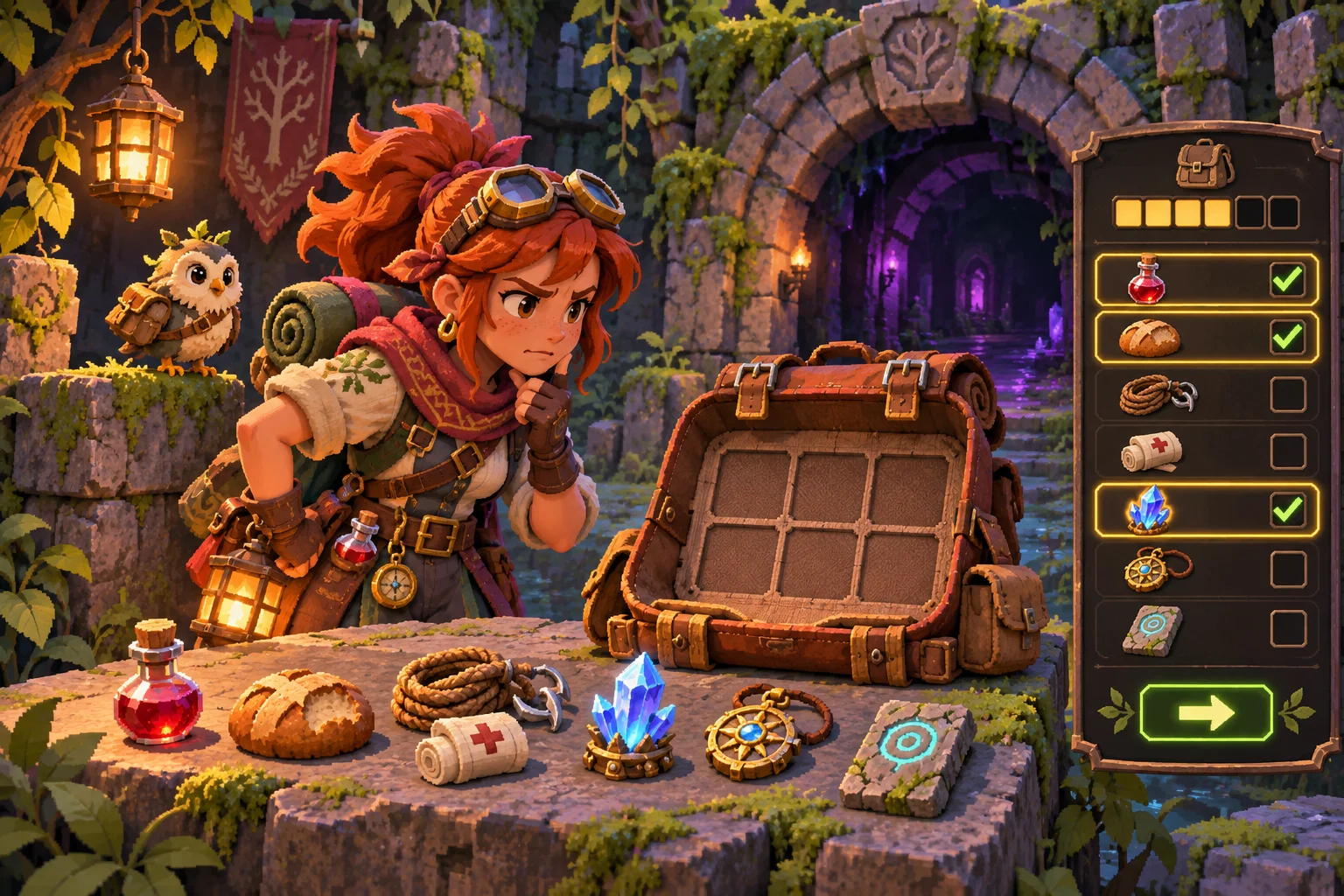
Before adding an upgrade, decide what the starting pack asks players to consider. A grid can make shape and adjacency matter; a row of slots can emphasize priority and quick access; a weight limit can make heavy equipment compete with consumables. Choose the constraint that supports your core game loop. If the player’s choices already depend on item compatibility, adding a capacity meter may create bookkeeping without adding a new decision.
List the choices a normal run should create. The player might choose between taking a healing item or a second tool, carrying a component for a future recipe, or keeping a flexible space open for unknown loot. If every player always takes the same items and fills every slot, the constraint may not be shaping meaningful decisions. If players regularly leave required items behind without understanding why, the rule may be too opaque.
Make pack state visible at the moment it matters. Show available cells, blocked shapes, capacity limits, and any item relationships clearly. During a reward choice, preview whether an item fits and what would need to move. Clear placement feedback reduces interface friction while preserving the strategic choice about what deserves space.
Offer expansion as a meaningful choice
Decide how expansion enters the progression. It might appear as a reward after a difficult encounter, a town service purchased with a scarce resource, a branching path choice, or an item that temporarily changes capacity. Each delivery method sets a different expectation. A one-time permanent upgrade encourages long-term planning; a temporary expansion can invite riskier runs; a side-grade can preserve tension by changing the pack’s shape or adding a special compartment.
Describe the actual benefit before the player commits. “Bigger pack” is less useful than showing the new cells, weight allowance, or storage category and how it interacts with current items. Let players preview the expanded arrangement when possible. Explain whether equipped items move automatically, whether the new space can be lost, and what happens if a run ends with items outside the original capacity.
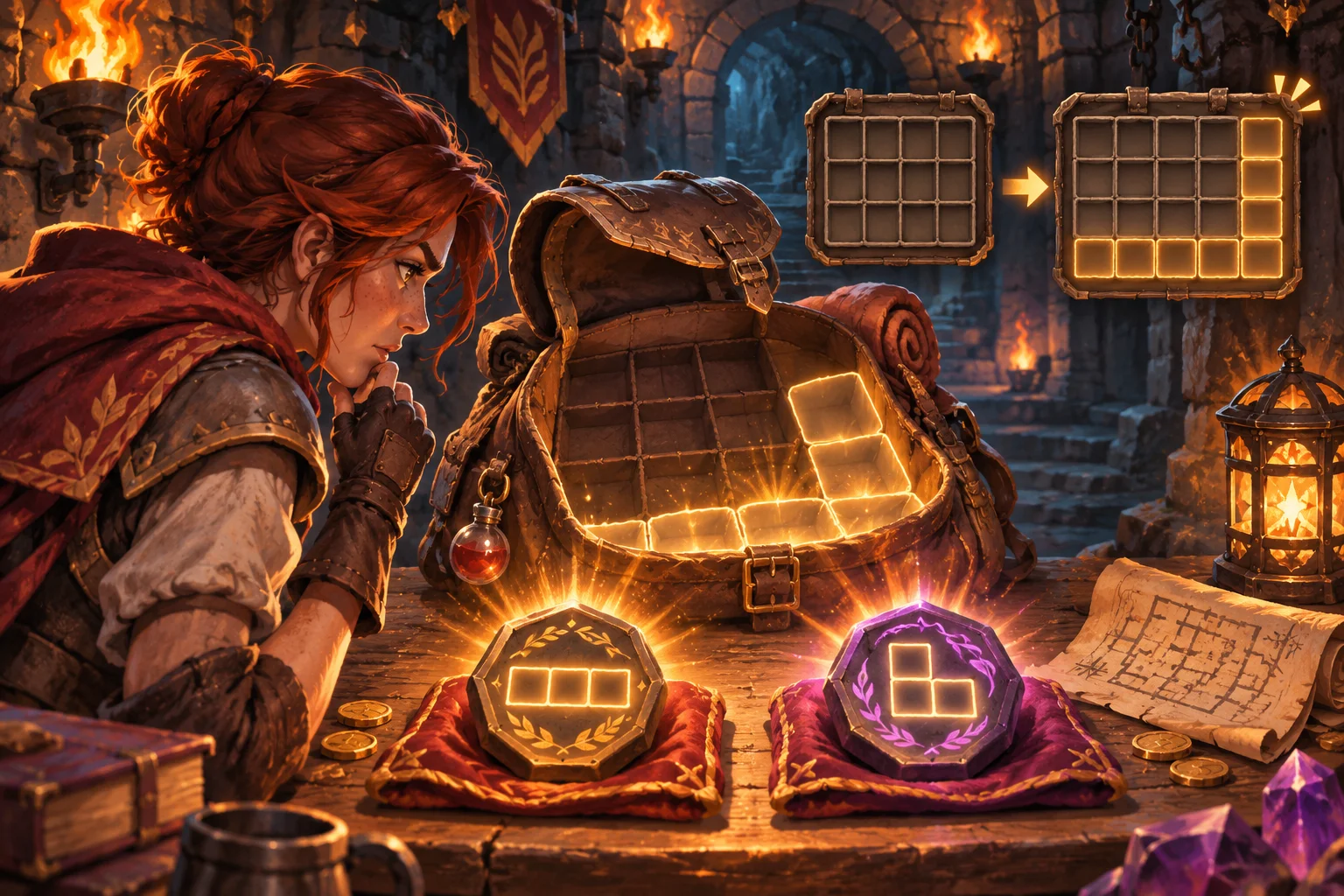
Expansion does not have to mean adding the same number of cells every time. One upgrade might open a small row, another might add a protected pocket for a single category, and a third might change the pack’s outline so different item shapes fit. Keep these options understandable and make sure each one creates a distinct advantage. A larger inventory is useful when it opens a new build or route, not only because a number went up.
Preserve placement and build tradeoffs
Capacity interacts with the rest of the item system. If weapons gain bonuses from adjacency, an expansion can create more combinations as well as more storage. If an item blocks nearby cells, the player may need to choose between keeping its effect and using its space. Test upgrades with several builds: a weapon-focused loadout, a consumable-heavy plan, and a flexible utility set. An expansion that only helps one strategy may still be valid, but the choice should be intentional and understandable.
Watch for upgrades that erase earlier decisions. If a player can eventually carry every useful item, the pack stops asking them to specialize. You can preserve choices by letting capacity rise slowly, making expansion compete with another valuable reward, or introducing new item shapes that require arrangement. Avoid adding penalties just to undo the benefit; tradeoffs should come from the system’s existing goals, such as preparation, adjacency, or limited access.
Plan edge cases before shipping. Check how expansion works when the pack is full, when an item occupies multiple cells, when an item is removed, and when a temporary upgrade expires. Define what happens after a reset, save reload, or encounter transition. Preserve the player’s items and communicate any rearrangement. A predictable rule is easier to trust than a clever rule that unexpectedly discards or disables something valuable.
Playtest progression and edge cases
Build a small prototype with a baseline pack, two expansion choices, and a short item pool. Compare runs with and without each upgrade. Observe what players take, what they leave, whether they rearrange items, and whether the new capacity changes their route or combat plan. Ask them to explain why they chose the upgrade. Their reasoning can reveal whether the benefit is understood or whether they picked it because it simply sounded larger.
Track practical signals such as the share of available cells used, how often reward items are rejected for space, how many builds appear after expansion, and whether players stop considering their loadout. These numbers do not define good balance by themselves; use them to locate patterns and then watch play. If every build fills the new space immediately, more room may be increasing collection rather than choice. If players avoid expansion, the cost or benefit may not be clear.
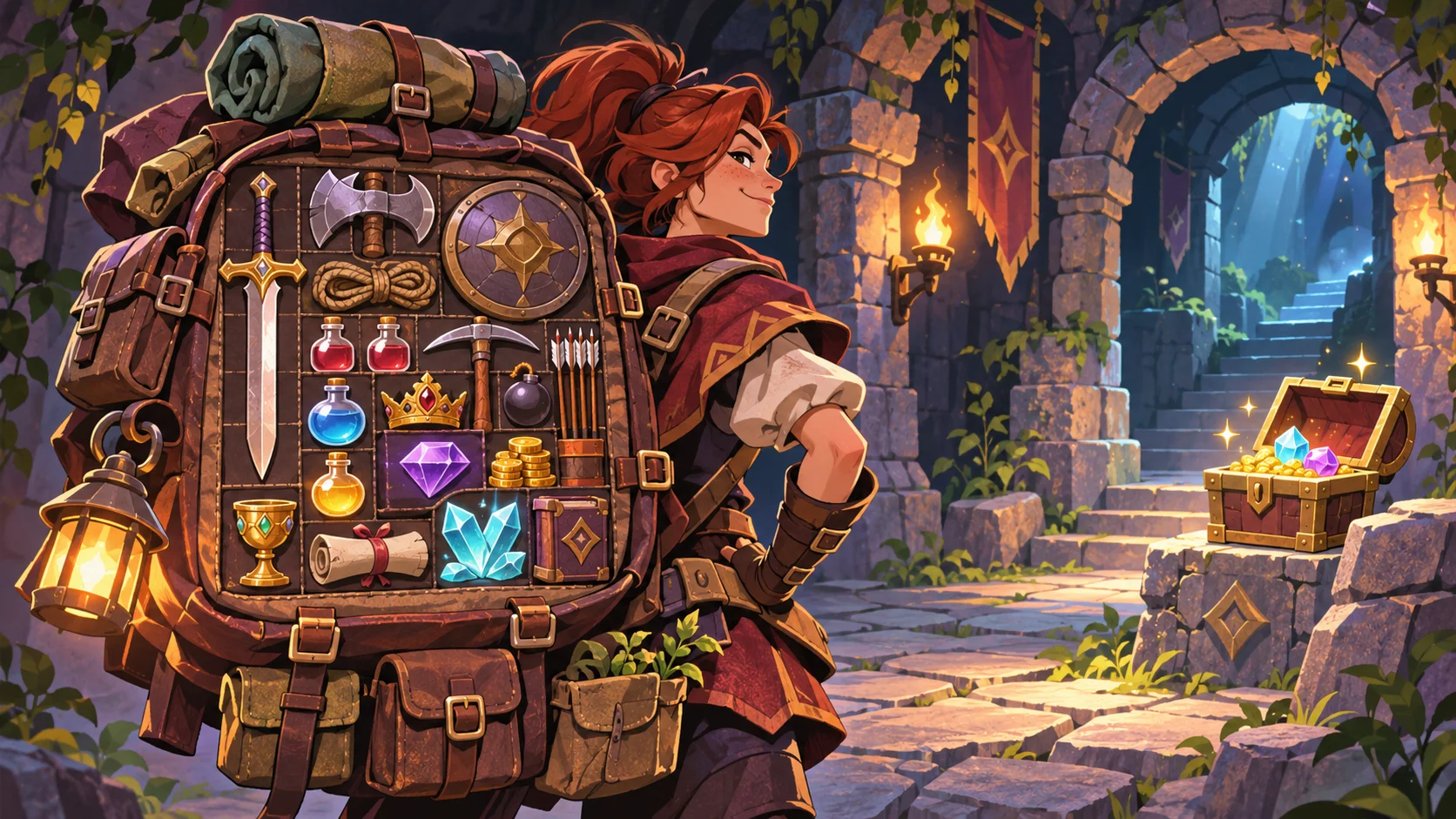
Keep expansion connected to the fantasy of the character and world. A new satchel, modular harness, or specialized pocket can make a capacity change feel grounded. The interface and the game world should agree about what changed. Make the reward visible, then test whether it creates a new decision that players can describe. SEELE’s documented game-creation capability can help start from a natural-language game idea; prototype the inventory rules and tune them through actual runs.
Frequently asked questions
How should inventory expansion work in a roguelike?
Use expansion to create a new choice in how players prepare, combine, or carry items. Decide whether it is permanent, temporary, or a side-grade, and show the precise change before selection. Then test it across different builds to confirm that it adds options without making the original inventory constraint disappear.
Should inventory upgrades add slots or change shape?
Either can work. Extra slots increase capacity directly, while a shape change can create new placement patterns and preserve spatial tradeoffs. Choose based on what your item system already rewards. If arrangement is central, shape-based upgrades may create richer decisions; if access and weight matter more, a simple capacity increase may be clearer.
How do you balance a larger inventory?
Test how the upgrade changes item selection, build variety, reward rejection, and route planning. Compare different strategies and progression points rather than balancing only around a full pack. If expansion removes every meaningful tradeoff, slow its growth or make it compete with another valuable choice. Do not add arbitrary penalties without a clear design purpose.
When should players unlock more inventory space?
Offer expansion when players understand the baseline constraint and can appreciate the new option. A reward after a milestone can make progression legible, while an early choice can introduce build specialization. Preview what changes and test whether players see the upgrade as useful at the moment it appears.
Prototype one baseline pack and two distinct upgrades, then compare the choices players make. Explore an AI game creation starting point for an original inventory roguelike concept.