Automatic travel works when it removes low-value movement commands while preserving decisions about risk and direction. Four Quarters’ official Steam listing for Loop Hero describes unique expedition loops shaped by placing enemies, buildings, and terrain cards. That is the public reference context; the movement state model, route choices, and return rules below are original implementation guidance.
Set a route the player can read at a glance
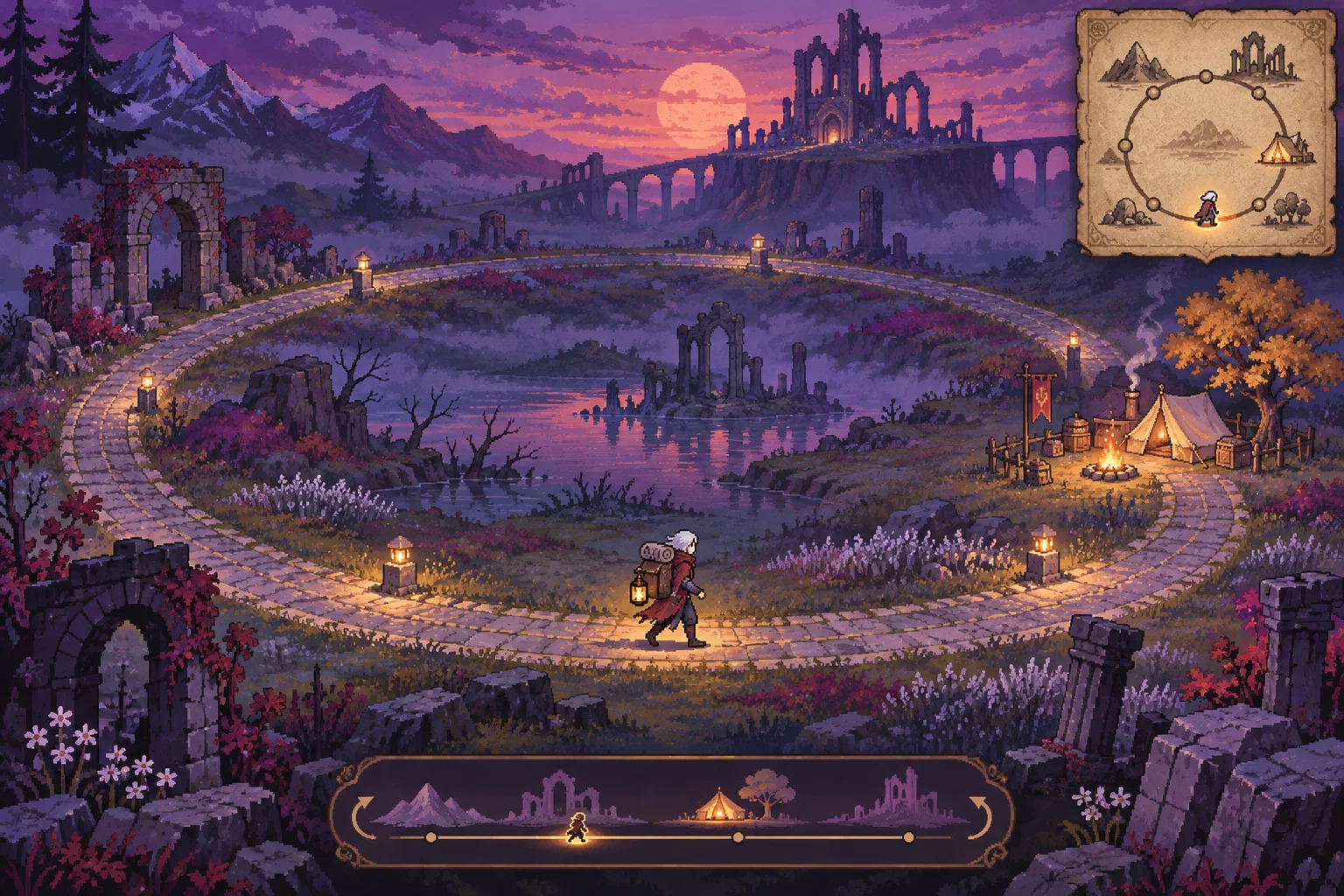
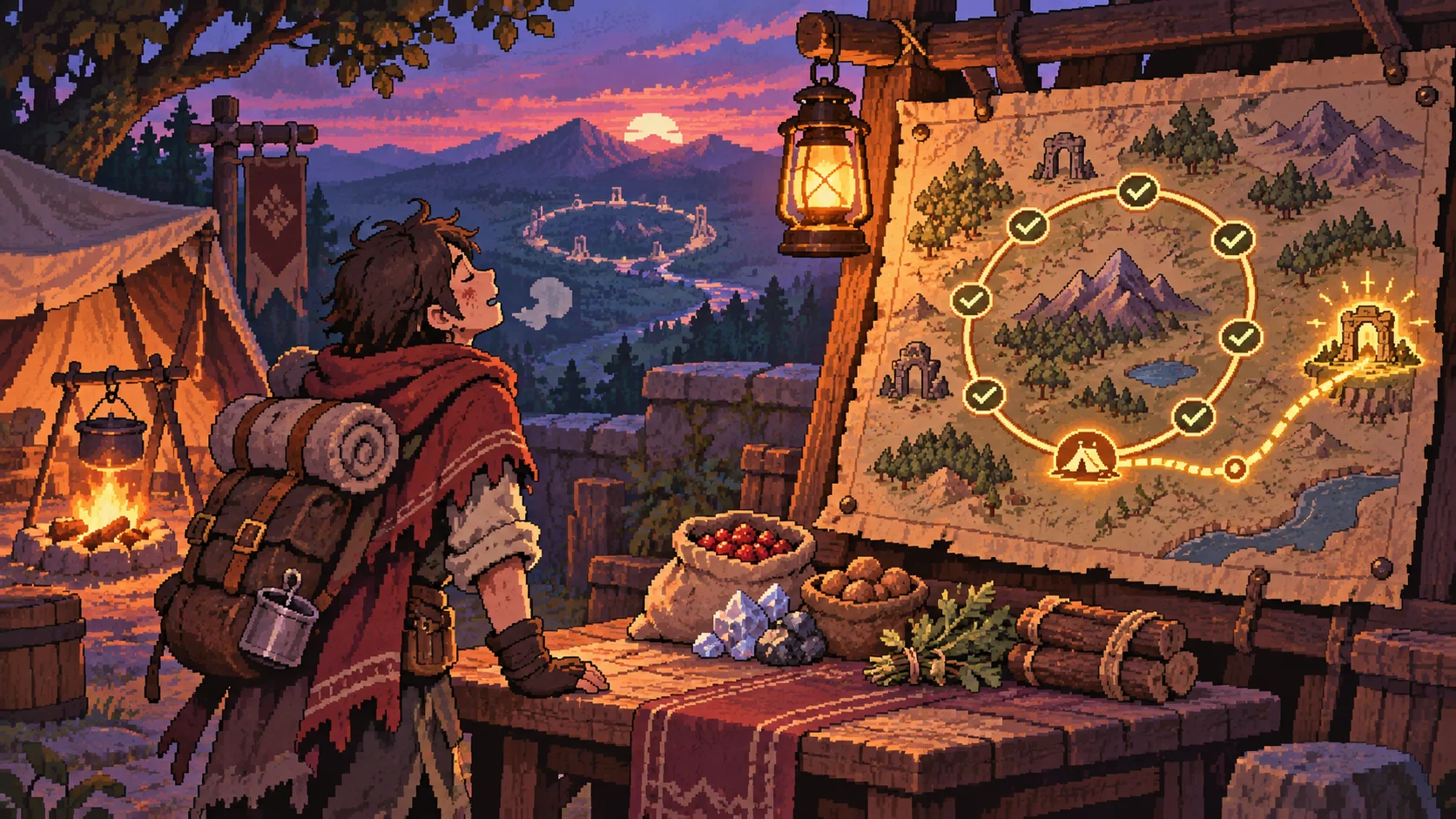
Represent travel as a route made of connected segments, not a hidden timer. Show the character’s current segment, the next landmark, known encounter markers, and the nearest safe return point. If the route is circular, make the loop direction and number of upcoming steps easy to see. If terrain changes the outcome, use a distinct icon and a short explanation.
Give players a useful forecast without revealing every result. A map could show that a forest segment is ahead, while a scout report indicates a low or high chance of an ambush. The player can decide whether to prepare or detour. Keep forecast precision consistent so they can learn what “likely” means.
Clarify the difference between route progress and real-time motion. A turn-based system may resolve one segment after each player action; a real-time system may move continuously but pause at choices. Either can work if players know when resources change and when they can intervene.
Connect automatic movement to player decisions
Reserve prompts for meaningful state changes: a route junction, a visible enemy, a low supply threshold, or a camp where the player can retreat. Let ordinary movement resolve without a click. This keeps the travel loop fluid while giving the player control at moments when the expected outcome changes.
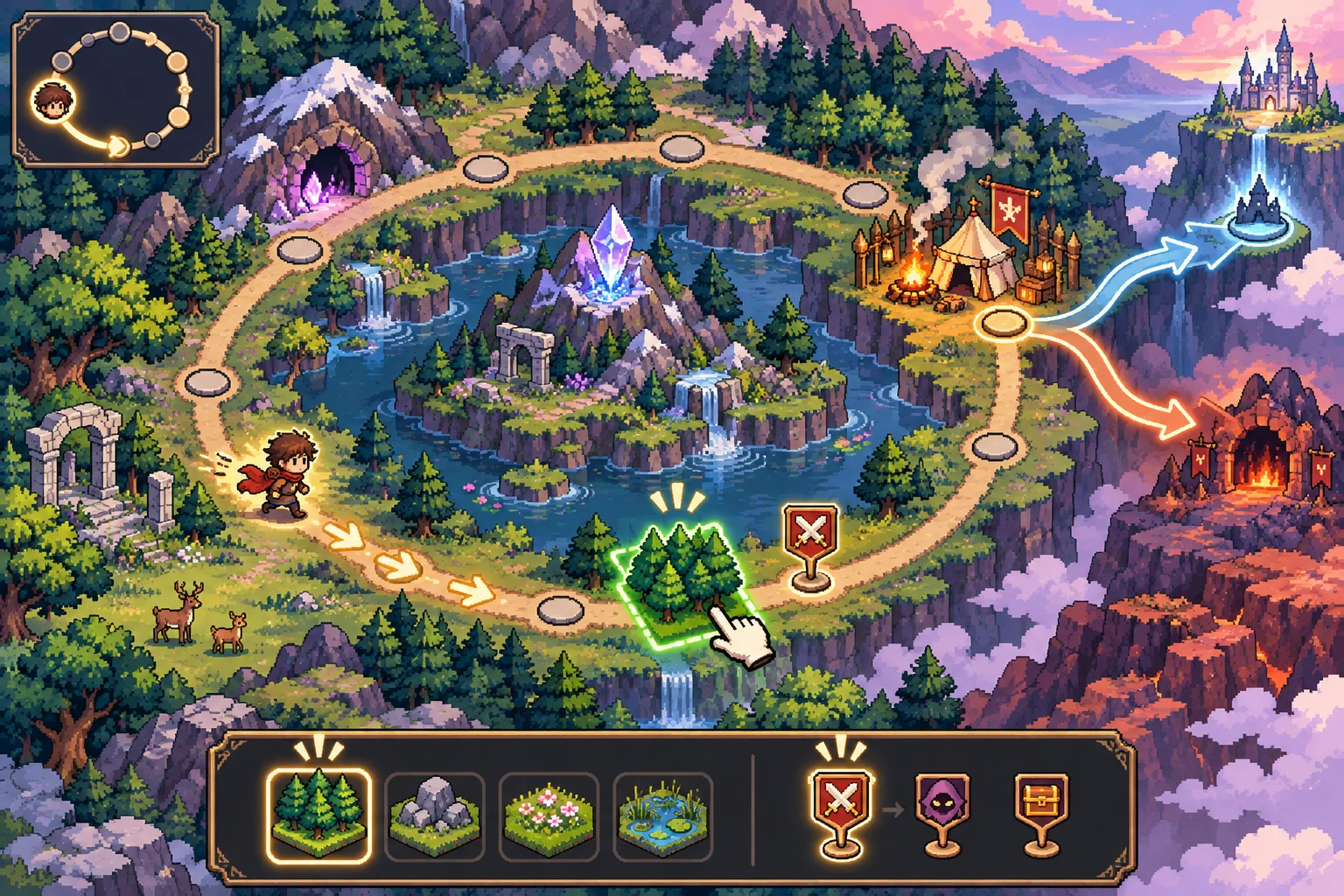
Offer a small set of actions at each decision point. The player could continue, take a marked detour, prepare a tool, or return. Explain the likely cost before commitment: a detour may add a segment but reach a supply cache; preparing may spend a resource but reduce encounter risk; returning may bank gathered materials but end the current expedition.
Avoid interrupting the player for every combat animation or repeated travel tick. If a battle requires tactical input, group it into a clear encounter phase. If combat is resolved automatically, show the key events in a compact log that players can review. The travel layer should remain readable even when encounters add detail.
Balance risk, resources, and route changes
Choose a few resources that influence a decision. Food could limit how far the traveler can go; equipment durability could make a risky route less attractive; supplies found on the road could reward a detour. Keep values small enough to compare. A player should be able to tell whether a possible reward is worth using a scarce resource.
Test multiple strategies on the same route. A cautious player may return after one loop with a modest gain; a prepared player may detour toward a more dangerous landmark; a player with a strong recovery item may continue farther. If one strategy always wins, change route rewards, costs, or information so different conditions support different choices.
Give the loop a clear stopping and return decision
At camp, summarize supplies gained, route progress, and any new information. Tell the player what will persist if they leave and what remains at risk if they continue. The next expedition can open a new route or add a landmark based on progress, creating a reason to return without making every run longer than the last.
Playtest whether people understand the stop-or-continue tradeoff before they learn the optimal strategy. Record when they miss a prompt, spend a resource unexpectedly, or return without realizing a reward was available. Ask each tester to explain the route forecast in their own words. Use that evidence to revise the map, warning language, or cost preview.
Use SEELE AI to draft an original loop-RPG concept, then inspect whether route movement and return decisions are present in the playable result. A written prompt alone does not guarantee automatic movement or balanced extraction. For a broader premise guide, read the original loop-RPG guide. Prototype an original loop RPG.
FAQ
How do you build automatic travel in a loop RPG?
Let the character traverse between meaningful decision points without requiring a command for every step. Show the current location, route ahead, expected encounters, and return point. Surface a choice when a junction, resource threshold, or encounter changes the risk so the player can shape the journey while movement remains automatic.
How can automatic movement still feel interactive?
Give players control over route composition, speed, equipment, encounter preparation, or the decision to stop. The character can move on its own while the player chooses which landmarks and risks to accept. Avoid frequent prompts for trivial steps; concentrate input where a choice changes the journey or its expected outcome.
How should a loop RPG handle retreat and return?
Show what the player keeps, loses, or converts when they return to camp, and make the route home legible. Let current supplies and danger provide evidence for the decision to continue. If defeat has a cost, teach it early and provide a recovery path so one mistake does not erase all progress.
What should you playtest in an automatic travel system?
Observe whether players can predict upcoming risk, understand what a route change does, and explain why they continued or returned. Record resource use, missed choice prompts, unwanted interruptions, and whether players recognize a safe stopping point. Compare several route strategies on the same scenario to find dominant choices.