A daily activity system can make a cozy town feel lived in when each action changes something the player cares about. Littlewood’s official Steam listing describes rebuilding a town, meeting residents, fulfilling requests, and pursuing activities such as gathering, crafting, fishing, and farming. That public context is the reference point; the day structure, action costs, and sample loop here are original design recommendations.
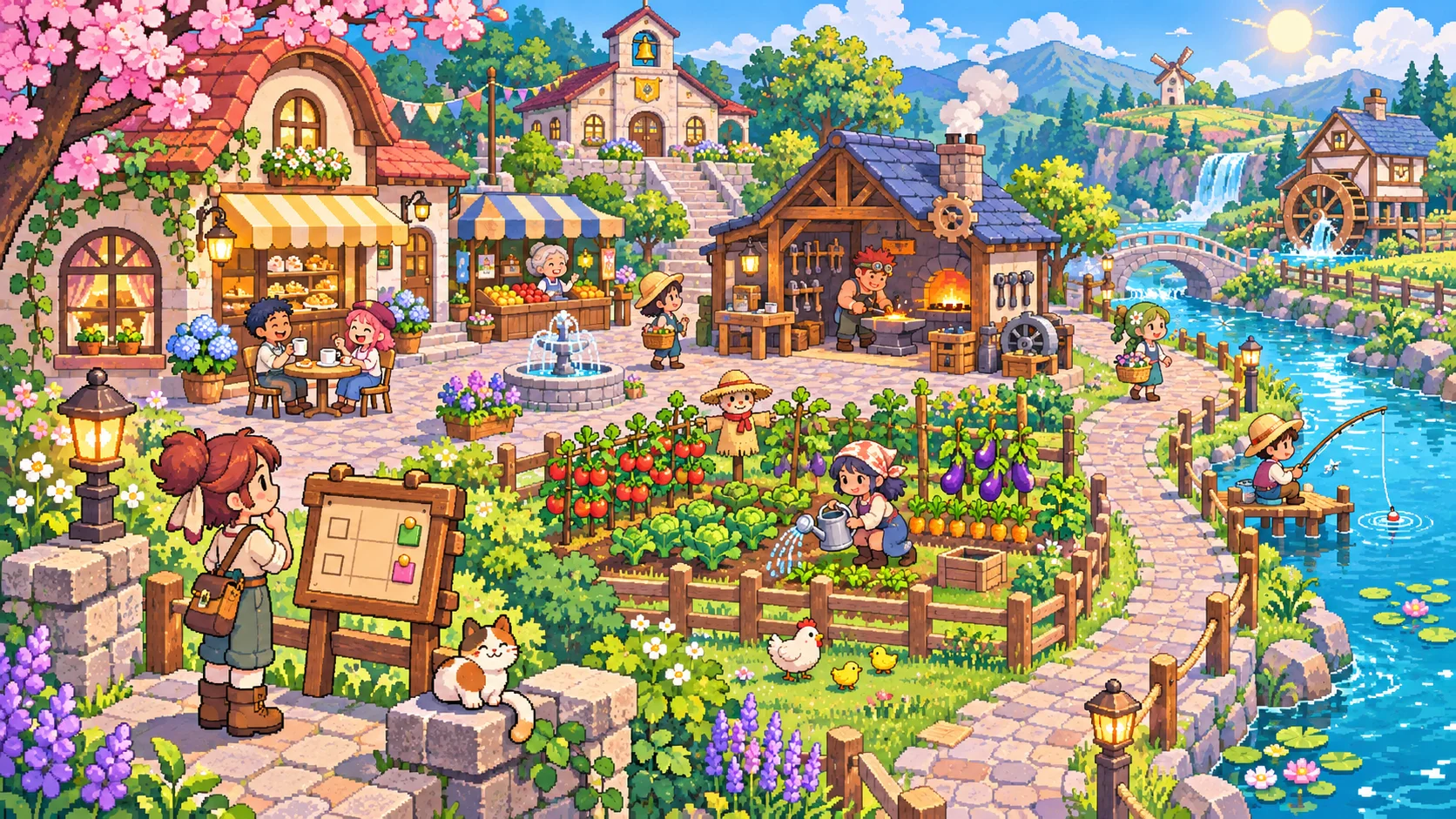
Give each day a few meaningful activity slots
Start with a short list of verbs that matter to the town: gather, tend, craft, explore, and visit. Give the player a modest activity budget, such as four substantial actions plus free movement. The specific number is a prototype value, not a genre rule. The goal is for players to choose among worthwhile options rather than click through a long routine.
Connect each action to a visible output. Gathering wood adds a building resource; tending a plot advances a crop; crafting turns gathered material into a repair item; visiting a resident can reveal a request or preference. Make it clear whether an action advances time, consumes an item, or changes a relationship. Avoid making players discover hidden costs through failure.
Let location add texture without becoming a travel tax. A workshop can host crafting, a river can host fishing, and a resident’s home can support a conversation. If walking across town is part of the fantasy, keep routes short or offer a quick map. The primary choice should be which activity to do, not how many empty steps it takes to reach it.
Connect activities to time, location, and relationships
Use simple dependencies the player can learn. A repair project may need timber from gathering and a plank made at the workshop. A resident might ask for a bench; completing it changes the town and opens a new conversation. Keep the chain short enough to remember, and show missing prerequisites before the player spends an action.
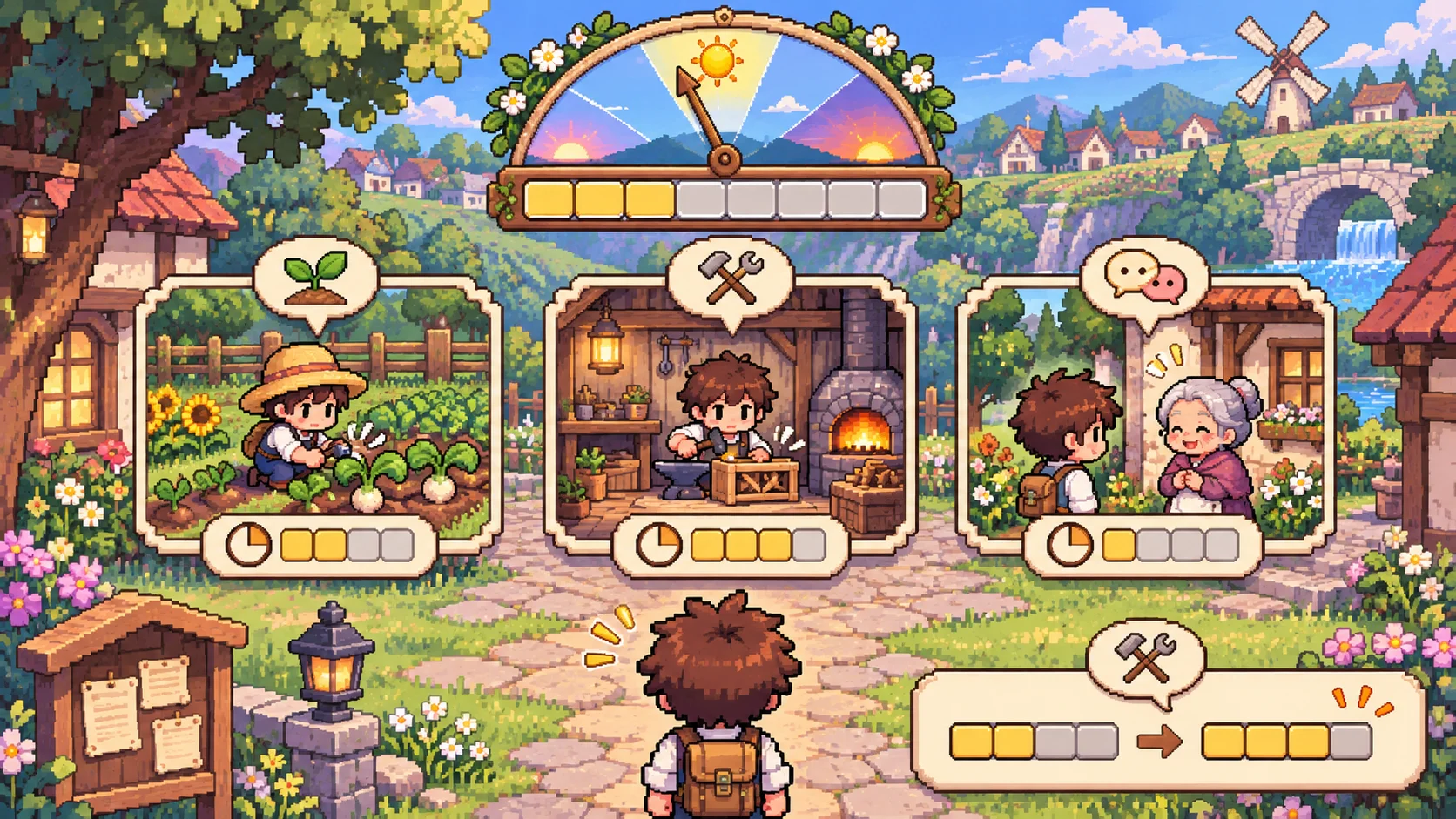
Make social actions more specific than “raise friendship.” A visit could reveal a preference, deliver a requested item, or invite someone to join a town activity. Show the relevant context in dialogue so players can connect their choice to the response. Avoid implying that every interaction needs a hidden score increase.
Give activities different temporal rhythms. A crop may need several days to grow; a crafted object may be ready immediately; a resident’s request may remain available until fulfilled. Explain which events are persistent and which change at the end of the day. That lets the player plan without memorizing a calendar of invisible deadlines.
Keep routine useful without making it mandatory
Allow players to change the order of activities and pursue different town goals. If a player ignores farming for several days, the game can still offer a path through crafting, exploration, or social requests. Optional special rewards can acknowledge dedication without blocking the main loop.
Reduce repeated clicks when an activity becomes familiar. A tool upgrade might let the player tend several adjacent plots in one action; a resident might help gather a material after a friendship event. Such improvements should make the day smoother rather than make older actions feel deliberately tedious.
Include a catch-up route for missed work. A delayed crop can remain available later, a resident can repeat a request, or a building can accept substitute materials. If the intended game includes seasonal deadlines, introduce them clearly and ensure the player has enough time to respond.
Review the day and make tomorrow feel different
At day’s end, show a short recap of what changed: a repaired path, a new material, a resident’s reaction, or a project now ready for the next step. Tie each result to the action that produced it. The player should understand why tomorrow offers a different option.

Playtest two or three consecutive in-game days. Record which actions players repeat, which options they ignore, and whether they can explain the costs. Ask whether skipping an activity made them feel behind. Adjust the action budget, recovery rules, or output visibility before adding more activities.
Use SEELE AI to draft an original cozy-town concept, then inspect how time, activity effects, and resident feedback work in the actual prototype. Do not assume a generated draft includes a complete day scheduler. For a related activity-led life-simulation example, read the recurring-activities guide. Prototype an original cozy town game.
FAQ
How do you build daily activities for a cozy town game?
Start with a few clear actions such as gather, craft, tend, and visit. Give each action a visible cost and outcome, then connect results to a town project or relationship. Let players choose the order and make optional activities recoverable so the day creates direction without demanding a fixed checklist.
How many actions should a player get each day?
There is no fixed number; choose a day length that lets players make a few meaningful tradeoffs without rushing through every system. Prototype with a small action budget, then observe whether players understand what they can accomplish. Add slots only when the existing activities are distinct and their costs are easy to compare.
How can daily activities avoid feeling like chores?
Give actions variety, visible purpose, and flexible alternatives. Let several activities advance the same broad goal, avoid punishing a player for skipping a task, and let routine actions become faster or optional over time. A day should invite a choice rather than require repeating the same errands for basic progress.
Should daily choices have consequences the next day?
Small consequences can make time feel meaningful: a repaired path changes who visits, a crop becomes ready, or a resident offers a new request. Keep outcomes readable and provide ways to catch up. Avoid irreversible loss for missing an optional task unless the game clearly teaches that risk and supports the intended play style.