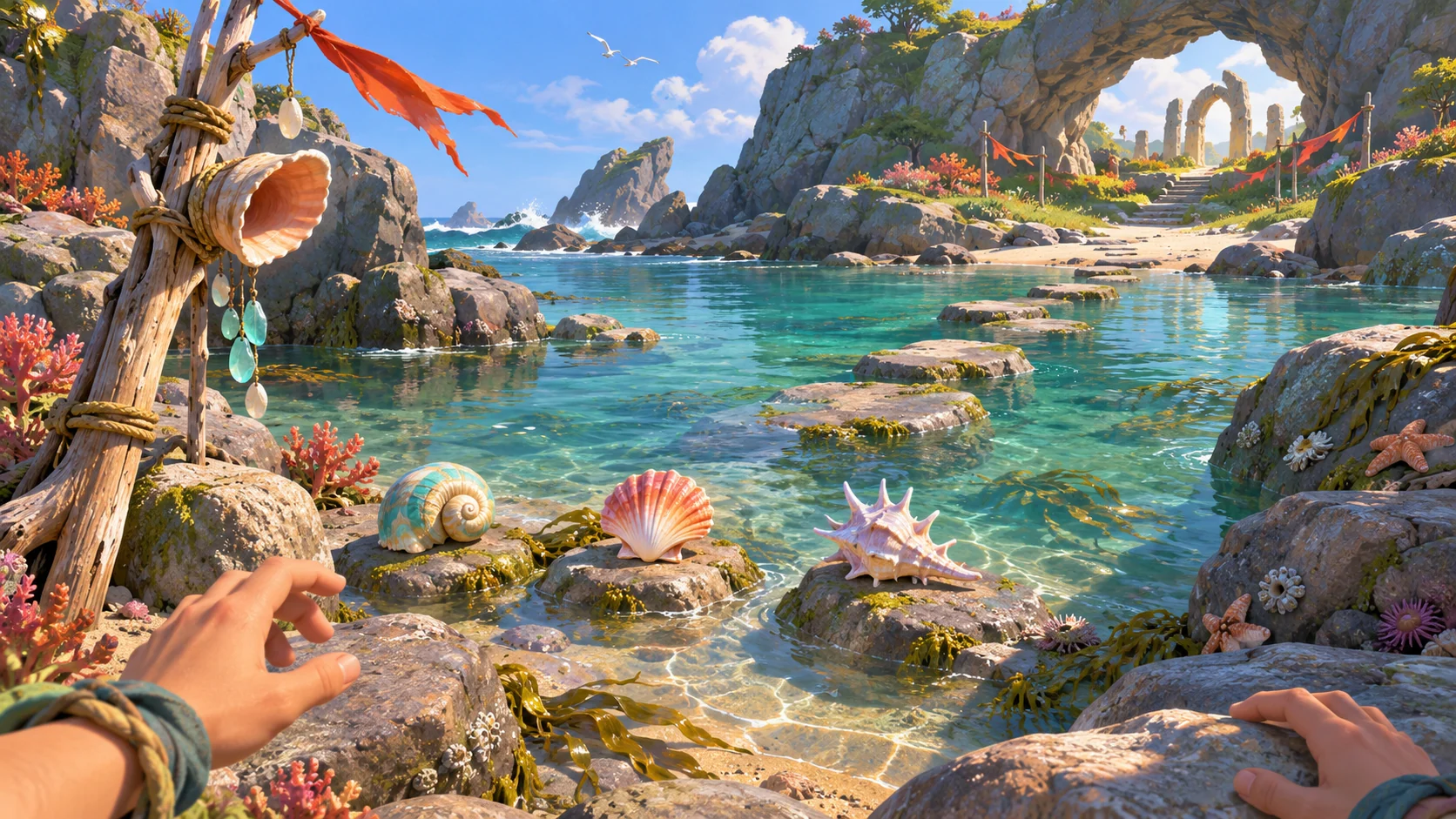
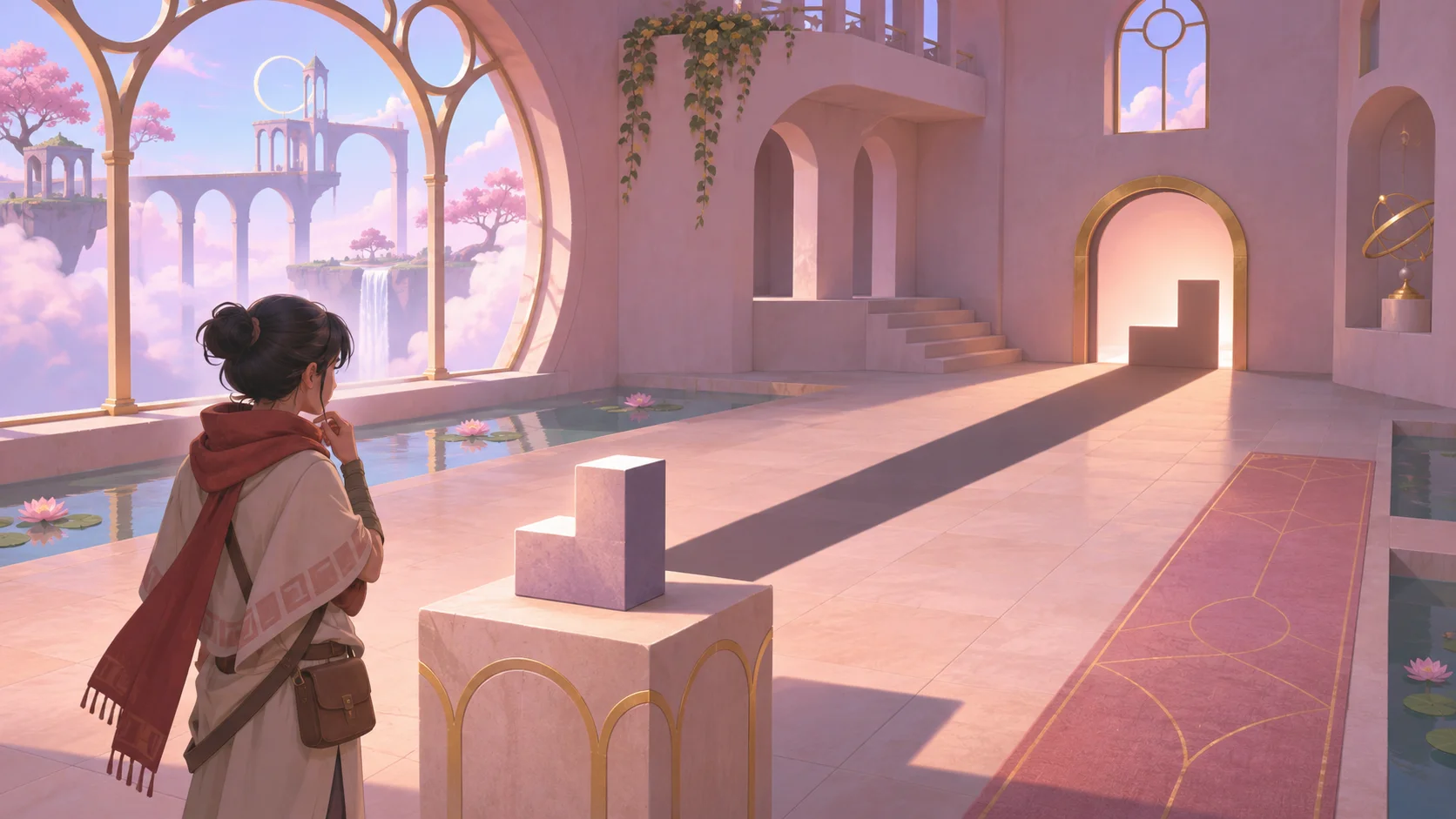
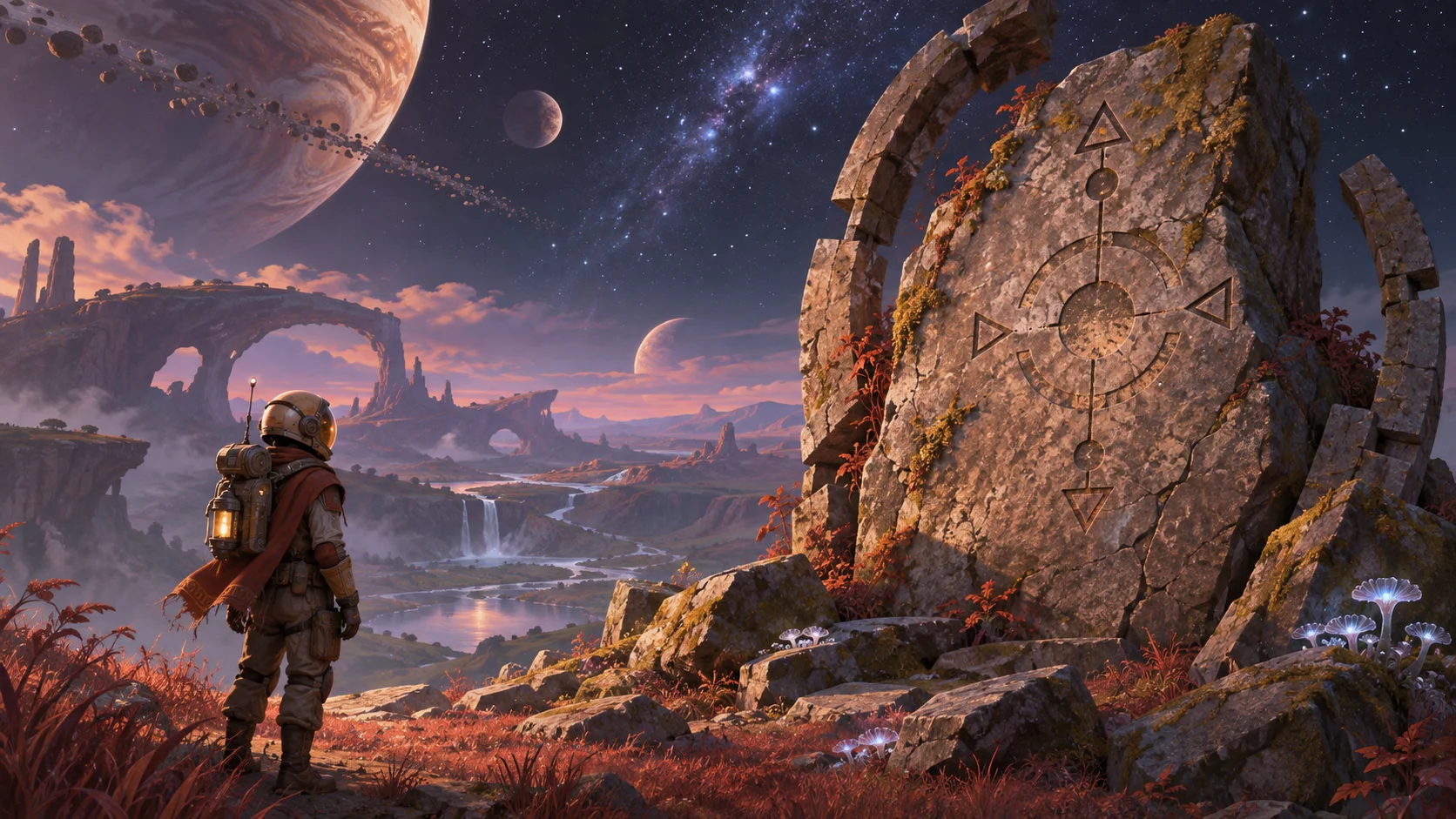
Environmental observation becomes a game mechanic when noticing something changes what the player can do or understand. Thekla’s official The Witness Steam listing describes an island full of puzzles. That broad exploration-puzzle setting is the only reference fact used here; the visual patterns, rules, and examples below are original.
Make observation an action the player chooses
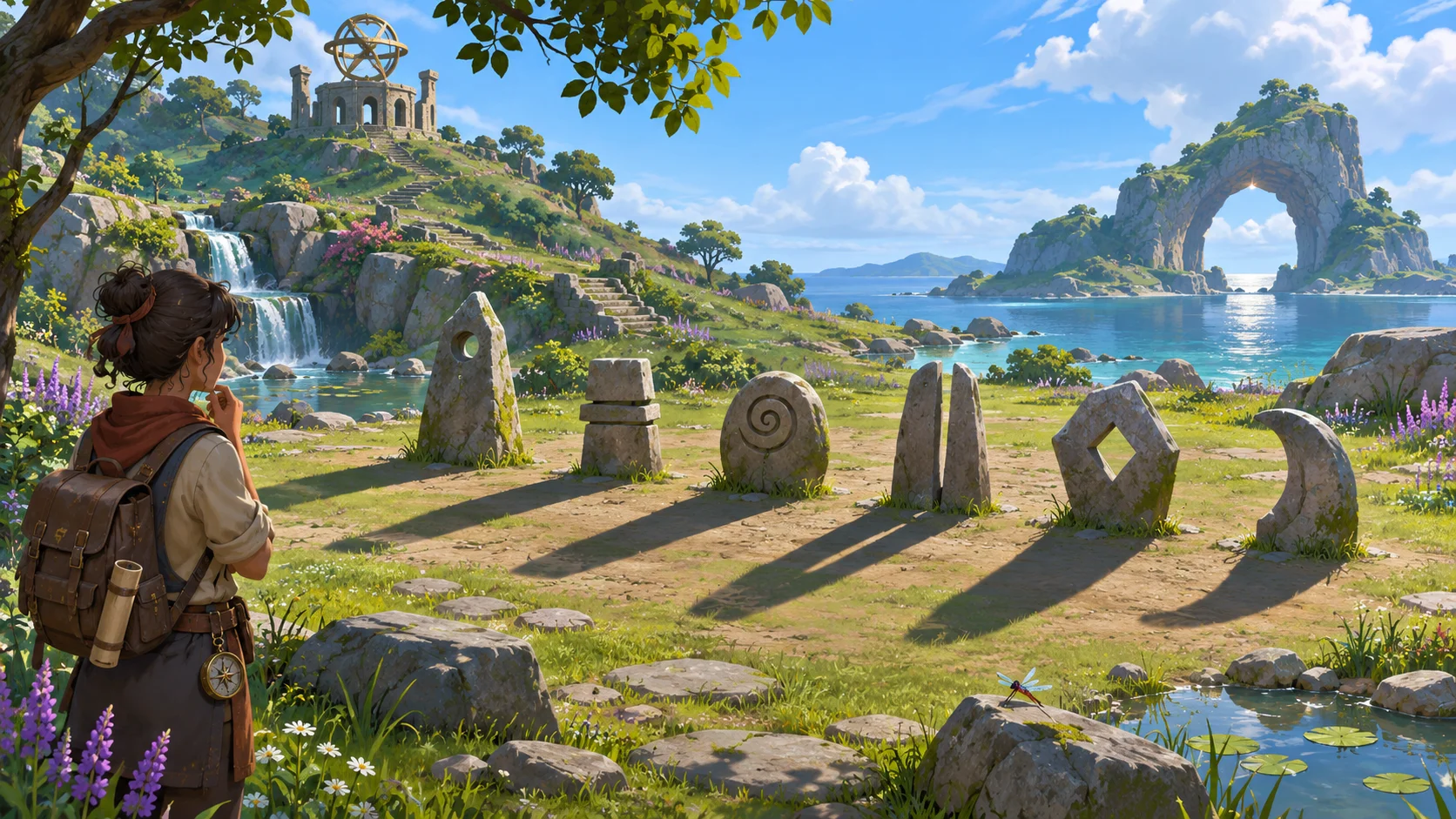
Begin with a detail that can be noticed and acted on. An original island scene might show three stones whose shadows point toward a distant arch, while a second landmark sits higher on a ridge. The player can compare the stones, walk to the arch, or climb toward the other landmark. Each action is a way to test an idea rather than a hidden sequence.
Use contrast to support noticing. A clue can stand out through shape, alignment, sound, color, or repetition. It should still belong to the world: a shadow can point toward a structure, a wind chime can repeat a rhythm, or a trail can change direction near a landmark. Avoid scattering decorative details that look equally important unless ambiguity is intentional.
Keep the player’s view useful. If a clue depends on alignment, make sure the player can see the relevant objects at the same time or move to a natural viewing point. A camera angle that hides the clue can turn observation into frustration.
Connect environmental patterns to a testable rule
Repeat a pattern with one meaningful variation. Three stone arrangements can share a common shape while one has a gap facing the arch. The player can hypothesize that orientation matters, then test the idea at a nearby mechanism. The example is original; the design principle is to let a player compare evidence before the game confirms a rule.
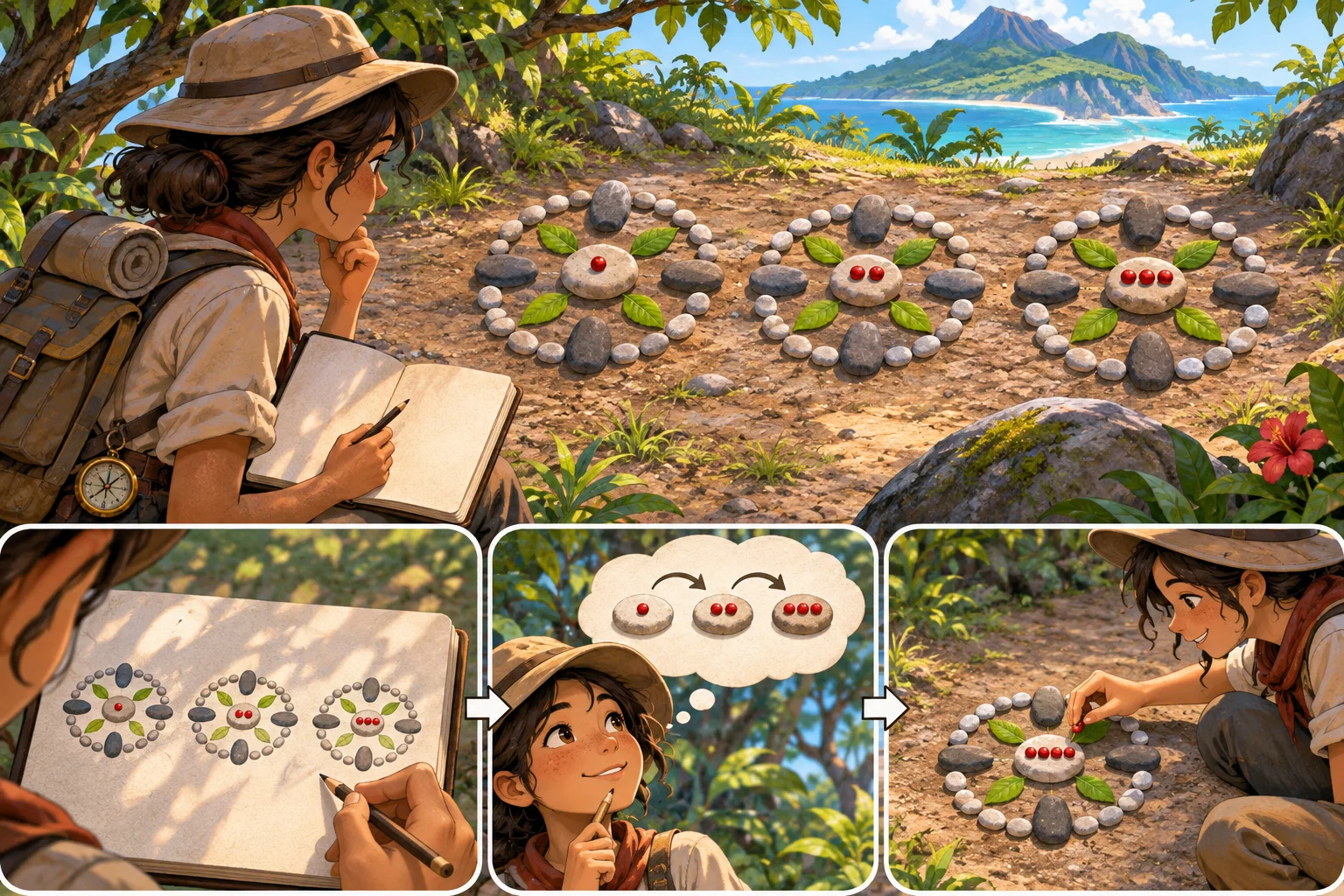
Separate what the player sees from what they infer. The observation might be “the gap faces the arch.” The hypothesis might be “the arch responds to that orientation.” A notebook can store a sketch or location, but should not need to state the full answer. This keeps discovery with the player while helping them revisit a clue.
Teach a rule in a low-cost situation before combining it with another. An early test can show one stone arrangement activating a light. Later, the player can use the same observation in a new location or combine it with a sound cue.
Give discoveries a visible response
Connect a correct observation to a signal, interaction, route, or new question. A small light at the arch can confirm that a pattern mattered; an opened path can invite another exploration step. The response should be noticeable without resolving the whole mystery.
Let the player recover from a wrong hypothesis. If they align the wrong stones, the system can remain inactive while preserving the prior state. A brief cue can show that the attempt did not meet the condition. Avoid punishing an experiment when the game has not yet taught its rule.
Playtest noticing, inference, and exploration order
Test with players who have not seen the scene. Record whether they notice the clue, what they believe it means, and which location they choose next. A clue may work even if the first hypothesis is wrong, as long as later evidence can correct it.
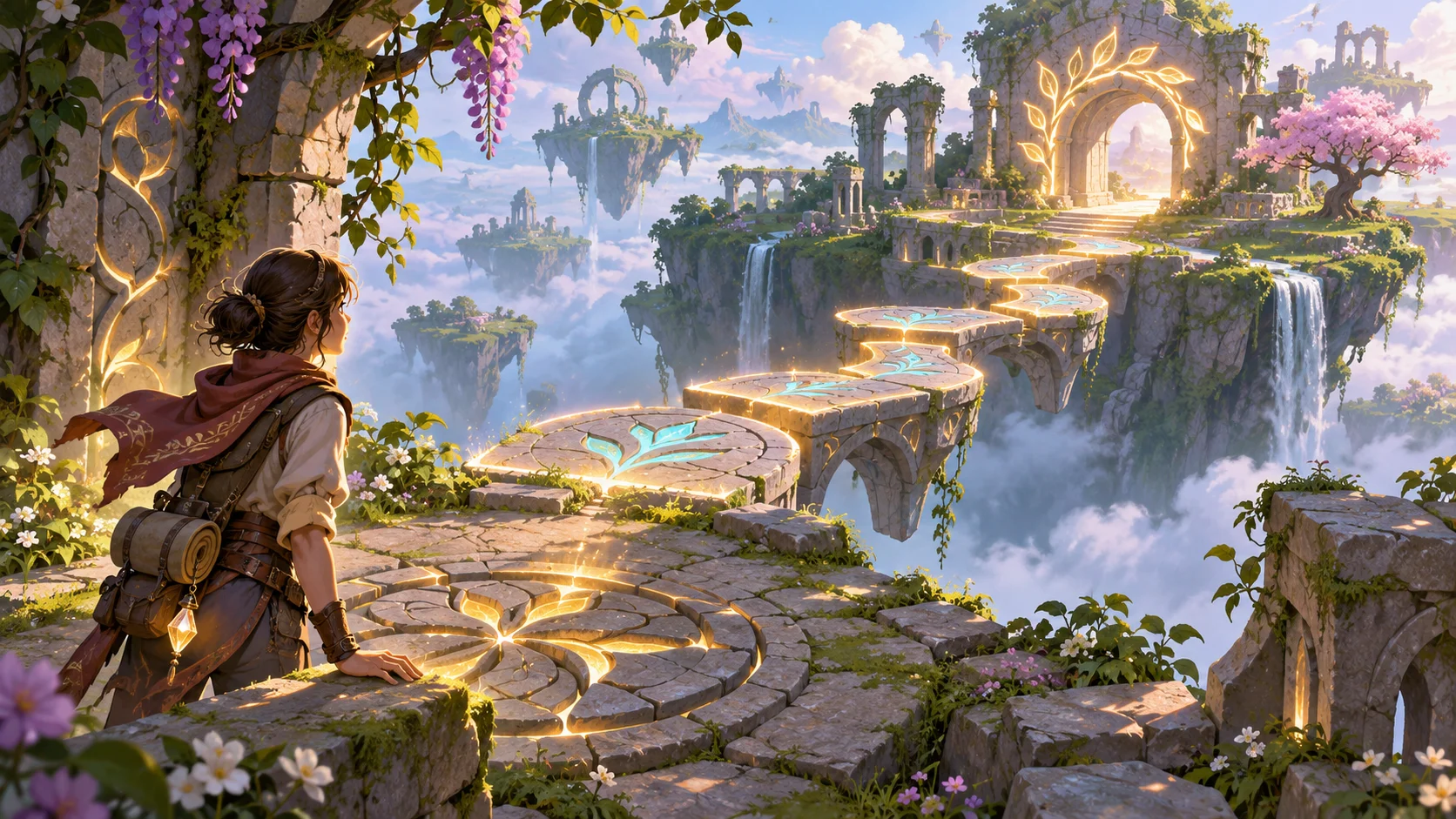
Try multiple exploration orders. Some players may visit the arch first and others may find the stones from the ridge. Check whether each path provides enough context to continue. If missing one clue makes all later content confusing, add another entry point or a way to revisit the observation.
Use SEELE AI to draft an original island puzzle, then inspect whether visual clues, player hypotheses, and world feedback work in the actual build. A concept draft does not prove that a player can discover the rule. For a broader premise guide, see the original island-puzzle guide. Prototype an original exploration puzzle.
FAQ
How do you build environmental observation into an exploration game?
Place a noticeable detail in a meaningful location, then let the player decide whether to inspect it. Connect what they see to a question, pattern, or action. Test the clue with someone unfamiliar with the level and observe whether they notice it, form a plausible idea, and know where to investigate next.
How can a game teach a rule through repeated visual patterns?
Repeat a pattern in several places and change one element with purpose. The player can compare examples and test a hypothesis rather than memorizing a written rule. Make each repetition easy to inspect, and ensure the variation produces a visible response when the player applies the idea.
How should a game respond when a player notices a clue?
Give a timely response that confirms the observation was relevant without explaining every meaning. A light can turn on, a route can open, or a new object can become available. Keep the feedback close to the action so players can connect what they noticed with what changed.
What should you observe in an environmental puzzle playtest?
Record which details players notice, what they infer, where they travel next, and whether new evidence changes their hypothesis. Ask them to explain one discovery in their own words. If a pattern is missed or read inconsistently, revise its contrast, placement, or relationship to nearby clues.