Introduction
Exploration puzzles reward players for noticing a detail and testing what it means. If you want to make a game like The Witness, start with the broad pleasure of learning a place, then invent a different way for the player to act on what they discover. This guide uses a fictional coastal game called Echo Shoals: the player listens to a three-note wind pattern, arranges resonant shells to match it, and opens a tide path to the next cove.
That is a teaching example, not a real build or tested result. Its purpose is to show how one clear sensory rule can connect observation, puzzle solving, and exploration.
Take the exploration goal, not the puzzle design
The official Steam page describes The Witness as a single-player open-world game in which the player explores an island, looks for clues, and solves puzzles (official game listing). That is the reference context for this article. It does not mean you should reproduce its panels, puzzle rules, symbols, locations, visual language, or progression.
Choose a different interaction that creates a similar need to observe. Echo Shoals uses sound and changing water. At one shoreline marker, the wind produces a short three-note pattern. The player finds three resonant shells nearby and turns them until their tones match the pattern. When the sequence is correct, a tide channel opens a walkable path. The puzzle is about listening, comparing and placing, not tracing a line through a copied panel.
Make observation lead to a visible action
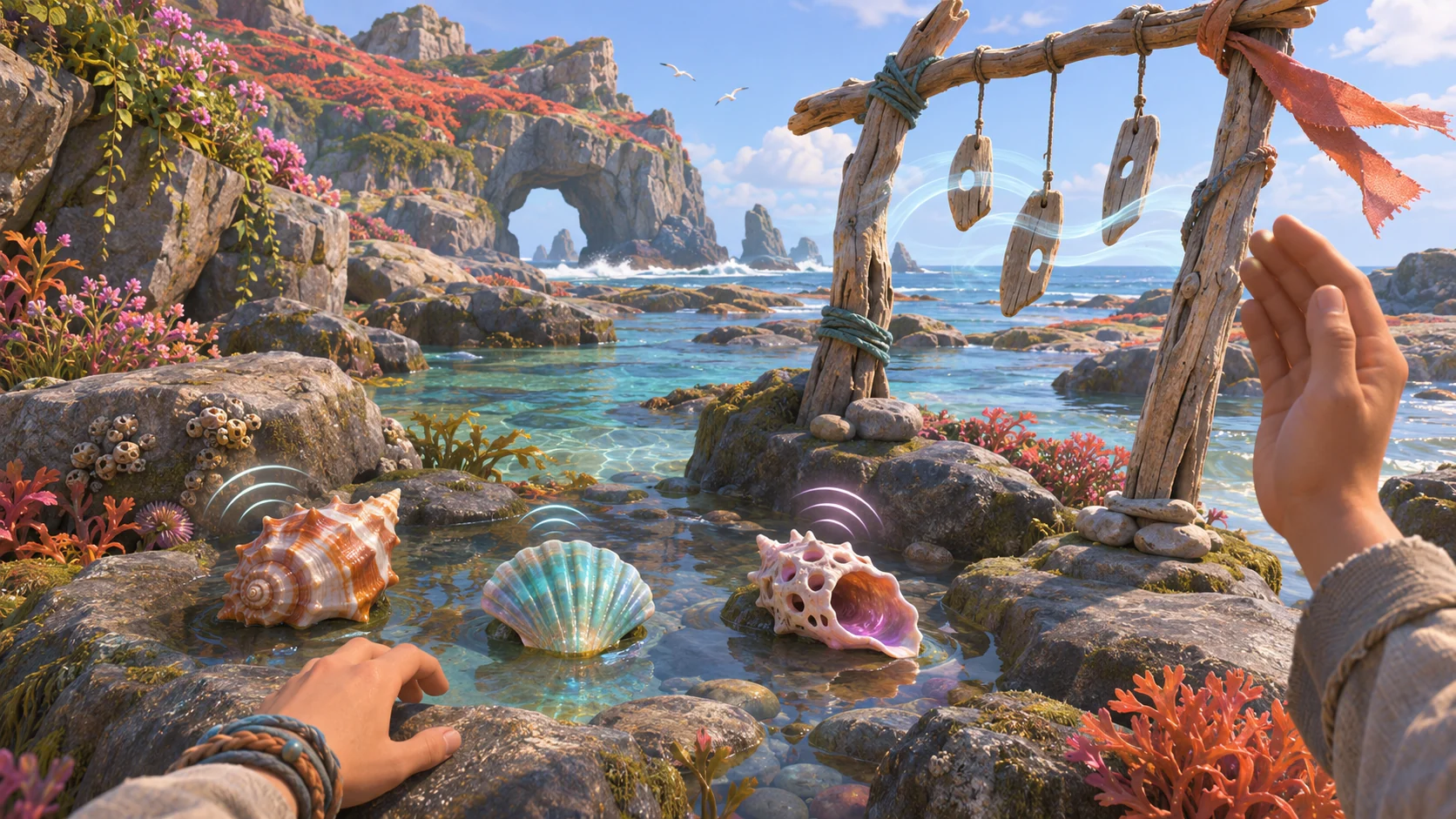
A clue should be available before the player commits to a solution. In Echo Shoals, the marker plays a short pattern when approached, and the shells produce distinct tones when turned. A tide gauge beside the channel gives a simple visual confirmation when the sequence matches.
| Step | Player action | Feedback | What it teaches |
|---|---|---|---|
| Listen | Activate a shoreline marker | Three notes play in order | The pattern is the clue |
| Compare | Turn one of three nearby shells | Each shell plays one note | Shell position affects the sequence |
| Arrange | Set shells in a row | The gauge highlights matched notes | The player can check progress |
| Confirm | Ring a small chime | The tide channel opens if the sequence matches | The solution changes traversal |
| Explore | Walk along the revealed path | The next cove becomes reachable | Solving creates a reason to continue |
The feedback keeps the puzzle legible. If the game only tells the player “wrong,” they may not know whether they misheard the clue, chose the wrong shell, or failed to activate the marker.
Build one cove as a complete puzzle loop
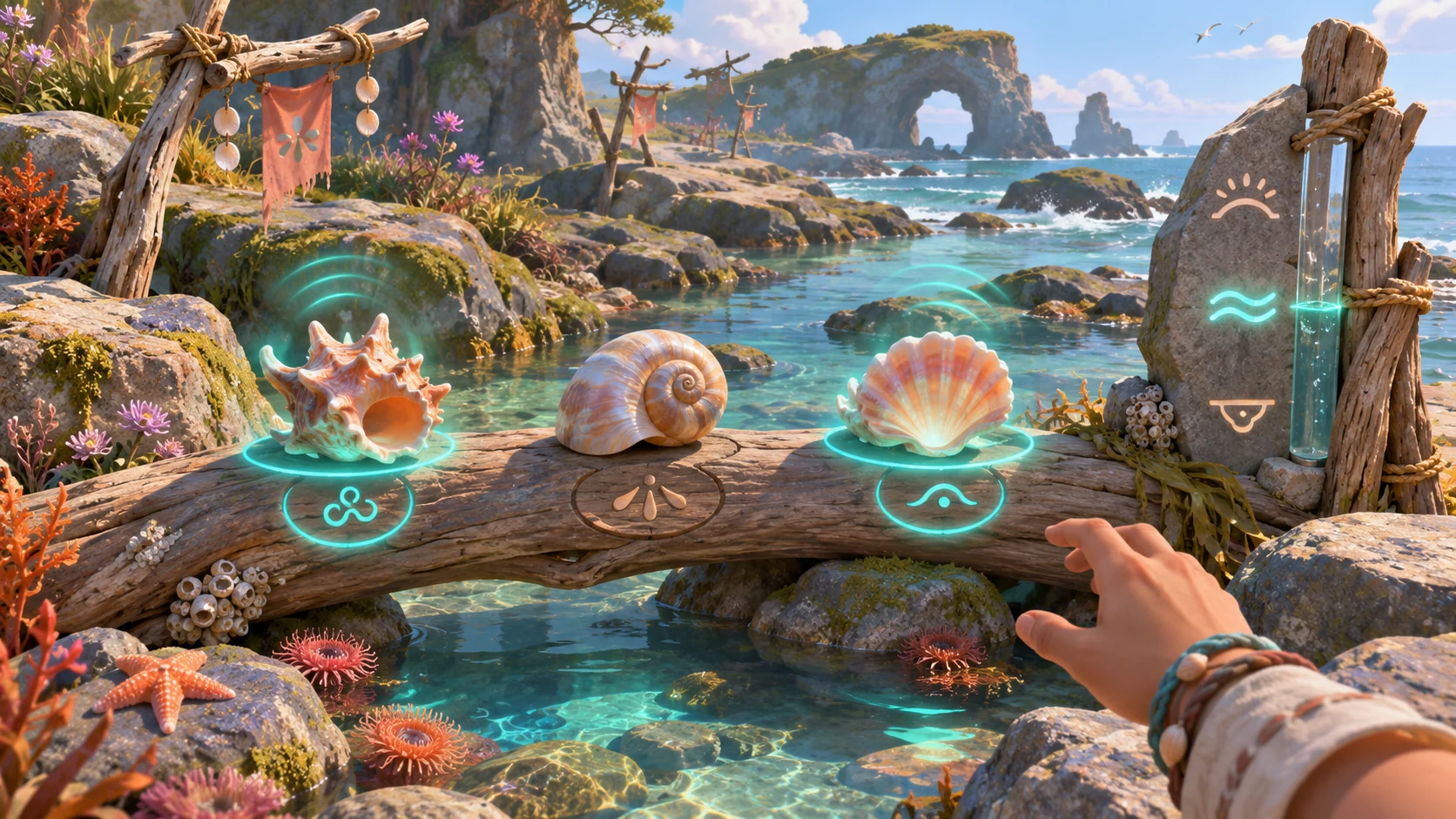
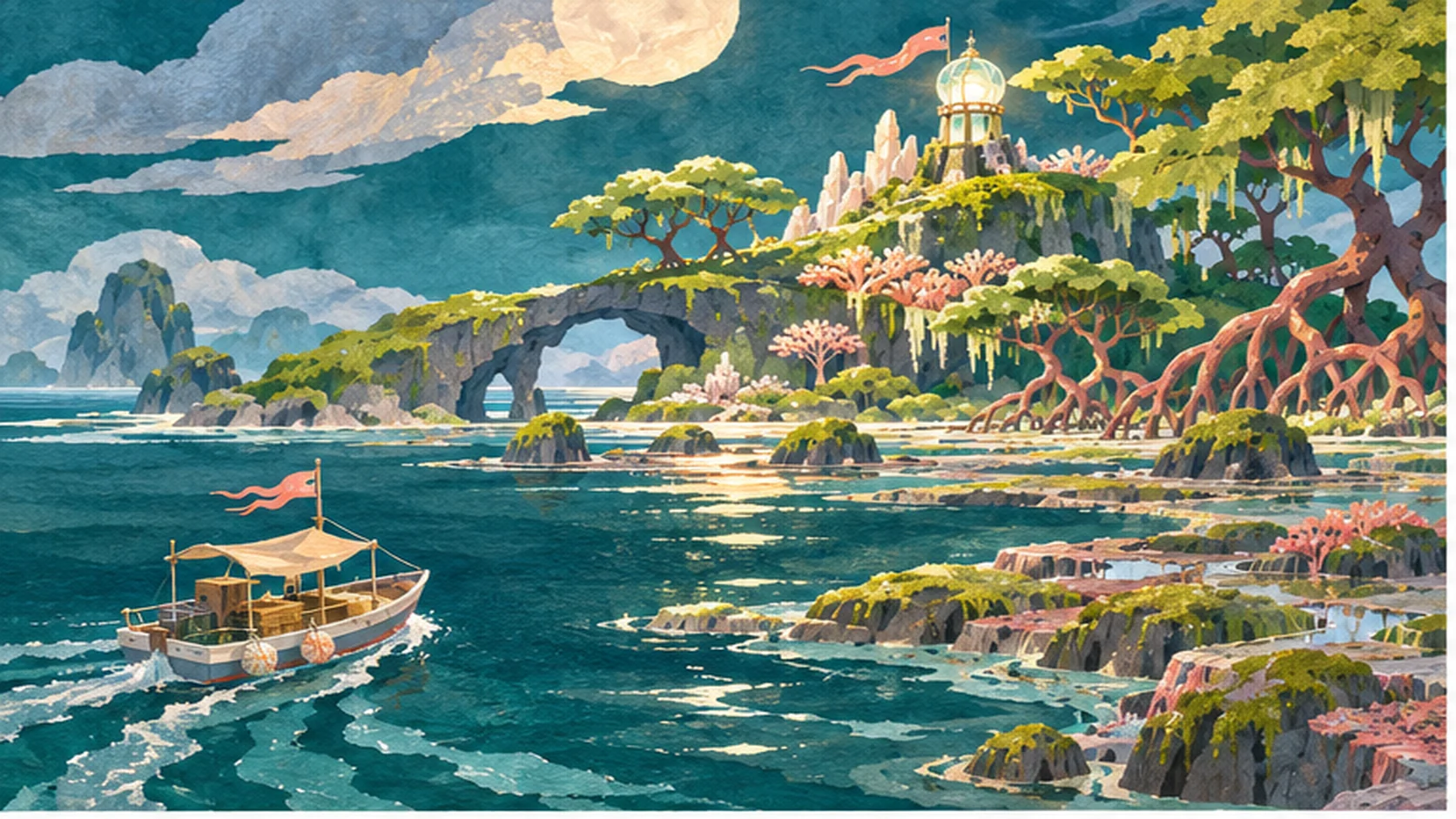
Sketch a cove with a visible destination across a shallow channel. Put the marker, three shells, and tide gauge within the starting view. The destination should be visible before the path opens so the player understands what the puzzle will change.
Start with three distinct tones and a fixed pattern. Let the player reset shell positions and replay the marker whenever they want. Avoid adding hidden lyrics, timed waves, more shells, or a second sound source until a player can explain how the starter pattern works.
A paper prototype can test the logic before you build the environment. Write the three-note pattern on a card, assign one tone to each shell, and make a row of three positions. Ask another person to arrange them using only the clue card. If the instructions are unclear on paper, a beautiful cove will not fix the rule.
Let the environment teach without hiding the clue
Exploration should reward attention, but the first puzzle should still give players a fair starting point. Use distant shell clusters or changes in shoreline foam to suggest where to look, then ensure the active marker is recognizable when the player reaches the cove. A missed clue and an incorrect guess are different problems; the game should make it possible to tell which happened.
When the player matches two notes, let the tide gauge show two lit marks. If all three match, play a short confirmation tone and animate the water receding. If the player has a wrong order, replaying the marker should be easy. These cues teach the rule while preserving the player’s moment of discovery.
Use a prompt that describes the clue and its consequence
A prompt for an AI-assisted prototype should state the setting, player action, feedback and success condition. Asking only for “a puzzle game like The Witness” describes a reference, not a new game.
Create an original first-person coastal exploration puzzle prototype called Echo Shoals. In one small cove, the player activates a shoreline marker that plays a three-note wind pattern. Let them turn three resonant shells to choose their tones and place them in a row. A tide gauge should show which positions match, and a separate chime action should open a shallow-water path only when all notes match. Include a replay and reset action. Use original coastal scenery and shell designs. Do not copy existing puzzle panels, symbols, levels, art, dialogue, interface, or text.
Treat that prompt as a proposal, not proof that the game exists or works. SEELE’s product catalog describes a prompt-led game studio and playable-game creation, which can make it a useful place to explore a concrete starting idea. It does not establish that Echo Shoals has been generated or tested. You can begin with the free AI game maker and inspect whether its output follows your intended rule.
Diagnose whether a puzzle is hard or merely unclear
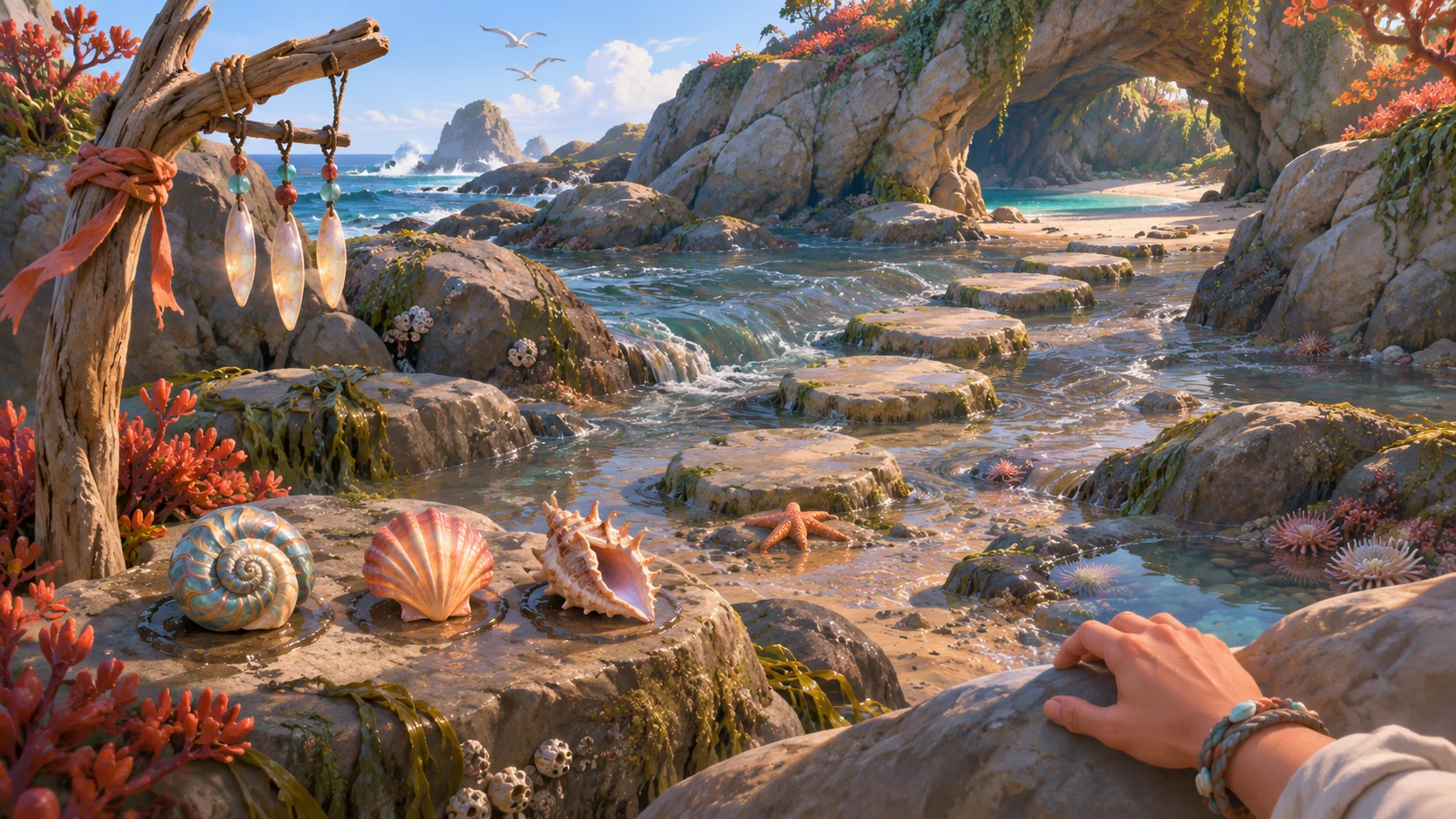
If a player gets stuck, ask them what they believe the marker told them. If they cannot repeat the three notes, improve the replay or make the tones easier to distinguish. If they can repeat the pattern but cannot map it to shell positions, make the shell feedback clearer. If the gauge shows a match but the path stays closed, fix the state logic before changing the puzzle.
| What you see | Question to ask | First adjustment |
|---|---|---|
| Player wanders without finding the marker | Is there a visible clue that points toward the active cove? | Add a distant sound cue or a shoreline landmark |
| Player cannot repeat the notes | Can they replay the marker? | Keep the replay action obvious and unrestricted |
| Player hears the pattern but guesses shell order | Does each shell’s tone have a clear identity? | Give each tone a distinct pitch and visual pulse |
| Gauge shows a match but path stays closed | Are visual state and traversal state using the same condition? | Connect both to the same three-note result |
| Player solves it but does not explore onward | Is the destination visible and meaningful? | Show the path’s endpoint before the puzzle is solved |
These are troubleshooting ideas for a hypothetical prototype, not observed playtest results. Change one clue or response at a time, then repeat the same puzzle setup to see whether the player’s explanation improves.
Test the rule before adding another cove
Ask a new player to describe the marker pattern before they touch the shells. Then ask them to predict which shell arrangement will match. Record their reasoning and the result separately. If they arrive at the answer by random trials but cannot explain why, the puzzle may be solvable without teaching its rule.
After the first test, try a second pattern with the same three shells. Keep all other parts of the cove the same. If players understand both patterns, you can consider adding a new location or one new rule. If the second pattern feels unfair, clarify tone differences before increasing complexity.
Conclusion
To make an exploration puzzle inspired by The Witness while keeping your work original, use the broad goal of learning a place and invent a different interaction. Echo Shoals connects a sound clue to shell placement and a changing tide path. Start with one cove, make every step observable, and add new rules only after a player can explain the first one.
FAQ
How do I make a game inspired by The Witness without copying it?
Borrow a broad goal such as exploring a place and learning from clues, then create different interactions, visuals, puzzle rules, and progression. Echo Shoals uses sound and tide paths as a fictional example.
Do exploration puzzles need written instructions?
Not always. The environment can teach the rule through consistent feedback, but players still need a fair way to notice and replay important clues. Test whether they can explain the rule after trying it.
How many puzzle rules should the first area include?
Start with one rule and vary the clue while keeping the interaction consistent. Add a new rule only when players understand the first and the new one creates a distinct decision.
Can I test an exploration puzzle before building the island?
Yes. Sketch the area and write down the clue, player action, feedback, and success state. A paper version can reveal gaps in the logic before you build scenery.
Can AI make and test the puzzle automatically?
AI can help explore a concrete starting idea, but this example has not been generated or tested. Check the sound clue, shell feedback, gauge, and path state yourself, then use player observations to revise it.