Introduction
An exploration-survival game needs a reason to leave a safe place, a reason to prepare before going, and a consequence that makes the return matter. Valheim's official description frames it as collaborative exploration and survival in a procedurally generated world inspired by Norse mythology, with crafting, building and combat. Those are useful high-level reference points, not a recipe to copy. Keep its world, creatures, weapons, bosses, architecture, art and specific presentation distinct. Valheim's official Steam page outlines that broad premise.
For a different direction, imagine Mosslight Archipelago, a fictional cooperative game about two field ecologists restoring tide beacons across a chain of living islands. Each outing happens during a low-tide window. The team gathers fallen reeds and shell-lime, chooses which beacon to repair, and tries to return before the channel floods. Materials spent on the beacon cannot also reinforce the field shelter, so preparation and route choices matter. This is a teaching example, not a built or tested game.
To make a game like Valheim with AI while keeping the result original, define the player loop before asking for a world map. Decide what exploration reveals, what players must bring, what they can gather, how conditions change, and what becomes safer or more useful when they return. A small expedition with one meaningful tradeoff is easier to evaluate than a huge setting filled with unconnected systems.
Translate the survival loop into a new design
Begin with the broad pattern rather than a list of copied features: explore an unfamiliar area, learn what it needs, prepare with gathered materials, attempt a goal, and return with a changed understanding of the world. Then choose a different setting and pressure. Mosslight uses tide timing and ecological restoration. Its players are not fighting mythic creatures or pursuing a boss ladder; they are deciding whether they have time and supplies to restore a beacon before the channel closes.
| Loop stage | Question for the designer | Mosslight Archipelago example |
|---|---|---|
| Explore | What new information does the area reveal? | A tide pool shows which beacon lens has cracked |
| Prepare | What can the team carry or repair first? | Choose a dry bag, lamp oil substitute, or shelter brace |
| Commit | What is the expedition's focused goal? | Reach one beacon before the high-water marker |
| Respond | What changes the plan while players are out? | The tide map reveals a shorter but slippery return channel |
| Return | How does success or failure alter the home space? | A repaired beacon makes the next shoreline easier to read |
A useful exploration game turns observation into a decision. If finding a shell-lime deposit does not change what players can do, it may be decorative detail. If the team learns the route floods earlier than expected and changes its load, the discovery affects the loop. Keep the relationship visible so players can connect what they noticed to what they chose.
Make preparation a choice, not a checklist
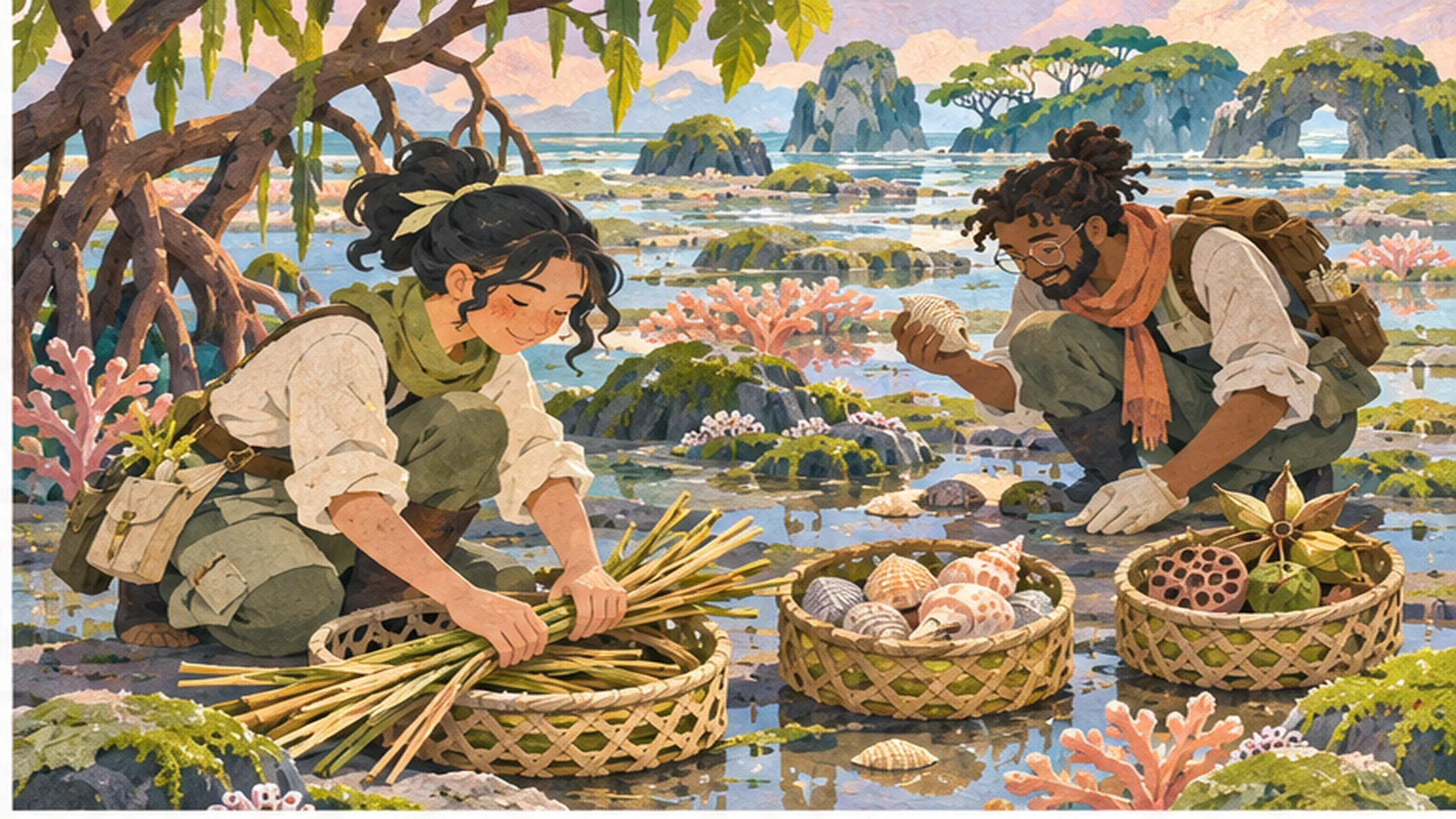
Survival preparation can become routine if the player always carries the same items and follows the same route. Give each resource a clear job and a meaningful alternative. In the fictional example, a bundle of reeds can reinforce the shelter, cushion a beacon crate, or mark a safe return path. The same resource cannot do everything at once, so the team chooses based on the information it has.
Keep the first set small. One environmental pressure, two useful materials and a few equipment choices are enough to show whether preparation matters. Avoid adding hunger meters, equipment tiers, combat, building grids and crafting recipes simply because those systems appear in the genre. Each system should create a decision the central expedition loop needs.
| Preparation choice | Immediate benefit | Tradeoff to make visible |
|---|---|---|
| Carry extra reeds | Protect the beacon lens on rough ground | Less room for shell-lime or route markers |
| Pack shell-lime | Repair a cracked foundation | Spend less time gathering on the island |
| Reinforce the shelter first | Improve the return point for later trips | Delay the next beacon repair |
| Travel light | Move quickly across the tide flat | Accept fewer recovery options if the route changes |
These are fictional design choices rather than validated balance values. The aim is to make the player compare options, not to punish them for missing hidden information. Show what each item can help with before departure, and let the world explain why a planned route became risky.
Design environmental pressure with readable signals
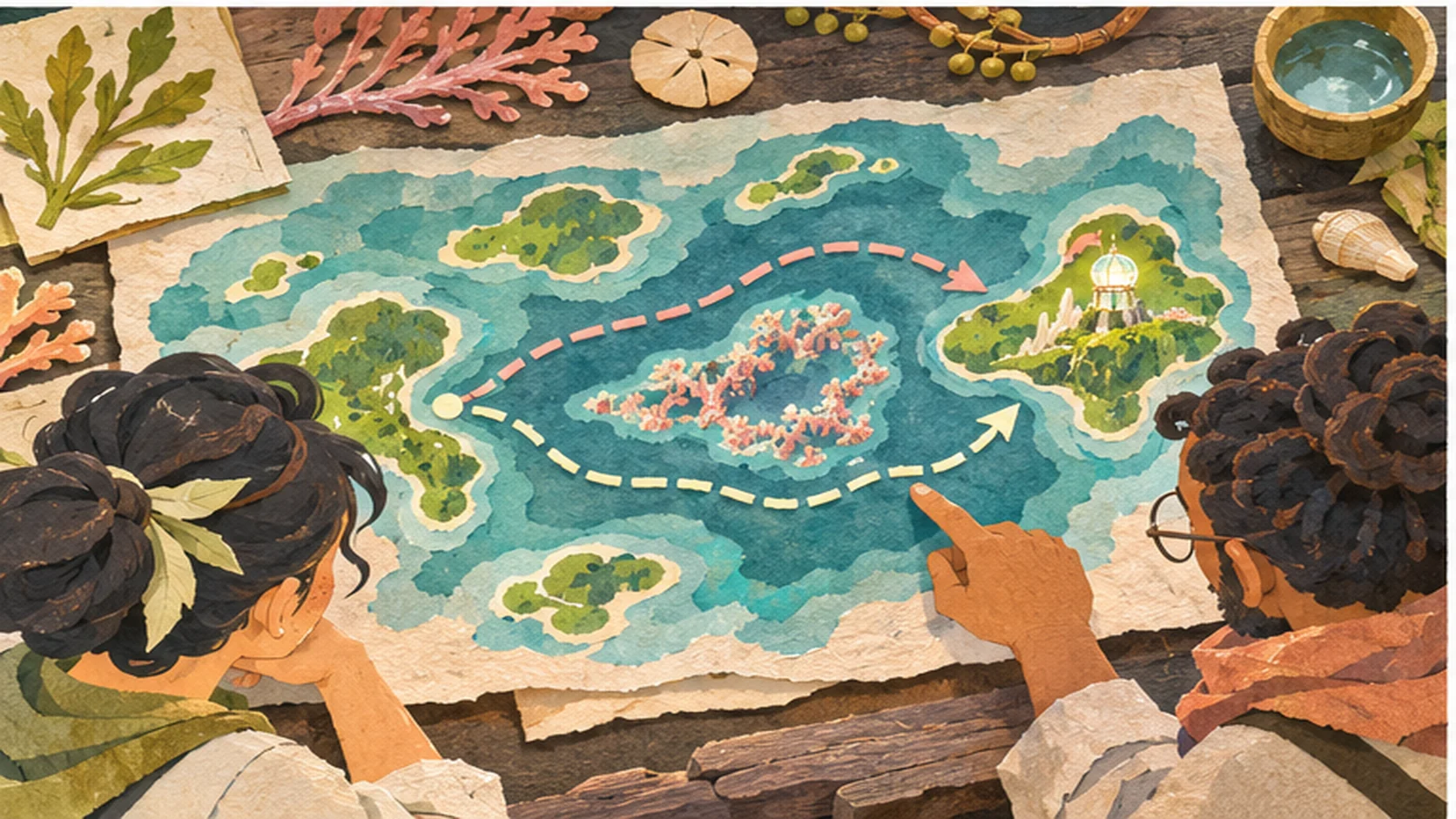
A timer can create urgency, but an unexplained timer creates stress without useful information. In Mosslight, the waterline on the map, the sound of shells clicking together and the changing color of a channel could signal that the return window is narrowing. These cues are proposed for the example. They should agree with one another and provide enough warning for players to act.
A pressure loop can remain calm if it asks players to prioritize instead of react instantly. The team may not repair every beacon on one trip. Choosing one goal and leaving another for later can make the expedition feel purposeful. If a player misses a cue, show what caused the outcome so the next attempt teaches something rather than feeling arbitrary.
| Signal | What it tells the player | Possible response |
|---|---|---|
| Waterline reaches a marked root | The low-tide window is narrowing | Begin returning or abandon a secondary task |
| Beacon lens flashes unevenly | The repair needs a steadying brace | Spend reeds or carry the lens back for a later trip |
| Return channel turns silver | A route is becoming submerged | Take the longer marked path if supplies allow |
| Shelter lamp remains dim | The home base is not yet prepared for night | Use part of the gathered material to improve it |
Use signals consistently. If silver water indicates a rising channel, it should not sometimes mean a safe shortcut without a second cue. Distinct shapes and labels can supplement color so route information remains readable to more players.
Scope one short expedition
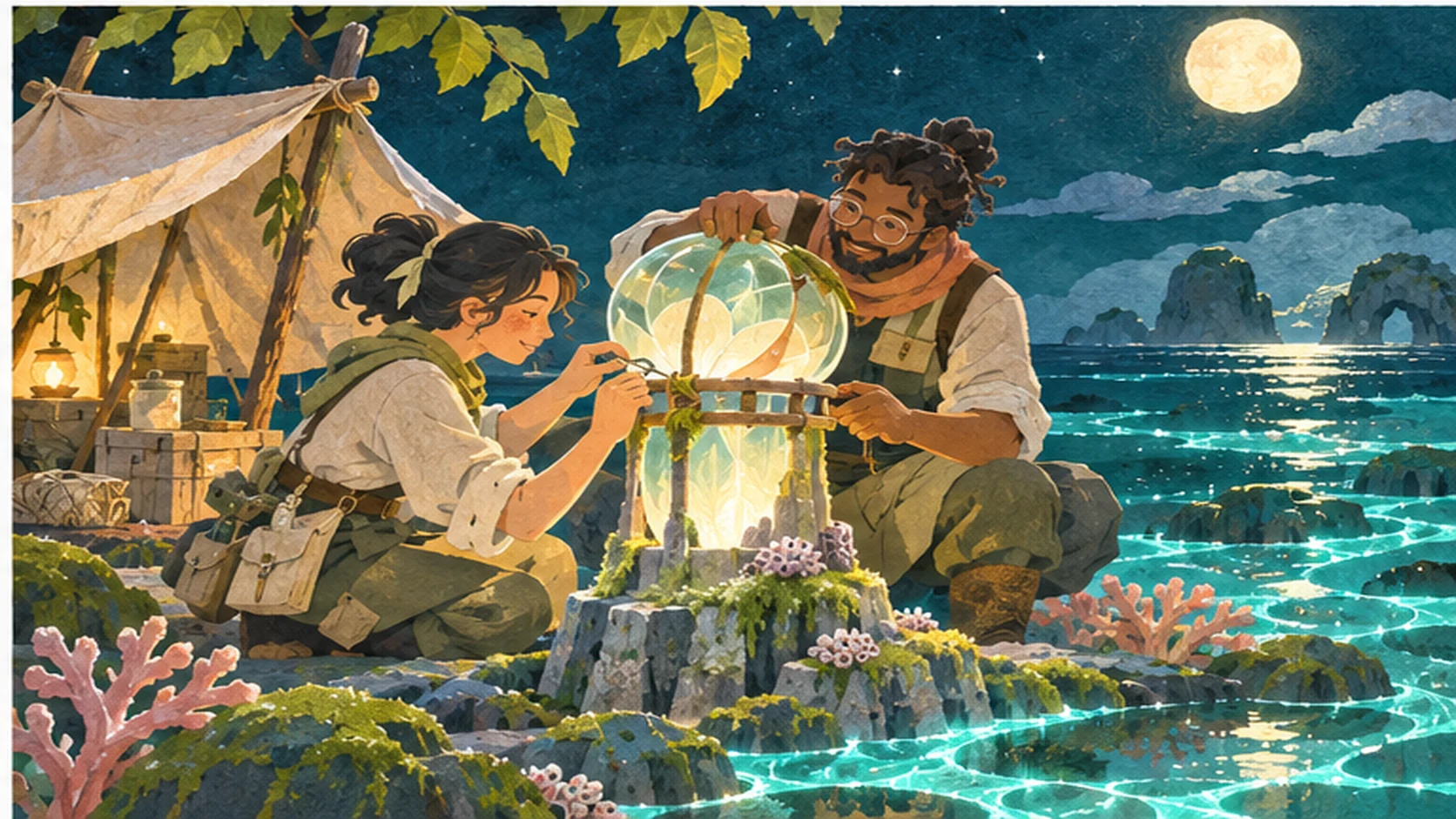
A first prototype can be a single island, one beacon, a short route and one return decision. The player should be able to inspect a clue, choose what to carry, act on the environment and see a consequence at the shelter. You can model the map on paper or with a local mockup; doing so does not count as a playtest or prove that the system is balanced.
For this fictional first slice, the player begins at a field shelter with three reed bundles and two shell-lime pieces. The map shows one beacon and two routes. Reaching the beacon requires choosing whether to spend reeds on a protective wrap or preserve them for a shelter brace. A tide marker advances when the team completes actions. At the end, the beacon either becomes easier to see from the shelter or remains an open task for the next trip. The exact values are illustrative and should be adjusted after a real prototype review.
Before expanding, ask whether the player can explain why they packed each item, what new fact the expedition revealed, and how the return changed the home point. If not, make those links clearer before creating more islands, recipes or enemies.
Prompt a distinct starting point
A prompt should say what the player does, what the environment communicates, what resources matter and what outcome changes. It should also state the originality boundary. For example:
Propose an original cooperative exploration-survival prototype called Mosslight Archipelago. Two field ecologists start from a small island shelter and travel across a tide flat to repair one glass beacon. Let the tide window visibly narrow while they explore. Give the team two materials—fallen reeds and shell-lime—with different uses for beacon protection and shelter repair. Include one route choice, one readable environmental signal, a return decision and a visible change at the shelter. Use original characters, setting, resources, art and interface; do not reproduce Norse mythology, named creatures, weapons, bosses, architecture or scenes from existing games. Treat this as a concept proposal that needs review, not proof of a playable result.
SEELE's catalog describes prompt-led game creation, which can help explore a concrete starting concept like this. It does not establish that Mosslight Archipelago has been generated or tested. You can start with the Free AI game maker, then inspect whether the expedition, resource tradeoff and environmental signals connect clearly.
Evaluate the expedition before expanding the world
Review one outing from preparation to return. Look for places where the player must guess what a material does, where a signal arrives too late, or where success does not change anything they can see. If you later run a play session, observe what players do before offering hints. The questions below are a proposed checklist, not playtest findings:
- Can the player name the expedition goal before leaving shelter?
- Can they distinguish a beacon-repair resource from a shelter resource?
- Do tide signals give enough information to reconsider the route?
- Is the cost of abandoning a secondary task understandable?
- Does the return visibly affect the shelter or future navigation?
- Can the player explain one thing they learned about the island?
Change one part of the loop at a time. If players miss the tide cue, strengthen or repeat the cue before changing the whole route. If they understand the cue but do not care about the beacon, make its return consequence more visible. Do not label a suggested outcome as a successful test until someone has actually played it.
Troubleshoot common survival-loop problems
| What you notice in a review | Possible cause | First adjustment to try |
|---|---|---|
| Players gather everything they see | Resource uses are unclear or interchangeable | Give each material one clear early purpose and show the tradeoff |
| The return feels like dead time | Travel does not include decisions or readable change | Add a route clue or a meaningful return choice, not extra chores |
| The tide feels unfair | Warning cues arrive too late or conflict | Show the same state through a map cue and a world cue |
| The shelter seems irrelevant | Expedition outcomes do not affect the home point | Make one return result change navigation or preparation |
| The player avoids every risk | Failure cost is too high or opaque | Explain recovery options and let a small mistake teach a rule |
These are hypotheses for diagnosing a design, not guaranteed fixes. Keep the game's pressure aligned with its tone. A quiet ecological adventure can still have meaningful limits without using combat or a severe punishment loop.
Conclusion
To make a game like Valheim with AI while keeping it original, translate the broad appeal of exploration, preparation and a persistent home into your own world and rules. Mosslight Archipelago uses tide windows, resource tradeoffs and beacon repair to create a fictional expedition loop about ecological stewardship. Start with one island, one goal and a visible return consequence, then expand only after players can explain how their choices shape the trip. This example is a design proposal, not a tested game.
FAQ
How do I make a game like Valheim without copying it?
Use broad goals such as exploring, preparing and improving a home, then create a new setting, characters, resources, rules, art and progression. Mosslight Archipelago's tide-beacon example is fictional and distinct.
What should a survival game prototype include first?
Start with one reason to explore, a small set of resources, one environmental pressure and a return consequence. Add systems only when they support a decision in that loop.
Does an exploration game need combat?
No. A game can create challenge through navigation, weather, resource limits, teamwork or repair goals. Choose pressures that suit the experience you want to make.
Can AI build and test a survival game automatically?
A prompt can describe a starting concept, but Mosslight Archipelago has not been built or tested. Review the rules and use actual play sessions before claiming that the loop works.
How can I make resource gathering feel meaningful?
Give each material a clear purpose, show what it can enable, and create a choice when it has more than one useful destination. Avoid collecting items that never change a later decision.